
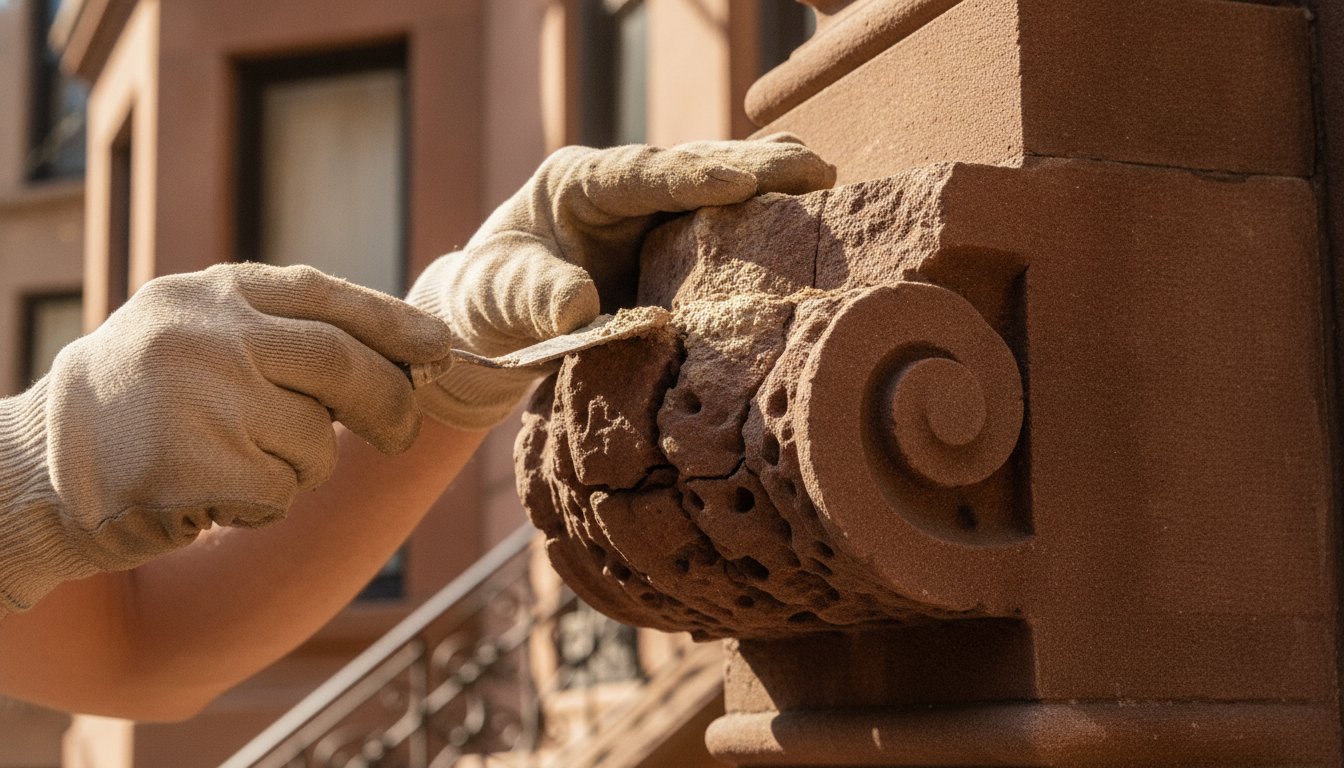
Most “repairs” to NYC brownstone carvings actually accelerate their decay because standard hardware store cement is the natural enemy of 19th-century stone. When it comes to repairing ornamental brownstone details, using the wrong material creates a waterproof trap that causes the original masonry to rot from the inside out. You likely feel a sense of dread when you see a piece of a decorative lintel on the sidewalk or notice a previous patch peeling away. It is frustrating to watch your home’s history crumble, especially while trying to avoid costly Landmark Preservation Commission (LPC) violations.
We understand that your brownstone is a piece of New York history that requires a steady hand and specialized chemistry. This guide explains the master masonry techniques used to bond new material to old stone so your restoration remains structurally sound and visually authentic for another fifty years. We will cover the importance of breathable mortar and how to choose a contractor who treats your facade like a piece of fine art. For direct assistance with your project, you can reach our team at 347-341-3808 or 718-350-7388; you can also email us at ProgressiveContractingNY@yahoo.com to discuss your specific restoration needs.
Understanding Ornamental Brownstone Damage: Why Details Fail
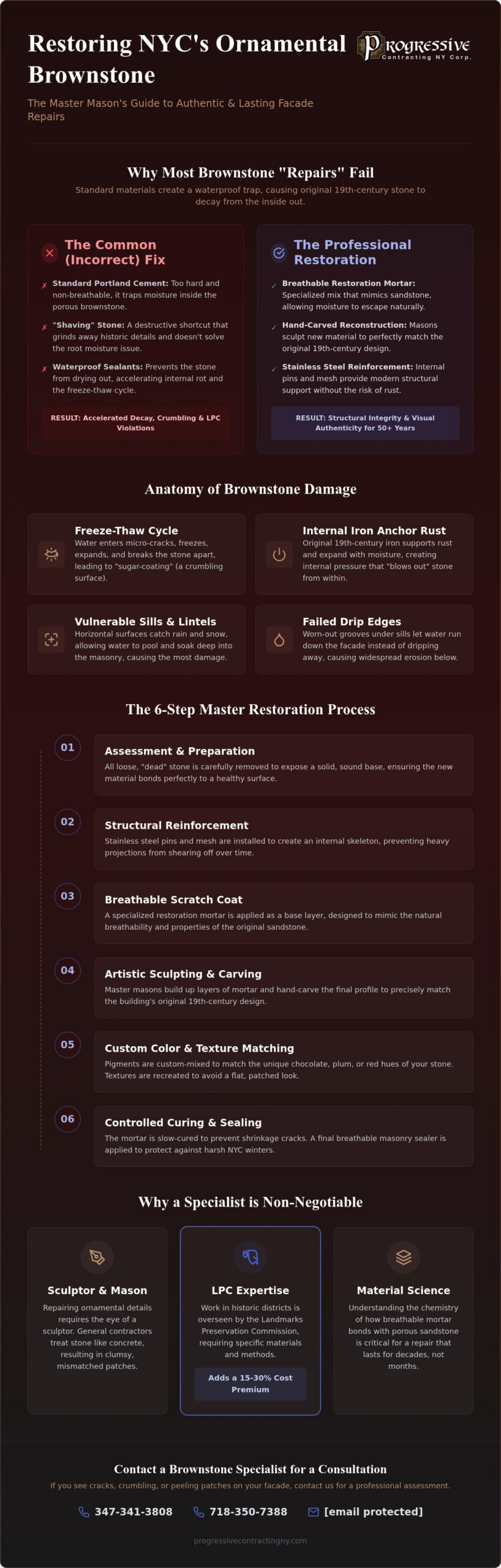
Ornamental features like window lintels, sills, and decorative corbels give NYC buildings their historic character. To understand what is brownstone, you must recognize it as a porous sandstone that naturally absorbs moisture. When water enters micro-cracks during the winter, it expands as it freezes. This “freeze-thaw” cycle eventually leads to “sugar-coating,” where the stone surface crumbles into a fine powder. Over time, these small fractures grow into significant structural issues that threaten the building’s facade.
Homeowners often face bad advice from contractors who suggest “shaving” the stone. This process involves grinding down the decorative carvings to a flat surface. Shaving is a temporary fix that destroys the property’s value and fails to address the underlying moisture problem. Properly repairing ornamental brownstone details requires a master mason who can rebuild the original shapes using breathable, stone-specific materials. You can identify early trouble by looking for hairline fractures or listening for a “hollow” sound when tapping the stone surface, which indicates the outer layer has detached from the core.
The Anatomy of Decorative Masonry Failure
Internal iron anchors are a common cause of dramatic masonry failure. These metal supports were used in the 19th century to secure heavy carvings to the building. As moisture seeps in, the iron rusts and expands, creating internal pressure that “blows out” the surrounding stone. Many people attempt to fix this with modern Portland cement, but this material is too hard for historic stone. It traps moisture inside and causes the surrounding brownstone to crack even faster. You can find more information on the geology of these structures in our guide on What is a Brownstone?
Why Sills and Lintels are the Most Vulnerable
Horizontal surfaces like window sills and lintels bear the brunt of New York’s weather. They catch rain and snow, allowing water to pool and soak into the masonry. A critical part of repairing ornamental brownstone details is the restoration of “drip edges.” These small grooves on the underside of a projection force water to fall away from the facade instead of running down the stone face. Without a functional drip edge, water continues to erode the wall below, leading to costly repairs. If your decorative masonry shows signs of erosion, contact us at 347-341-3808 or 718-350-7388. You can also email ProgressiveContractingNY@yahoo.com to discuss a professional restoration plan.
The How-To of Repairing Ornamental Brownstone Details
Success in repairing ornamental brownstone details begins with a rigorous assessment. We remove all loose, “dead” stone until we reach a solid, sound base. This step ensures that the new restoration mortar bonds to a healthy surface rather than a crumbling one. Once the base is prepared, we install stainless steel pins or mesh to provide a structural skeleton. This internal support is essential for heavy projections like lintels and brackets, as it prevents the new material from shearing off over time.
After the skeleton is in place, we apply a scratch coat. This base layer consists of a specialized restoration mortar designed to mimic the natural breathability of sandstone. Proper repointing mortar joints and base layers must allow moisture to move through the stone rather than trapping it. The final sculpting phase is where craftsmanship truly shines. Our masons build up layers and hand-carve the profile to match the original 19th-century design, ensuring your home retains its historic value.
Color Matching and Texturing
NYC brownstone is not just “brown.” It features a range of unique chocolate, plum, and red hues. We custom-mix pigments to achieve an exact match for your specific building. Beyond color, we use specialized tools to recreate the original “tooled” or “brushed” texture. This attention to detail prevents the repair from looking like a flat, modern patch. For more information on maintaining your facade, read our guide on Brownstone Spalling Repair.
Curing and Protection
Precision does not end when the sculpting is finished. Slow-curing is vital for ornamental details. If the mortar dries too quickly, it develops shrinkage cracks that compromise the repair. We manage the moisture levels during the curing process to ensure a dense, durable finish. Finally, we apply breathable masonry sealers to protect the new carvings from NYC’s harsh winters. If you notice cracks in your window sills or cornices, call us at 347-341-3808 or 718-350-7388. You can also email us at ProgressiveContractingNY@yahoo.com to discuss your project with a brownstone specialist.
Hiring a Specialist for Historic Brownstone Restoration
Repairing ornamental brownstone details is a task for a sculptor as much as a mason. General contractors often treat historic stone like modern concrete, which leads to repairs that look like clumsy, mismatched patches. In neighborhoods like Park Slope and Bedford-Stuyvesant, your building’s facade is subject to strict oversight by the Landmarks Preservation Commission (LPC). Working within an LPC-designated district typically adds a 15-30% cost premium because of the specific materials and artisanal methods required. Progressive Contracting of NY brings over a decade of local experience to these projects. We ensure your restoration meets every regulatory standard while preserving the stone’s historic integrity.
Vetting a contractor requires looking past a standard price sheet. You need to see a portfolio of hand-sculpted lintels and corbels that match the surrounding historic fabric. A true specialist understands the chemical bond between new restoration mortar and 19th-century sandstone. We also know how to sequence Department of Buildings (DOB) and LPC reviews to avoid steep penalties. Unpermitted work in larger residential buildings can result in minimum fines of $6,000, making professional guidance a financial necessity.
The Risks of Improper Ornamental Repair
Poorly executed repairs do more than just look bad; they can cause permanent structural instability. Using the wrong cleaning methods or harsh chemicals often leads to disaster. Homeowners should investigate the dangers of abrasive cleaning, as sandblasting or high-pressure washing destroys the delicate details you are trying to save. Doing the job right the first time prevents the need for a total facade resurfacing, which can cost between $80,000 and $200,000 depending on the building’s condition. Investing in a master of the craft protects your property value and the building’s lifespan.
Get an Expert Assessment Today
Don’t wait until a piece of your cornice falls onto the sidewalk. Early intervention saves the original architectural details and prevents costly LPC violations. We provide expert consultations for residential properties across Brooklyn, Manhattan, and Queens. Our team acts as a reliable partner through the entire restoration process, from the initial filing to the final hand-carved finish. Contact us today to secure your building’s future. Call 347-341-3808 or 718-350-7388, or email ProgressiveContractingNY@yahoo.com for a detailed quote.
Protect Your Property’s Historic Legacy
Restoring a historic facade is a long-term investment in your building’s structural health and market value. We’ve seen how the freeze-thaw cycle and improper materials like Portland cement can devastate delicate carvings. Successfully repairing ornamental brownstone details requires a master mason who understands the chemistry of 19th-century stone and the precision of hand-sculpting. It’s not just about aesthetics; it’s about ensuring your lintels and sills remain secure and compliant with NYC Landmark Preservation Commission standards for decades to come.
Progressive Contracting of NY has served Park Slope, Bedstuy, and Manhattan for over a decade. We specialize in Rammstein stoop restoration and historic facade renovation, bringing local reliability to every project. Our team handles the complexities of LPC-compliant work so you don’t have to worry about fines or failed repairs. For direct assistance, you can reach us at 347-341-3808 or 718-350-7388. You can also email ProgressiveContractingNY@yahoo.com to discuss your specific restoration needs.
We’re ready to help you protect your piece of New York history. Your brownstone deserves a partner who respects traditional methods and values long-lasting results.
Frequently Asked Questions
Can I use standard concrete to repair my brownstone carvings?
You cannot use standard concrete for these repairs. Concrete is far too dense and lacks the porosity required for natural stone to breathe. It traps moisture behind the patch, which leads to the internal decay and “sugar-coating” mentioned earlier in this guide. When repairing ornamental brownstone details, we use specialized restoration mortars that expand and contract at the same rate as the original 19th-century sandstone.
How long do repairs on ornamental brownstone details typically last?
A professionally executed restoration should last 50 years or more. This longevity depends on the use of stainless steel structural pins and a proper bond to a healthy stone base. While a standard cement patch often fails within 3 to 5 years, our master masons prioritize durability and historic integrity. You can reach our team at 347-341-3808 or 718-350-7388 to ensure your restoration is built to last.
Do I need a permit from the Landmarks Preservation Commission (LPC) for ornamental repairs?
You almost always need an LPC permit if your building is in a historic district. Even “in-kind” repairs that match the original stone require a Certificate of No Effect. The minimum DOB filing fee for these permits is $130 as of late 2025. Skipping this step is a major financial risk; penalties for unpermitted work in larger buildings start at $6,000. For assistance with the filing process, email us at ProgressiveContractingNY@yahoo.com.
What is the best time of year to perform brownstone restoration in NYC?
Spring and autumn are the ideal seasons for masonry work in New York. Restoration mortar requires consistent temperatures above 40°F to cure properly without freezing. Extreme summer heat is also a challenge because it causes the material to dry too quickly, which leads to shrinkage cracks. We typically schedule complex sculpting and facade projects between April and November to ensure the highest quality bond and finish.