
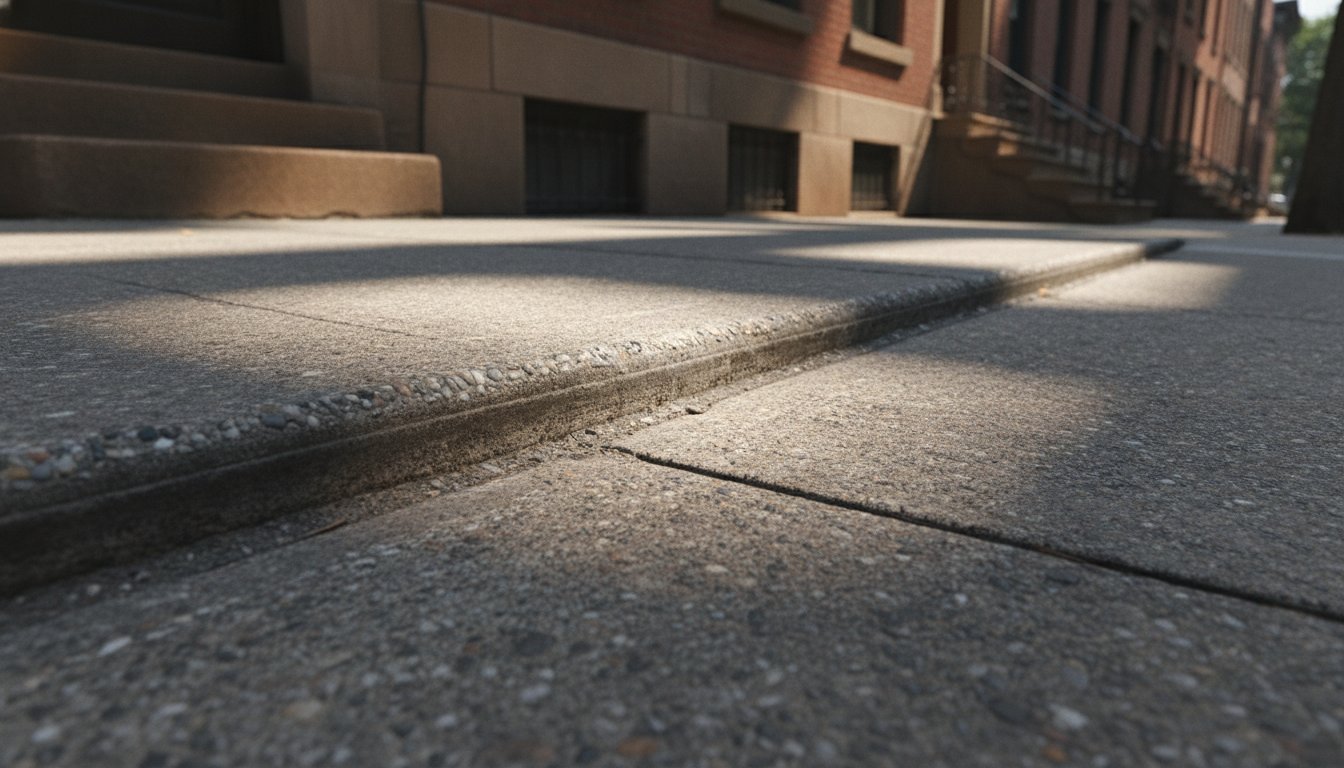
Could a single uneven concrete flag really lead to a $5,000 civil penalty or a high-interest lien against your New York City property? As a homeowner, you already know that maintaining your property is a full-time job, and the pressure of strict city enforcement only adds to the burden. Staying informed about nyc sidewalk repair regulations 2026 is the best way to protect your financial stability and ensure your walkway meets the latest safety standards. You deserve a clear path through the bureaucracy of Section 19-152 without the stress of “trip hazard” confusion or the threat of property tax surcharges.
This guide will show you how to handle the latest city requirements, avoid premium city-hired contractor rates, and successfully remove sidewalk violations. We detail the specific steps to meet the 4,500 PSI concrete standards and manage the 75-day DOT repair window effectively. By following a structured plan, you can maintain your property’s integrity and avoid the city’s high-cost repair crews. For professional assistance with your sidewalk project or violation removal, call Progressive Contracting NY Corp at 347-341-3808 or 718-350-7388. You can also reach our team at ProgressiveContractingNY@yahoo.com for expert guidance on your restoration needs.
New York City Sidewalk Responsibility: Section 19-152 and 2026 Updates
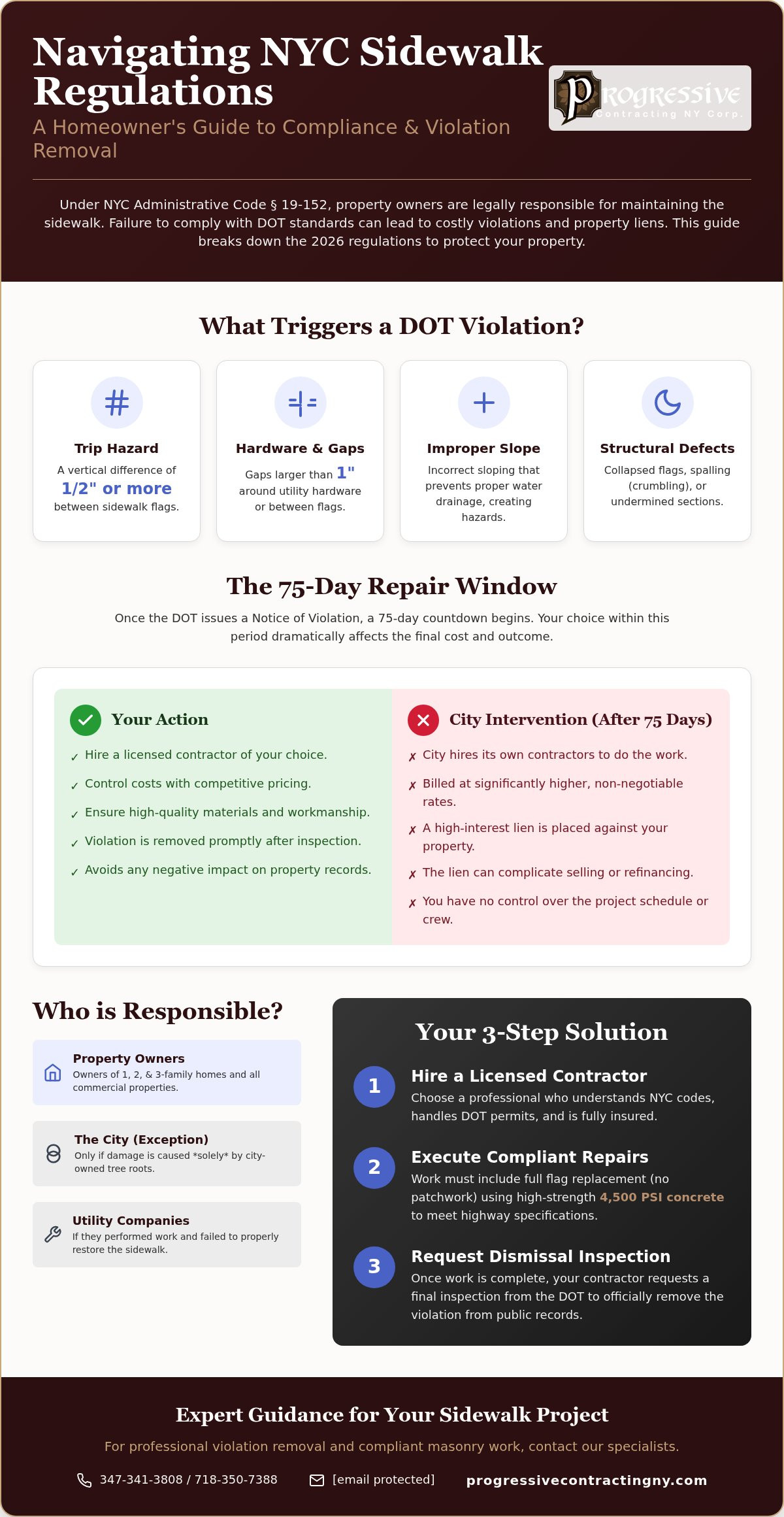
Under Section 19-152 of the NYC Administrative Code, the legal burden of sidewalk maintenance falls squarely on the property owner. While the history of sidewalks shows they are public thoroughfares, the city views them as an extension of your property responsibility. The nyc sidewalk repair regulations 2026 specify that the Department of Transportation (DOT) can issue a Notice of Violation if they identify specific defects during an inspection. This isn’t just a suggestion; it’s a legal mandate to keep the walkway safe for every pedestrian.
For 2026, the DOT defines a trip hazard as any vertical shift of 1/2 inch or more between concrete flags. They also look for gaps larger than 1 inch around utility hardware or between flags. If your sidewalk meets these criteria, you have a 75-day window to complete repairs before the city intervenes. The city’s “Get Sheds Down” initiative adds another layer of complexity. This program aims to remove long-standing scaffolding that blocks walkways. If your property has a sidewalk shed, you might face expedited repair timelines to ensure the structure can be safely dismantled.
Who is Actually Responsible for Your Sidewalk?
Owners of 1, 2, and 3-family residential properties are generally responsible for repairs. However, an exception exists if the damage is caused solely by city-owned tree roots. In these specific cases, the city may perform the work at no cost to you. Commercial owners and larger residential buildings don’t get this break. If a utility company dug up your sidewalk and didn’t restore it correctly, they are the ones on the hook for the fix. We can help you determine who is liable. Call us at 347-341-3808 or 718-350-7388 to discuss your specific situation.
The Hidden Cost of Ignoring a DOT Violation
Ignoring a notice is a gamble that usually ends in a higher bill. If you miss the 75-day deadline, the city hires its own contractors through the “repaired-by-default” program. These city-led projects often cost significantly more than hiring a private sidewalk repair specialist. Additionally, the city will place a lien on your property for the cost of the work. This lien remains on your record, making it difficult to sell or refinance your home until the debt is cleared. Following nyc sidewalk repair regulations 2026 is the only way to avoid these surcharges. For expert guidance, email us at ProgressiveContractingNY@yahoo.com.
Standard DOT Sidewalk Defects and the 75-Day Repair Window
The 75-day countdown begins the moment the DOT issues a Notice of Violation. This period is your window to control the costs and quality of the restoration. If the deadline passes, the city assumes control of the project. They hire their own crews and bill you at premium rates. Common defects that trigger these notices include collapsed flags, undermined conditions where the soil has washed away, and improper sloping that prevents correct drainage. Accurate identification of these issues is the first step toward compliance.
Patchwork repairs are a common mistake that leads to failed inspections. Smearing a thin layer of cement over a crack won’t satisfy NYC Sidewalk Responsibility standards. The DOT requires full flag replacement to ensure structural integrity. You must also navigate the permit landscape. A standard DOT permit for up to 300 linear feet costs $70. However, if your project involves a sidewalk shed, you must also comply with Department of Buildings (DOB) regulations. If you have questions about a specific defect on your property, reach out to our sidewalk repair specialists at 347-341-3808.
Identifying Trip Hazards Before the Inspector Arrives
Take a proactive approach by conducting a DIY inspection. Use a measuring tape to identify any vertical shifts larger than 1/2 inch between concrete flags. Check for gaps around utility covers or between slabs that exceed one inch. Look for spalling, which is the surface disintegration of the concrete. This crumbling often indicates deeper structural issues. If you notice similar decay on your building’s exterior, you can learn more about Brownstone Spalling Repair to prevent further damage.
Steps to Take After Receiving a Sidewalk Violation
- Hire a licensed NYC concrete contractor: We handle the paperwork and pull the necessary DOT permits for you. Call 718-350-7388 to start the process.
- Execute the repair: Use 4,500 PSI concrete to meet the standard highway specifications. This high-strength material is essential for nyc sidewalk repair regulations 2026.
- Request a dismissal inspection: Once the work is verified, the DOT removes the violation from the public record.
Managing these steps requires punctuality and transparency. Our team ensures that every flag meets the city’s meticulous standards. For a detailed consultation or to submit your violation notice for review, email us at ProgressiveContractingNY@yahoo.com.
Professional Sidewalk Violation Removal and Masonry Compliance
Historic neighborhoods like Park Slope and Bedford-Stuyvesant present unique challenges for property owners. In these areas, nyc sidewalk repair regulations 2026 require more than just pouring standard concrete. Many streets fall under specific aesthetic mandates that require specialized sidewalk tinting to match the aged appearance of the surrounding infrastructure. Progressive Contracting NY Corp understands how to bridge the gap between durable masonry and the strict visual standards of Brooklyn’s historic corridors. Our team manages the transition from facade restoration to walkway compliance, ensuring your entire property frontage remains cohesive and legally sound.
Hiring a contractor who understands both modern concrete requirements and traditional masonry is essential. While a general laborer might offer a lower initial price, they often lack the experience to handle the administrative side of violation dismissal. If the tinting is off or the expansion joints aren’t placed correctly, the city may refuse to sign off on the work. You can find detailed information on budgeting for these projects in our guide to the Cost of Sidewalk Violation Removal NYC.
Historic District Requirements (LPC Compliance)
If your property is within a landmarked district, you must navigate Landmarks Preservation Commission (LPC) rules before beginning any sidewalk replacement. These regulations often dictate the color, texture, and finish of the concrete flags. We specialize in matching the aesthetic of historic brownstone stoops and building facades during our sidewalk projects. Maintaining this visual harmony is vital for preserving property value and avoiding additional fines. For those currently restoring their entrance, our guide on Brownstone Stoop Restoration Brooklyn offers deep insights into historic masonry standards.
Contacting an Expert for Sidewalk Repair in Brooklyn and Manhattan
Managing nyc sidewalk repair regulations 2026 doesn’t have to be a source of stress. Progressive Contracting NY Corp provides the local expertise needed to handle every step of the process, from pulling permits to the final inspection. You can find Official NYC Sidewalk Repair Information through city portals, but we provide the hands-on labor and technical knowledge to get the job done right. We offer a steady hand and clear communication throughout your project’s lifecycle.
Contact Progressive Contracting NY Corp today for a consultation on your sidewalk violation or masonry needs. You can reach our team directly at 347-341-3808 or 718-350-7388. For a detailed review of your violation notice, email us at ProgressiveContractingNY@yahoo.com. Let us help you protect your investment with professional sidewalk repair and restoration services.
Secure Your Property Value Through Proactive Sidewalk Compliance
Ensuring your walkway remains in top condition is a critical part of property management in New York City. The nyc sidewalk repair regulations 2026 emphasize that property owners must act decisively to avoid city-led repairs and the resulting financial burdens. By prioritizing high-quality materials and regulatory adherence, you protect your investment from liens and safety liabilities. This proactive approach turns a potential legal headache into a long-term asset for your home.
Progressive Contracting NY Corp offers more than a decade of specialized experience in navigating the complexities of DOT and LPC requirements. We handle the technical masonry work and the administrative follow-through needed to clear your record efficiently. For a professional review of your sidewalk status or to discuss a violation notice, call us at 347-341-3808 or 718-350-7388. You can also reach our experts at ProgressiveContractingNY@yahoo.com for reliable guidance on your project.
Taking the right steps today ensures your property stays safe and compliant for years to come. We are ready to provide the dependable partnership and skilled craftsmanship your home requires.
Frequently Asked Questions
What is Section 19-152 of the New York City Administrative Code?
Section 19-152 is the specific law that makes property owners legally responsible for the maintenance and repair of the sidewalks adjacent to their lots. This mandate requires owners to keep the walkway in a reasonably safe condition at all times. If an inspection reveals defects like trip hazards or collapsed flags, the city will issue a formal notice requiring the owner to take action.
How long do I have to fix a sidewalk violation in NYC?
You have 75 days from the date the Notice of Violation is issued to complete the required repairs. If you miss this deadline, the city may hire its own contractor to perform the work at a much higher rate than private masonry specialists. The city then bills the property owner for the full amount, which can result in a lien if the payment isn’t settled promptly.
Can I repair my own sidewalk in NYC?
No, homeowners aren’t permitted to perform their own sidewalk concrete work because it requires a licensed and insured contractor to pull the necessary permits. All repairs must meet the DOT Standard Highway Specifications, including the use of 4,500 PSI concrete. Following nyc sidewalk repair regulations 2026 ensures your project passes the final dismissal inspection and removes the violation from your property record.
What happens if a city tree breaks my sidewalk?
An exception to the owner’s responsibility exists for 1, 2, or 3-family homes where the damage is caused exclusively by city-owned tree roots. In these instances, the city may perform the repairs at no cost to the homeowner through the Trees and Sidewalks program. You should contact 311 to request a specialized inspection to determine if your property qualifies for this city-funded repair.
How do I check if my property has a sidewalk violation?
You can check for active sidewalk violations by using the NYC Department of Transportation’s online search portal or by calling 311. It’s a vital step to take before selling or refinancing a home, as an open violation can delay the process. If you find a notice and need an expert review, you can email us at ProgressiveContractingNY@yahoo.com for guidance on the next steps.
Do I need a permit for sidewalk repair in NYC?
Yes, a DOT Sidewalk Construction Permit is mandatory for any repair or replacement of a sidewalk flag. This permit must be obtained by a licensed contractor before the work begins to ensure the project is tracked and inspected by the city. To start your repair and handle the permit paperwork, call us at 347-341-3808 or 718-350-7388 for professional assistance.