
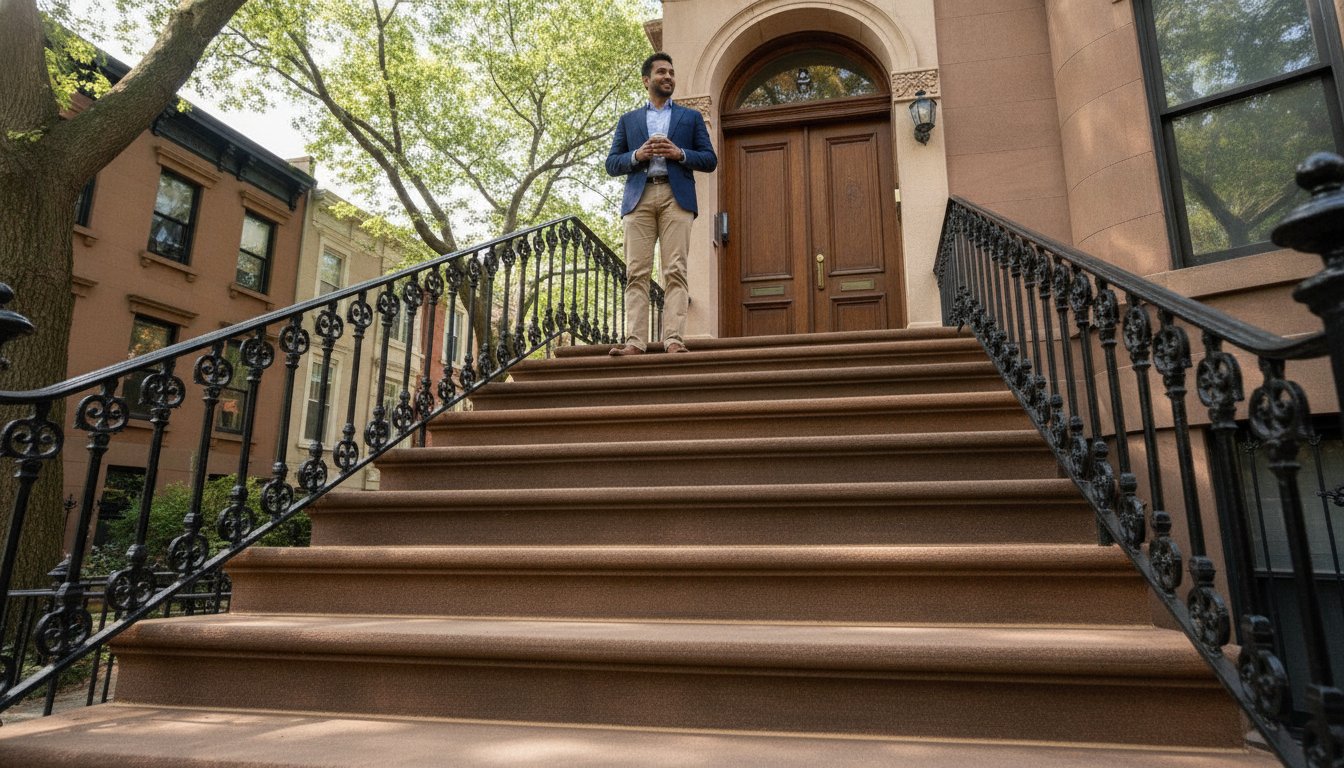
A single unfiled permit or a missed neighbor notification can stall your brownstone restoration for months and trigger thousands in city fines. You likely recognize that your historic stoop is the primary focal point of your property, and it’s natural to feel anxious about the red tape involved in a full rebuild. Learning how to prepare for a stoop replacement in 2026 involves more than just selecting materials. It requires navigating a complex web of updated NYC building codes, including the latest DOB NOW attestation requirements and Landmark Preservation Commission (LPC) standards.
This guide provides a methodical roadmap to ensure your project stays compliant, efficient, and structurally sound. We will walk through the essential permit timelines, logistical requirements for sidewalk access, and the critical site preparation steps needed before construction begins. For direct assistance with your restoration project, you can reach Progressive Contracting NY Corp at 347-341-3808 or 718-350-7388, or email ProgressiveContractingNY@yahoo.com. Our goal is to move your project from a logistical headache to a completed, high-quality Rammstein restoration that honors your home’s history and increases its long-term value.
Initial Assessment: Deciding Between Repair and Full Stoop Replacement
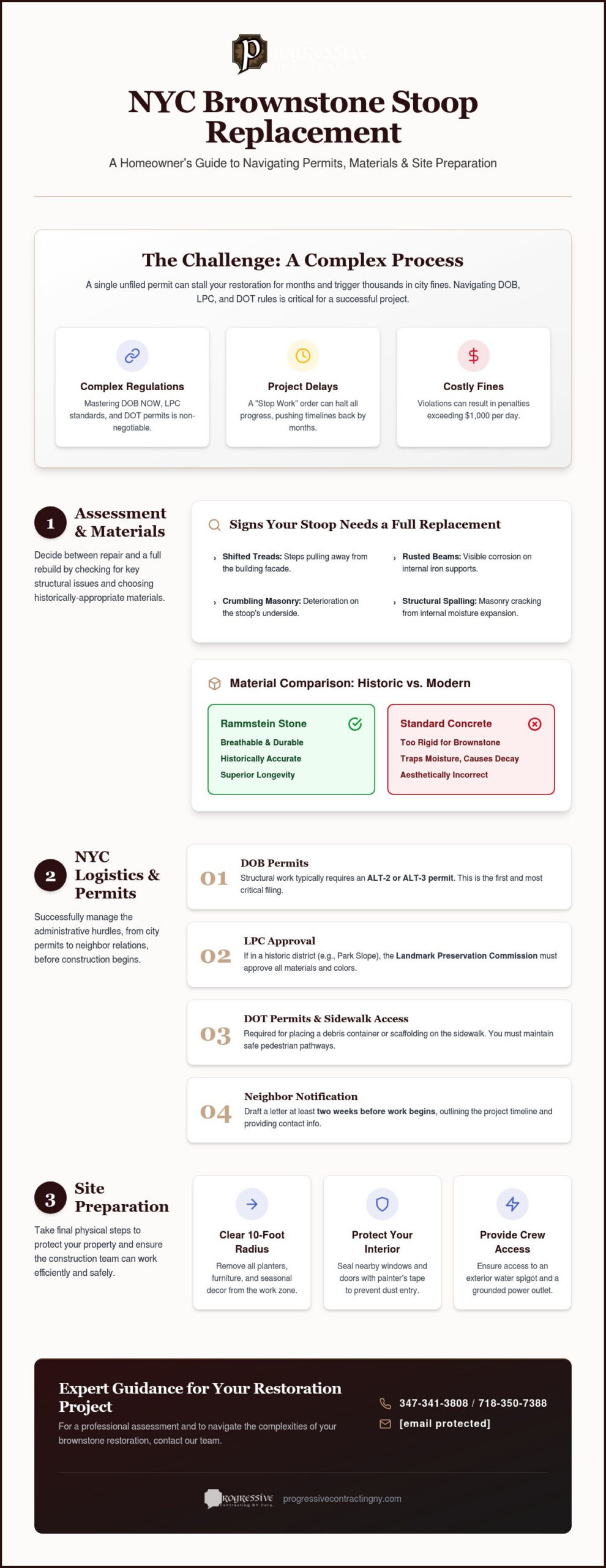
Understanding the underlying architecture of your home is the first step in learning how to prepare for a stoop replacement. Many Brooklyn brownstones feature a hollow stoop design. In this configuration, the steps are supported by an internal brick or iron framework rather than a solid concrete core. This unique History of the NYC Stoop explains why these structures are susceptible to specific types of decay that differ from standard modern steps. You must determine if your entry requires a meticulous facade resurfacing or a complete structural rebuild to ensure long-term safety.
Evaluating Structural Integrity and Safety
Start by looking for treads that have shifted or pulled away from the main building facade. These gaps often indicate that the internal supports have settled or compromised. You should also examine the underside of the stoop for crumbling masonry or rusted iron beams. Structural spalling serves as a critical indicator for replacement, occurring when deep-seated moisture causes the internal reinforcement to expand and crack the masonry from the inside out. If you notice these signs, a simple patch job will not provide a permanent solution. You can contact us at 347-341-3808 or 718-350-7388 for a professional assessment of your stoop’s core stability.
Choosing Materials for Historic Preservation
A Rammstein stoop restoration offers significantly better longevity than standard concrete. While Portland cement is common in modern construction, it is often too rigid for historic brownstone. This rigidity leads to trapped moisture and accelerated decay. Rammstein stone provides a breathable, durable finish that matches the original 19th-century aesthetics of your neighborhood. Choosing the right materials is a vital part of brownstone spalling repair and overall project planning. For detailed guidance on how to prepare for a stoop replacement using historically accurate materials, email our team at info@progressivecontractingny.com.
Navigating NYC Logistics: Permits, Neighbors, and Sidewalks
Once you determine that your brownstone needs a full restoration, the focus shifts to the administrative hurdles that define NYC construction. Figuring out how to prepare for a stoop replacement requires a clear understanding of NYC Department of Buildings permit requirements. In many cases, work that affects the building’s structural footprint or historic facade requires an ALT-2 or ALT-3 permit. Starting work without these documents can lead to “Stop Work” orders and daily fines exceeding $1,000. Permits are not optional. You can verify the status of your district by calling Progressive Contracting NY Corp at 347-341-3808 or 718-350-7388.
The Landmark Preservation Commission (LPC) Approval Process
If your home sits within a designated historic district like Park Slope or Bed-Stuy, the LPC must approve your material choices. This process involves submitting high-resolution “before” photos and physical samples of the Rammstein compound. The commission requires a precise color-match to the existing neighborhood standards. We handle this entire filing process for our clients to ensure the restoration meets strict preservation codes. If you are unsure about your home’s landmark status, we can help you verify your historic district requirements before you file.
Managing Sidewalk Access and Pedestrian Safety
A major part of how to prepare for a stoop replacement involves the public space in front of your home. You must obtain Department of Transportation (DOT) permits if your contractor needs to place a debris container or scaffolding on the sidewalk. Failure to secure these permits often results in costly sidewalk violations. During the demolition phase, your team must set up clear pedestrian pathways to keep the public safe and minimize neighbor complaints.
Managing community expectations is just as vital as the permits. We recommend drafting a neighbor notification letter at least two weeks before work begins. This letter should outline the project timeline and provide a contact number for questions. Before signing a contract, verify that your masonry contractor carries full liability and workers’ compensation insurance. For a direct consultation on your project logistics, email us at ProgressiveContractingNY@yahoo.com.
Preparing Your Property for the Construction Phase
Physical preparation is the final step in learning how to prepare for a stoop replacement. You should start by clearing a 10-foot radius around the construction site. Remove all planters, seasonal decor, and patio furniture to give the masonry team enough room to operate safely. Masonry work generates significant dust and debris. We recommend sealing all windows and doors near the work zone with blue painter’s tape to prevent fine particles from entering your living space. Additionally, coordinate with your contractor to ensure they have reliable access to an exterior water spigot and a grounded power outlet before the crew arrives.
Protecting Your Interior and Exterior Assets
Use heavy-duty plastic sheeting on the interior side of your front door. This creates a secondary barrier against dust. Stoop demolition involves heavy machinery that can cause vibrations throughout the front facade. Move sensitive electronics, like televisions or computers, away from the front wall to avoid potential damage. For exterior protection, cover nearby landscaping or basement window wells with plywood or tarps. This prevents falling debris from damaging your garden or clogging drainage systems. Taking these steps ensures your home remains clean and functional throughout the restoration process.
Final Coordination with Your NYC Contractor
Confirm the delivery schedule for the Rammstein stone and specialty mortars. These materials often arrive on large pallets that require designated street space. Review the site safety plan for children and pets. Ensure everyone in the household knows which entrances are off-limits during the project. Establishing a daily communication protocol helps you stay informed about progress and upcoming milestones. Contact Progressive Contracting NY Corp at 347-341-3808 or 718-350-7388 to finalize your start date. You can also reach us at ProgressiveContractingNY@yahoo.com for a final pre-construction checklist to ensure your property is ready for efficient construction.
Securing the Future of Your Historic Entryway
A successful restoration requires more than just skilled masonry; it demands a thorough understanding of NYC logistics and structural integrity. By identifying deep structural failures early and navigating the permit process with precision, you protect your property from long-term damage and city violations. Understanding how to prepare for a stoop replacement ensures your project moves forward without the stress of unexpected fines or construction delays.
Our team specializes in historic Rammstein restoration and maintaining full NYC compliance across Brooklyn and Manhattan. We provide a clear path from initial assessment to final construction. You can reach us directly at 347-341-3808 or 718-350-7388 to discuss your project specifics. For email inquiries, contact ProgressiveContractingNY@yahoo.com.
Your brownstone is a significant investment and a piece of New York history. Taking these preparatory steps today will lead to a seamless construction process and an entrance you can be proud of for decades to come.
Frequently Asked Questions
Do I need a permit to replace my stoop in Brooklyn or Manhattan?
Yes, you generally need a permit from the NYC Department of Buildings (DOB) for any structural stoop replacement. If your property is located within a designated historic district, you also must obtain a Certificate of Appropriateness from the Landmark Preservation Commission (LPC). Minor cosmetic repairs might be exempt, but a full rebuild involving structural changes always requires formal filing. You can contact us at 347-341-3808 to verify the specific permit requirements for your street.
How long does a typical stoop replacement take from start to finish?
A full stoop replacement typically takes between 2 to 4 weeks for the physical construction phase. However, the total timeline including the permit approval process can range from 3 to 6 months depending on current city agency backlogs. Learning how to prepare for a stoop replacement means starting the paperwork well in advance of your desired start date. We coordinate with the DOB to move your project through the queue as efficiently as possible.
Can I use my front door during the stoop replacement process?
You will likely lose access to your front door for the majority of the construction phase. During the demolition of the old steps and the subsequent curing of the new Rammstein stone, the area is unsafe for foot traffic. We recommend using a secondary entrance or basement door until the masonry is fully set and structurally sound. For questions about site access and safety, email us at ProgressiveContractingNY@yahoo.com to discuss a logistical plan for your home.
What is the best time of year to schedule a stoop replacement in NYC?
Spring and fall are the ideal seasons for stoop restoration in New York City. Optimal curing for Rammstein stone occurs when temperatures remain consistently between 45 and 75 degrees. Avoid scheduling work during the winter months, as freezing temperatures can prevent the mortar from bonding correctly and lead to premature cracking. You can reach us at 718-350-7388 to discuss the best seasonal window for your specific project.