
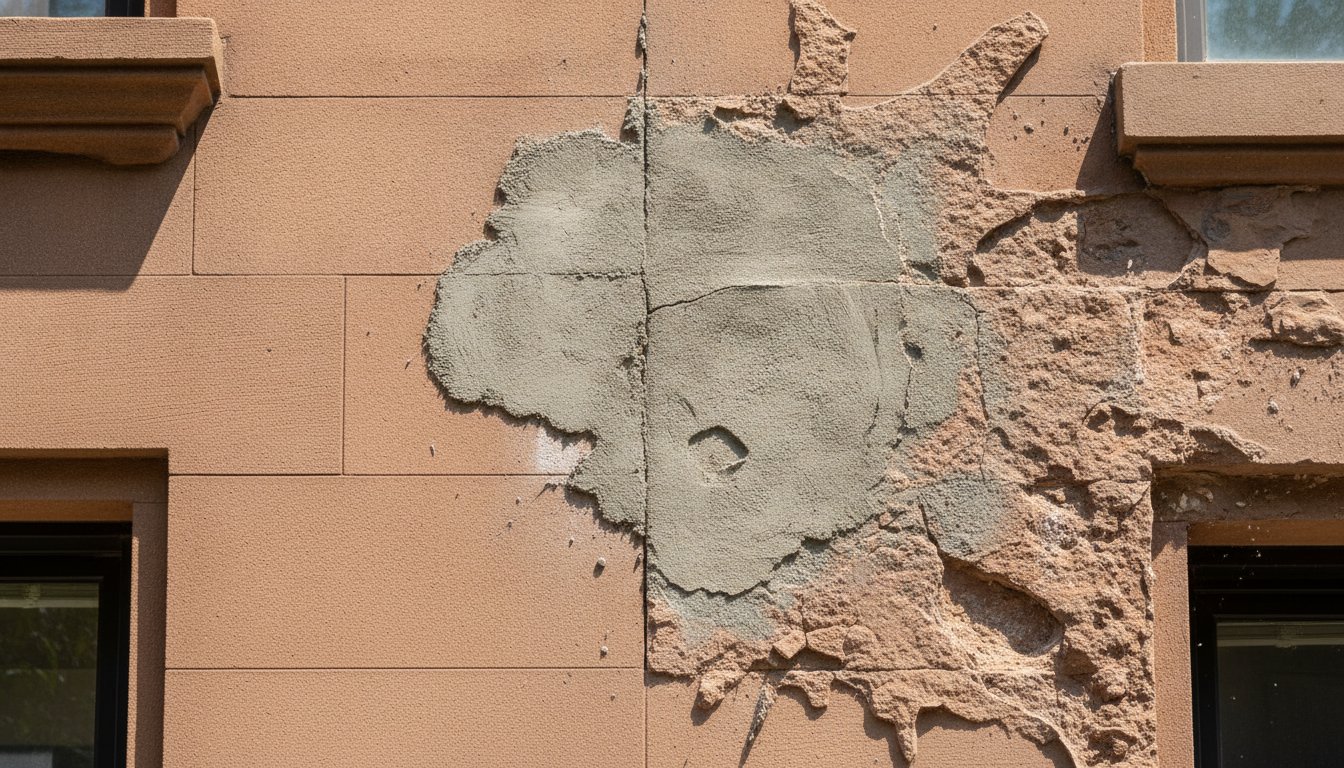
What if the “affordable” patch job on your facade is actually a slow-motion demolition of your property’s structural integrity? Many NYC homeowners realize too late that the consequences of improper brownstone repair extend far beyond a mismatched color or a messy finish. When a contractor uses modern, non-breathable materials like Portland cement to fix a historic facade, they aren’t just making a cosmetic error; they are trapping moisture inside the stone and causing it to “suffocate.” This process leads to rapid spalling and internal decay that eventually requires a total, and far more expensive, restoration.
You likely invested in a Brooklyn or Manhattan brownstone because you value its legacy and character. It is stressful to see flaking stone or receive a “Notice of Violation” from the Landmarks Preservation Commission, especially when you thought the work was handled correctly. This article explains how incorrect materials and “quick-fix” methods lead to permanent damage and massive costs. We will examine the physics of masonry decay, the reality of 2026 LPC fines that can reach $5,000 for architectural alterations, and the specific steps you must take to maintain your property’s value and historic compliance.
The Science of Failure: Why Incompatible Materials Destroy Brownstone
Brownstone is a porous arkose sandstone. To understand what brownstone is, you must view it as a living material that interacts with its environment. It requires constant vapor exchange, or “breathing,” to remain stable over decades. One of the most severe consequences of improper brownstone repair is the disruption of this natural process. When the stone cannot shed moisture, the structural bond begins to dissolve.
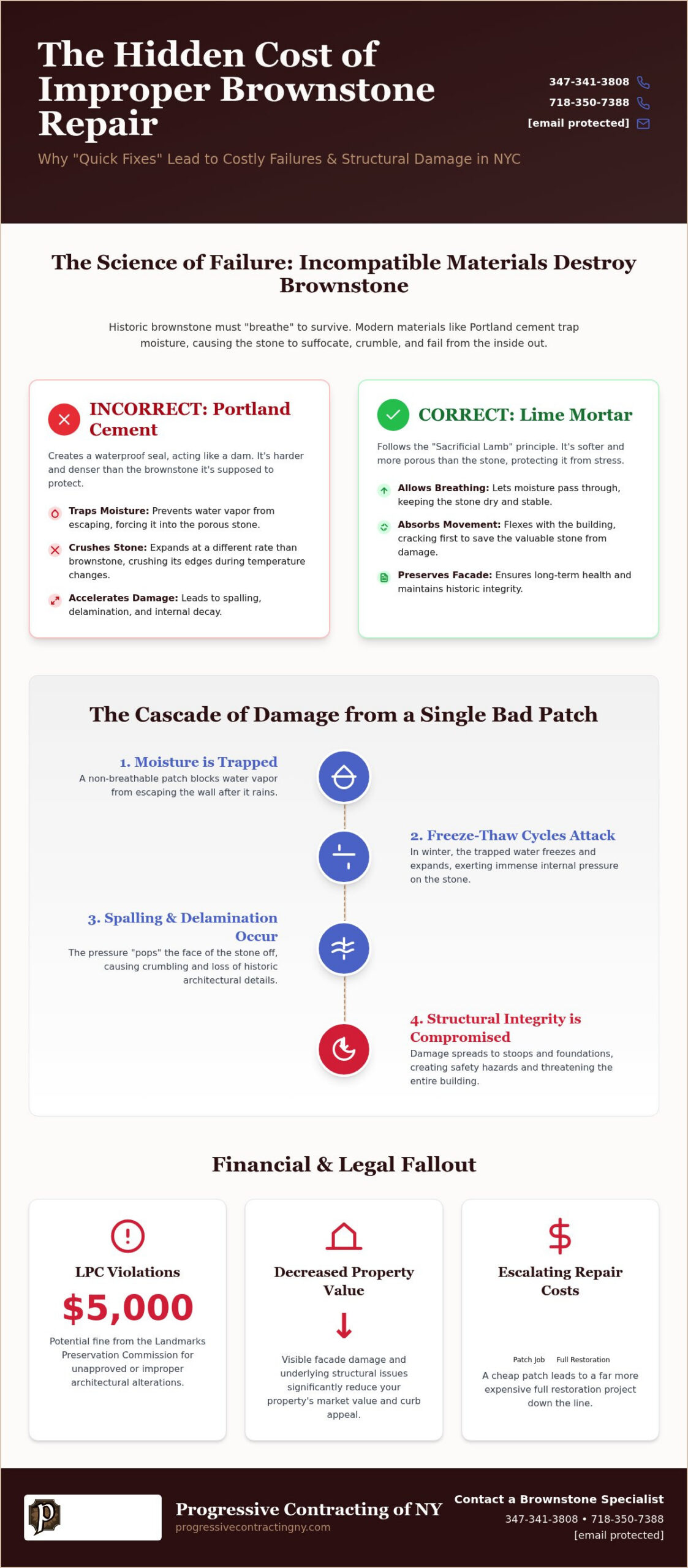
Historic masonry relies on the “Sacrificial Lamb” principle. This rule dictates that the mortar used in the joints must always be softer and more permeable than the stone itself. If the building shifts or moisture enters the wall, the mortar should crack or erode first. This protects the valuable stone from taking the brunt of the stress. When this balance is ignored, the stone begins to fail from the inside out. Physical pressure builds up behind the surface, leading to irreversible damage.
The Portland Cement Trap: How Modern Mortar Crushes Soft Stone
Standard Portland cement is the primary culprit in failed NYC restorations. It is far too hard for historic brownstone facades. Because it is non-porous, it creates a waterproof seal over the joints. This prevents moisture from escaping through the mortar. Instead, water is forced into the sandstone, leading to internal rot and accelerating the need for brownstone spalling repair. The stone and cement also expand at different rates. As the sun heats the facade, the rigid cement stays still while the stone tries to move; this physical conflict literally crushes the edges of the brownstone.
Freeze-Thaw Cycles in the NYC Climate
The NYC climate presents a unique challenge for masonry. Trapped water is a liability during Brooklyn and Manhattan winters. When temperatures drop, the moisture inside the stone expands. If a hard patch or improper mortar blocks its exit, the resulting pressure causes the face of the stone to “pop” or delaminate. Observations of 2026 winter weather patterns show an increase in rapid temperature swings. These “flash-freeze” events are particularly destructive to facades already compromised by poor repair choices. The stone simply cannot withstand the internal hydraulic pressure.
Immediate and Long-Term Consequences of “Quick-Fix” Patching
Identifying a failing repair starts with a simple visual inspection. You’ll often see hairline cracks appearing exactly where the new patch meets the original stone. This separation happens because the repair material didn’t bond correctly or is moving at a different rate than the sandstone. If you tap on these areas and hear a hollow thud, it indicates that the stone has already detached from the substrate. These are the early consequences of improper brownstone repair that many owners overlook until the damage becomes visible from the sidewalk.
The danger moves beyond aesthetics when these loose sections become a liability. NYC property owners are responsible for the safety of the public walkway. A single piece of falling masonry can lead to severe legal issues and hefty fines. Following the Standards for Restoration ensures that repairs are physically integrated into the building rather than just sitting on the surface. When a patch fails, it also creates a pocket where water collects. This trapped moisture eventually finds its way into your home’s interior, causing plaster damage and mold growth that is difficult to remediate.
Spalling and Delamination: When Your Facade Starts to Shed
Spalling is the flaking or crumbling of the stone surface. It occurs when moisture is trapped behind a hard, non-breathable layer. Improper brick pointing nyc accelerates this by sealing the joints with cement that forces water into the stone faces. Over time, you’ll lose historic details like the sharp edges of cornices and the delicate molding of window lintels. Once these features erode, they are much harder and more expensive to recreate.
Structural Risks: From Stoop Cracks to Foundation Issues
Stoops are particularly vulnerable to poor craftsmanship. A failed brownstone stoop restoration brooklyn often allows water to seep into the internal structure. Most historic stoops are built over ironwork or rubble cores. When water enters through cracks in the stone, it rots the metal supports and weakens the entire entrance. A bad facade repair can also mask deeper masonry issues, hiding structural cracks until they become a major safety hazard. If you notice these signs, it’s best to consult a brownstone specialist before the damage spreads.
Financial and Legal Fallout: LPC Violations and Property Value
The NYC Landmarks Preservation Commission (LPC) maintains strict oversight of historic districts like Park Slope and Bedford-Stuyvesant. If you own a landmarked property, any exterior work visible from the street must be approved through the Portico online portal. One of the most immediate consequences of improper brownstone repair is the issuance of a Type A violation. As of 2026, a first-time Type A violation for unauthorized alterations to architectural elements can result in a fine of up to $5,000. If the issue is not corrected, daily penalties can reach $250, creating a significant financial burden for the homeowner.
Beyond fines, improper repairs create a “Double Cost” scenario. If a contractor uses unapproved materials or methods, the LPC can issue a stop-work order and legally require you to undo the work. You will have to pay a second contractor to carefully remove the hard cement or incorrect patches and then pay again for a historically compliant restoration. This botched work also acts as a major red flag during the sales process. Unresolved violations are public record and can prevent you from refinancing or closing a sale, as they signal potential structural neglect to buyers and lenders.
The True Cost of Cheap Masonry: A 2026 Perspective
A “patch job” might seem cost-effective today, but these repairs frequently fail within 24 months. When a cheap fix traps moisture, it accelerates stone decay, turning a minor surface issue into a major structural problem. Investing in a historic brownstone renovation brooklyn ensures the use of breathable, lime-based mortars that protect the stone for decades. The most expensive repair is the one you have to do twice. Choosing quality craftsmanship the first time preserves your property’s equity and prevents the need for emergency interventions later.
Protecting Your Investment with Expert Restoration
Homeowners should always vet contractors for their specific knowledge of natural hydraulic lime (NHL) mortars and NYC “in-kind” replacement rules. Progressive Contracting NY Corp specializes in navigating these complex requirements to keep your property compliant and beautiful. If you are concerned about the state of your facade or have received an LPC notice, we can provide a professional assessment. Call us at 347-341-3808 or 718-350-7388 to discuss your project. You can also email ProgressiveContractingNY@yahoo.com for a detailed consultation on your restoration needs.
Securing Your Property’s Structural Legacy
Owning a historic home in Brooklyn or Manhattan is a significant responsibility. The consequences of improper brownstone repair are often hidden until they become a structural or financial crisis. By choosing compatible materials and respecting LPC standards, you protect your building from internal decay and avoid the “double cost” of fixing a contractor’s mistakes. A disciplined approach to restoration is the only way to preserve your property’s value and architectural integrity.
Progressive Contracting NY Corp provides reliable, family-owned expertise with over a decade of experience in NYC historic districts. We act as a steady partner, helping you navigate complex masonry challenges with transparency and precision. Our team is committed to maintaining the character of our local communities through master-level craftsmanship and LPC-compliant methods. We prioritize the long-term health of your facade over temporary fixes.
Protect your home’s legacy. Contact Progressive Contracting NY Corp for a professional brownstone evaluation or call us at 347-341-3808.
Your brownstone is a tangible asset and a piece of New York’s history. Taking the right steps today provides peace of mind and ensures your home remains a stable investment for decades to come.
Frequently Asked Questions
Can I use standard cement for brownstone repair?
No, you should never use standard Portland cement for brownstone restoration. This material is too rigid and non-porous for soft sandstone, creating a waterproof seal that prevents necessary vapor exchange. Using the wrong binder is one of the primary consequences of improper brownstone repair, as it leads to internal pressure and accelerated decay of the historic stone.
What are the first signs that my brownstone repair was done incorrectly?
The first signs of a failed repair include hairline cracks around the perimeter of new patches and a hollow sound when the stone is tapped. You may also notice the “face” of the stone beginning to flake off or delaminate from the wall. These symptoms indicate that the repair material has detached from the original substrate or is trapping moisture behind the surface.
Are there legal consequences for improper facade work in NYC?
Yes, the Landmarks Preservation Commission issues severe legal penalties for unauthorized or improper work in historic districts. As of 2026, a Type A violation for architectural alterations can result in a fine of up to $5,000 for a first-time offense. Owners may also face daily fines of $250 and criminal penalties ranging from $500 to $15,000 per day for landmark law violations.
Why is my brownstone facade crumbling after it was just repointed?
Your facade is likely crumbling because the new mortar is harder than the brownstone itself. When moisture enters the wall, it cannot escape through hard cement joints. Instead, the water is forced into the stone, causing it to freeze, expand, and eventually pop the face of the masonry. Proper restoration requires mortar that is softer and more breathable than the stone it holds.
How long should a proper brownstone restoration last?
A professionally executed brownstone restoration using lime-based mortars can last 30 to 50 years. In contrast, “quick-fix” patch jobs using incompatible materials often fail within 24 months. Investing in traditional methods ensures the stone remains breathable and structurally sound, which prevents the need for a secondary, more expensive repair shortly after the first one is completed.
Does the LPC require specific mortar types for historic districts?
Yes, the LPC requires “in-kind” replacement of historic materials for buildings six stories and below. This typically involves using natural hydraulic lime (NHL) mortar, specifically NHL 3.5, for repointing work. All permit applications for these repairs must now be submitted through the online Portico portal, as paper and email submissions are no longer accepted as of the 2025 guidelines.