
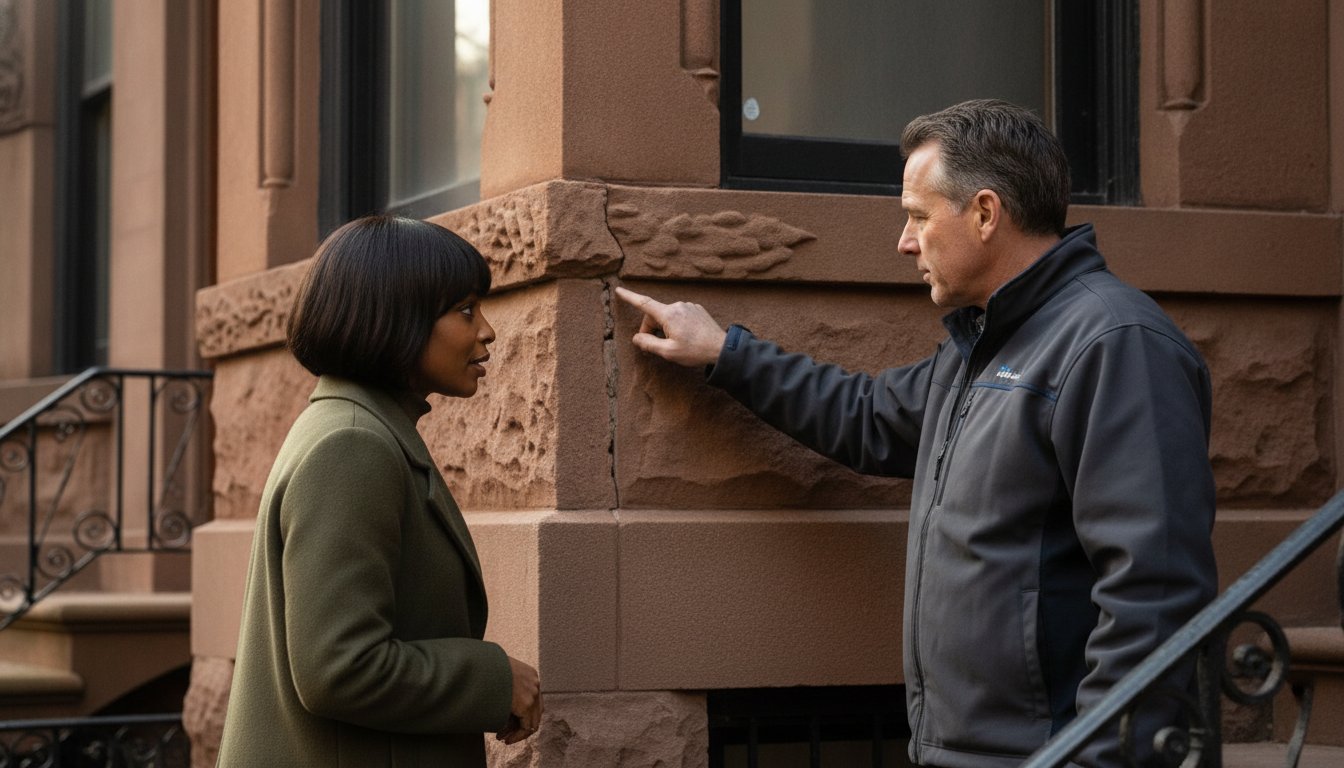
Imagine walking down your stoop on a crisp November morning only to find “confetti” flakes of stone scattered across the sidewalk. This isn’t just a cosmetic nuisance; it’s the first sign that NYC’s brutal freeze-thaw cycle is beginning to compromise your home’s structural integrity. Successfully winterizing your brownstone facade requires more than just a quick visual check. It involves a systematic approach to managing moisture before it expands and causes permanent damage to the masonry.
We understand the anxiety that comes with seeing your historic investment literally crumble, especially as restoration labor and material costs have risen significantly. You deserve a clear strategy that balances high standards with practical maintenance. This 2026 checklist provides a professional-grade plan to prevent spalling, protect your stoop from salt damage, and identify when a crack requires an emergency intervention. If you need a reliable partner to assess your property, Progressive Contracting of NY is available at 347-341-3808 or 718-350-7388. You can also reach us at ProgressiveContractingNY@yahoo.com to discuss your restoration needs and ensure your home is prepared for the season.
The Science of the Freeze-Thaw Cycle: Why Winter Destroys Brownstone
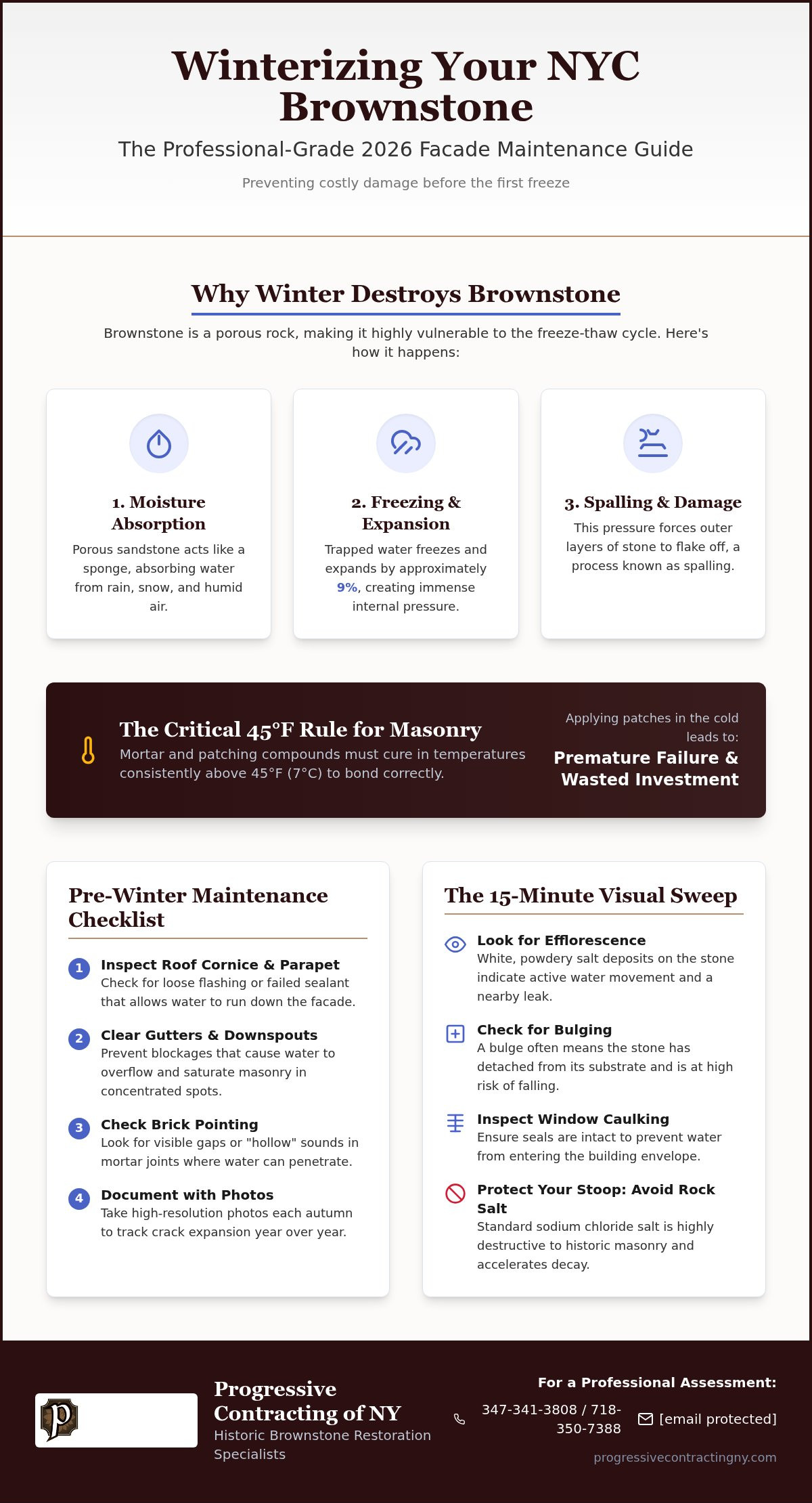
Brownstone is a sedimentary rock, specifically a porous sandstone, which means it naturally absorbs moisture from NYC’s humid winter air. When temperatures drop, the water trapped within the stone’s layers freezes and expands by approximately 9%. This physical change generates thousands of pounds of internal pressure. Understanding the science of the freeze-thaw cycle is essential for any homeowner concerned with winterizing your brownstone facade. Without a professional-grade strategy, this pressure forces the outer layers of stone to separate from the core. Spalling is the progressive flaking of stone caused by trapped moisture and freezing temperatures.
This mechanical stress is the primary driver behind brownstone spalling repair projects. Many owners attempt quick DIY fixes in December, but masonry has physical limits. The “45-degree rule” dictates that mortar and patching compounds must cure in temperatures consistently above 45 degrees Fahrenheit. If you apply a patch during a cold snap without climate-controlled scaffolding, the material will likely freeze before the chemical bond stabilizes. This leads to premature failure and wasted investment. A proactive approach to winterizing your brownstone facade prevents small cracks from becoming structural emergencies.
Identifying Vulnerable Entry Points
Water doesn’t just enter through the stone’s pores; it exploits existing structural weaknesses. Hairline cracks in an old “scratch coat” provide direct pathways for water to reach deep behind the facade. Deteriorated mortar joints also act as funnels rather than waterproof seals. Additionally, you should check your window lintels and sills. These elements are designed to shed water away from the building. If they’re cracked or improperly pitched, they allow water to pool against the soft stone, accelerating decay.
If you notice “confetti” flakes on your sidewalk, it’s time for a professional assessment. Progressive Contracting of NY specializes in historic brownstone restoration and can help you secure your property before the next freeze. Contact us at 347-341-3808 or 718-350-7388, or email ProgressiveContractingNY@yahoo.com to discuss your facade’s needs. We provide the steady hand and technical expertise required to protect your historic investment through the harshest NYC winters.
The Ultimate 2026 Pre-Winter Brownstone Maintenance Checklist
Preparing your property before the first hard frost is the most effective way of winterizing your brownstone facade. Small issues in autumn often become expensive structural emergencies in January. By following a methodical inspection routine, you can identify moisture risks before they lead to the “confetti” stone flaking that plagues many historic NYC homes. This checklist focuses on the critical areas where water management fails.
- Inspect the roof cornice and parapet: These elements act as your building’s primary umbrella. If the flashing is loose or the sealant has failed, water will cascade directly down the face of the stone. This concentrated runoff accelerates the freeze-thaw damage discussed earlier.
- Clear gutters and downspouts: Blocked drainage is the leading cause of concentrated water damage on historic facades. When water overflows, it saturates the masonry in specific spots, creating deep-seated moisture pockets that are impossible to dry out in winter.
- Check the brick pointing: Examine the mortar joints for a “hollow” sound when tapped or visible gaps between the masonry units. Gaps allow water to sit behind the brick or stone, which is disastrous during a sudden freeze.
- Document with photos: Take high-resolution photos of your facade each autumn. Compare these to previous years to track if hairline cracks are expanding or if new areas of concern have appeared. This record is invaluable for planning future restoration phases.
The 15-Minute Exterior Walk-Around
A quick visual sweep can reveal hidden dangers. Look for “efflorescence,” which appears as a white, powdery salt deposit on the stone. This indicates active water movement through the masonry and suggests a leak nearby. You should also check for any bulging in the brownstone surface. A bulge often means the stone has already detached from the substrate and is at high risk of falling. Finally, ensure all window caulking is intact. Flexible seals prevent water from entering the building envelope where it can cause hidden rot and interior damage.
Progressive Contracting of NY provides meticulous brownstone facade restoration services across Brooklyn and Manhattan. For a professional assessment to ensure your home is ready for the 2026 winter season, call us at 347-341-3808 or 718-350-7388. You can also reach our team at ProgressiveContractingNY@yahoo.com to discuss your specific maintenance needs.
Protecting Your Stoop and Sidewalk from Winter Hazards
The stoop and sidewalk are the most high-traffic areas of your property, making them especially vulnerable to winter damage. While it’s tempting to reach for a bag of standard rock salt after a storm, sodium chloride is highly destructive to historic masonry. It triggers a chemical reaction that breaks down the cementitious bond within the stone, leading to rapid crumbling and surface erosion. This chemical breakdown is a critical factor to consider when winterizing your brownstone facade, as once the surface integrity is lost, moisture penetration becomes much harder to control.
For safe traction, use sand or birdseed. These materials provide grip on icy surfaces without causing chemical damage to the stone. If a de-icing agent is absolutely necessary, choose Calcium Magnesium Acetate (CMA). It’s significantly less corrosive to masonry than traditional salts and safer for the surrounding environment. If your property currently requires Rammstein stoop restoration, ensure all structural repairs are completed and fully cured before the first freeze. Sidewalk salt not only damages the stone but can lead to sidewalk violations if the concrete begins to pit and crack.
Pre-Winter Stoop Sealing
Applying a breathable masonry sealer is an essential defensive step. A breathable product allows internal moisture to escape while preventing external water from soaking deep into the stone’s pores. Before the temperature drops consistently below 45 degrees, clean the stoop thoroughly with a soft-bristle brush. Removing dirt and organic growth ensures the sealer bonds correctly to the surface, providing a robust barrier against the coming freeze-thaw cycles.
Contact a Brownstone Specialist Today
Early intervention is the best way to avoid the “emergency” premium of mid-winter repairs. A professional evaluation can identify “red flag” issues like shifting lintels or failing mortar before they escalate into structural failures. Progressive Contracting of NY offers the disciplined expertise required for effective winterizing your brownstone facade. Reach out to our team at 347-341-3808 or 718-350-7388 to schedule a site visit. You can also send email inquiries to ProgressiveContractingNY@yahoo.com for a detailed estimate and a clear path toward protecting your historic investment.
Securing Your Historic Investment for the 2026 Winter Season
Securing your historic investment requires a proactive stance against the elements. Successful winterizing your brownstone facade is ultimately a matter of moisture management and technical precision. Addressing hairline cracks or repairing deteriorated brick pointing now prevents the expensive emergency premiums that often arise during mid-winter freezes. We specialize in Rammstein stoop restoration and meticulous facade work, ensuring your property remains a stable and beautiful part of the New York landscape.
Our team at Progressive Contracting of NY provides the steady hand needed for complex historic projects. We focus on transparency and high-level craftsmanship to give you peace of mind throughout the coldest months. If you have questions about specific entry points or need a detailed estimate, contact us at 347-341-3808 or 718-350-7388. You can also reach us at ProgressiveContractingNY@yahoo.com to discuss your restoration goals.
Your home is a significant asset, and proper seasonal care ensures it stays protected for years to come.
Frequently Asked Questions
Can I repair my brownstone facade in the middle of winter?
No, professional masonry work is generally not feasible during mid-winter because mortar and patching compounds require temperatures above 45 degrees Fahrenheit to cure. Applying materials in freezing conditions leads to immediate bond failure and wasted investment. If you face a structural emergency, Progressive Contracting of NY can discuss temporary stabilization measures. Reach us at 347-341-3808 or 718-350-7388 to evaluate your options.
What is the best ice-melt for a brownstone stoop?
The safest de-icing option for historic masonry is Calcium Magnesium Acetate (CMA), which is significantly less corrosive than standard rock salt. For the absolute best protection when winterizing your brownstone facade, stick to sand or birdseed for traction. These non-chemical alternatives provide grip on icy steps without triggering the destructive chemical reactions that cause brownstone to flake and crumble over time.
How do I know if my brownstone is spalling or just dirty?
Spalling is characterized by the physical separation of stone layers, whereas dirt is merely surface staining or atmospheric carbon buildup. If you notice thin flakes of stone on the sidewalk or see the surface of your facade bulging, you are dealing with active spalling caused by trapped moisture. You can send clear photos of the area to ProgressiveContractingNY@yahoo.com for a professional opinion on whether your facade requires restoration.
Does insurance cover winter damage to a brownstone facade?
Standard homeowner insurance policies typically exclude damage resulting from the freeze-thaw cycle, as it is considered a maintenance issue rather than a sudden accident. Insurance usually covers catastrophic events, such as a falling tree limb, but not the progressive decay associated with winterizing your brownstone facade poorly. We recommend seasonal inspections to identify small problems before they become uninsurable structural emergencies that require a full facade renovation.