
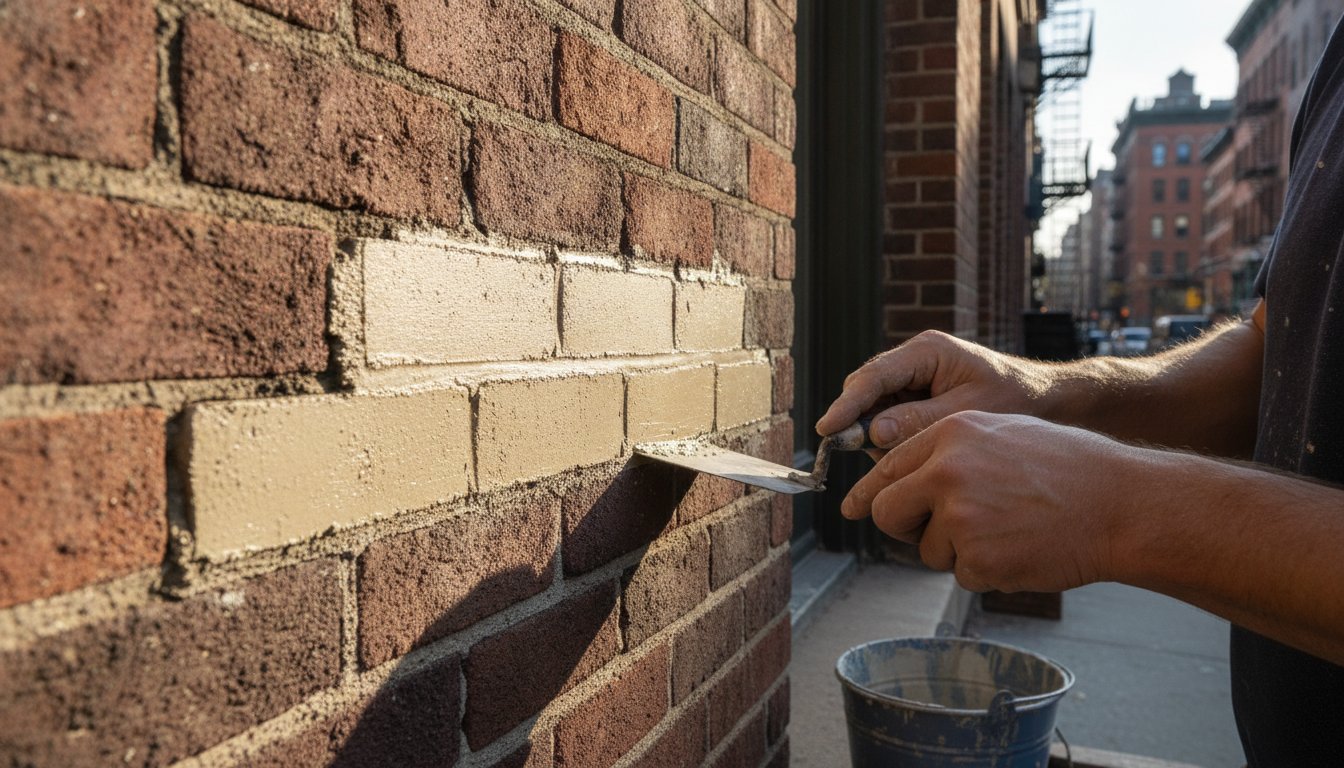
The mortar joints on your Manhattan facade are designed to be the sacrificial element of the structure, meant to wear down over time so your historic bricks don’t have to. If you’ve noticed crumbling masonry or water infiltration, you’re likely facing the pressure of Sub-cycle 10B filing deadlines or the strict requirements of the Landmarks Preservation Commission. It’s a common concern for owners who want to protect their investment without risking the “spalling” caused by incompatible, modern cements. Investing in specialized brick pointing for pre-war buildings manhattan is the only way to ensure your property remains both watertight and historically preserved.
We understand that navigating NYC building codes and mortar chemistry can feel overwhelming. This 2026 restoration guide provides a clear path toward a durable, compliant facade by explaining traditional pointing techniques and the importance of material matching. You’ll learn how to maintain structural integrity while avoiding the heavy penalties associated with Local Law 11 non-compliance. For professional guidance on your restoration project, contact Progressive Contracting NY at 347-341-3808 or 718-350-7388, or reach us via email at ProgressiveContractingNY@yahoo.com.
Understanding Manhattan Pre-War Masonry Challenges
Manhattan’s pre-war buildings, constructed primarily between 1880 and 1939, utilize multi-wythe mass masonry. In these structures, the mortar serves a critical function beyond just holding bricks together. It acts as the breathing element of the facade, allowing moisture to escape through the joints. When this mortar degrades, you’ll notice sandy textures or deep voids. If left unaddressed, this leads to brownstone spalling repair needs where the very face of the masonry begins to crumble. High-quality brick pointing for pre-war buildings manhattan requires understanding that the mortar must remain softer than the historic brick to prevent permanent damage.
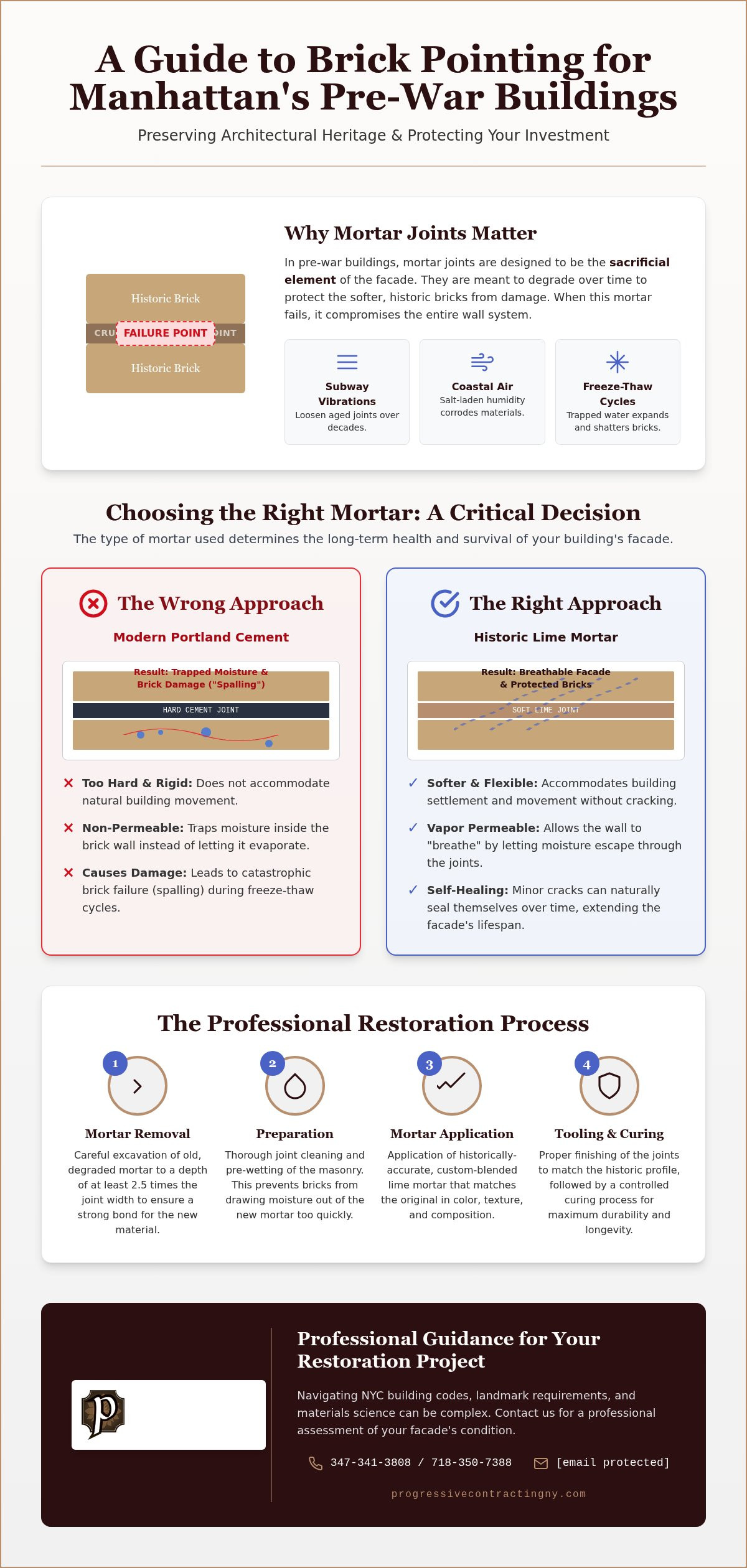
Our city presents unique environmental stressors that accelerate decay. Constant vibrations from the subway system can loosen aged joints over decades. Additionally, the salt-laden humidity from our coastal air creates a corrosive environment for inferior materials. The process of renewing the pointing is a technical restoration that accounts for these specific Manhattan factors to ensure long-term stability.
The Architecture of the Upper West and East Sides
Architects like Emery Roth designed iconic residences using intricate brick bonds that define the skyline. These designs often distinguish between decorative face brick and the structural common brick hidden behind it. Meticulous pointing is necessary to maintain the alignment and aesthetic of these historic patterns. If the pointing is performed haphazardly, it ruins the architectural character and can compromise the load-bearing capacity of the exterior wall.
Why ‘Standard’ Masonry Fails Pre-War Buildings
Many general contractors mistakenly use modern, high-strength Portland cement on historic facades. This material is far too hard for historic soft-fired bricks. It traps moisture inside the wall rather than letting it evaporate through the joints. During New York’s harsh freeze-thaw cycles, this trapped water expands, causing the brick faces to shatter. We use historically accurate mortars to prevent this catastrophic failure and keep your building watertight.
For a professional assessment of your facade’s condition, contact Progressive Contracting NY at 347-341-3808 or 718-350-7388. Our team is also available via email at ProgressiveContractingNY@yahoo.com to help you navigate your next restoration project.
Choosing the Right Mortar: Lime vs. Portland Cement
The choice of mortar determines whether your building survives the next century or suffers irreversible structural rot. In historic masonry, we follow the “sacrificial joint” principle. This means the mortar must be weaker and more permeable than the brick itself. If the mortar is too hard, like modern Portland cement, the brick will eventually crack under pressure. Vapor permeability is the ability of a wall to release moisture without structural damage. Without this permeability, moisture stays trapped behind the facade. Historic preservation guidelines emphasize using compatible materials to avoid “over-pointing” with waterproof sealants. These sealants often cause internal rot by choking the building’s natural airflow and preventing the facade from drying out after a storm.
Achieving a successful restoration requires matching the color, texture, and profile of the original 1920s joints. This isn’t just about aesthetics; it’s about maintaining the physical continuity of the wall. Using the wrong materials for brick pointing for pre-war buildings manhattan can lead to moisture being forced into the brick units, which then freeze and shatter during the winter months.
Historic Lime Mortar Benefits
Lime mortar offers flexibility that modern alternatives lack. Manhattan buildings sit on complex bedrock foundations that settle over time. Lime-based joints accommodate this movement without snapping or losing their bond. These mortars also possess self-healing properties. When minor hairline cracks form, moisture reacts with the lime to create new crystals that naturally seal the gap. This biological process extends the lifespan of your masonry and reduces the frequency of future repairs.
When to Use Custom Mortar Blends
For high-stakes brick pointing nyc projects, we recommend lab-testing original mortar samples. This analysis identifies the specific sand-to-lime ratio used during the building’s original construction. We then match historic pigments to ensure the color and texture are seamless across the entire facade. This level of precision is essential for landmarked properties where visual consistency is required by law. If you need help determining the right blend for your facade, contact Progressive Contracting NY at 347-341-3808 or 718-350-7388. You can also email us at ProgressiveContractingNY@yahoo.com for a professional consultation.
Planning Your Manhattan Brick Pointing Project
A successful restoration project follows a disciplined sequence to ensure the new mortar bonds permanently with the historic brick. Phase 1 begins with the careful removal of old, degraded mortar. We excavate the joints to a depth of at least 2.5 times the joint width. This provides enough volume for the new material to seat deeply into the wall. Phase 2 involves thorough cleaning and pre-wetting of the masonry. If the bricks are dry, they’ll suck the moisture out of the fresh mortar too quickly. This results in a “flash dry” that leaves the joint brittle and prone to premature failure. Understanding the chemical requirements of Lime mortar vs portland cement is vital during this stage to ensure the new bond is both flexible and durable.
Phase 3 focuses on the layered application and “striking” of the joint. We match the historic profile of your building, whether it’s a weathered, concave, or grapevine finish. Proper striking isn’t just for looks; it’s a functional design that directs rainwater away from the brick edges. Throughout this process, we maintain strict debris management. In high-traffic Manhattan neighborhoods like the West Village, containing dust and old mortar is essential for public safety and neighborhood relations. Executing brick pointing for pre-war buildings manhattan requires this level of logistical precision to avoid delays and city fines.
Vetting a Manhattan Masonry Specialist
When you interview contractors, ask for a portfolio that specifically features brownstone repair and restoration. Pre-war buildings have different structural needs than modern towers. You must also verify that the firm holds the correct NYC licensing and insurance for high-rise scaffolding work. A qualified specialist will be transparent about their methods and provide a clear timeline for the restoration of your brick pointing for pre-war buildings manhattan.
Contact Progressive Contracting of NY
Our team provides expert consultations for historic property owners across Manhattan and Brooklyn. We understand the complexities of NYC building codes and the technical demands of pre-war masonry. Reach our primary specialists directly at 347-341-3808 or 718-350-7388 for a detailed facade assessment. For project inquiries and documentation, email us at ProgressiveContractingNY@yahoo.com. We’re here to serve as your dependable partner in preserving your building’s historic charm and structural integrity.
Secure the Future of Your Historic Facade
Protecting a pre-war building in Manhattan requires more than just a quick patch. It demands a technical understanding of how historic brick breathes and moves. By choosing the right lime-based mortar and following a disciplined restoration process, you avoid the catastrophic spalling caused by modern cements. This approach ensures your property remains watertight while meeting the strict demands of NYC building codes and landmark regulations. You’ve worked hard to maintain your property; ensuring the masonry is handled by experts is the next logical step in its preservation.
Professional brick pointing for pre-war buildings manhattan is an investment in both safety and architectural preservation. Our team at Progressive Contracting NY specializes in these traditional techniques and provides direct owner communication throughout every project. We prioritize financial transparency and meticulous attention to detail from the initial assessment to the final strike of the joint. You can reach us at 347-341-3808 or 718-350-7388 to discuss your property’s specific needs. For documentation or project inquiries, email us at ProgressiveContractingNY@yahoo.com.
We look forward to helping you preserve the legacy of your Manhattan home for the next generation with a steady hand and proven expertise.
Frequently Asked Questions
How often do pre-war buildings in Manhattan need brick pointing?
Most pre-war buildings require a comprehensive repointing every 20 to 30 years. However, the specific interval depends on your building’s exposure to wind and rain. Facades on corner lots or those facing the Hudson River often show signs of joint erosion faster than sheltered mid-block properties. Regular visual inspections help you identify sandy or recessed joints before they lead to interior water damage.
Can I use modern waterproof paint over my newly pointed brickwork?
You should avoid using modern waterproof or elastomeric paints on historic masonry. These coatings trap moisture inside the wall and prevent the bricks from breathing. This trapped water eventually causes the brick faces to shatter during New York’s winter freeze-thaw cycles. Quality brick pointing for pre-war buildings manhattan provides natural weatherproofing through proper mortar selection and joint striking without the need for damaging surface sealants.
Does the NYC Landmarks Preservation Commission (LPC) regulate brick pointing?
The LPC regulates all exterior work on buildings located within historic districts or those designated as individual landmarks. You must obtain a permit and provide mortar samples that match the original color, texture, and joint profile. Our team handles the technical requirements for brick pointing for pre-war buildings manhattan to ensure your project remains compliant with all preservation standards and avoids costly city violations.
What is the best time of year to perform masonry restoration in NYC?
The ideal window for masonry work is during the spring and fall when temperatures stay between 40 and 80 degrees Fahrenheit. Mortar needs a stable, moderate environment to cure properly. Extreme summer heat can dry the joints too quickly and cause them to shrink. Conversely, winter temperatures can freeze the water in the wet mortar, which destroys the bond before it has a chance to set.
For more specific questions or to schedule a site visit, contact Progressive Contracting NY at 347-341-3808 or 718-350-7388. You can also reach our restoration specialists via email at ProgressiveContractingNY@yahoo.com for help with your next project.