
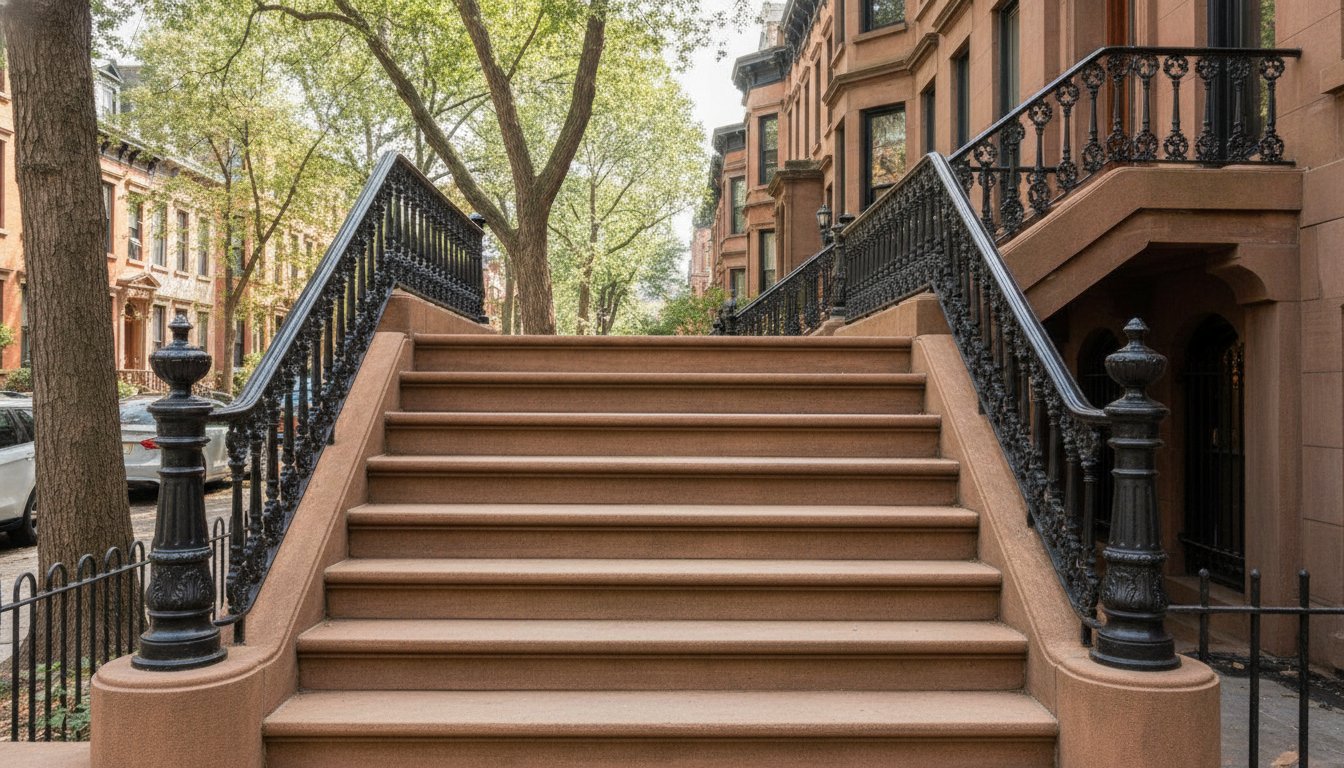
A single bucket of modern Portland cement can lead to a $5,000 LPC violation and cause your historic brownstone to crack during the first NYC freeze. For many homeowners, the process of stoop repair in landmarked district brooklyn often feels like a choice between watching steps crumble or risking a legal headache. You want a front entrance that reflects the dignity of your block, but the fear of choosing a contractor who uses the wrong texture or mortar color is a valid concern.
At Progressive Contracting NY Corp, we believe that historic restoration is a technical discipline that requires absolute precision. This 2026 guide explains how to navigate the Landmarks Preservation Commission regulations while utilizing professional Rammstein masonry techniques to stabilize your home. You’ll learn how to secure the right permits and choose materials that match the original stone’s porosity and color perfectly.
We provide a structured path toward a structurally sound, beautiful stoop that survives the elements. If you have questions about your specific project, you can reach our team at 347-341-3808 or 718-350-7388. You may also email us directly at ProgressiveContractingNY@yahoo.com to discuss your restoration needs and schedule a site visit.
Navigating Brooklyn Landmark Regulations and Damage Assessment
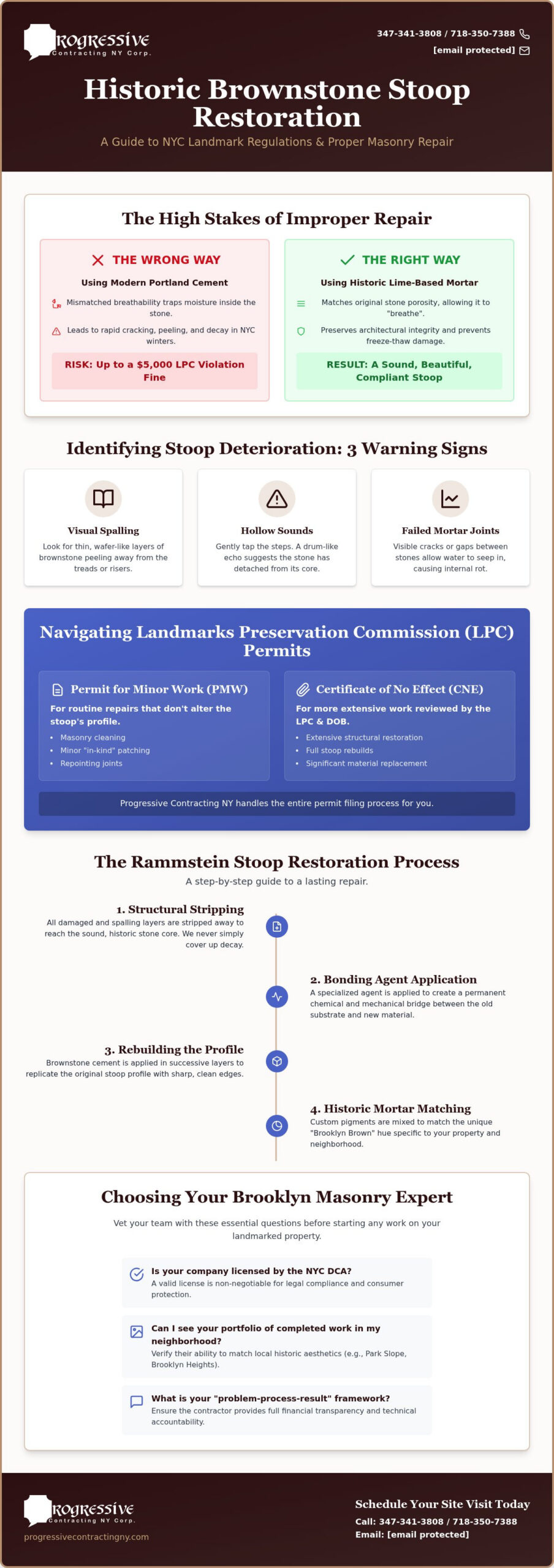
Stoop repair in landmarked district brooklyn requires more than just masonry skill; it involves strict legal compliance. In neighborhoods like Park Slope or Bedford-Stuyvesant, any exterior work must meet the standards of the Landmarks Preservation Commission (LPC). This means using “in-kind” materials that match the original stone in composition, color, and texture. The preservation movement, which took root in the Brooklyn Heights Historic District, ensures that the borough’s architectural history remains intact. If you ignore these rules and use standard Portland cement, the mismatch in breathability will cause the stone to crack and peel. This often results in a Notice of Violation, which can carry fines up to $5,000 for major infractions.
Historic mortar is a specialized lime-based mixture formulated to match the specific permeability and color of original 19th-century masonry. Using the wrong mix traps moisture inside the stone, leading to rapid decay during NYC winters. Choosing a specialized Brownstone repair contractor ensures your project satisfies both aesthetic and regulatory demands from the start.
Identifying Historic Stoop Deterioration
Before beginning any work, it’s vital to assess the current state of your masonry. Look for these specific warning signs of failure:
- Visual spalling: Thin, wafer-like layers of brownstone peeling away from the treads or risers.
- Hollow sounds: Gently tap the front edges of the steps; a drum-like echo suggests the stone has detached from the core.
- Failed mortar joints: Cracks or gaps in the joints allow water to seep into the structural core, causing internal rot.
Permit for Minor Work vs. Certificate of No Effect
The type of permit you need depends on the scope of the project. A Permit for Minor Work (PMW) covers routine repairs, such as masonry cleaning or minor patching, that don’t change the stoop’s physical profile. For more extensive structural restoration or a full rebuild, you’ll need a Certificate of No Effect (CNE). This involves a more detailed review and often requires coordination with the Department of Buildings. Progressive Contracting NY Corp handles this entire filing process for you, providing the transparency and peace of mind you need. You can reach us at 347-341-3808 or 718-350-7388, or email ProgressiveContractingNY@yahoo.com to discuss your property’s specific requirements.
The Rammstein Stoop Restoration Process: A Step-by-Step Guide
Achieving a successful stoop repair in landmarked district brooklyn requires a methodical approach that mirrors the original 19th-century construction. True structural integrity begins by stripping away all damaged and spalling layers until we reach the sound, historic stone core. We do not simply cover up decay. Once the core is exposed, we apply a specialized bonding agent to ensure the new material adheres permanently. This process creates a chemical and mechanical bridge between the old substrate and the new restoration material. The final tooled finish must match the specific texture of neighboring historic properties to maintain the visual continuity of the block.
Why Structural Stripping Beats Surface Patching
Many contractors offer surface patches that fail within two NYC winters because they trap moisture behind a thin shell. This trapped moisture leads to further Brownstone Spalling Repair and eventually causes the entire facade to delaminate. The Rammstein method ensures a monolithic bond between the old and new materials. This technique follows historic masonry repair best practices by removing unstable material before rebuilding. A solid foundation is the only way to prevent the freeze-thaw cycle from destroying your investment.
Rebuilding the Profile and Historic Mortar Matching
We use a built-up method, applying brownstone cement in successive layers to replicate the original stoop profile. This allows us to achieve sharp, clean edges on treads and risers for an authentic look. We mix custom pigments to match the unique “Brooklyn Brown” hue of your specific street. Proper curing times are essential; we carefully monitor the drying process to prevent premature cracking. If you need a specialized masonry contractor to evaluate your stoop, we are here to help. Reach our team at 347-341-3808 or 718-350-7388. You can also send photos of your project to ProgressiveContractingNY@yahoo.com for a preliminary review of the damage.
Choosing a Brooklyn Masonry Expert and Post-Repair Care
Selecting the right partner for stoop repair in landmarked district brooklyn is a decision that impacts your property’s value for decades. A qualified contractor must hold a valid NYC DCA license and demonstrate a deep portfolio of landmarked projects. You should always ask to see completed work in your specific neighborhood, such as Park Slope or Brooklyn Heights, to verify their ability to match local historic aesthetics. We maintain a strict “problem-process-result” framework to ensure full financial transparency and technical accountability throughout the project. For a deeper look at our methodology, consult our guide on Brownstone Stoop Restoration Brooklyn.
Essential Questions for Your Landmark Contractor
Vet your masonry team with targeted questions before work begins. Ask how they navigate LPC permit filings and if they have experience obtaining “in-kind” material approvals for your specific district. It is critical to confirm they use a breathable, lime-based mortar mix. High-strength Portland cement is too rigid and will destroy historic stone over time. Finally, verify that their insurance coverage specifically includes historic facade restoration in New York City to ensure your home is protected during the process.
Long-Term Maintenance: Protecting Your Investment
Preserving your stoop after a professional restoration requires a strict “No Salt” policy. Rock salt and calcium chloride are highly destructive; they trigger aggressive freeze-thaw cycles that shatter brownstone layers. Use safer alternatives like Calcium Magnesium Acetate (CMA) or simple sand for winter traction. We recommend performing annual inspections to identify hairline cracks before they turn into major spalling issues. Catching these small fissures early prevents water infiltration and extends the life of your masonry. If you notice new signs of wear or need a professional assessment, contact Progressive Contracting NY Corp at 347-341-3808 or 718-350-7388. You can also reach our experts via email at ProgressiveContractingNY@yahoo.com to discuss your maintenance needs.
Protecting Your Brooklyn Legacy
Restoring a historic brownstone entrance is a significant investment in your property’s value and structural health. By prioritizing LPC compliance and the specialized Rammstein restoration method, you ensure that your home remains a distinguished part of the Brooklyn landscape. We’ve demonstrated that using the correct “in-kind” materials and technical stripping techniques prevents the cycle of crumbling stone and legal violations. Our team brings local expertise to neighborhoods like Park Slope, Bed-Stuy, and Brooklyn Heights, offering a steady hand for these complex projects.
Choosing a master of the craft for your stoop repair in landmarked district brooklyn provides the peace of mind that comes from precision. We handle the permit navigation and masonry details so you don’t have to face the next NYC winter with uncertainty. If you’re ready to secure your home’s facade, reach our experts at 347-341-3808 or 718-350-7388. You can also email us at ProgressiveContractingNY@yahoo.com to schedule a site visit.
Contact Progressive Contracting NY Corp for a professional stoop assessment
We look forward to helping you preserve the historic character of your property with transparency and professional care.
Frequently Asked Questions about Brooklyn Stoop Restoration
Do I need a permit for minor stoop patching in a landmarked district?
Yes, you must obtain a permit for any stoop repair in landmarked district brooklyn, regardless of the project’s size. The Landmarks Preservation Commission requires oversight for all exterior masonry work to ensure that patching materials match the historic stone’s color and physical properties. Performing even minor “patch jobs” without an approved Permit for Minor Work (PMW) can result in significant fines and legal violations that remain attached to your property deed.
How much does stoop repair cost in a Brooklyn historic district?
The cost of restoration in 2026 is determined by the total number of steps, the depth of structural decay, and the complexity of the LPC filing. Projects in landmarked districts typically carry a premium due to the requirement for specialized lime-based mortars and custom color matching. Factors such as the condition of the side walls and the need for new balusters also influence the final investment. We provide detailed, transparent estimates after evaluating the specific masonry needs of your home.
How long does a Rammstein stoop restoration typically last?
A Rammstein restoration is designed to provide a permanent solution that lasts for decades. Unlike standard masonry patches that sit on the surface, this method involves stripping the stone to its sound core and creating a monolithic bond with the new material. This technical approach prevents the delamination common in NYC’s freeze-thaw cycles. When combined with the maintenance practices mentioned earlier, such as avoiding rock salt, the restoration remains structurally sound and aesthetically pleasing for the long term.
Can I change the color or style of my stoop during restoration?
No, the LPC mandates that all restoration work must be “in-kind,” meaning it must replicate the original 19th-century appearance. You are required to maintain the original profile, texture, and color of the masonry to preserve the architectural continuity of the streetscape. Our craftsmen specialize in matching the specific “Brooklyn Brown” hue of your block by using custom-mixed pigments in our historic mortar and stone-patching compounds.
If you have additional questions or need a professional evaluation of your masonry, contact Progressive Contracting NY Corp at 347-341-3808 or 718-350-7388. You can also reach our experts via email at ProgressiveContractingNY@yahoo.com to discuss your project details and schedule a site visit.