
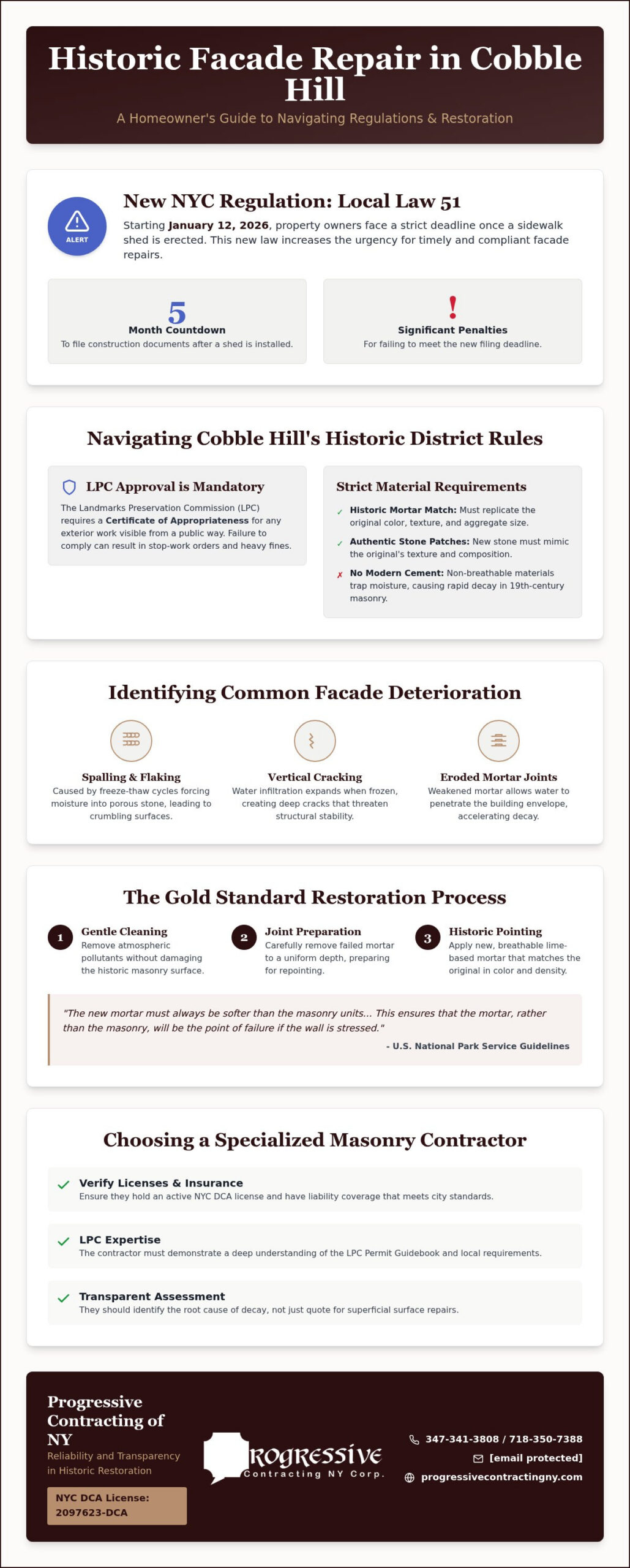
Starting January 12, 2026, NYC property owners face a strict five-month countdown to file construction documents once a sidewalk shed is erected, or they risk significant new penalties. If you own a historic home, the pressure to begin a facade repair in Cobble Hill is no longer just about curb appeal; it’s about handling a tightening regulatory landscape. You’ve likely seen your 19th-century brownstone surfaces spall or noticed crumbling mortar joints that threaten your building’s envelope. It’s stressful to balance urgent repairs with the fear of an LPC violation.
We agree that your home deserves a restoration that respects its 1845 architectural DNA. This guide provides the technical roadmap you need to achieve a weather-tight, compliant facade. We’ll examine the impact of Local Law 51, the nuances of historic masonry, and how to secure long-term structural stability for your property.
Navigating Cobble Hill’s Historic District Regulations
Cobble Hill is one of Brooklyn’s most strictly regulated areas. Designated in 1969, the Cobble Hill Historic District requires Landmarks Preservation Commission (LPC) approval for any exterior modification visible from a public way. This oversight ensures that your facade repair cobble hill project respects the 1845 to 1885 architectural timeline. Owners must secure a Certificate of Appropriateness before starting work to avoid stop-work orders and heavy fines from the city.
Matching the original Greek Revival and Italianate aesthetics is a technical requirement, not a suggestion. Mortar must match the historic color and aggregate size, while stone patches must mimic the original texture exactly. Reviewing the history and architecture of NYC icons provides the necessary context for these material choices. Using modern, non-breathable cement on 19th-century masonry often causes internal moisture traps and rapid structural decay.
LPC Permit Requirements for Facade Masonry
The permit path depends on your project’s scale. Minor maintenance, like localized repointing, often proceeds through an expedited review. More intensive work, such as a full restoration or stoop repair, triggers a comprehensive approval process. Your contractor must submit detailed drawings and material samples for LPC review to ensure the work matches the neighborhood’s fabric.
Choosing a contractor who understands this regulatory environment is vital for a smooth project. We manage the entire application process, from initial filings to final inspections. This proactive approach ensures your facade repair cobble hill stays compliant with current laws, including the updated 2026 filing requirements. Precise documentation and expert material matching provide the peace of mind that your historic home is protected for another century.
Identifying and Addressing Facade Deterioration in Cobble Hill
Cobble Hill’s 19th-century facades face unique environmental stressors. NYC winters involve frequent freeze-thaw cycles that push moisture deep into porous masonry. When this water freezes, it expands, leading to spalling, flaking, and deep vertical cracking. This water infiltration accelerates structural instability and erodes mortar joints. Relying on specialized brownstone spalling repair is the only way to arrest this crumbling before it reaches the load-bearing masonry.
Many owners attempt “patching” with high-strength modern cement. This is a mistake. Modern cement is too rigid and non-breathable for historic soft stone. It traps moisture behind the surface, causing the original material to rot from the inside out. Proper facade repair cobble hill requires materials that mimic the original stone’s permeability and expansion rates. If you notice flaking surfaces, it is time for a professional evaluation.
The Process of Historic Restoration and Brick Pointing
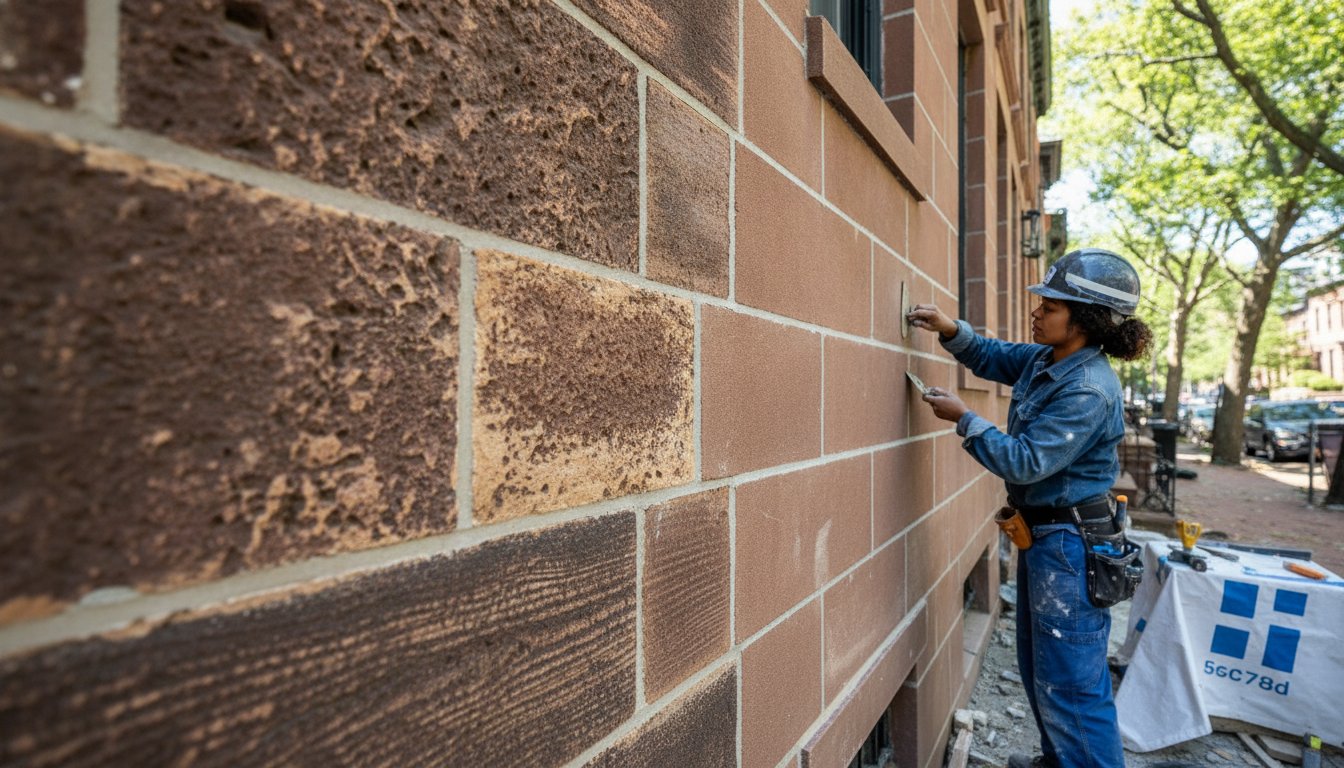
Meticulous restoration begins with gentle cleaning to remove atmospheric pollutants. We then prepare the joints by removing failed mortar to a uniform depth. For the brickwork, expert brick pointing in NYC involves matching the specific density and color of 19th-century lime-based mortars. This ensures the facade repair cobble hill project maintains visual and structural harmony.
The U.S. National Park Service provides the gold standard for Repointing Mortar Joints in Historic Masonry Buildings, emphasizing that new mortar must always be softer than the surrounding units. Following these protocols prevents future cracking and stone failure. If you suspect your facade is losing its integrity, our team can provide a detailed masonry assessment to identify hidden vulnerabilities.
Choosing a Specialized Masonry Contractor in Cobble Hill
Selecting a partner for your building’s exterior is a serious legal and financial commitment. You must verify active licenses and insurance coverage that meets NYC’s specific liability standards. A qualified contractor understands the NYC Landmarks Preservation Commission Permit Guidebook and its strict implications for local row houses. They should provide a transparent masonry assessment that identifies the root cause of decay rather than just quoting for surface repairs.
Professional accountability is essential for historic facades. A true Brownstone Repair Specialist ensures that all work complies with the rigorous standards set by the city. This level of diligence prevents the stop-work orders and fines that often plague poorly managed projects. Your contractor should serve as a steady guide through the entire facade repair cobble hill process, from permit filing to the final cleanup.
Progressive Contracting NY Corp: Reliability and Transparency
Our team prioritizes clarity and high-level craftsmanship in every project. We hold License 2097623-DCA, which serves as a marker of our professional legitimacy and commitment to NYC regulatory compliance. We don’t use high-pressure sales tactics. Instead, we focus on providing a structured path toward a stable, weather-tight home. This disciplined approach ensures your restoration meets both aesthetic and structural requirements for the long term.
We’re deeply invested in the Brooklyn community and offer direct accessibility for all owners. If you need a detailed project estimate or a professional assessment of your facade repair cobble hill, contact us directly at 347-341-3808 or 718-350-7388. You can also reach us via email at ProgressiveContractingNY@yahoo.com to discuss your property’s specific needs and start your restoration journey with a reliable partner.
Protecting Your Historic Investment for the Next Century
Historic restoration in Cobble Hill is a technical and legal commitment. You now understand that matching 19th-century mortar and addressing spalling early are critical for structural integrity. You also know the importance of LPC compliance and the strict 2026 city deadlines regarding sidewalk sheds. Choosing a partner with DCA License 2097623-DCA ensures your facade repair cobble hill project meets every professional standard. We provide the steady hand and transparent guidance your brownstone requires to remain weather-tight. With specialized expertise in the Cobble Hill Historic District, we help you avoid costly penalties while respecting your home’s architectural DNA. Reach our team directly at 347-341-3808 or 718-350-7388 to secure your property’s future.
Your home is a piece of Brooklyn history. We look forward to helping you preserve it with precision, transparency, and care.
Frequently Asked Questions
Do I need a permit for facade repair in Cobble Hill?
Yes, almost any exterior work visible from the street in this historic district requires a permit from the Landmarks Preservation Commission (LPC). This includes everything from minor repointing to major structural work. Failing to secure a Certificate of Appropriateness before starting a facade repair cobble hill project can lead to stop-work orders and significant fines from the Department of Buildings.
How long does a typical brownstone facade restoration take?
A standard restoration for a 3-4 story row house usually takes between four and eight weeks. The exact timeline depends on the extent of the masonry damage and current weather conditions. Meticulous tasks like stone carving and curing lime-based mortars require patience. We provide a clear schedule during the assessment phase so you can plan for the presence of scaffolding.
What is the best time of year for brick pointing in Brooklyn?
Spring and autumn are the ideal seasons for brick pointing because moderate temperatures allow mortar to cure slowly and evenly. We avoid performing masonry work when temperatures drop below 40 degrees Fahrenheit or exceed 90 degrees. Extreme heat dries mortar too quickly, while frost causes it to crack before it sets. This timing ensures long-term structural stability and durability for your home.
Can I change the color of my facade during restoration?
You can only change the color if the new shade matches the building’s original historic appearance. The LPC requires that any facade repair cobble hill uses colors and textures consistent with the neighborhood’s Greek Revival or Italianate origins. We help you select pigments that satisfy regulatory requirements while restoring the authentic 19th-century aesthetic of your specific property.