
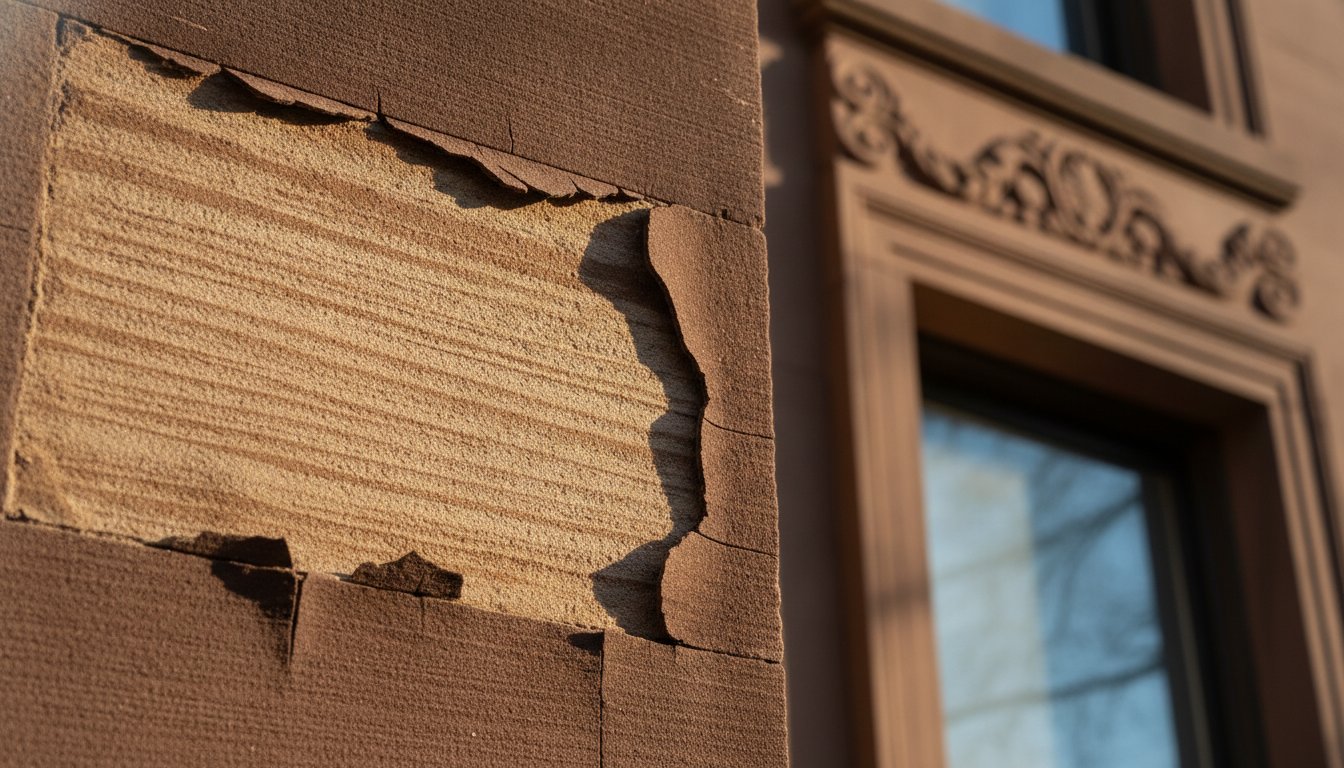
If you notice thin sheets of stone flaking off your Brooklyn facade, you aren’t just looking at an aesthetic problem. Most homeowners worry that these peeling layers signal a structural collapse or will lead to an expensive NYC Landmarks Preservation Commission violation. Understanding what causes brownstone delamination and how to fix it is the first step toward securing your property’s future. This process occurs when moisture gets trapped behind the surface of the porous sandstone and expands.
We understand the anxiety of maintaining a historic home in neighborhoods like Park Slope or Bedstuy. This 2026 guide explains the geological triggers behind stone decay and the professional masonry techniques required for a lasting restoration. We’ll examine why breathable mortars are essential for your facade’s health and how to avoid the “Portland cement trap.” For expert assistance, Progressive Contracting of NY (License 2097623-DCA) is available at 347-341-3808, 718-350-7388, or ProgressiveContractingNY@yahoo.com.
Understanding Brownstone Delamination: Why NYC Facades Peel and Scale
Delamination occurs when the natural bedding planes of the stone separate into thin, flaky layers. To understand what is a brownstone, you must view it as a sedimentary rock formed over millions of years. It’s built in layers, much like a deck of cards or a stack of paper. While general spalling involves random surface pitting, delamination specifically follows the stone’s internal grain. This structural shedding is often accelerated by complex sandstone weathering processes where moisture and salts expand between these compressed layers.
Homeowners often ask us what causes brownstone delamination and how to fix it when they see large sheets falling away. The answer usually lies in how the stone was originally installed. If you notice these issues on your property, Progressive Contracting of NY, license number 2097623-DCA, can provide a thorough assessment. You can reach us at 347-341-3808 or 718-350-7388 to discuss your restoration needs.
The ‘Face-Bedding’ Error in Historic NYC Masonry
During the 19th-century building boom, masons often prioritized aesthetics over durability. They frequently set stones with their natural layers parallel to the facade, a practice known as face-bedding. This orientation allowed the stone to look smoother and more uniform initially. However, it placed the “grain” in a vertical position where gravity and water could easily pull the layers apart. Face-bedding is the primary architectural flaw that turns minor moisture into major delamination. When water penetrates these vertical seams, it freezes and expands, forcing the face of the stone to peel away in sheets. When diagnosing what causes brownstone delamination and how to fix it, our specialists at ProgressiveContractingNY@yahoo.com look for signs of vertical cracking that indicate this poor orientation.
Primary Causes of Brownstone Decay: The Portland Cement Trap
Water infiltration serves as the primary fuel for facade decay. During New York winters, water enters the stone’s layers and expands as it freezes. This internal pressure physically forces the sedimentary layers apart. Poor roof drainage and clogged gutters often saturate the stone, providing the constant moisture needed for this destructive cycle. This process is closely linked to brownstone spalling repair, as both conditions stem from moisture-driven structural breakdown.
The most significant mistake in historic restoration is using hard Portland cement for repairs. Brownstone is a soft, porous material that must “breathe” to remain stable. Portland cement is dense and impermeable, creating a trap for moisture. Understanding what causes brownstone delamination and how to fix it starts with recognizing that these hard patches actually accelerate decay. The National Park Service Preservation Briefs highlight that using incompatible materials is a leading cause of failure in historic masonry.
How Incompatible Mortars Accelerate Stone Failure
Hard cement patches create a vapor barrier effect. Since moisture cannot evaporate through the dense patch, it is forced to exit through the surrounding soft stone. This leads to salt crystallization, known as efflorescence, directly behind the repair. These expanding crystals push against the stone’s layers, causing them to flake off in sheets. Identifying what causes brownstone delamination and how to fix it involves more than just patching the surface; it requires a deep understanding of material compatibility. Proper brick pointing nyc requires lime-based mortars that allow vapor to pass through safely. If you are concerned about previous repairs, Progressive Contracting of NY (License 2097623-DCA) offers expert assessments at 347-341-3808 or 718-350-7388. You can also email us at ProgressiveContractingNY@yahoo.com for a detailed facade evaluation.

How to Fix Brownstone Delamination: The Professional Restoration Process
Identifying the extent of the damage is the first step in a successful restoration. We begin by sounding the facade with a small mallet to locate hollow areas where layers have already detached from the substrate. These pockets often hide behind a surface that looks stable but lacks structural integrity. When homeowners ask what causes brownstone delamination and how to fix it, they are often surprised by the precision required in this initial diagnostic phase.
Once we identify the compromised sections, we carefully remove loose material down to a solid, healthy stone base. According to the National Park Service Glossary of Historic Masonry, this thorough removal is critical to prevent future exfoliation. We then apply a multi-layer cementitious slurry to create a strong mechanical bond. Finally, we build up the facade using a breathable patching compound, meticulously matched to the original stone color and texture. Homeowners should always consult an expert brownstone repair specialist to ensure the work meets NYC standards.
Long-Term Maintenance and LPC Compliance in NYC
The NYC Landmarks Preservation Commission (LPC) requires specific color-matching and the use of breathable materials to maintain the historic character of your building. Understanding what causes brownstone delamination and how to fix it is essential for any property owner facing facade decay in a historic district. To protect your investment, we recommend a consistent maintenance schedule:
- Perform annual gutter cleaning to prevent water from saturating the stone.
- Inspect coping stones for cracks or failed joints that allow water entry.
- Avoid power washing, as high pressure can force water deep into the stone grain.
For a professional assessment and LPC-compliant restoration, contact Progressive Contracting of NY (License 2097623-DCA) at 347-341-3808 or 718-350-7388. Our team is also available at ProgressiveContractingNY@yahoo.com to discuss your specific facade needs and provide a detailed project plan.
Securing Your NYC Facade for the Future
Preserving a historic brownstone requires a balance of traditional craftsmanship and modern material science. You’ve learned that moisture trapped behind incompatible cement is often what causes brownstone delamination and how to fix it through sounding and breathable patching. Addressing these issues early prevents minor flaking from becoming a major structural concern or a Landmarks Preservation Commission violation.
Progressive Contracting of NY (License #2097623-DCA) brings over a decade of experience to Park Slope, Bedstuy, and Manhattan. We specialize in Rammstein stoop restoration and complex facade repairs. Reach our team at 347-341-3808, 718-350-7388, or ProgressiveContractingNY@yahoo.com to discuss your restoration goals.
Your historic home is a valuable asset. We’re here to help you protect it with proven masonry techniques and meticulous care.
Frequently Asked Questions
Can I just paint over delaminating brownstone to stop the peeling?
No, you should never paint over peeling stone. Paint creates an impermeable layer that traps moisture within the sedimentary layers. This trapped water leads to internal rot and forces the stone to flake off in even larger sheets. Understanding what causes brownstone delamination and how to fix it is essential before applying any surface coatings that might cause permanent damage.
How much does it cost to fix brownstone delamination in Brooklyn?
Restoration costs vary based on the extent of the damage and the size of your property. A targeted repair for a few delaminated blocks costs less than a comprehensive facade overhaul. Factors like NYC Landmarks Preservation Commission requirements and the depth of the stone decay also impact the total. We recommend a professional assessment to provide an accurate estimate for your Brooklyn or Manhattan home.
Is delamination a sign that my brownstone is structurally unsound?
Delamination is usually a surface issue, but it compromises your home’s protective shell. While the structural core of most brownstones is brick, the stone facade acts as a vital barrier against New York’s harsh weather. If you ignore what causes brownstone delamination and how to fix it, the internal masonry eventually becomes exposed to moisture, leading to much more expensive structural repairs over time.
What happens if I ignore the peeling stone on my facade?
Ignoring peeling stone can lead to legal violations and safety risks. Falling debris creates a hazard for pedestrians on NYC sidewalks, which may trigger fines from the Landmarks Preservation Commission. Additionally, exposed stone absorbs more water, accelerating the freeze-thaw cycle that destroys your facade. Contact Progressive Contracting of NY (License 2097623-DCA) at 347-341-3808 or 718-350-7388 to address these issues before they escalate.