
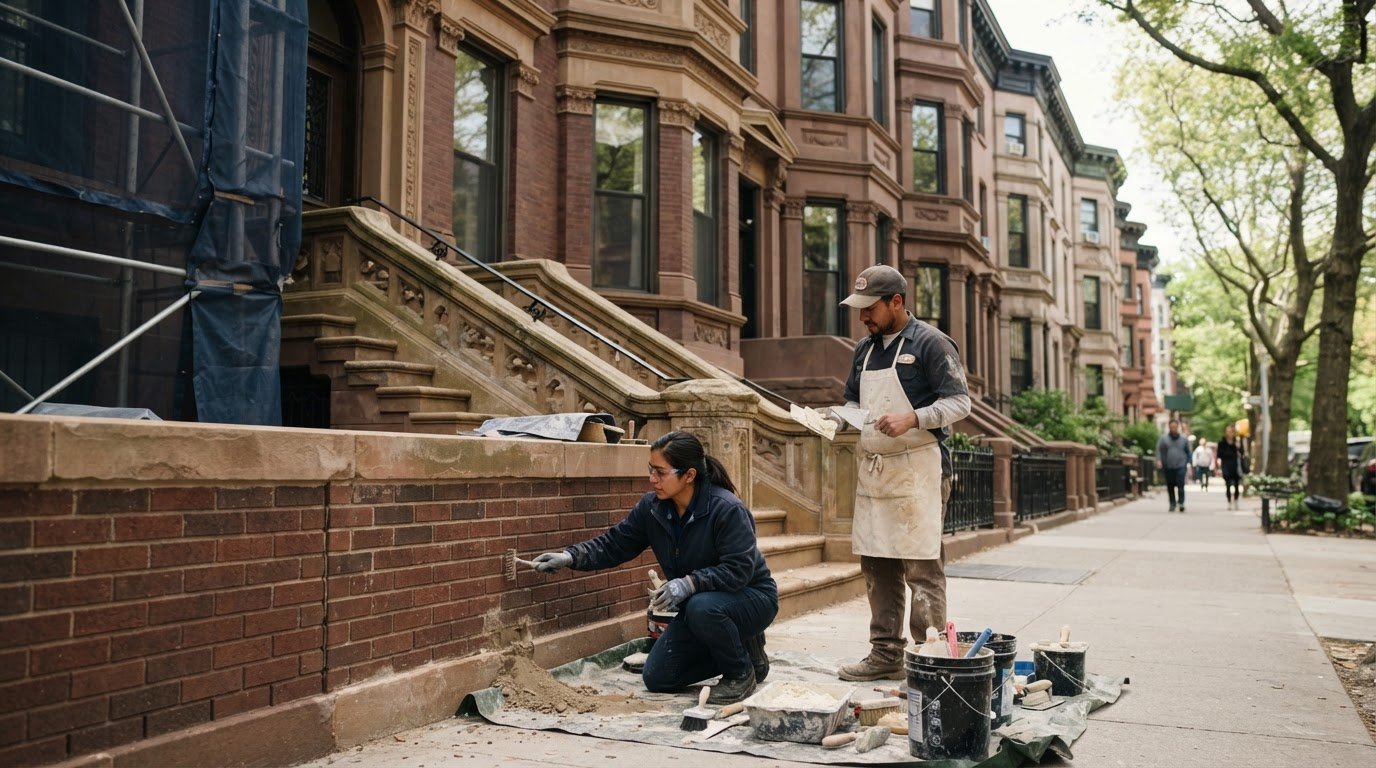
A cut-rate masonry bid on a historic Brooklyn rowhouse often turns into the most expensive mistake a property owner can make. If you’re calculating the cost of brick repointing in a Brooklyn historic district, the fear of surprise change orders and unapproved alterations is completely valid. Landmarks Preservation Commission (LPC) rules are strict, and applying hard Portland cement instead of breathable, vapor-permeable lime mortar can cause permanent face-brick damage that costs a fortune to reverse.
You deserve total clarity before work begins on your building. In this guide, you’ll learn the real variables that shape a restoration budget, from site staging and custom aggregate matching to mandatory LPC filing protocols. Here is how you evaluate historic masonry standards and vet qualified specialists to ensure a durable, code-compliant restoration that protects your home for decades.
Cost Factors for Historic Brooklyn Brick Repointing
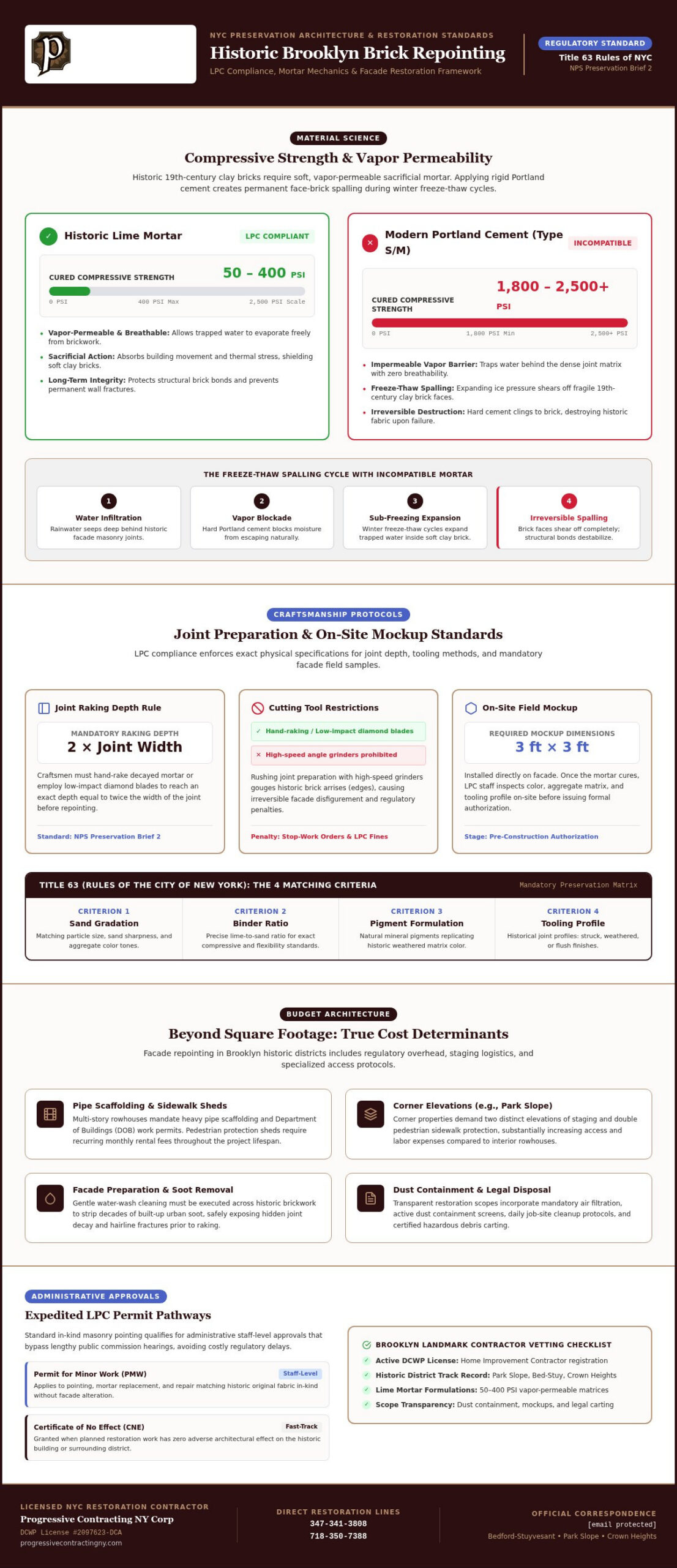
Calculating the cost of brick repointing in a Brooklyn historic district doesn’t just depend on surface square footage; facade stability and site logistics dictate the real investment. When exterior mortar washes out, rainwater seeps deep behind the masonry. During winter freeze-thaw cycles, trapped moisture expands, fracturing soft 19th-century clay bricks and destabilizing structural brick bonds. Resolving this underlying masonry damage, detailed in our brownstone spalling repair guide, inevitably expands the overall scope beyond standard joint work.
Labor precision represents another major variable. A durable, compliant masonry repointing process on landmarked properties demands surgical joint preparation. Craftsmen must carefully hand-rake decayed mortar or use specialized, low-impact diamond blades to reach a depth equal to twice the joint width. Rushing this critical stage with high-speed angle grinders gouges historic brick arrises. That careless cutting permanently disfigures the wall and invites severe regulatory penalties.
Site Access and Facade Preparation Expenses
Building dimensions and street logistics directly determine access expenses for historic properties. Multi-story rowhouses require heavy pipe scaffolding and Department of Buildings work permits. Sidewalk pedestrian sheds are often mandatory to protect public walkways, incurring recurring monthly rental charges. Corner properties in Park Slope require two distinct elevations of staging, which substantially increases setup labor. Once access is secure, technicians execute gentle water-wash cleaning to strip decades of soot and expose hidden joint decay before cutting begins. Ultimately, the total cost of brick repointing in a Brooklyn historic district depends on these safety protocols as much as artisan trade skills.
Historic Mortar Matching and LPC Compliance Standards
Historic vapor-permeable lime mortar is a breathable, flexible binding material designed to act sacrificially, absorbing moisture and thermal movement so that the surrounding historic clay brickwork remains undamaged. Meeting Landmarks Preservation Commission (LPC) standards requires replicating this original matrix precisely. Under Title 63 of the Rules of the City of New York, contractors must match the original sand gradation, binder ratio, pigment, and historic joint tooling profile (such as struck, weathered, or flush joints). Adhering to these strict conservation metrics influences the total cost of brick repointing in a Brooklyn historic district, as detailed in our brick pointing nyc guide on long-term wall performance.
Preventing Irreversible Damage from Incompatible Mortars
Applying modern Portland cement (Type S or M) to 19th-century brick creates severe structural failure because it doesn’t breathe. While historic lime mortars cure at 50 to 400 psi, rigid Portland cement reaches 1,800 to 2,500+ psi. This dense barrier blocks vapor transmission, trapping water inside softer historic brick units. When winter freeze-thaw cycles hit, expanding ice shears off brick faces, causing irreversible spalling. Following federal Preservation Brief 2 guidelines, preservation teams install on-site test mockups (typically three feet by three feet) directly on the facade. Once the mortar cures, LPC staff inspects color and texture before issuing field authorization. To ensure your facade receives proper aggregate analysis and regulatory approval, consult a licensed brownstone specialist before signing a contract.
Selecting an LPC-Qualified Masonry Contractor in Brooklyn
Hiring the right mason protects both your capital and your home’s historic fabric. Before signing any proposal, confirm the contractor holds an active Home Improvement Contractor license from the NYC Department of Consumer and Worker Protection, such as Progressive Contracting NY Corp (License #2097623-DCA). Always demand a proven portfolio of completed exterior work across landmarked neighborhoods like Bedford-Stuyvesant, Park Slope, and Crown Heights. Seasoned specialists understand local building typologies and supply chains. For a transparent project evaluation and a realistic view of the cost of brick repointing in a Brooklyn historic district, contact Progressive Contracting NY Corp at 347-341-3808 or email ProgressiveContractingNY@yahoo.com.
Navigating Landmark Permits and Contract Transparency
Standard in-kind masonry pointing qualifies for expedited, staff-level LPC filings like a Permit for Minor Work (PMW) or Certificate of No Effect (CNE). These administrative approvals bypass lengthy public commission hearings, keeping your project moving forward without regulatory delays. A professional contract leaves no room for ambiguity. It must clearly outline required dust containment measures, daily job-site cleanup, and legal debris disposal. Missing these operational details creates hidden fees that artificially inflate the total cost of brick repointing in a Brooklyn historic district. Reach our team directly at 718-350-7388 to review facade drawings and ensure complete code compliance.
Plan Your Brooklyn Facade Restoration With Confidence
Managing the cost of brick repointing in a Brooklyn historic district comes down to prioritizing preservation over shortcuts. Protecting your building requires vapor-permeable lime mortars, careful joint raking, and compliant LPC permit filings. Progressive Contracting NY Corp brings over a decade of masonry restoration experience to historic properties across Park Slope and Bed-Stuy. As a licensed NYC General Contractor (License #2097623-DCA), our master craftsmen deliver exact aggregate matching and complete regulatory peace of mind.
Reach our team directly at 347-341-3808, call 718-350-7388, or email ProgressiveContractingNY@yahoo.com to discuss your project scope. Investing in skilled historic masonry ensures your home remains structurally sound and visually stunning for generations.
Frequently Asked Questions
How do historic district regulations affect total brick repointing expenses in Brooklyn?
Historic district regulations require specialized materials and preservation-grade techniques that directly shape the overall cost of brick repointing in a Brooklyn historic district. Homeowners must account for custom lime-and-aggregate matching, physical on-site mockups, and non-impact mortar removal rather than aggressive grinding. These preservation steps prevent irreversible masonry damage while ensuring regulatory compliance with New York City landmark standards.
Can I use standard Portland cement mortar on an older Brooklyn brick facade?
No, standard Portland cement mortar will permanently damage older historic brick facades. Modern Portland mixes are overly rigid and non-porous. When moisture penetrates behind the wall, it can’t escape through the joints. During freezing temperatures, this trapped water expands and shears off the softer brick faces. Historic brickwork always requires vapor-permeable, lime-based mortars engineered to flex and breathe.
Do I need a formal Landmarks Preservation Commission permit to repoint my home?
Yes, repointing any building within a designated New York City historic district requires an LPC permit before work begins. Routine in-kind repointing generally qualifies for an expedited Permit for Minor Work or Certificate of No Effect through the city’s Portico portal. Working without approval triggers stop-work orders and compounding fines from both LPC and the Department of Buildings.
How long does a proper historic repointing job protect a brick exterior?
A professionally executed repointing job using compatible lime mortar protects a historic brick facade for 30 to 50 years. Longevity depends on proper joint depth, appropriate weather curing, and sound roof drainage. Choosing qualified craftsmen protects your investment and preserves structural masonry units, stabilizing the long-term cost of brick repointing in a Brooklyn historic district over your home’s lifespan.