
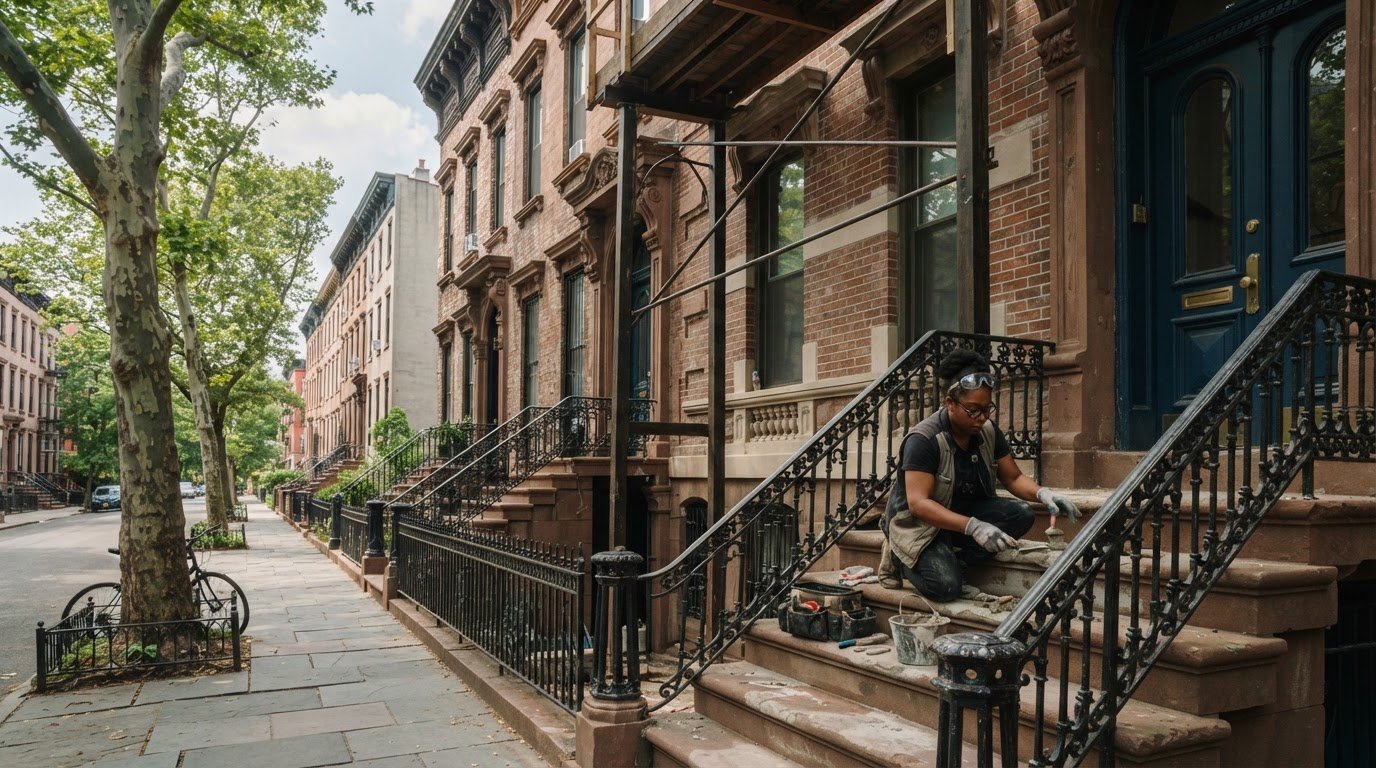
What if the most respectful way to restore a famous New York building isn’t to make it look new? Facade restoration for a building with a famous history starts by identifying the materials and architectural details that tell its story. Historical records can help explain what those details mean, while the facade’s present condition determines what needs repair.
It’s understandable to worry that a generic renovation or incompatible repair could diminish a building’s character. A sound plan connects historical research with a close look at the masonry, then defines work that suits the materials and preserves significant details. Progressive Contracting NY Corp provides historic brownstone renovation, brownstone repair, and brick pointing in Brooklyn and Manhattan, including neighborhoods such as Park Slope and Bedford-Stuyvesant. The company also serves property owners in the Bronx and Queens. License number 2097623-DCA. Call 347-341-3808 or 718-350-7388, or email ProgressiveContractingNY@yahoo.com.
Why a Building’s History Matters in NYC Facade Restoration
History-led facade restoration uses a building’s documented significance and surviving architectural character to guide exterior work. Instead of treating every worn surface as a reason to replace it, consider what the facade reveals about its original materials, craftsmanship, and later changes. For facade restoration for a building with a famous history, that context helps distinguish a careful repair from a generic renovation.
A building’s history can help determine what to repair, what to retain, and how to address damaged details without erasing its architectural character. This approach aligns with architectural conservation and historic preservation, where understanding a property’s significance comes before choosing a treatment.
A notable past and formal landmark designation are separate matters. A building may have cultural or architectural importance without a particular designation. Establish the property’s specific status before describing its review requirements, which depend on the building and its location.
What evidence helps establish a building’s history?
Build the picture from different kinds of evidence. Each source can offer useful clues, but verify details against the property rather than treating a single document or image as proof of its story.
- Archival photographs may show earlier facade features, materials, or finishes.
- Property records can help trace ownership, construction, or alterations.
- Historic descriptions may provide context about the building or its neighborhood.
- Surviving facade details, such as masonry patterns or carved elements, can help identify features that remain from earlier work.
Compare the sources to see which details appear original, which may have changed, and where the record is incomplete. For neighborhood context, the history and architecture of NYC brownstones can be a useful starting point. Use that background alongside research into the specific property and a close examination of its facade.
Matching Historic Facade Repairs to Building Character
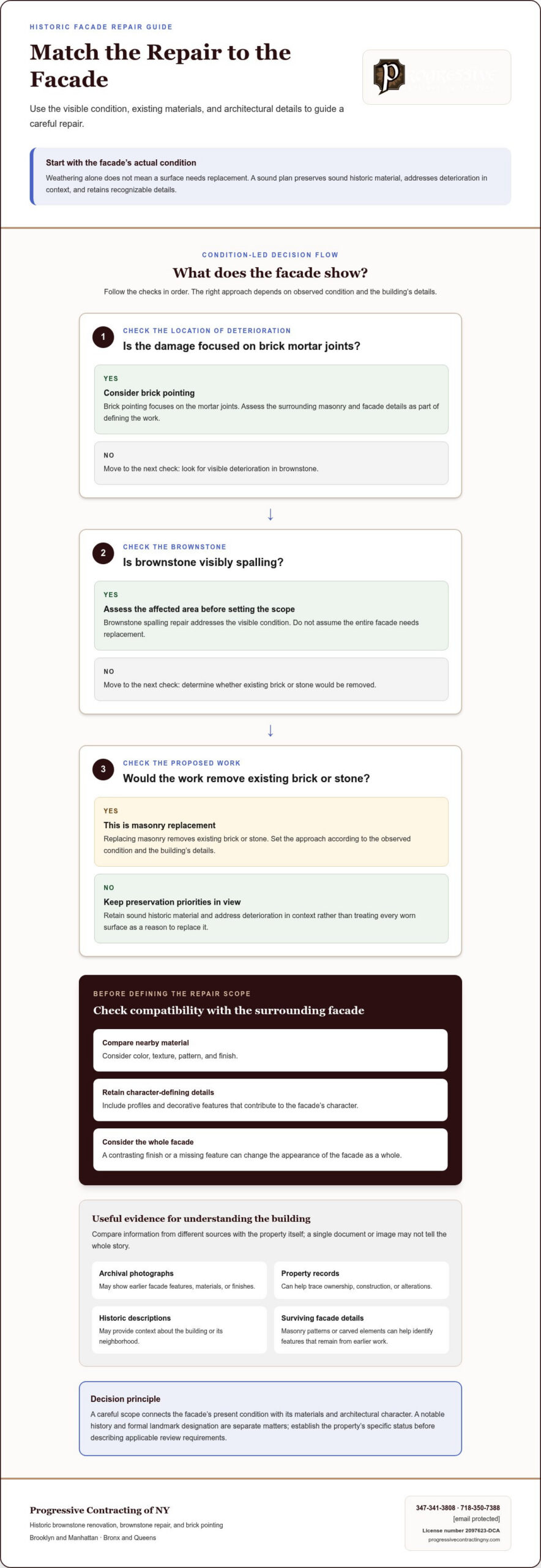
A repair scope should respond to the facade’s actual condition, not assume every weathered surface needs replacement. Look at where deterioration appears, how far it extends, the material surrounding it, and which details contribute to the building’s appearance. Crumbling brownstone, worn brick joints, and damaged decorative features each call for a close assessment to distinguish surface wear from more extensive deterioration.
For facade restoration for a building with a famous history, a considered repair preserves sound historic material, addresses deterioration in context, and retains recognizable details. The National Park Service standards for historic building restoration offer guidance on retaining historic materials and matching necessary new work to the existing structure.
Why material and detail compatibility matter
Brownstone and brick are familiar features of New York’s historic streetscapes, but they have different repair needs. Spalling brownstone needs a focused assessment before the repair scope is defined. Brownstone spalling repair addresses the visible condition without assuming the entire facade needs replacement. Brick pointing focuses on the mortar joints, while replacing masonry removes existing brick or stone. The right approach depends on the observed condition and the building’s details.
- Compare the repair area with nearby material for color, texture, pattern, and finish.
- Include profiles and decorative features that contribute to the facade’s character.
- Consider how a contrasting finish or a missing feature could change the appearance of the whole facade.
Progressive Contracting of NY handles brownstone repair, renovation, and brick pointing in Brooklyn and Manhattan. Explore brownstone facade restoration when planning exterior masonry work. Call 347-341-3808 or 718-350-7388, or email ProgressiveContractingNY@yahoo.com. License number 2097623-DCA.
From Historical Research to Facade Restoration in Brooklyn and Manhattan
A clear project plan connects what’s known about a building’s past with what its facade needs today. For facade restoration for a building with a famous history, move from research to masonry work in a deliberate sequence:
- Document the history. Gather available records and images that may explain the building’s original design and later alterations.
- Inspect facade conditions. Record visible deterioration, the areas it affects, and architectural features that need attention.
- Set preservation priorities. Identify historic materials and details to retain as part of the repair approach.
- Plan exterior masonry work. Define relevant work, such as brownstone repair, renovation, or brick pointing, according to the building’s condition and character.
Designation and review requirements vary by property. Establish the building’s status and any applicable requirements before planning work. A notable history alone does not establish which rules apply. Progressive Contracting of NY provides exterior masonry work in Brooklyn and Manhattan, including historic brownstone restoration. Its brownstone renovation, repair, and brick pointing services address the masonry, while property research helps set preservation priorities.
What property owners can prepare before discussing the work
Gather a few practical details to make an initial project discussion more focused. Bring what’s available, even if records or observations are incomplete:
- Photographs of the facade, including close views of worn or damaged areas.
- Property history or archival images that show earlier exterior features.
- Notes about where deterioration appears and which details concern you.
These materials help frame the work and clarify which areas need attention. For brownstone renovation, repair, or brick pointing in Brooklyn or Manhattan, call Progressive Contracting of NY at 347-341-3808 or 718-350-7388, or email ProgressiveContractingNY@yahoo.com. License number 2097623-DCA.
Plan the Next Step for Your Historic Facade
A thoughtful project begins with a clear picture of the building’s current condition and the character you want its exterior to retain. For facade restoration for a building with a famous history, gather property records, photographs, and notes on visible deterioration before deciding on the next steps. A focused discussion can connect those priorities with practical exterior masonry work.
Progressive Contracting of NY provides historic brownstone facade renovation and exterior masonry services in Brooklyn and Manhattan. To discuss brownstone restoration, repair, or brick pointing, call 347-341-3808 or 718-350-7388, or email ProgressiveContractingNY@yahoo.com. License number 2097623-DCA.
Careful planning and skilled masonry work help you move forward with respect for the building’s history and a clear understanding of the decisions ahead.
Frequently Asked Questions
Does a building’s famous history automatically make it a landmark?
No. A notable person, event, or past association doesn’t automatically give a building formal landmark status. Treat historical interest and official designation as separate questions. To understand what applies to a specific property, check its address against NYC landmark records and review reliable documentation about its history. This distinction matters before describing a property as designated or making plans based on that assumption.
What historical records can help guide facade restoration?
Records that clearly relate to the property’s address can help clarify its timeline. Compare dated photographs or descriptions with the building’s current features, and note when sources disagree or leave gaps. For facade restoration for a building with a famous history, a record of a past alteration can help explain why a visible feature differs from an older image. Treat clues as leads, not proof.
Can a historic facade be repaired without changing its appearance?
Repairs can often retain much of a facade’s familiar appearance, but no repair can be promised to leave every surface visually unchanged. The result depends on the material’s condition and the extent of work needed. A localized brownstone or brick repair may affect less of the facade than replacing a larger section. A finish that contrasts with nearby masonry may be more noticeable.
How can I find out whether a Brooklyn building has historic significance?
Start with the exact address and check whether it appears in NYC landmark or historic district records. Then compare that information with property documents, neighborhood histories, and dated images. In Brooklyn, areas such as Park Slope and Bedford-Stuyvesant have distinct architectural histories, but a neighborhood’s character alone doesn’t establish a specific building’s status. Keep official designation separate from broader historical interest.