
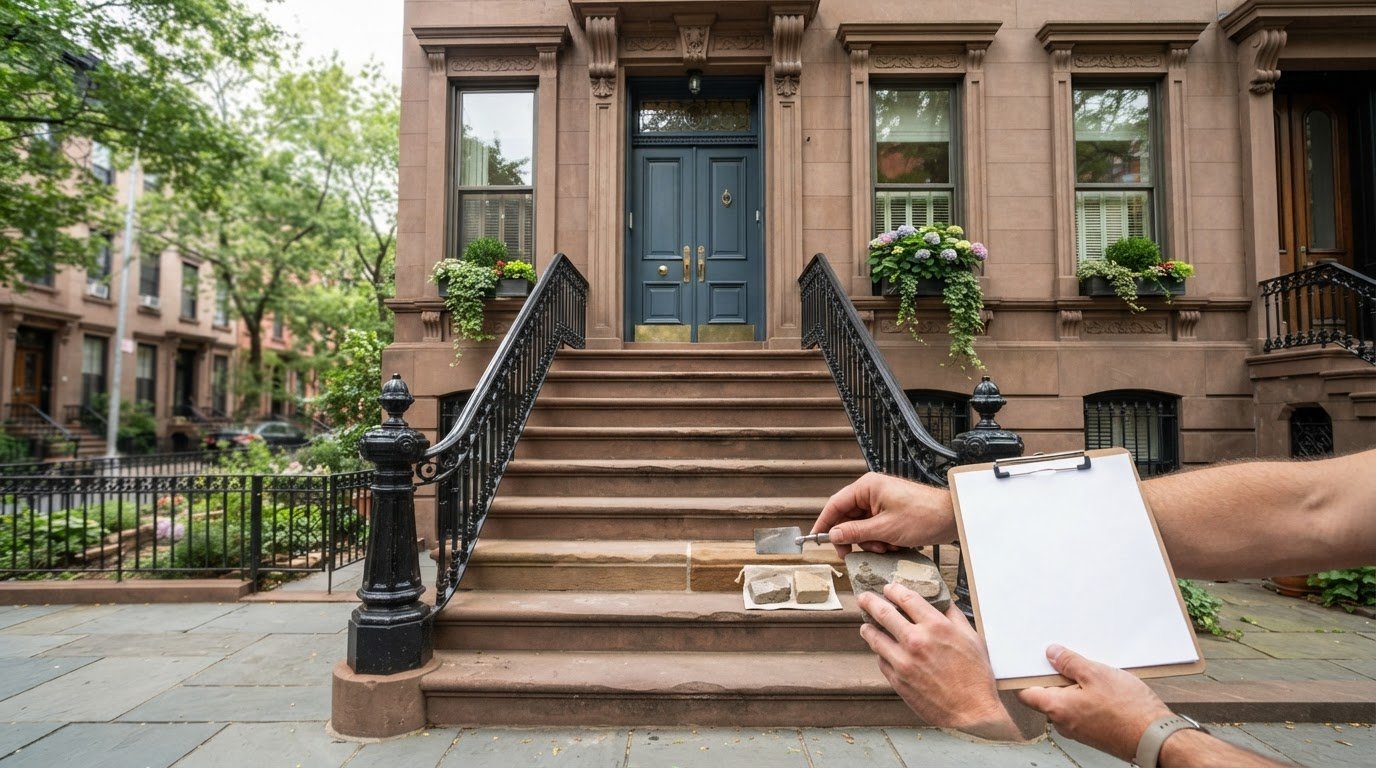
What if preserving a Cobble Hill stoop starts with repairing more and replacing less? Stoop restoration for landmarked properties in Cobble Hill raises practical questions: which parts can be repaired, which original details should remain, and how could landmark status affect visible exterior work? A careful assessment gives you a clearer basis for answering those questions before masonry begins.
Progressive Contracting NY Corp provides brownstone and stoop restoration for historic properties. The process starts by documenting the existing stonework and architectural details, then defining repairs around the stoop’s condition and the features you want to retain. Progressive Contracting NY Corp serves property owners in Brooklyn and Manhattan, including Cobble Hill, Bedford-Stuyvesant, and Park Slope, as well as the Bronx and Queens. License number 2097623-DCA. Call 347-341-3808 or 718-350-7388, or email ProgressiveContractingNY@yahoo.com.
What Landmark Status Means for Stoop Restoration in Cobble Hill
Landmark-sensitive restoration means repairing a stoop while respecting the historic character expressed through its materials, profiles, and architectural details. In Cobble Hill, decisions need to suit the individual building rather than follow a one-size-fits-all approach. The neighborhood includes Greek Revival, Italianate, and Anglo-Italianate row houses, and each property may have its own design and repair history. The Cobble Hill Historic District offers context for the area’s architectural heritage.
Before planning masonry work, record the visible condition of the stone and note details that could affect the repair: cracked or worn surfaces, tread and riser profiles, open or deteriorated joints, railing placement, and signs of previous work. Photograph the whole stoop as well as close-ups of damaged areas. This helps separate observable conditions from assumptions about their cause and identify features worth retaining. Repairing a damaged section to match its existing profile, for example, is a different decision from changing the stoop’s shape or visible details.
Routine repair addresses damage; preservation-minded restoration also protects the stoop’s historic character.
Why Cobble Hill’s historic context matters to stoop work
A stoop is part of a building’s street-facing composition, so even a localized repair can affect how the entrance relates to the façade. Visible exterior changes may involve landmark review, but requirements depend on the property and the proposed scope. Confirm the applicable requirements for the address before settling on a review or permit path or beginning work.
For stoop restoration for landmarked properties in Cobble Hill, start by documenting the existing conditions and identifying what should be repaired, retained, or carefully matched. This gives the property owner and masonry team a practical basis for discussing the work before construction begins.
How to Plan a Landmark-Sensitive Cobble Hill Stoop Restoration
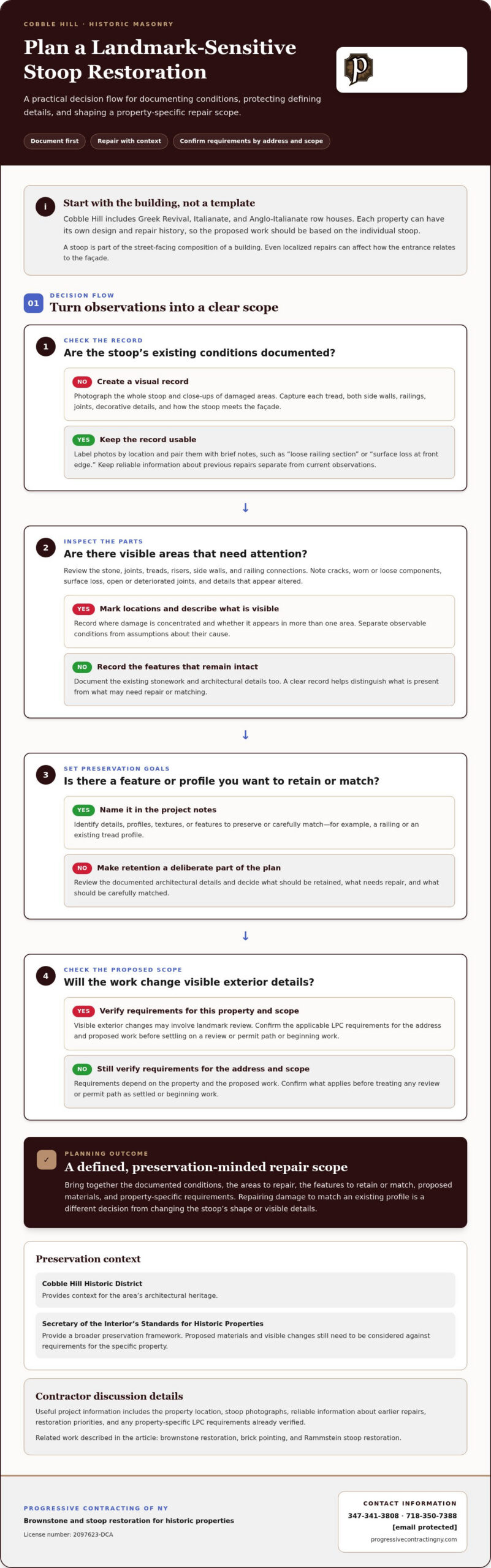
A clear plan turns initial observations into a defined scope of masonry work. For stoop restoration for landmarked properties in Cobble Hill, use a deliberate sequence:
- Document visible conditions. Photograph the stoop and note cracks, loose components, surface loss, open joints, and details that appear altered. Describe what you see without guessing at the cause.
- Review the main components. Record the condition of the stone, joints, treads, risers, side walls, and railing connections. Note where damage is concentrated and whether it appears in more than one area.
- Set preservation goals. Identify the existing features you want to retain, the areas that need repair, and any profiles, textures, or details that should be matched.
- Define the work. Describe the proposed repairs and materials, and consider visible changes in relation to the property-specific review requirements. Confirm the applicable LPC requirements for the address and scope before treating an approval or permit path as settled.
What to document before restoration planning
Take clear photographs of each tread, both side walls, railings, joints, and decorative details. Include close views of damaged areas and wider views showing how the stoop meets the façade. If you have reliable records of previous repairs or know that a feature was changed, keep that information separate from your current observations.
Good documentation makes scope decisions clearer by showing what exists, where it needs attention, and which details the work should preserve.
Keep the record easy to use: label photos by location and pair them with brief notes, such as “loose railing section” or “surface loss at front edge.” The Secretary of the Interior’s Standards for Historic Properties provide a broader preservation framework. The proposed materials and visible changes still need to be considered against the requirements for the specific property. Progressive Contracting of NY’s brownstone and stoop restoration work can help turn documented conditions into a considered masonry scope.
Choosing a Cobble Hill Stoop Restoration Contractor and Taking the Next Step
Landmark-sensitive stoop work calls for a masonry contractor who understands brownstone repair and the importance of preserving existing character. Progressive Contracting of NY provides brownstone restoration, brick pointing, and Rammstein stoop restoration for historic properties. For a Cobble Hill project, the aim is to connect the stoop’s observed condition and your preservation priorities to a clear scope of exterior masonry work.
What to expect when discussing a restoration project
A useful project discussion starts with what is visible, what you want to preserve, and which areas need attention. Share the property location, photographs of the stoop, reliable information about earlier repairs, and your restoration priorities. You might note, for example, that you want to retain a railing or match an existing tread profile. Clear details help focus the discussion without assuming a particular approval, price, duration, or technical solution.
Progressive Contracting of NY can discuss how its brownstone restoration work relates to the stoop and surrounding façade. Include any property-specific LPC requirements you have verified, since the appropriate review depends on the address and proposed work. Your photographs and notes can help organize the conversation and keep preservation priorities visible as the scope is discussed.
For stoop restoration for landmarked properties in Cobble Hill, Progressive Contracting of NY can be reached at 347-341-3808 or 718-350-7388, or by email at ProgressiveContractingNY@yahoo.com. License number: 2097623-DCA.
Move Toward a Stoop Plan That Fits Your Property
Begin with a focused look at your Cobble Hill property and the restoration outcome you want. Progressive Contracting of NY provides Rammstein stoop restoration and historic brownstone restoration. Sharing the stoop’s condition and your priorities helps frame a practical discussion about addressing masonry damage while respecting the building’s character.
For stoop restoration for landmarked properties in Cobble Hill, gather current photographs, the property address, and any reliable information about earlier repairs. Note which details matter most to you, then use those observations to guide the project discussion.
Discuss your Cobble Hill stoop restoration project with Progressive Contracting of NY to plan masonry work around your property’s condition and historic character.
Frequently Asked Questions
Does every stoop repair in Cobble Hill require landmark review?
No. The neighborhood alone does not determine whether a specific repair requires landmark review. The answer depends on the property’s status and the proposed work, particularly whether it changes visible features. A repair that retains the existing form may raise different questions from a change to the stoop’s profile. Confirm the requirements for the specific address and scope before work begins.
How long does stoop restoration take on a landmarked property?
There is no single reliable duration for every project. The time required depends on the condition and extent of the masonry work, the selected scope, and any property-specific review that applies. Keep construction time separate from review time when planning. Once the proposed scope and applicable review path are understood, the project schedule can be discussed in that context rather than relying on a generic estimate.
Can historic stoop details be preserved during restoration?
Preservation can often be built into the scope by identifying which details should remain and addressing them carefully during repair. A worn tread edge, for instance, may call for a different approach from a missing or heavily altered feature. The appropriate treatment depends on the material’s condition and the project goals. Discussing these priorities early helps keep preservation decisions in view throughout the work.
What information should I prepare before discussing stoop restoration?
Prepare the property address, current photographs, and any reliable notes about earlier work. Add a short list of priorities, such as repairing a particular damaged area or retaining a railing detail, and distinguish urgent concerns from cosmetic ones. If you are unsure about the cause of a crack or whether a feature was altered, describe what you observe rather than guessing. Clear observations help focus the project discussion.