
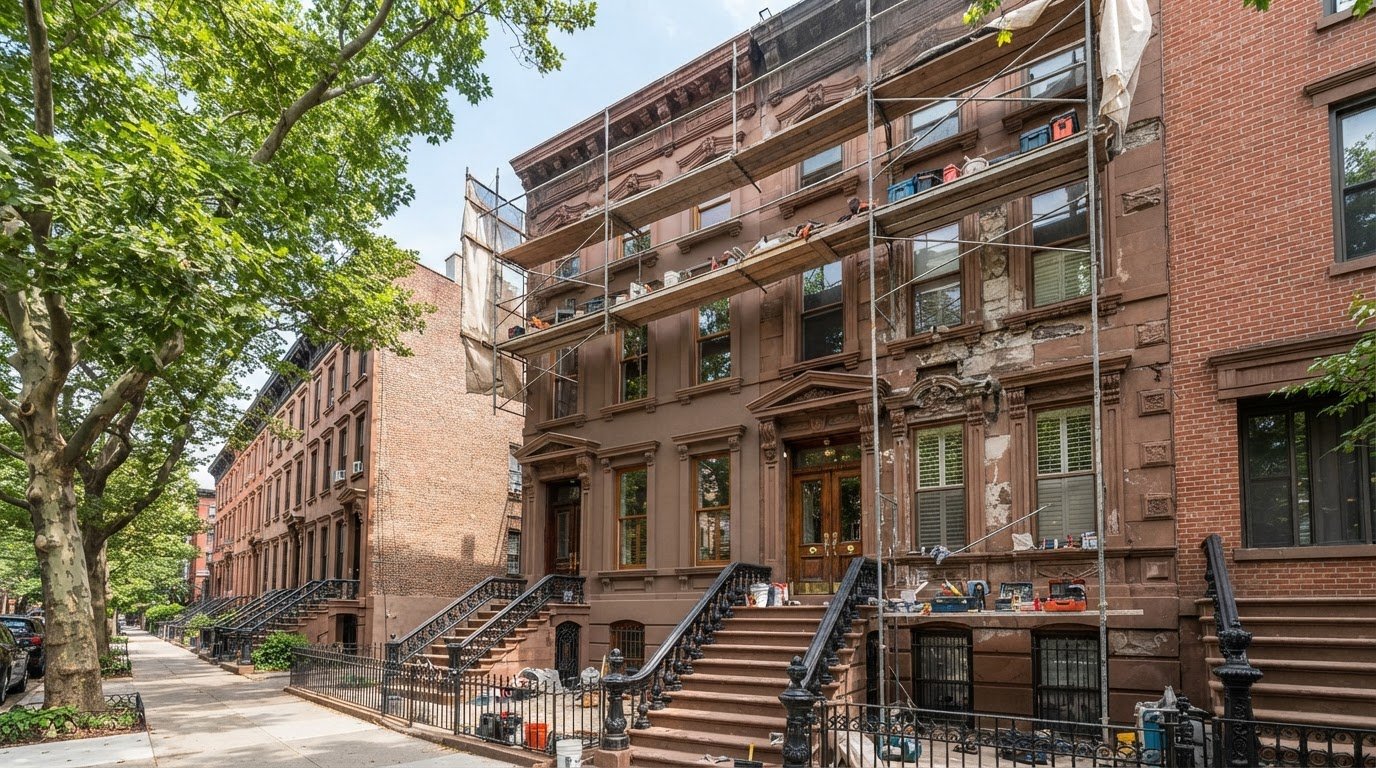
Replacement isn’t always necessary when a brownstone facade has deteriorated. If sound stone remains beneath the damaged surface, repairs can remove weakened material and rebuild it with new cementitious coats. A Brownstone facade Repair specialist assesses the masonry to distinguish localized damage from areas that need more extensive work.
Peeling, cracks, or crumbling can make it seem as though the original facade is beyond repair. Often, the first step is identifying what is causing the damage and how far it has spread before choosing a treatment.
This guide explains how water and freeze-thaw cycles affect brownstone, what informs the choice between repair and replacement, and how careful cleaning and stone consolidation can help preserve a facade’s character. You’ll also learn what restoration involves and when specialized masonry work is the practical next step.
Can brownstone be repaired, or does it have to be replaced?
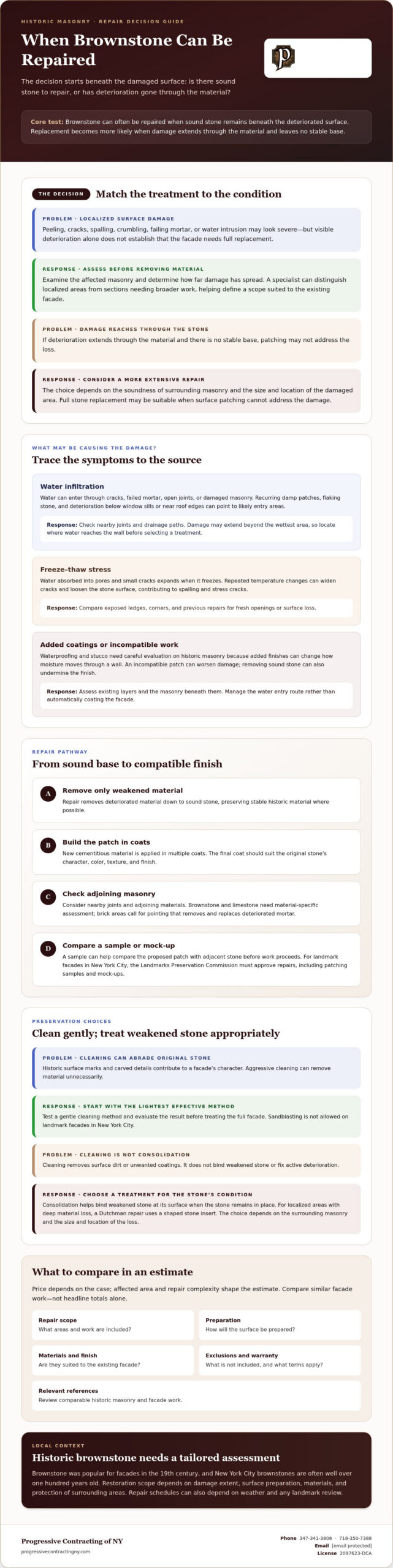
Brownstone can often be repaired when sound stone remains beneath the deteriorated surface. Replacement becomes more likely when damage extends through the material and leaves no stable base. Brownstone was popular for facades in the 19th century, and New York City brownstones are often well over one hundred years old.
For Bedford-Stuyvesant properties, start by assessing visible deterioration and the affected masonry. A Brownstone facade Repair specialist can distinguish localized damage from areas that need broader work. This assessment helps define a scope suited to the existing facade instead of assuming full replacement is necessary.
Spalling, cracks, failing mortar, and water intrusion can signal deterioration. Repair involves removing weakened material down to sound stone, then applying new cementitious material in multiple coats. The final coat should suit the original stone’s character and color. A Brownstone facade Repair specialist also considers adjoining materials and the condition of nearby joints.
Brownstone and limestone need material-specific assessment; repair methods and finishes should suit the existing facade. For brick areas, pointing removes and replaces deteriorated mortar. Restoration scope depends on damage extent, surface preparation, materials, and protection of surrounding areas. Price depends on the case and is given after a quote request; affected area and repair complexity shape the estimate.
Compare estimates by matching the repair scope, preparation steps, materials, finish, exclusions, and warranty terms. Review relevant project references and compare similar facade work rather than headline totals.
For landmark facades in New York City, the Landmarks Preservation Commission must approve repairs before work proceeds. Its protocols include approval of patching samples and mock-ups. Other permit requirements depend on the work and property.
A brownstone contractor should show practical experience with historic masonry, surface preparation, patching, and finish matching. Specialists offer assessment, brownstone patching, facade restoration, and related brick pointing.
Repair schedules depend on deterioration extent, preparation, weather, and any landmark review. An unqualified contractor may remove sound stone or apply an incompatible patch, worsening damage and undermining the finish.
Brownstone deterioration from water and freeze-thaw
In Bedford-Stuyvesant, water entry and seasonal weather can stress historic brownstone and its architectural details. Tracing moisture to its entry point helps distinguish visible symptoms from continuing infiltration.
Water Infiltration Damage
Water can enter through cracks, failed mortar, open joints, or damaged masonry. Look for recurring damp patches, flaking stone, and deterioration below window sills or near roof edges. These patterns can indicate likely entry points, but damage may extend beyond the wettest area. A Brownstone facade Repair specialist can examine nearby joints and drainage paths to locate where water reaches the wall before selecting a treatment.
Freeze-Thaw Deterioration
Water absorbed into pores and small cracks expands when it freezes. Thawing eases the pressure, but repeated temperature changes can widen cracks and loosen the stone surface. This cycle contributes to spalling, when thin pieces detach, and can create stress cracks in masonry. A Brownstone facade Repair specialist can compare exposed ledges, corners, and previous repairs for fresh openings or surface loss.
Effective weatherproofing starts with managing water, not automatically coating the facade. Address the entry route, such as a failed joint collecting runoff. Waterproofing and stucco require careful evaluation on historic masonry because added finishes can change how moisture moves through the wall. Assess existing layers and the masonry beneath them before choosing compatible work. A focused brownstone facade restoration assessment can connect visible deterioration with likely water sources.
Gentle facade cleaning and stone consolidation
Historic brownstone buildings have surface marks and carved details that contribute to their architectural character. Preservation begins with a measured cleaning approach: start with the lightest effective method and increase intensity only if needed. This limits unnecessary abrasion to the original stone. Sandblasting is not allowed on landmark facades in New York City, so it is not an appropriate cleaning method there.
Cleaning and consolidation serve different purposes. Cleaning removes surface dirt or unwanted coatings, while consolidation helps bind weakened stone at its surface. Neither should conceal active deterioration or replace fixing its cause. A careful sequence assesses the stone, tests a gentle cleaning method, and evaluates the result before treating the full facade.
Patch materials also matter in preservation. The final brownstone patch coat should suit the original stone’s character and color, rather than leave a conspicuously smooth or mismatched area. Matching also involves the visible texture and finish. A sample or mock-up can help compare the proposed repair with adjacent stone before work proceeds.
For localized areas with deep material loss, a Dutchman repair uses a shaped stone insert to replace what is missing. Full stone replacement may be suitable when surface patching cannot address the damage. The choice depends on the soundness of the surrounding masonry and the size and location of the loss. Concrete, stone, and brick each require compatible repair materials and preparation.
For Bedford-Stuyvesant facades, preservation work should retain sound historic material while addressing damaged sections. Gentle cleaning can reveal cracks or previous patches that need separate attention. Consolidation is most useful when the stone surface has weakened but remains in place. Together, these steps support a careful restoration plan for brownstone and adjoining masonry.
Discuss brownstone facade restoration
Progressive Contracting NY Corp: Brownstone facade renovation
Progressive Contracting NY Corp provides brownstone facade renovation and restoration for Bedford-Stuyvesant properties with deteriorated stone or damaged architectural details. When targeted masonry work can address the damage, the company can help plan repairs suited to the existing facade and finish.
The work also includes brownstone stoop restoration when the stoop needs attention alongside the facade. Discussing both areas together can help clarify the project scope. License number: 2097623-DCA.
To discuss brownstone facade restoration, contact Progressive Contracting NY Corp at 347-341-3808 or 718-350-7388, or email ProgressiveContractingNY@yahoo.com.
Set a clear direction for your facade project
Your next step is to turn visible facade concerns into a defined work plan. A Brownstone facade Repair specialist can assess affected areas and help distinguish localized repairs from broader renovation, so decisions respond to the masonry’s condition. Progressive Contracting of NY provides brownstone facade renovation, brownstone facade restoration, and Rammstein stoop restoration for Bedford-Stuyvesant properties. Note concerns such as exposed stone, cracks, or mismatched patches, and identify the facade sections or stoop details that need attention. This gives the project discussion a practical starting point while keeping the building’s historic character in view. Contact Progressive Contracting of NY for a free consultation to discuss your restoration needs.
With a clear scope in hand, you can take the next step with confidence.
Frequently Asked Questions
Do you match the color and texture of the original stone?
Restoration aims to make the finished repair complement the original stone’s color and character. The mason compares the repair area with nearby brownstone, considering its visible grain, surface profile, and finish. A sample patch can show how the selected material looks beside the existing facade before repairs extend across a larger area.
Planning a Brownstone or Exterior Restoration Project in NYC?
Start by noting the property’s location, the facade areas that concern you, and any recent changes, such as new cracks or loose surface material. For Bedford-Stuyvesant brownstones, Progressive Contracting of NY provides facade renovation and restoration in Brooklyn. A focused project discussion can identify which exterior areas need attention and help define the work scope.
Should I seal my brownstone?
Don’t apply a sealer as a routine first step. The right approach depends on the stone’s condition, existing coatings, and how moisture moves through the facade. An incompatible coating can change how the wall dries. Have the surface and likely water paths assessed first, especially if the stone is already flaking or damp.
What causes brownstone to spall and crumble?
Water entering cracks or weakened joints can saturate brownstone, while repeated freezing and thawing puts stress on the material. Failing mortar and damaged masonry can create additional routes for moisture. For example, fresh surface loss beneath a window ledge may indicate that water is reaching the stone from above, not simply damaging the visible patch.
What is a Dutchman repair?
A Dutchman repair fits a shaped piece of stone into a carefully prepared recess where material has been lost. The insert is selected to suit the surrounding masonry, then set and finished to integrate with the facade. Unlike rebuilding a broad area, this method suits localized stone loss where the surrounding material is stable.