
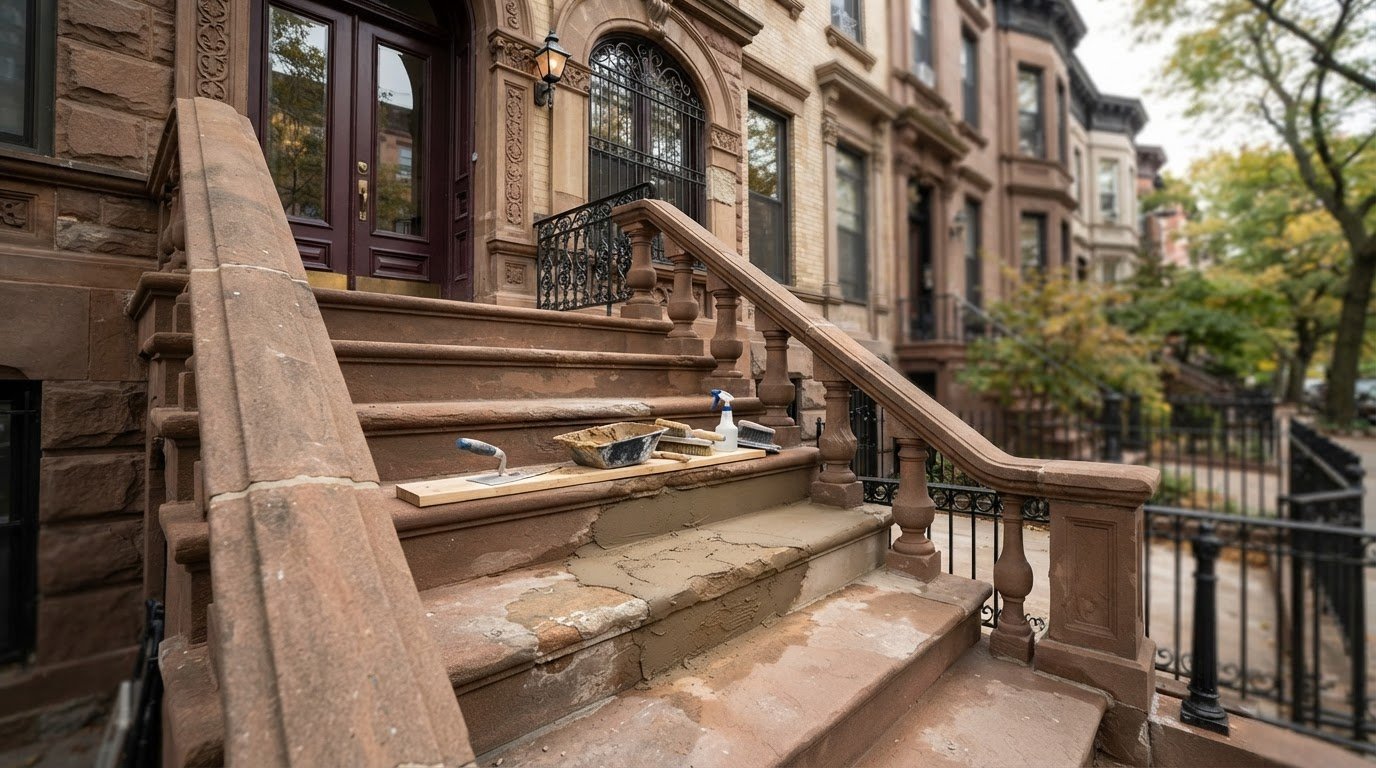
The cost of Brownstone stoop restoration depends on the extent of the damage, the source of moisture, and whether repairs need to connect with the facade. Start by looking for cracks, loose or worn areas, and water damage. Trace where moisture is entering before choosing a repair method. Pricing depends on the property and the scope of work.
A worn stoop can affect more than appearance, and a quick patch may not address the cause of deterioration. This guide explains how to assess damage, what influences restoration costs, and how to apply fast-setting cement-based mortar in layers while allowing time for proper curing. You’ll also see why the condition of the adjoining facade and the mortar’s compatibility with the existing masonry matter when planning a durable repair in Carroll Gardens.
Applying fast-setting cement-based mortar
Repairing cracked or spalled brownstone involves removing loose material, preparing sound edges, and applying a bond coat and compatible mortar in layers. The work and curing time depend on the materials, weather, and extent of the repair.
-
Select Matching Mortar
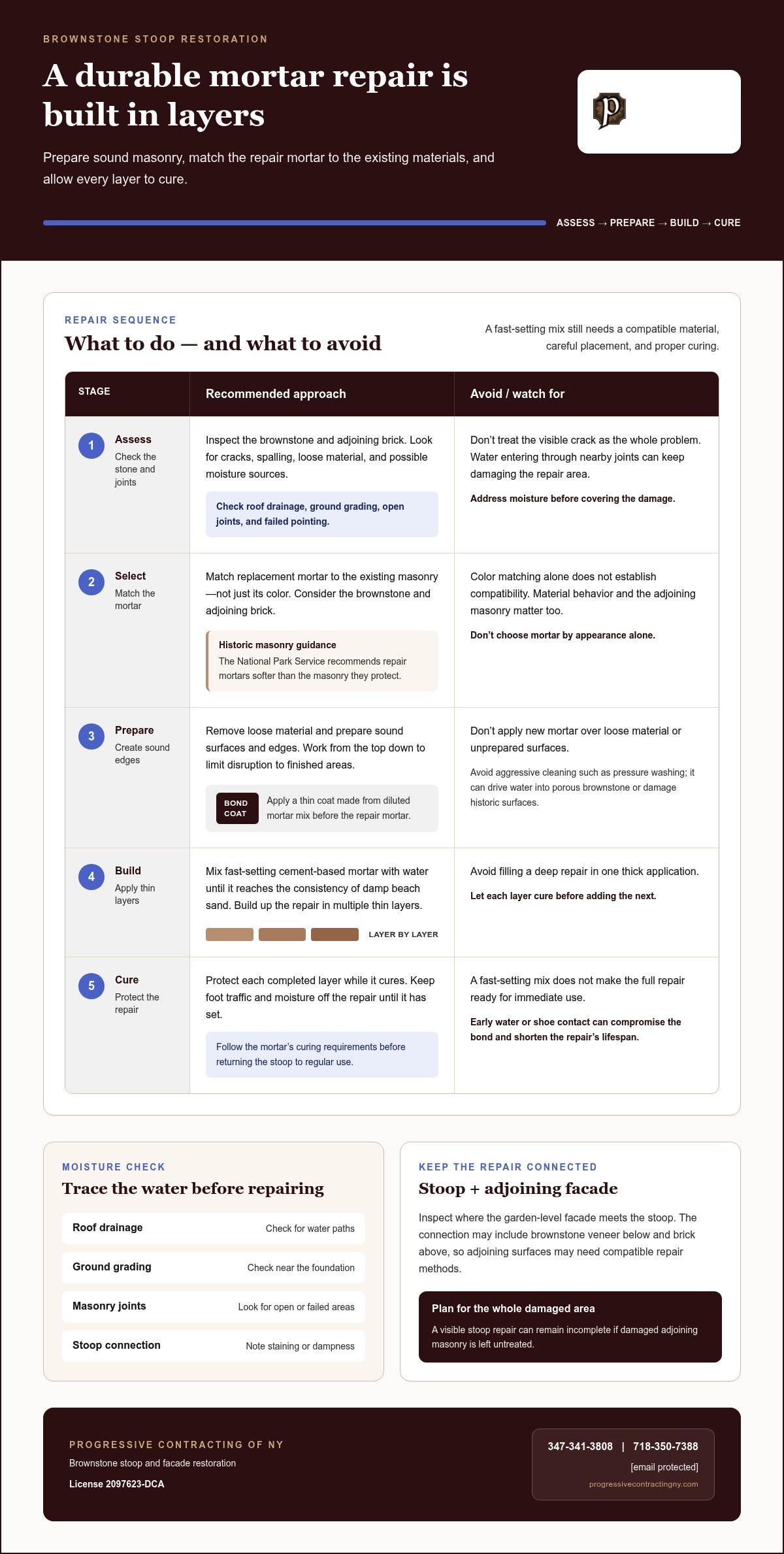
Check the brownstone and adjoining brick before selecting mortar for pointing. In Brooklyn, assess the masonry and trace moisture to possible sources, such as roof drainage, ground grading, open joints, or failed pointing. Repointing without addressing moisture can leave new joints exposed to further damage. Match replacement mortar to the existing masonry, not just its color. For historic masonry, the National Park Service recommends using repair mortars softer than the masonry they protect.
-
Apply Mortar in Layers
Prepare sound surfaces, then work from the top down to limit disruption to finished areas. Apply a thin bond coat made from diluted mortar mix before adding the repair mortar. Mix fast-setting cement-based mortar with water until it reaches the consistency of damp beach sand. Build up the repair in multiple thin layers, allowing each layer to cure before applying the next. Avoid filling a deep repair in one thick application.
-
Cure the Mortar
Protect each completed layer while it cures, and keep foot traffic and moisture off the repair until it has set. Weather and material choice affect curing, so a fast-setting mix does not make the full repair ready for immediate use. Follow the mortar’s curing requirements before returning the stoop to regular use. Early contact with water or shoes can compromise the bond and shorten the repair’s lifespan.
Assessing cracked, worn, loose, or water-damaged stoops
Inspect the stoop and adjoining masonry after wet or freezing weather. Address drainage problems and failed joints before repairing the visible surface to help prevent further damage.
-
Inspect Stoops for Damage
Walk each tread and check for cracks, worn edges, loose sections, and peeling stone. Note where damage appears and whether it follows a joint, edge, or broader surface area. Brownstone is porous sandstone, so water can penetrate it. When that water freezes, it expands and can cause spalling. Look for flaking or detached surface layers, not just open cracks. If several treads show similar wear, record their locations together.
- Trace the damage pattern. Compare affected areas with sheltered sections of the stoop. Damage concentrated near exposed edges can point to weather exposure, while deterioration near joints may indicate water entering through adjoining masonry. Check whether water remains on treads or collects beside the stoop after rain. These observations help distinguish surface wear from a moisture problem that needs attention before repairs.
-
Identify Water Intrusion Sources
Follow possible water paths from above and beside the stoop. Inspect roof drainage, ground grading near the foundation, adjacent wall mortar joints, and brick pointing for defects. Water can travel through failed joints and reach the brownstone below, so repairing only the visible spot may leave the source active. Check where the garden-level facade meets the stoop, and note any staining or dampness along that connection.
- Protect the masonry from further exposure. Keep drainage paths clear and repair open joints or failed pointing before water causes deeper deterioration. Avoid aggressive cleaning, including pressure washing, which can drive water farther into porous brownstone or damage historic surfaces. Reassess the area after rain to see whether water still collects or enters near the same crack, tread, or wall joint.
Brownstone stoop and facade restoration
Treat the stoop and brownstone facade as connected masonry, not separate surfaces. A sound repair plan should address damage across both areas while preserving the building’s original character.
-
Choose a Restoration Contractor
Choose a contractor with brownstone restoration experience and a clear method for coordinating stoop and facade work. Ask for a project scope that identifies damaged areas, proposed materials, and how the finished repair will relate to the existing masonry. For historic New York City properties, approvals from the New York City Landmarks Preservation Commission and Department of Buildings filings may be required.
-
Select Restoration Materials and Techniques
Match the repair method to the damaged feature. A worn set of treads may need resurfacing or build-up, while a broken decorative detail may need carving and sculpting from a brownstone stucco mix. Facade resurfacing can involve removing deteriorated stone, applying bonding and stucco coatings, matching the final cement color, and sealing the surface. For historic masonry, the National Park Service recommends mortar softer than the masonry it protects.
- Coordinate the stoop and facade. Inspect where the garden-level facade meets the stoop before setting the repair scope. This connection can include brownstone veneer below and brick above, so adjoining surfaces may need compatible repair methods. Snow exposure and everyday wear can accelerate stoop deterioration compared with the facade. Repairing the visible stoop while leaving damaged adjoining masonry untreated can leave the restoration incomplete.
- Review the complete work plan. Confirm that the sequence covers damaged stone and related facade work, such as brick pointing or surface restoration where needed. Color matching alone does not ensure compatibility. Texture, material behavior, and original architectural details matter too.
Explore brownstone restoration services
Progressive Contracting NY: Brownstone facade renovation
Progressive Contracting NY Corp provides brownstone facade renovation and brownstone stoop restoration for properties with worn steps, damaged masonry, or deteriorating facade details. When both the stoop and adjoining facade need attention, the company coordinates the exterior restoration as a connected project.
For cracked treads, loose stone, or facade deterioration, share the affected areas and visible damage when you get in touch. Progressive Contracting NY Corp.’s license number is 2097623-DCA.
Contact Progressive Contracting NY Corp. at 347-341-3808 or 718-350-7388, or email ProgressiveContractingNY@yahoo.com to discuss your brownstone restoration project.
Plan the next step for your brownstone
A clear restoration plan starts with the property’s condition and the way its exterior details fit together. If the stoop and facade both need attention, plan how the work can address their connection while respecting the building’s original character. Brownstone stoop restoration is a practical next step when damaged treads, deteriorating stone, or adjoining facade concerns call for a coordinated approach.
Progressive Contracting NY Corp. offers Brownstone facade renovation, Rammstein stoop restoration, and Brownstone Facade Restoration. Share the areas you’re concerned about and discuss the restoration work that fits your property.
A carefully planned next step can help you move forward with a clearer approach to your home’s exterior.
Frequently Asked Questions
What Influences the Cost?
The main cost drivers are the amount of damaged masonry, the repair method, material compatibility, and whether related facade work is needed. Replacing a broken decorative feature, for example, differs from resurfacing several worn treads. Access to the work area and the condition of adjoining brickwork can also affect the project scope in Brooklyn and Manhattan.
What is involved in brownstone stoop restoration?
Brownstone stoop restoration involves assessing the existing stone, identifying damaged sections, and choosing repairs that suit the building’s masonry. Work may address worn treads, decorative details, or connections between the stoop and facade. For a Carroll Gardens property, the plan should account for how repaired surfaces meet the original brownstone and adjoining brickwork.
How much does brownstone stoop restoration cost in NYC?
Pricing depends on the specific property and scope of work. The estimate reflects the extent of deterioration, the materials and repair method, and whether the adjoining facade needs attention. Localized damage differs from a project involving several steps and connected exterior masonry, so there is no single price for every New York City stoop.
What factors affect the cost of restoring a brownstone stoop?
The underlying condition can change the scope beyond what visible cracks suggest. Loose stone around a tread, for instance, may require different work from widespread surface loss or deterioration where the stoop meets the facade. Material compatibility, the amount of affected masonry, and the condition of connected exterior features all influence what the project requires.
Do brownstone stoop repairs require permits in New York City?
Some historic-property projects may require approvals or filings, depending on the property and scope of work. The New York City Landmarks Preservation Commission and Department of Buildings may require approvals or filings for historic properties. Requirements vary by property and project, so not every stoop repair follows the same process.