
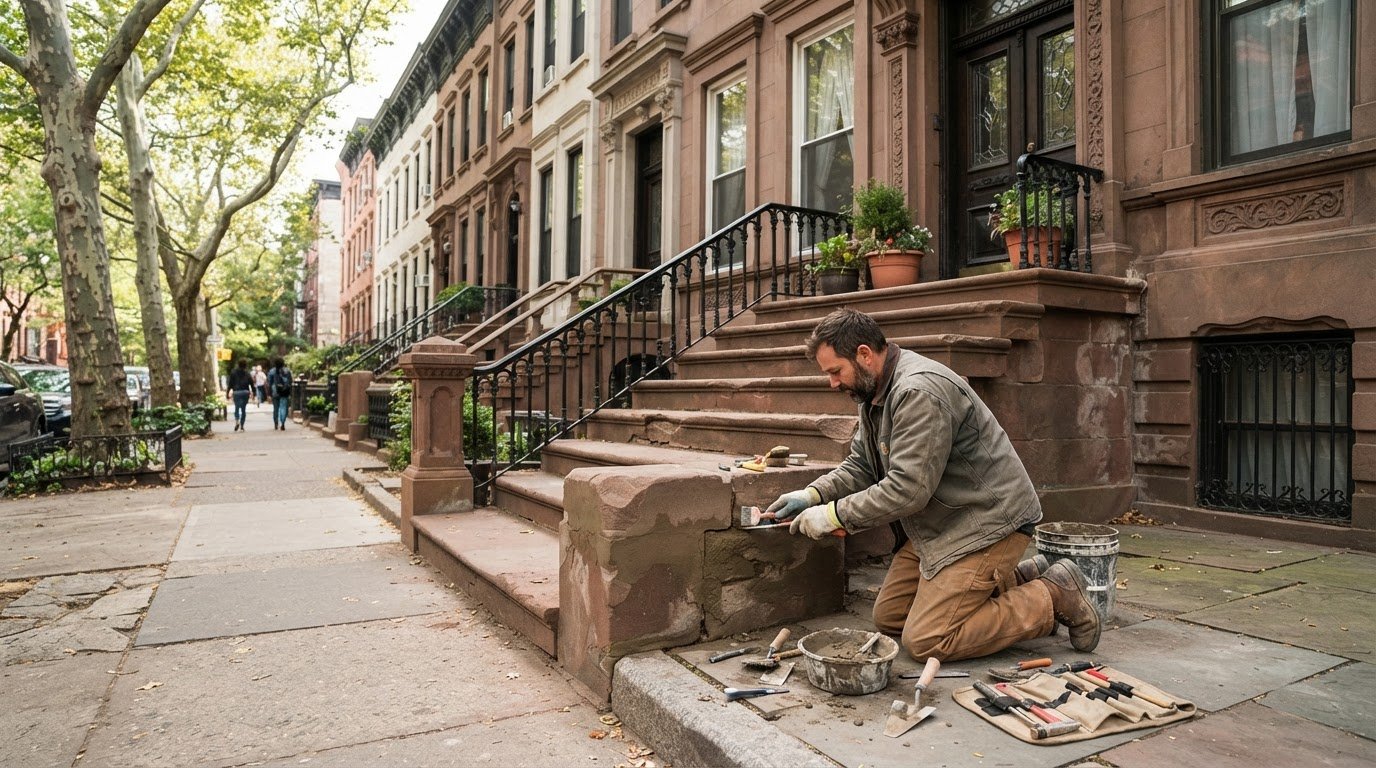
A broken brownstone step doesn’t always need replacement. Brownstone stoop repair can address localized cracks and worn edges, while extensive deterioration may call for resurfacing or rebuilding. The key is whether the stone and its supporting structure remain sound enough to support a repair.
Cracks and crumbling edges can make a stoop unsafe, and a quick patch may leave the cause unresolved. Repair materials matter: the National Park Service recommends mortar softer than the historic masonry it protects, allowing the mortar to wear as a sacrificial layer. Here’s how to assess damage, understand the role of compatible mortar and water management, and decide when reconstruction may be more durable.
Historic masonry-compatible repair mortar
Yes, a cracked brownstone step can often be repaired when the damage is localized and the underlying stone remains sound. You can remove loose debris, but a durable patch requires suitable mortar, careful surface preparation, and a properly shaped edge. For broken corners, deep cracks, or several failing steps, choose a mason experienced with historic brownstone. A mismatched repair may be harder than the original stone and transfer damage to it.
Mortar compatibility matters because brownstone is porous sandstone. The National Park Service recommends repair mortar softer than the historic masonry, so the mortar wears before the original stone. A mason should assess the existing brownstone and mortar, then select a compatible mix and finish. Color and texture matter too: a sharply contrasting patch can leave a visible mark on the stoop.
Before patching, look for where water enters or collects. Check roof drainage, the slope beside the steps, open mortar joints, and nearby brick pointing. Water can travel through these paths and worsen cracks during freezing and thawing. Sealing only the visible crack may leave the source untouched, so the repair should address both the damaged area and contributing water entry.
Historic district rules can affect the work. In New York City, brownstone stoop repairs in historic districts may be subject to local requirements. Permits are needed for many stoop repairs and always for landmark buildings, so account for these requirements before work begins.
A compatible repair follows a practical sequence: assess the stone, remove unsound material without widening the damage, prepare the surface, apply suitable mortar, and reproduce the original contour. At a tread edge, restore the nosing profile rather than leaving a blunt patch. Keep foot traffic and moisture away until the repair has cured appropriately.
Brownstone, bluestone, and granite stoop reconstruction
Reconstruction may suit steps with widespread wear, failing edges, or a damaged base. Before choosing the scope, compare the existing stone, tread condition, drainage, and finish you want.
Stone Reconstruction Options
Brownstone can preserve the stoop’s historic appearance, while bluestone or granite offers a different finish. The right choice depends on the existing material, the building’s character, and how much of the staircase needs rebuilding. In Brooklyn, each tread may be a hand-cut block of brownstone or bluestone. New work should fit the step dimensions and provide even, usable surfaces.
In New York City, permits are needed for many stoop repairs and always for landmark buildings. Work in historic districts may also be subject to local requirements intended to preserve the building’s character.
Repair Versus Replacement Costs
Repair typically addresses localized damage, such as one cracked tread or a failing edge. Replacement or reconstruction may involve several worn treads, broader structural damage, or the need for a uniform finish. The scope, stone selection, access, and preparation affect project cost. Compare what each proposal includes, especially removal, rebuilding, and finish work, rather than judging by the surface treatment alone.
A patched-and-painted surface is different from replacing the stoop’s stone layer. Choose based on the damage and intended result, not appearance alone.
Repair Timeline and Lifespan
A small stoop repair may take one day, while a full stoop rebuild can take a few weeks. The repair and its curing period are separate: curing can take several days to a few weeks, depending on materials and weather. Keep foot traffic and moisture off the work until it has cured appropriately.
There is no fixed lifespan for every repair. Durability depends on material compatibility, sound preparation, drainage, weather exposure, and ongoing use.
Risks from Damaged Stoops
A loose tread, crumbling nosing, or uneven step can catch a foot and cause a fall. Damaged edges may worsen with daily use, and insecure railings can reduce support. Keep people off visibly unstable steps and arrange repairs before using them again. After the work, edges should be smooth, railings secure, and the area safe to use once curing is complete.
For upkeep, clear snow and debris, avoid winter salt on brownstone, and watch for standing water or new cracks. Address drainage problems and deteriorating joints promptly to limit moisture-related damage.

What is the cost to repair versus replace a brownstone stoop?
Repair usually involves a limited area, such as one cracked tread or a broken nosing. Replacement may involve removing and rebuilding several steps, or renewing the stone layer across the staircase. The price depends on the stoop’s condition and scope, and is provided after a quote request. Cost factors include the amount of damaged material, stone choice, access, removal, and finish work.
Compare proposals by their work descriptions, not just the finished surface. A patched-and-painted stoop differs from one rebuilt with a new brownstone coating. The first may address visible damage; the second covers a larger area and changes the finish. Ask what each scope includes: removing loose material, rebuilding edges, replacing stone, and restoring the tread surface.
For example, one stable tread with a localized chip may need less work than several treads with worn edges. Resurfacing or build-up may suit a staircase with multiple worn treads or a need for a consistent finish. If the base is compromised, surface patching alone won’t address the problem. The extent of deterioration, not appearance alone, guides the repair-versus-replacement decision.
Before comparing costs, document each damaged step and note loose stone, uneven surfaces, or pooling water. Include these observations when requesting a quote. A clear scope helps you compare whether proposals address the same areas and underlying issues, rather than comparing a small patch with a full staircase rebuild.
Request a brownstone stoop repair quote
Progressive Contracting NY: Brownstone facade renovation
Progressive Contracting NY Corp handles brownstone facade renovation and brownstone stoop repair for owners addressing damaged steps or wider exterior deterioration. When cracks, worn treads, or failing edges go beyond a small patch, its brownstone restoration work can address the stoop as part of the property’s historic masonry.
Start by understanding the damage and the work needed to restore the stoop’s condition and appearance. If the facade also shows deterioration, brownstone facade renovation can address the broader exterior alongside the stoop. This is a practical next step when localized repairs no longer match the scale of the damage.
For inquiries, call 347-341-3808 or 718-350-7388, or email ProgressiveContractingNY@yahoo.com. License number 2097623-DCA. Contact Progressive Contracting NY Corp to discuss your Park Slope brownstone stoop, or visit progressivecontractingny.com.
Plan the next step for your stoop
A sound repair starts with a clear view of the damage and the result you want. Before deciding on Brownstone stoop repair, note which steps feel unstable, where edges have broken away, and whether the facade also needs attention. These observations can help focus the discussion on the work needed.
Progressive Contracting NY Corp offers Rammstein stoop restoration, Brownstone facade renovation, and Brownstone Facade Restoration. For a Park Slope property that needs coordinated exterior work, consider how the stoop and facade can be addressed together while preserving the building’s character.
A well-planned next step can move you from visible damage toward a carefully considered restoration.
Frequently Asked Questions
Can broken brownstone steps be repaired?
Yes, a broken step can often be repaired if the damage is limited and the tread remains stable. A mason assesses whether the fracture affects only a corner or crosses the load-bearing area. For example, a chipped edge may be rebuilt, while a tread that shifts underfoot may need replacement. The condition of adjacent steps also helps determine the right scope.
Why do brownstone stoops crack?
Brownstone stoops crack when moisture, seasonal freezing and thawing, and regular foot traffic stress the stone. Brownstone is porous, so water can enter small openings and contribute to deterioration. Rain, snow, and winter salt add exposure at the steps. A crack that returns after patching may point to ongoing moisture or wear rather than a one-time impact.
What causes brownstone stoop deterioration and cracking?
Water entry and repeated wear are common contributors, but damage may start away from the visible crack. Roof runoff, poor drainage near the steps, open joints, or failing nearby brick pointing can let moisture reach the masonry. For example, a damp area beneath one tread may help explain recurring cracks there. Identifying the pattern helps distinguish surface damage from a broader issue.
What materials are best for brownstone stoop repair?
The best material depends on whether the work patches existing stone or replaces a tread. For mortar repairs, the National Park Service recommends mortar softer than the historic masonry, allowing it to act as a sacrificial layer. Replacement may use brownstone or bluestone to suit the existing steps; granite is another reconstruction option. Matching the building’s stone and finish helps the repair blend naturally.
What permits are required for brownstone stoop repair in New York City?
Some stoop repairs may require permits, and requirements can vary. Repairs in historic districts may also be subject to local requirements.