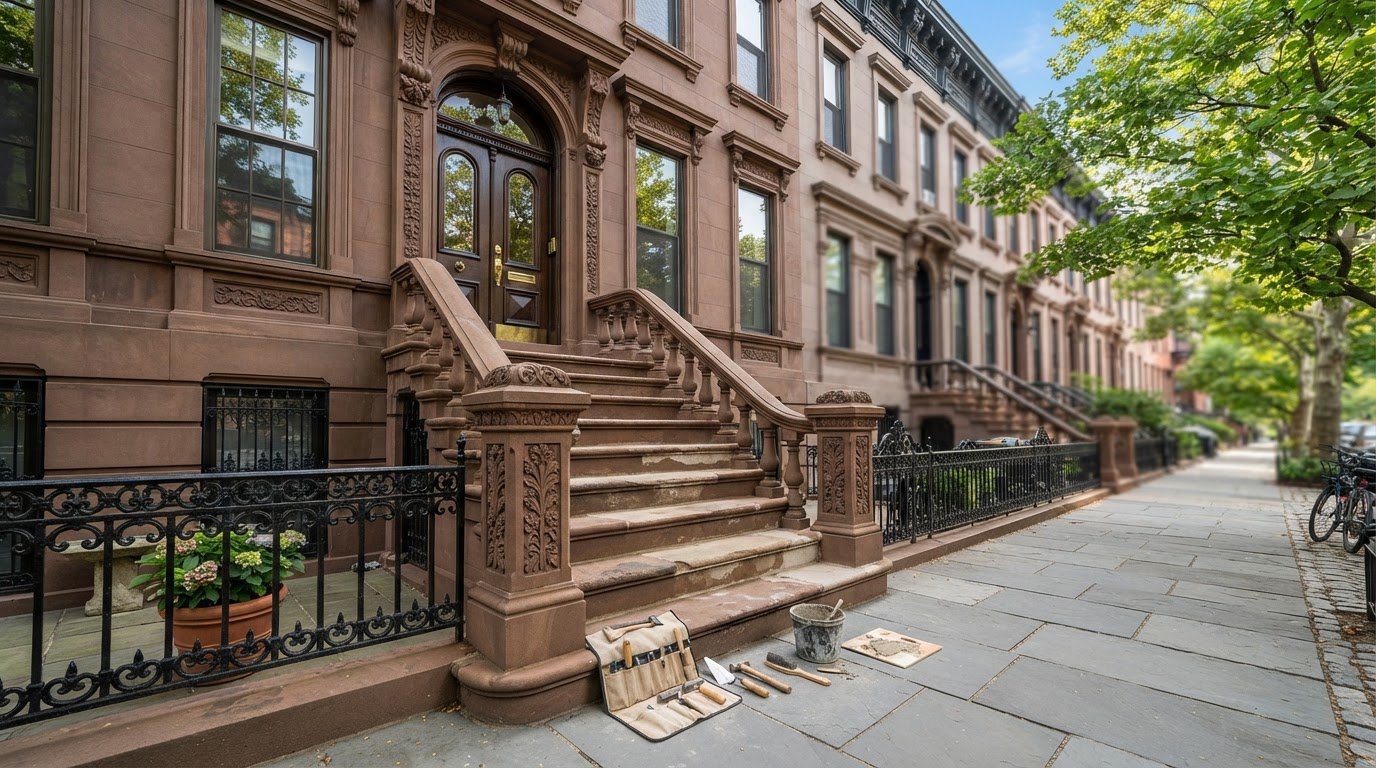
Brownstone stoop repair in Brooklyn, NY, may need to meet local preservation requirements if the property is in a historic district. The appropriate repair also depends on whether damage is limited to the surface or extends into the masonry. A sound plan respects both the stoop’s condition and its historic character.
It’s understandable to want a clear path before work begins, especially when permits, preservation rules, and repair options all come into play. Progressive Contracting NY Corp explains how those considerations shape the project and what distinguishes patching from resurfacing or rebuilding damaged areas. You’ll also learn why sound masonry repairs address water sources and restore the stoop’s original details, not just its visible finish.
Table of Contents
1. Restoration permits and historic preservation
First, determine whether the Brooklyn property is in a New York City historic district. The New York City Landmarks Preservation Commission notes that brownstone repairs in historic districts may be subject to requirements intended to preserve a building’s character. Those requirements can affect the repair method and visible details. Some brownstone restoration work in New York City may also require permits, so establish the project scope and applicable review before construction.
Historic mortar compatibility matters as much as appearance. The National Park Service recommends using repair mortar softer than the historic masonry, so the mortar can act as a sacrificial layer. Hard, incompatible mortar can transfer damage to the older material instead of protecting it. Consider the existing brownstone and mortar before choosing a replacement mix. Mortar selection is a practical preservation decision, not just a cosmetic one.
To compare estimates for brownstone stoop repair in Brooklyn, review the written scope: surface preparation, mortar compatibility, damaged areas, finish, and any preservation or permit steps. A quote for a small patch is not comparable to one covering broader restoration, even if both call the work stoop repair.
Choose a contractor with brownstone restoration experience who can explain how the proposed methods protect historic masonry. Ask for a clear description of the repair sequence, materials, and preservation considerations. Brownstone stoop repair in Brooklyn, NY, requires attention to both the masonry and the property’s historic context, not simply a fresh surface.
2. Choosing between patching, resurfacing, and step replacement
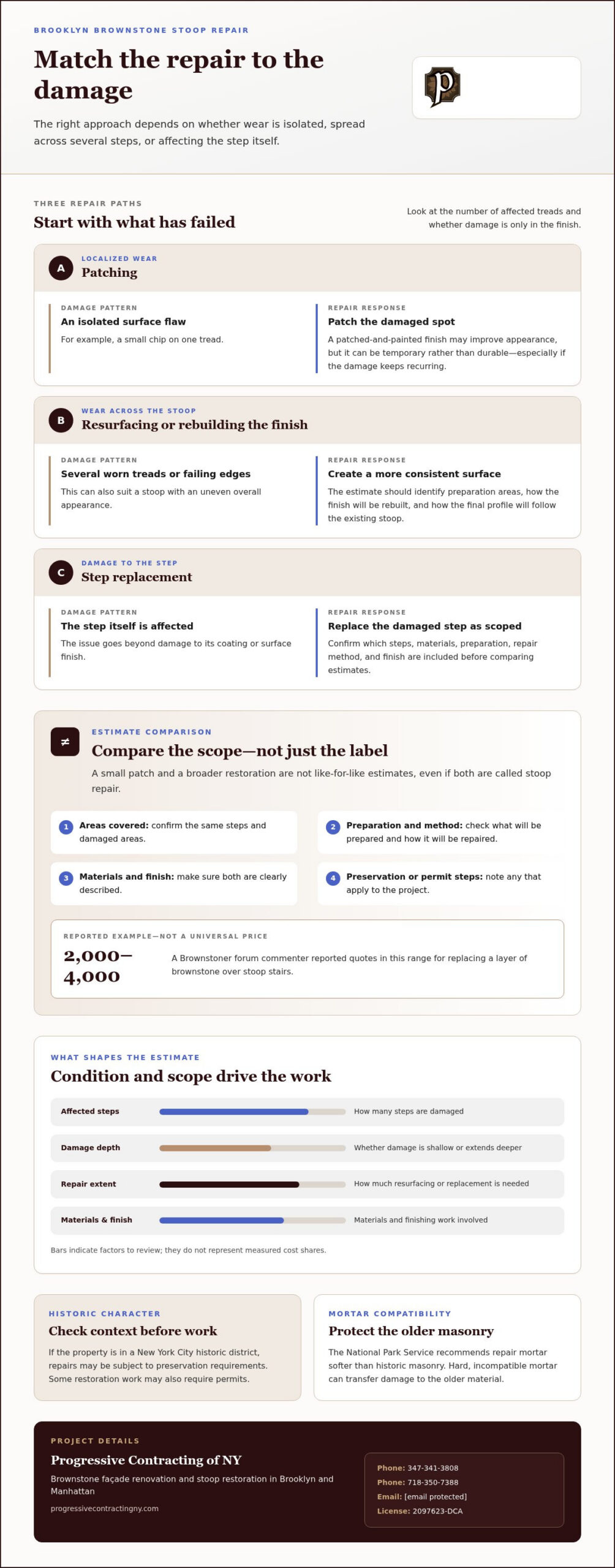
Match the repair to the extent of wear. Patching may suit isolated surface damage, such as a small chip on one tread. It can improve appearance, but a patched and painted finish may be temporary rather than durable. The key question is whether damage is isolated or recurring across the stoop.
Resurfacing or rebuilding the brownstone finish may suit stoops with several worn treads, failing edges on multiple steps, or an uneven appearance. This approach creates a more consistent surface without treating every step as a separate patch. The estimate should specify which areas need preparation, how the finish will be rebuilt, and how its final profile will follow the existing stoop.
Step replacement may be appropriate when damage affects the step itself, not just its coating. Compare estimates by confirming that they cover the same steps, repair method, materials, preparation, and finish. Differences in scope can make prices difficult to compare directly.
Brownstone stoop repair costs in Brooklyn depend on the number of damaged steps, the depth of the damage, how much resurfacing or replacement is needed, and the materials and finishing work involved. The project’s scope and condition shape the estimate. Progressive Contracting of NY offers a free consultation to discuss the work.
Before choosing, document each damaged tread and note whether wear appears on one step or across several. A brownstone stoop repair plan should make the repair scope clear, so you can compare like with like and understand what the finished work includes.
A Brownstoner forum commenter distinguished a patched-and-painted stoop from a redo with new brownstone coating, noting that the latter costs considerably more. The commenter also cautioned that a patched and painted repair might work as a temporary fix but might not be durable. Quotes for replacing a layer of brownstone over the authors’ stoop stairs ranged from 2000- 4000.
3. Masonry repairs and structural integrity
A sound brownstone repair rebuilds the damaged profile instead of covering it with a thick surface layer. Repair material is applied in thin layers, with each allowed to cure before the next is added. This staged approach helps the repair follow the stoop’s shape and form a stable bond.
Pay close attention to the nosing, the projecting front edge of each step. If it has failed, rebuild its original geometry, sight lines, and proportions. A rounded or uneven replacement can change the stair’s appearance, even if the surface looks smooth. Matching the original edge preserves the step’s historic profile.
Cleaning methods matter too. Aggressive pressure washing can drive water deeper into brownstone or damage its historic surface. A careful repair process removes loose material without eroding sound stone, preparing the damaged area while preserving the surrounding masonry.
Address water entry alongside visible cracks or spalling. Check roof drainage, foundation grading, nearby wall mortar joints, and failed brick pointing. Repairing a stoop while leaving a leaking downspout or open wall joint can leave the source of moisture active. A thorough assessment follows the water path rather than focusing only on the damaged step.
Delaying repair can allow water entry to worsen masonry deterioration and cause more of the original profile to fail. A loose or crumbling area can also require a broader repair if the damage and its source are not addressed together.
Layered repairs, faithful nosing reconstruction, and attention to drainage, foundation grading, adjacent mortar joints, and brick pointing help keep the work consistent with the stoop’s original details.
Progressive Contracting NY: Brownstone facade renovation
Progressive Contracting NY Corp provides brownstone façade renovation and brownstone stoop restoration for property owners in Brooklyn and Manhattan. The company can address worn surfaces, damaged masonry, and historic details, including repairs considered alongside the surrounding façade. For a Brooklyn brownstone, describe the stoop’s condition and preservation needs to begin a focused discussion of the project scope.
To discuss brownstone restoration work, contact Progressive Contracting NY Corp at 347-341-3808 or 718-350-7388, or email ProgressiveContractingNY@yahoo.com. License number: 2097623-DCA.
Contact Progressive Contracting NY Corp for a free consultation about your brownstone stoop project.
Plan the next step for your stoop
Before beginning brownstone stoop repair in Brooklyn, NY, make a simple record of the condition. Note which treads are worn, where edges have broken, and whether water appears near the stoop after rain. These observations help focus the project discussion on visible damage and the work it may require.
A measured approach helps preserve historic details. Photograph the stoop and note any changes that could affect its original appearance. These records provide a useful reference when discussing the scope and desired finish with a restoration contractor.
Progressive Contracting of NY can discuss your brownstone restoration needs and the appropriate scope for your property in Brooklyn or Manhattan. Contact the company for a free consultation when you’re ready to plan the repair.
A carefully planned repair can help preserve the character of your Brooklyn brownstone.
Frequently Asked Questions
Do Brooklyn brownstone stoop repairs require a NYC building permit?
Permit requirements depend on the work involved. In New York City, brownstone restoration may require permits, and a localized surface repair differs from reconstructing or changing steps. Define the planned work clearly, then determine which requirements apply before scheduling construction.
Are stoop repairs subject to NYC Landmarks Preservation Commission approval?
Repairs may also be subject to preservation requirements if the building is in a historic district. The New York City Landmarks Preservation Commission notes that requirements can apply to brownstone repairs to preserve a building’s character. Consider the scope and visible changes, and distinguish routine maintenance from work that alters historic details.
What materials and methods are best for restoring a historic brownstone stoop?
Use compatible repair materials and rebuild damaged details to match the existing stoop. The National Park Service recommends mortar softer than historic masonry, allowing it to act as a sacrificial layer. A sound repair to a broken step edge restores its original profile and proportions. Address the moisture source as well, rather than treating discoloration as only a surface problem.
How long does brownstone stoop repair or replacement take?
Cure times can range from several days to a few weeks, depending on the materials and weather conditions.