
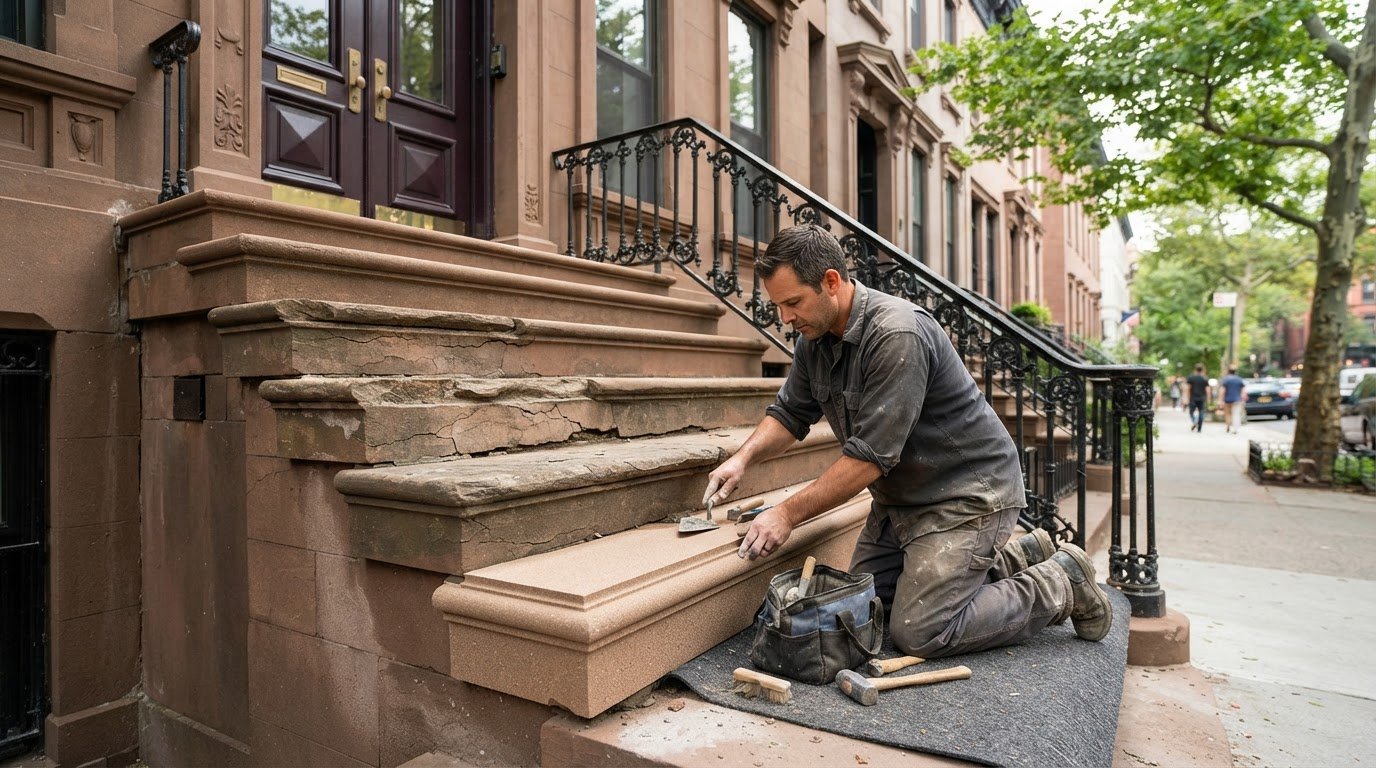
Matching replacement stone to an existing Manhattan stoop takes more than finding a similar color. Texture, profile, and how the stone meets the surrounding masonry all matter. Brownstone Stoop Repair in Manhattan, NY should begin with an assessment of the damage and structural condition, followed by a decision about whether targeted stone replacement and mortar work are suitable. Costs depend on the extent of damage, the work needed to match the stone, and whether repairs extend beyond the visible surface.
It’s understandable to want a repair that feels sound and still fits the original brownstone. This guide explains how to recognize damage, assess whether stone needs replacing, and repoint mortar with materials suited to historic masonry. It also outlines the factors that shape an estimate, so you can understand the proposed work before choosing a next step.
Table of Contents
How do I know if my stoop needs repair or replacement?
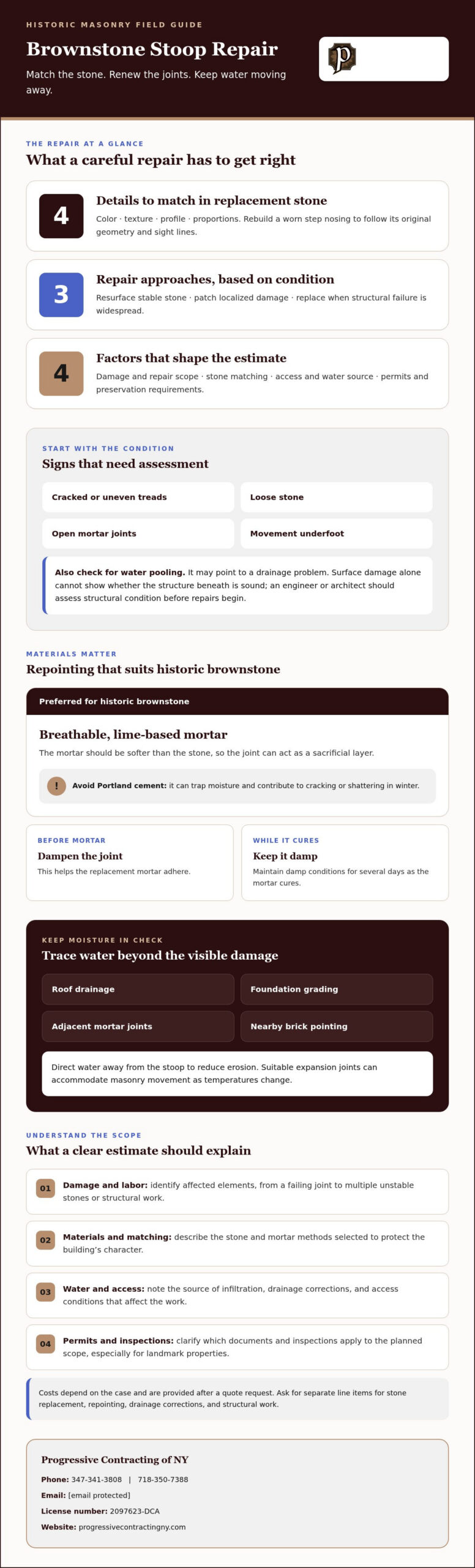
Look for cracked or uneven treads, loose stone, open mortar joints, and movement underfoot. Water pooling on the steps may signal a drainage problem. Before repairs begin, have a professional engineer or architect assess the stoop’s structural condition. Surface damage alone can’t show whether the structure beneath is sound.
Resurfacing renews the outer finish when the stone underneath remains stable. Patching addresses localized cracks or missing material, while full replacement may be appropriate when the stoop has widespread structural failure. An inspection can distinguish cosmetic wear from damage that affects stability and help define the repair scope.
Permit needs depend on the repair scope, so identify the work before setting a schedule. In-kind repairs that restore a stoop to its original state usually need a Permit for Minor Work; alterations will likely require a Certificate of Appropriateness and may involve a public hearing. In historic districts, establish whether the building is landmarked. According to the New York City Landmarks Preservation Commission, owners must obtain an LPC permit for work on a landmark property. As of 2026, restoration approval requires detailed documentation. Ask which permits and inspections apply to the planned work, and who will coordinate them.
Grants, tax credits, and financing are not automatic benefits of historic status. Treat them as separate budget considerations: eligibility depends on the property, owner, and project scope. Confirm any funding before relying on it in your estimate.
Before hiring, ask how the inspection will distinguish repair from replacement, how new stone will match the existing profile and color, and which mortar suits the historic masonry. Ask what permit documents the project requires and how any inspections fit into the work sequence.
Replacing damaged stone and repointing mortar
Delaying repairs can allow loose stone, open joints, or uneven treads to worsen. Water entering those gaps can damage masonry, and loose or cracked surfaces can create a tripping hazard. Freeze-thaw cycles add stress as water expands when it freezes and contracts as it thaws, gradually wearing down stone and mortar.
A localized repair may involve replacing damaged stone, filling a crack, or rebuilding a worn step nosing. Match replacement stone to the original color, texture, profile, and proportions to preserve the stoop’s character. Rebuild a failed nosing to follow the original geometry and sight lines, rather than leaving an uneven edge.
Repointing renews deteriorated joints, but the mortar must suit the masonry. Historic brownstone needs breathable, lime-based mortar that is softer than the stone, allowing the joint to act as a sacrificial layer. Portland cement can trap moisture and contribute to cracking or shattering in winter. Before applying replacement mortar, dampen the joint to help it adhere, then keep it damp for several days as it cures.
Water management is part of a sound repair. Check roof drainage, foundation grading, adjacent joints, and nearby brick pointing for sources of moisture. Direct water away from the stoop to reduce erosion. Temperature changes also make masonry expand and contract, so suitable expansion joints can accommodate movement.
For maintenance, inspect joints and step edges regularly, clean gently, and seal where appropriate. Avoid aggressive pressure-washing, which can force water deeper into historic masonry or damage the surface. Early repairs limit ongoing water damage and help the stoop withstand changing weather.
Brownstone stoop repair costs
A useful estimate starts with the work required, not just the visible surface. A few cracked stones and open mortar joints call for a different scope than loose steps or structural movement. Moisture can also extend damage beneath the surface. Ask for separate line items for stone replacement, repointing, drainage corrections, and structural work.
Appearance and historic details shape the repair plan. Matching brownstone requires attention to color, texture, profile, and the shape of the step nosings. A landmark property may also need preservation documentation and permits, which affect planning. The estimate should explain how the materials and methods will protect the building’s character while addressing the damage.
Access, the number of damaged elements, and the source of water infiltration also shape the project scope. Repairing one failing joint is different from correcting drainage and replacing several unstable stones. The price depends on the case and is provided after a quote request. The estimate should identify the damage, materials, labor, and permit-related work that determine the total.
When choosing a Manhattan contractor, look for experience with historic masonry and brownstone stoops. Ask for a written scope explaining how the contractor will assess structural hazards, match replacement stone, select mortar, and address moisture. Before approving the work, ask for clear explanations of permits, inspections, and each estimate line.
Request a brownstone stoop repair estimate
Progressive Contracting NY: Brownstone facade renovation
Progressive Contracting NY Corp provides expert stoop restoration and brownstone facade renovation for historic properties. Turn to the company when damaged steps, worn masonry, or facade deterioration call for careful work that respects the building’s character. A clear scope identifies affected areas, proposed repairs, and how the work addresses visible damage.
For a Manhattan stoop project, discuss the condition of the steps and any related facade concerns. Progressive Contracting NY Corp also provides brownstone contracting in Manhattan, connecting stoop restoration with broader exterior masonry work where appropriate.
Contact Progressive Contracting NY Corp at 347-341-3808 or 718-350-7388, or email ProgressiveContractingNY@yahoo.com. License number: 2097623-DCA. Visit progressivecontractingny.com to discuss your brownstone restoration needs.
Move your stoop project forward
Before work begins, decide what matters most: restoring safe access, preserving original details, or coordinating stoop work with the facade. That priority helps define the project scope and keeps the conversation focused. For brownstone stoop repair Manhattan NY, Progressive Contracting NY Corp provides quality stoop restoration, brownstone facade renovation, and expert masonry services.
Keep the building’s character and practical repair needs in view as you plan the next step. A clear discussion of the project can help turn visible concerns into a considered restoration plan.
Thoughtful planning is a strong start toward a well-maintained brownstone entrance.
Frequently Asked Questions
Can you match existing brick or stone materials?
Yes, replacement materials can be chosen to coordinate with the existing masonry. Compare a sample with the stoop’s color, texture, grain, dimensions, and finish in natural light. For example, a new tread should align with the neighboring step’s edge and profile, not just match its color. Since weathering changes appearance, aim for a compatible repair that respects the original design.
How long does stoop reconstruction take?
Reconstruction schedules vary with the scope, material preparation, weather, and required approvals. Removing stone and rebuilding involve separate stages, so a complete replacement takes longer than repairing one isolated section. Mortar curing alone can take several days to a few weeks, depending on materials and weather. Plan around the curing process rather than treating the final installation day as project completion.
What are common causes of brownstone stoop damage in Manhattan?
Repeated moisture exposure, freeze-thaw cycles, settling, and daily foot traffic can all contribute to deterioration. In Manhattan, observe how water behaves after rain: pooling on a tread or running toward a joint may indicate a drainage issue. Cracks, loose joints, or movement can help distinguish surface wear from problems affecting the step assembly. These clues help focus the assessment.
What is the cost to repair or restore a brownstone stoop in Manhattan, NY?
The price depends on the case and is provided after a quote request. A focused repair to a small damaged area differs from restoration involving several steps, structural elements, or water management. The estimate should link each proposed task to a visible condition, such as a cracked tread or deteriorated joint, so you can see how the scope shapes the total.
How much does brownstone stoop repair cost per step or square foot in NYC?
A per-step or per-square-foot rate can’t capture every stoop’s repair needs. Two steps of similar size may require different work if one has sound stone and the other needs underlying repairs or custom-shaped replacement material. The estimate reflects the project scope, material matching, access, and required repairs.