
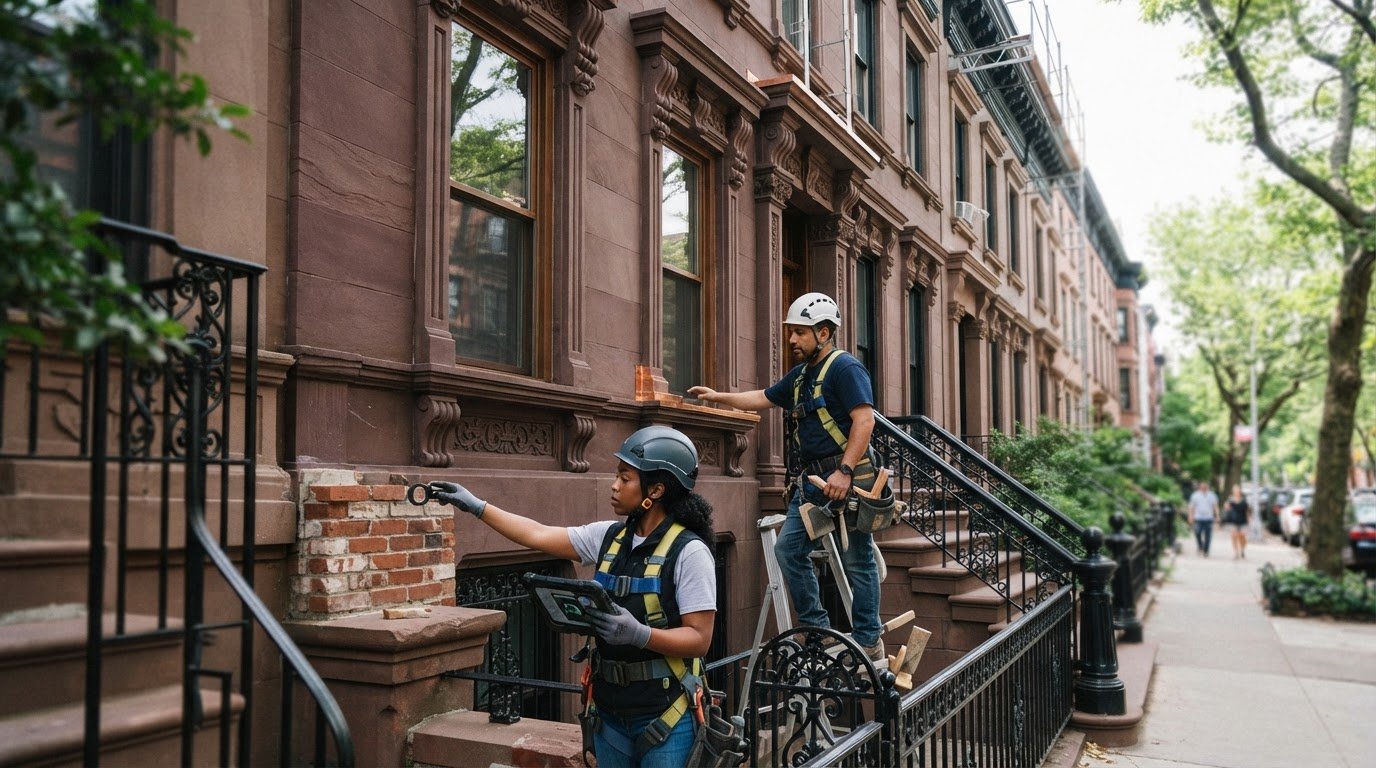
A balcony is part of a building’s façade, so its condition matters alongside the walls, windows, and roofline. Facade restoration addresses deterioration across these connected exterior elements, from cracked masonry and worn mortar to water intrusion. A careful inspection helps identify where damage begins and which repairs the building needs.
Visible cracks or stains can point to problems beneath the surface. This guide explains what façade restoration involves, which common repairs it can address, and how inspections assess surfaces, openings, structural conditions, and roof elements. You’ll also see how inspection findings shape a practical restoration scope for a New York City building, including brownstones in Brooklyn and Manhattan.
Table of Contents
What are the most common façade repairs?
Common repairs address water entry, deteriorated masonry, cracks, and loose or displaced materials. The right scope depends on where damage appears, its pattern, and the materials involved.
Waterproofing and Building-Envelope Repairs
Waterproofing traces leaks to their entry point, such as a failed joint, opening, or damaged flashing. Repairs may involve sealing vulnerable areas or installing or repairing through-wall flashing to limit water penetration and related steel corrosion. Look for a scope that addresses the building envelope, not just interior stains or surface appearance.
Masonry Repair and Stabilization
Masonry repair can include replacing cracked bricks, patching concrete, or rebuilding a deteriorated wall section. Repointing removes failing mortar and replaces it with compatible material, shaped to match the existing joints. This helps limit water entry while preserving architectural character and masonry integrity. Where units have shifted, stabilization may be needed before replacement or finishing work.
Crack Repair and Structural Reinforcement
A crack may reflect movement, moisture damage, or deterioration behind the exterior surface. Its direction, width, and location help distinguish a surface repair from a deeper concern. If surrounding masonry has shifted or steel corrosion has weakened support, reinforcement or anchoring may be needed. Sealing only the visible crack can leave the underlying cause unresolved.
Damage Assessment and Repair Scope
An assessment records cracking patterns, displacement, moisture entry points, and material deterioration. A typical sequence is inspection, diagnosis, repair planning, then masonry or waterproofing work. Costs depend on the damaged area, material, access, and whether repair or replacement is needed. Permit and code requirements depend on project scope and building status, so establish applicable approvals before work begins. Risks include falling masonry and instability, so the work plan should address exposed areas and support needs. Temporary shoring can support a building during masonry replacement or structural repairs.
What is Façade Restoration?
Facade restoration renews existing exterior materials through cleaning, repairs, and protective treatments. The appropriate method depends on the surface, its condition, and the source of deterioration.
Restoration preserves repairable materials; replacement removes and installs new materials where repair isn’t suitable. The decision depends on the extent of damage, material condition, and the building’s architectural features.
To choose a qualified contractor, look for experience with similar materials and projects. A clear assessment, defined work scope, and relevant references help owners understand the proposed approach.
Tax credits or grants may be available for historic properties through programs with specific eligibility criteria. Availability depends on the property and program requirements.
There’s no single U.S. cost per square foot for façade work. The price depends on the case and is given after a quote request; factors include surface area, material, cleaning method, access, and the extent of repairs.
Facade Cleaning Methods
Cleaning can remove pollution stains, efflorescence, and biological growth from masonry and other surfaces. Methods include pressure washing, low-pressure steam, poultice cleaning, chemical cleaning, and abrasive cleaning. The appropriate method depends on the surface material and the deposits being removed. Owners should consider whether the cleaning plan could affect mortar, existing cracks, or areas showing deterioration.
Protective Coatings
After cleaning, protective treatments may help shield an exterior surface from further weather exposure. The material and its condition matter when selecting a treatment, especially where moisture or damaged mortar is present. Coatings don’t replace repointing or repairs when the underlying surface has deteriorated. Address defects first, then apply a suitable protective treatment if needed.
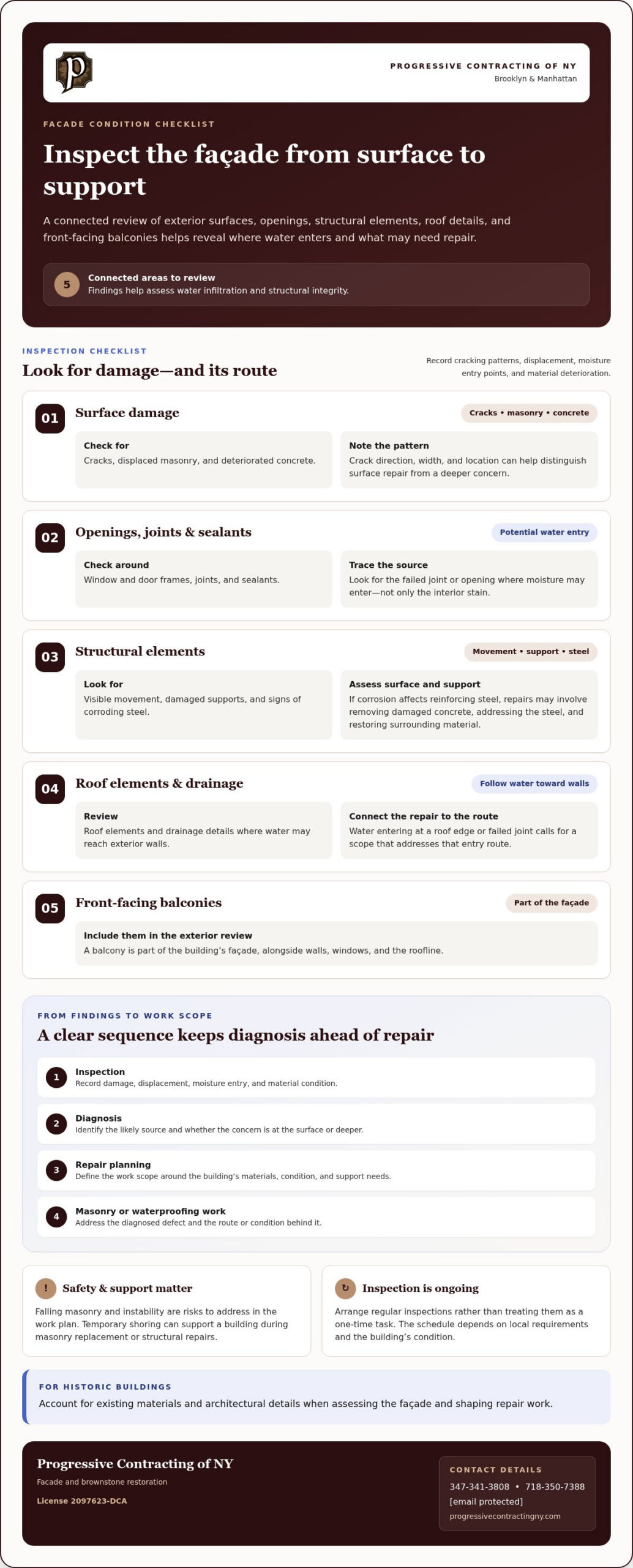
Inspection of surface damage, openings, structures, and roof elements
A façade inspection examines how weather has affected the building exterior, from visible surfaces to roof connections. The findings help property owners identify water infiltration and assess structural integrity.
Inspectors review the building façade in connected areas:
- Surface damage, including cracks, displaced masonry, and deteriorated concrete.
- Openings, including window and door frames, joints, and sealants where moisture can enter.
- Structural elements, including visible movement, damaged supports, and signs of corroding steel.
- Roof elements and drainage details where water may reach exterior walls.
- Front-facing balconies, which are also part of a building’s façade.
Concrete damage calls for attention to both the surface and its support. Where corrosion affects reinforcing steel, repairs may involve removing damaged concrete, addressing the steel, and restoring the surrounding material. Anchoring or reinforcement may also be considered if inspection findings show displacement or weakened support. For a historic building, the assessment should account for existing materials and architectural details.
How often are façade inspections required in major U.S. cities? Owners should arrange regular inspections rather than treat them as a one-time task. The schedule depends on local requirements and the building’s condition.
Inspection findings also guide waterproofing. If water enters at a roof edge, opening, or failed joint, the repair scope should address that route and consider suitable sealants. A commercial building with recurring water entry may need exterior repairs and a review of connected structural elements. This helps distinguish surface deterioration from damage that could affect the building’s support.
Discuss façade restoration needs
Progressive Contracting NY Corp: Brownstone facade renovation
Progressive Contracting NY Corp handles brownstone façade renovation for property owners addressing worn masonry, water entry, or visible exterior damage. Its work includes brownstone restoration and repair, with the scope shaped around the building’s materials and condition. For a related entrance project, the company also provides brownstone stoop restoration.
A building assessment can clarify whether the next step is targeted masonry repair, broader façade work, or both. Progressive Contracting NY Corp serves Brooklyn and Manhattan as a brownstone contractor, connecting restoration needs with practical exterior repairs.
Contact Progressive Contracting NY Corp to discuss a brownstone façade project. Call 347-341-3808 or 718-350-7388, or email ProgressiveContractingNY@yahoo.com. License number: 2097623-DCA.
Plan the Next Step for Your Building
Turn inspection observations into a clear list of priorities. Note where damage appears, whether water returns after rain, and which exterior areas need attention first. These details help keep the project discussion focused on the building’s actual condition.
For a brownstone, preserving original features can shape repair decisions alongside durability and appearance. Consider which areas need immediate attention and which can be addressed as part of a coordinated scope. This preparation connects the purpose of facade restoration with practical choices for the property.
A measured plan gives you a sound starting point. Take the next step with a clear view of your building’s needs.
Frequently Asked Questions
Are balconies considered parts of a façade?
Yes. A front-facing balcony forms part of the building’s façade, including its visible surfaces and connections to the exterior wall. For example, deterioration at a balcony edge may relate to adjacent masonry or water entry at the wall connection. Include balconies in a visual review so damage there isn’t overlooked when assessing the building’s exterior condition.
How is a façade different from cladding?
A façade is the building’s exterior face, while cladding is a protective layer applied to an exterior wall and forms part of that façade. Brickwork, windows, and balconies may contribute to the overall exterior composition; cladding describes a particular wall covering. This distinction helps clarify whether an inspection concerns the whole building face or one exterior material system.
What does facade restoration include?
Facade restoration includes work that renews or repairs existing exterior materials while addressing their condition and function. The scope can combine cleaning with targeted repairs, such as mortar work on brick or restoration of a damaged façade element. A project may focus on one affected area rather than the entire exterior, depending on the assessment findings and which materials remain repairable.
How do you assess a building facade for damage?
Start with a systematic visual review from the ground and accessible viewpoints, recording damage locations and patterns. Note whether cracks cluster near openings, whether materials appear displaced, and where staining suggests recurring water entry. Compare affected areas with adjacent surfaces, then use those observations to distinguish isolated wear from connected deterioration and plan follow-up repairs.
What materials and methods are used to restore brick, stone, and stucco facades?
Brick repairs may use replacement units and compatible mortar for repointing. Stone and terra-cotta work can repair or replace damaged pieces while respecting existing profiles and finishes. Stucco restoration may involve repairing damaged sections or applying stucco where needed. Across materials, the method depends on the surface condition, type of damage, and appearance to retain.