
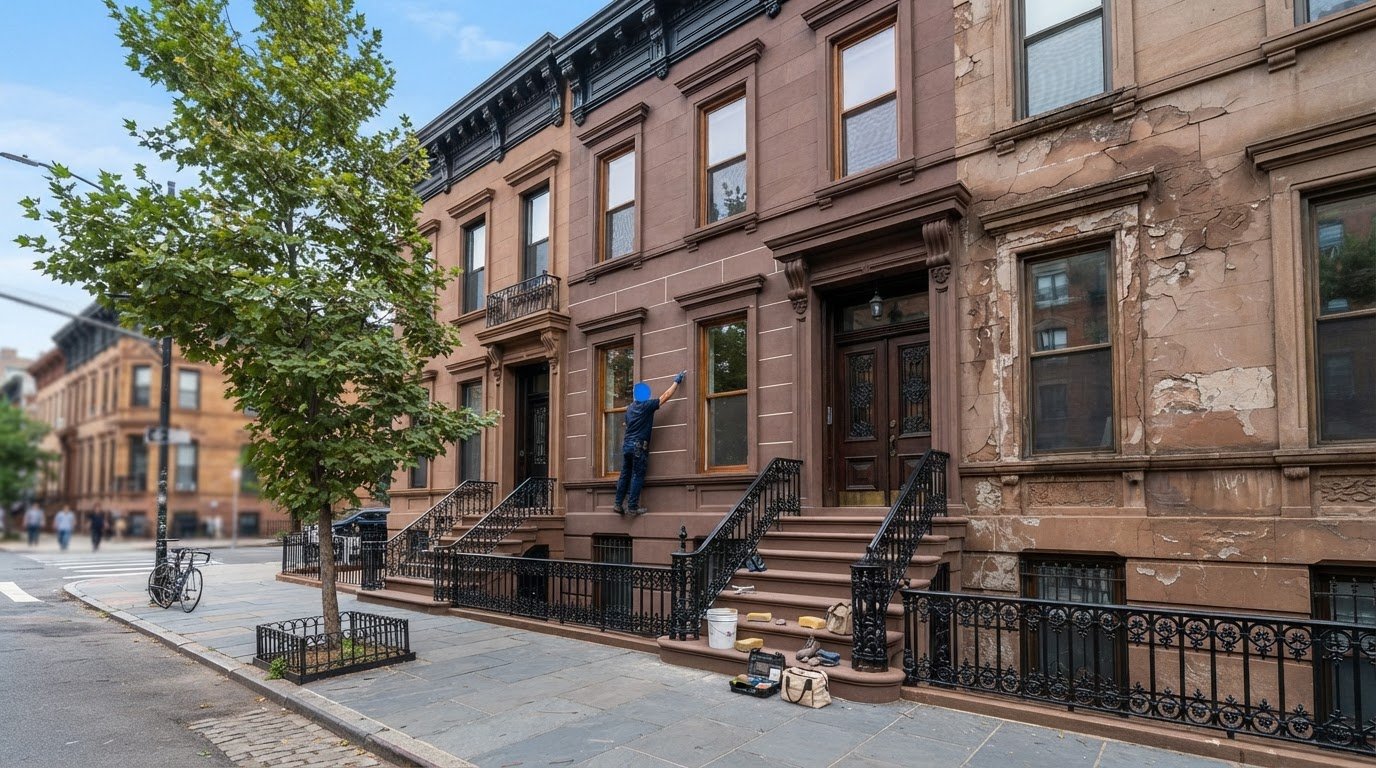
A brownstone facade can look intact from the sidewalk while cracks, loose mortar, or water damage are developing beneath the surface. Facade restoration in Bedford-Stuyvesant, Brooklyn, begins with identifying the type and extent of deterioration, then matching the repair to the masonry and architectural details. Many of the neighborhood’s iconic brownstone row houses were built between 1870 and 1910, so preserving their original character is often part of the work.
It’s understandable to want repairs that protect your building without stripping away the details that make it distinctive. This guide to facade restoration in Bedford-Stuyvesant, Brooklyn, explains common warning signs, how to assess cornices and ornamental features, and what to consider when planning restoration work. You’ll learn how to move from spotting wear to defining a practical project scope.
Table of Contents
Common facade deterioration
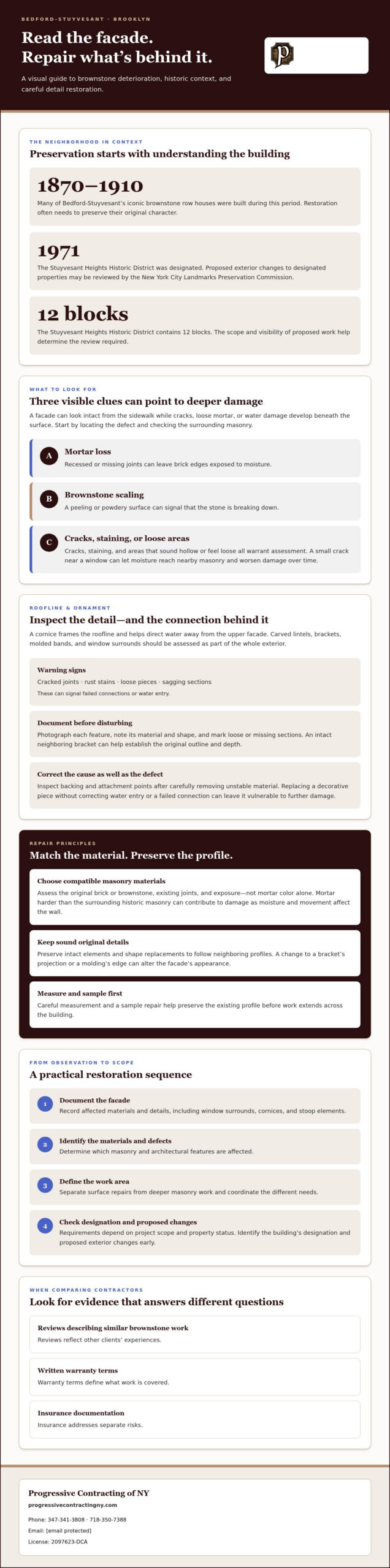
On a Bedford-Stuyvesant brownstone, deterioration often begins where water gets in or masonry joints fail. Look for cracks, flaking brownstone, open mortar joints, staining, and areas that sound hollow or feel loose. For example, a small crack near a window can let moisture reach nearby masonry and worsen damage over time.
- Mortar loss: Recessed or missing joints can leave brick edges exposed to moisture.
- Brownstone scaling: A peeling or powdery surface can signal that the stone is breaking down.
- Detail damage: Cracks or detached sections on a cornice, lintel, or carved trim need close assessment.
The Stuyvesant Heights Historic District was designated in 1971 and contains 12 blocks. For buildings within a designated district, the New York City Landmarks Preservation Commission can affect exterior restoration by reviewing proposed changes to historic features and appearance. The work’s scope and visibility help determine the review required.
Choose repair materials to suit the existing masonry, not by mortar color alone. A specialist assesses the original brick or brownstone, existing joints, and exposure before selecting compatible mortar. Mortar that is harder than the surrounding historic masonry can contribute to damage as moisture and movement affect the wall.
When comparing restoration contractors, look for reviews describing similar brownstone work, written warranty terms, and insurance documentation. Reviews reflect client experiences, warranty terms define what work is covered, and insurance addresses separate risks.
Grants, tax credits, and financing follow different routes. Grant programs set their own property and project criteria, tax credits depend on eligibility and tax circumstances, and financing depends on lender terms. For a Brooklyn property, identify its designation and proposed work before deciding which funding route may fit.
Cornice and ornamental-detail restoration
A Bed-Stuy cornice frames the roofline and helps direct water away from the upper facade. Cracked joints, rust stains, loose pieces, or sagging sections can signal failed connections or water entry. Carved lintels, brackets, molded bands, and window surrounds also need inspection, since damage can follow their profiles. For facade restoration in Bedford-Stuyvesant, Brooklyn, assess these features as part of the whole exterior, not as isolated decoration.
Start by documenting each feature before disturbing it. Photograph the cornice, note its material and shape, and mark loose or missing sections. A broken bracket beside an intact one, for instance, can help establish the original outline and depth. This record gives the repair work a useful reference.
Address the cause as well as the visible defect. Carefully remove unstable material, inspect the backing and attachment points, then repair damaged areas with compatible materials. Replacing a decorative piece without correcting water entry or a failed connection can leave it vulnerable to further damage. In Bedford-Stuyvesant, Brooklyn, facade restoration should respect both the architectural detail and the masonry around it.
- Masonry details: Match replacement mortar and repair material to the surrounding brick or brownstone.
- Metal cornices: Assess corrosion, loose seams, and attachment points before repairing or refinishing sections.
- Ornament: Preserve sound original elements, then shape replacements to follow neighboring profiles.
A replacement that changes a bracket’s projection or a molding’s edge can alter the facade’s appearance. Careful measurement and a sample repair help preserve the existing profile before work extends across the building.
For a project involving these features, a brownstone facade restoration plan can coordinate surface repairs with cornice and ornamental work.
Restoration projects in Bedford-Stuyvesant
Local projects show why facade restoration should preserve a building’s character while addressing its specific defects. At 313 Hancock Street, a Bedford-Stuyvesant brownstone facade restoration provides a neighborhood example. Each property still needs its own inspection: a missing mortar joint, damaged brownstone, and unstable stoop call for different repairs.
A practical project sequence starts with documenting the facade and identifying the materials affected. Then define the work area, distinguish surface repairs from deeper masonry work, and record details such as window surrounds, cornices, and stoop elements. A clear scope helps coordinate repairs and maintain a consistent appearance across the front of the building.
What permits are required for facade repairs in Bedford-Stuyvesant? Requirements depend on the scope of work and the property’s status. Exterior changes to a designated historic property may also require review by the New York City Landmarks Preservation Commission, so identify the building’s designation and proposed changes early.
What facade restoration services are available in Bedford-Stuyvesant, Brooklyn? A project may include brownstone repair, brick pointing, cornice and ornamental-detail restoration, facade work, or stoop restoration. Sidewalk repair is a separate exterior project that can be addressed when the adjoining area also needs attention.
Bedford-Stuyvesant’s restoration history also includes community-scale preservation. The Bedford Stuyvesant Restoration Corporation completed Restoration Plaza in 1972 and purchased the Hunterfly Road houses in Weeksville in 1973. These projects illustrate different approaches: neighborhood investment and preservation of historic buildings. For a private facade, the takeaway is to define the building’s needs before choosing a repair scope.
Explore Bedford-Stuyvesant brownstone facade restoration
Progressive Contracting NY: Brownstone facade renovation
Progressive Contracting NY Corp. provides brownstone facade renovation for Bedford-Stuyvesant properties with worn masonry, damaged surfaces, or deteriorating architectural details. If your facade needs repair that preserves its brownstone character, this is a practical next step. The company also provides Rammstein stoop restoration and works as a brownstone contractor on Brooklyn projects.
A clear project scope connects visible problems with the right exterior work. When you get in touch, share the building’s location and describe the facade or stoop concerns. Progressive Contracting NY Corp. offers a free consultation to discuss the relevant restoration service and project needs.
Contact Progressive Contracting NY Corp. at 347-341-3808 or 718-350-7388, or email ProgressiveContractingNY@yahoo.com. License number: 2097623-DCA. Reach out to discuss your brownstone facade renovation.
Plan the next step for your brownstone
For facade restoration in Bedford-Stuyvesant, Brooklyn, start by turning visible concerns into a clear project scope. Note the areas that need attention, such as a damaged facade, worn brownstone, or deteriorating stoop. This gives the restoration conversation a practical starting point and keeps the building’s existing character in view.
Progressive Contracting NY Corp. provides brownstone facade renovation, brownstone facade restoration, and Rammstein stoop restoration. These services address exterior masonry and stoop work, helping property owners plan around the areas that need attention. A defined scope makes it easier to move from spotting deterioration to discussing the work.
A well-planned project can help preserve the character of your Bedford-Stuyvesant brownstone. Take the next step when you’re ready.
Frequently Asked Questions
Which contractors specialize in historic brownstone restoration in Brooklyn?
Progressive Contracting NY handles brownstone facade renovation and restoration for historic properties in Brooklyn and Manhattan. For a brownstone with several exterior concerns, describe each affected area, such as the upper facade, window surrounds, or front steps. A clear scope connects the building’s specific masonry needs with relevant restoration work, rather than treating every visible defect as the same repair.
How can I assess facade damage and identify urgent structural risks?
Start with a visual review from ground level, noting changes in the wall’s shape or condition. Bulging masonry, a section pulling away from the facade, a sagging roofline, or newly loose material deserves prompt professional assessment. Photograph the area from a safe distance and note whether cracks or movement appear to change. Don’t climb or touch unstable masonry to investigate it.
What are common facade restoration problems in Bedford-Stuyvesant brownstones?
Water can enter around window frames, roof edges, and transitions between facade materials, then cause damage elsewhere. Earlier repairs can also create problems if patches don’t match the surrounding masonry or conceal the source of moisture. For example, recurring staining below a window may point to an opening or joint above, so tracing the water’s path matters as much as repairing the mark.
How do facade restoration contractors compare on reviews, warranties, and insurance?
When choosing a restoration contractor, compare reviews describing similar brownstone work, written warranty terms that define covered work, and insurance documentation, which addresses separate risks.