
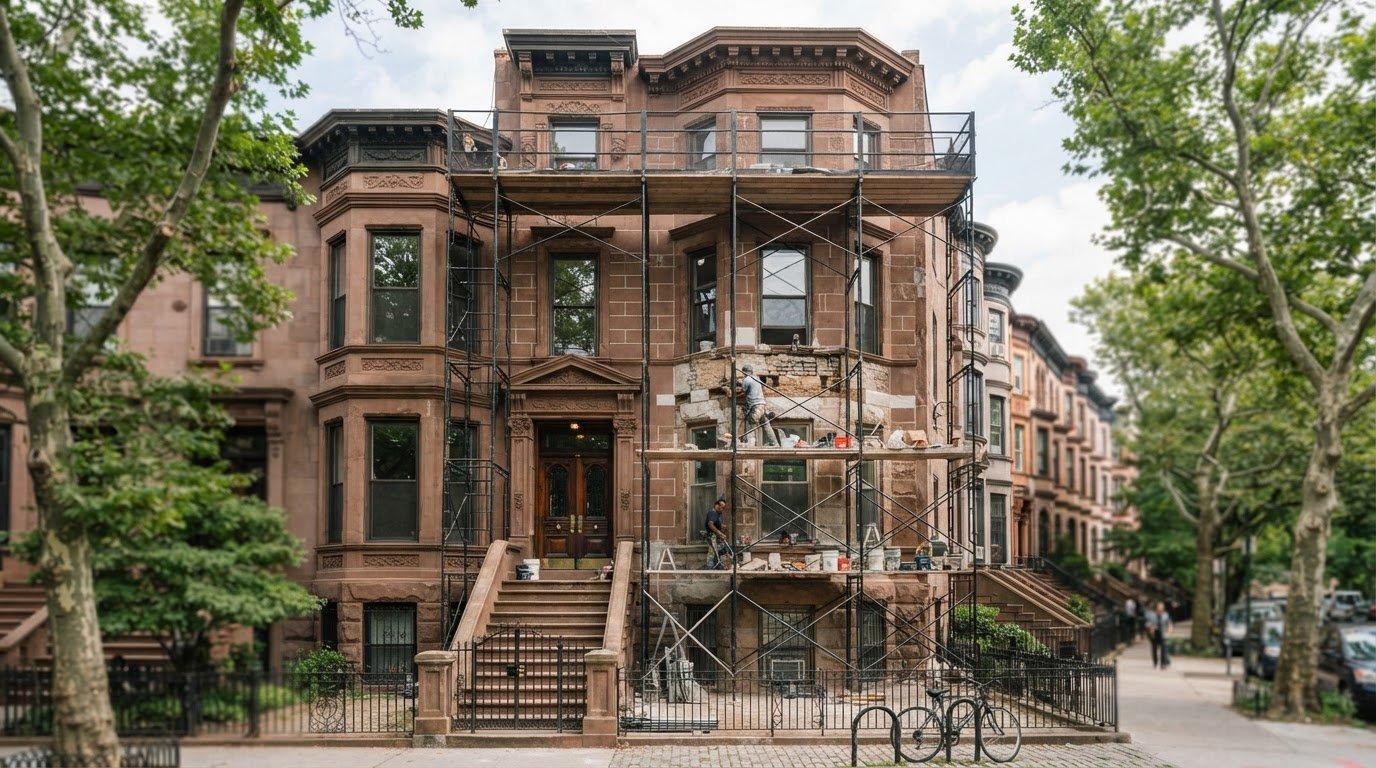
Crown Heights brownstone repair costs depend on how much façade material has failed, whether water is getting behind the masonry, and how much matching work the surface needs. Crown Heights is in Brooklyn, and the neighborhood’s ZIP code is 11213, so local service coverage is a practical part of planning the work.
It’s understandable to want a clear cost before restoration begins, but visible damage doesn’t always show the full scope: eroded stone, failed mortar, and water infiltration can call for different repairs. This guide explains what affects restoration costs without assigning a price, how façade damage and moisture are addressed, and whether service covers Crown Heights. You’ll also see what to expect from the repair process, from assessing the masonry to choosing an approach that respects the character of a historic brownstone.
Table of Contents
Brownstone façade deterioration and repair
Indiana limestone is common in Crown Heights limestone row houses. Repairing cracks and worn joints early can help limit further façade deterioration.
Facade Patching and Restoration
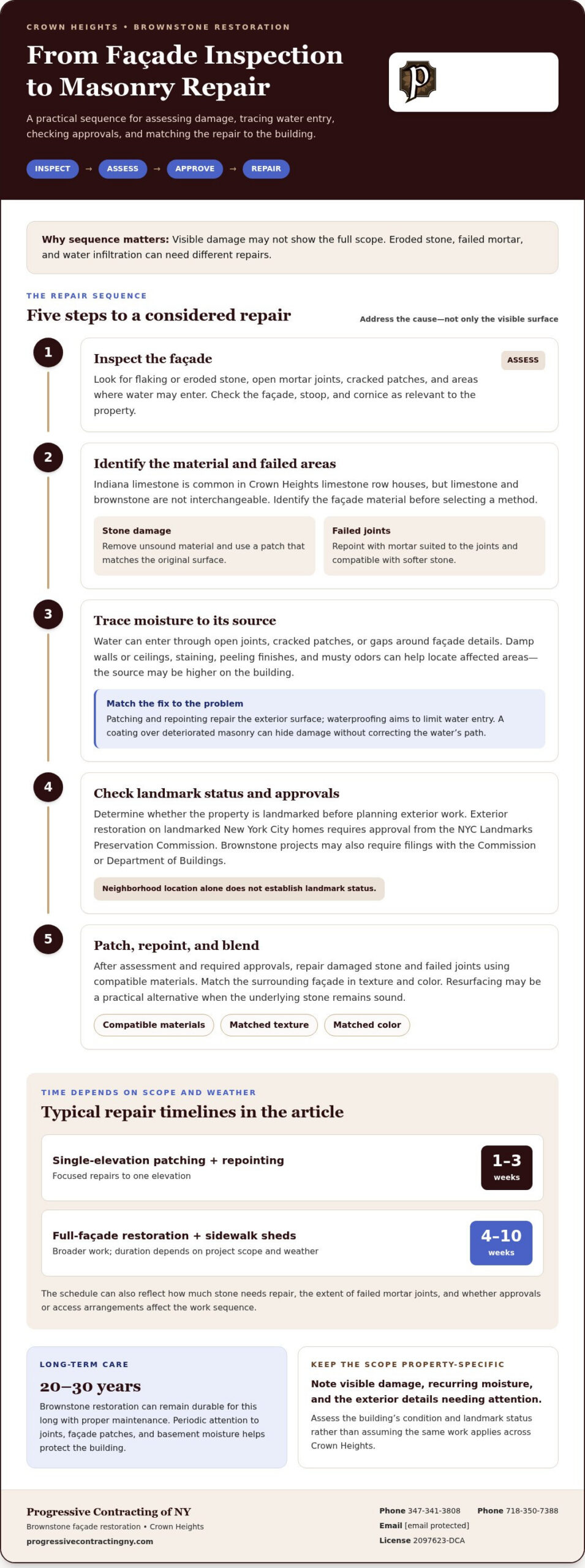
Brooklyn brownstone façade restoration begins by identifying flaking stone, open mortar joints, and places where water may enter. Patching rebuilds damaged surface sections, while repointing renews failed joints. Repairs should match the surrounding façade in texture and color. Check that the proposed work addresses the cause of deterioration, not just the visible surface. Resurfacing can be a practical alternative when the underlying stone remains sound.
Repair Materials and Methods
Historic stoops and façades need repair materials compatible with the existing stone and mortar. Brownstone patches should match the original surface, and mortar should suit the joints without damaging softer stone. Limestone and brownstone aren’t interchangeable, so identify the façade material before choosing a repair method. A masonry specialist can assess loose or eroded areas, remove unsound material, apply matching patches, and finish the surface to blend with adjacent masonry.
Repair Permits and Steps
For landmarked New York City homes, exterior restoration requires approval from the NYC Landmarks Preservation Commission. Brownstone projects may also require filings with the Commission or Department of Buildings. A practical sequence is to inspect the façade, identify damaged stone and mortar, assess water entry, complete required approvals, then patch and repoint. In Crown Heights, determine whether the property is landmarked before planning exterior work.
Repair Timeline Factors
Single-elevation patching and repointing usually takes 1-3 weeks. Full-façade restoration with sidewalk sheds usually takes 4-10 weeks, depending on project scope and weather. The timeline also reflects how much stone needs repair, the extent of failed mortar joints, and whether approvals or access arrangements affect the work sequence. Addressing isolated damage involves fewer repair stages than restoring an entire façade.
Brownstone deterioration and water infiltration
Water can enter through open joints, cracked patches, and gaps around façade details. In Brooklyn, an interior leak may point to exterior masonry failure, not just a basement problem. Pay attention to damp ceilings or walls as well as visible exterior damage.
Many Brooklyn Heights brownstones have below-grade spaces prone to moisture because of aging foundations. In Crown Heights and nearby neighborhoods such as Park Slope, inspect basement walls, stoops, and façades when dampness recurs. Staining, peeling finishes, and musty odors can help locate affected areas, though the source may be higher on the building.
Surface repair and waterproofing address different parts of the problem. Patching damaged brownstone or renewing open mortar joints repairs the exterior surface; waterproofing aims to limit water entry. A coating over a deteriorated façade can hide damage without correcting the water’s path. Trace the leak first, then match the repair to its source, whether that is a failed joint, a crack, or another exterior opening.
For exterior waterproofing, assess the masonry and water path before selecting a method. Historic details, including cornices and stoops, need careful treatment so repairs don’t obscure the façade. A practical sequence is to document damp areas, inspect nearby joints and patches, repair defective masonry, then address any remaining water entry. This connects surface repairs to the underlying cause.
Brownstone restoration can remain durable for 20-30 years with proper maintenance. Periodic attention to joints, façade patches, and basement moisture helps protect the building over decades, while recurring leaks call for renewed assessment rather than repeated surface fixes.
Brownstone repair service areas, including Crown Heights
The neighborhood’s location can help frame a brownstone repair assessment. Crown Heights brownstone repair should account for the specific property, not just its neighborhood. A residential contractor may assess the masonry, stoops, and cornices together, especially when weather has worn several connected surfaces. Local service coverage matters, while landmark status can also affect exterior work.
The Crown Heights North Historic District was designated in 2007, with extensions in 2011 and 2015. Crown Heights North II extends farther into the neighborhood’s historic area. Exterior restoration on landmarked New York City homes requires approval from the NYC Landmarks Preservation Commission. Crown Heights brownstone repair requires that approval when the property is landmarked; location within the neighborhood alone doesn’t establish landmark status.
A Crown Heights brownstone repair specialist should understand historic masonry, façade restoration, stoops, and details such as cornices. Reviews are most useful when they describe comparable work, communication, and craftsmanship. A review of a repaired stoop or matched façade patch offers more context than general praise or a rating alone.
To determine the right scope, identify the property’s address, note visible damage, and establish whether it lies within a historic district. Then match the needed work, such as cornice repair or masonry restoration, to the building’s condition and landmark status. This keeps the project focused on the property rather than assumptions based on its Crown Heights location.
Crown Heights brownstone repair
Progressive Contracting NY Corp: Brownstone facade renovation
Progressive Contracting NY Corp restores and renovates brownstone façades in Crown Heights, including properties with worn masonry, damaged surfaces, or deteriorating stoops. The company also provides Rammstein stoop restoration. Start with the specific concern, such as a damaged façade patch or worn stoop, and define the work around the property’s condition.
For a Crown Heights brownstone repair inquiry, contact Progressive Contracting NY Corp at 347-341-3808 or 718-350-7388, or email ProgressiveContractingNY@yahoo.com. License number: 2097623-DCA.
Contact Progressive Contracting NY Corp for a free consultation about your brownstone restoration project.
Move your Crown Heights restoration forward
Planning brownstone repair in Crown Heights starts with a clear description of what your property needs. Note where the surface is damaged, whether moisture is present, and which exterior details need attention. This gives the restoration discussion a practical starting point and keeps the focus on your building.
Progressive Contracting of NY provides brownstone façade renovation and restoration, as well as Rammstein stoop restoration. If your next step is repairing worn masonry or a deteriorating stoop, contact the team for a free consultation about the project and its scope.
A well-planned repair can help preserve your home’s character. Start with a clear view of what needs attention.
Frequently Asked Questions
How much does brownstone restoration cost in NYC?
The price depends on the property’s condition and project scope, and is provided after a quote request. Costs are shaped by the damaged area, the amount of stone and mortar needing work, access requirements, and whether repairs address isolated spots or a larger façade. A focused description of visible damage helps define the work involved.
Do you match historic brownstone color and texture?
Yes, restoration can match the existing brownstone’s color and texture. The repair approach considers the surrounding stone, its finish, and the appearance of nearby façade sections. For example, a front-façade patch should blend with adjacent masonry rather than create a visibly different surface. Historic details and the original material’s condition guide the finish.
Do you work on residential and commercial brownstone properties?
Yes, Progressive Contracting of NY works on residential and commercial properties needing exterior brownstone restoration and masonry work. The appropriate scope depends on the building’s exterior condition and the requested repairs. A residential stoop repair and a commercial façade project may involve different areas, access needs, and masonry details, so describe the property type and visible issue when requesting a free consultation.
What brownstone repair services are available in Crown Heights, Brooklyn?
Services include brownstone façade renovation and restoration, brownstone repair, Rammstein stoop restoration, and brick pointing. They address exterior masonry concerns such as worn façade surfaces, damaged stoops, and deteriorated brick joints. For a Crown Heights property, identify the affected feature and whether the issue involves stone, brick, or the stoop to clarify the work needed.
How much does brownstone facade repair cost in Crown Heights?
The cost depends on the façade’s condition and repair scope, and is provided after a quote request. A localized patch differs from work involving extensive stone damage, mortar joints, or water-related deterioration. Access needs and the area requiring repair also affect the project scope. Describe the affected façade sections and visible symptoms to support a useful estimate.