
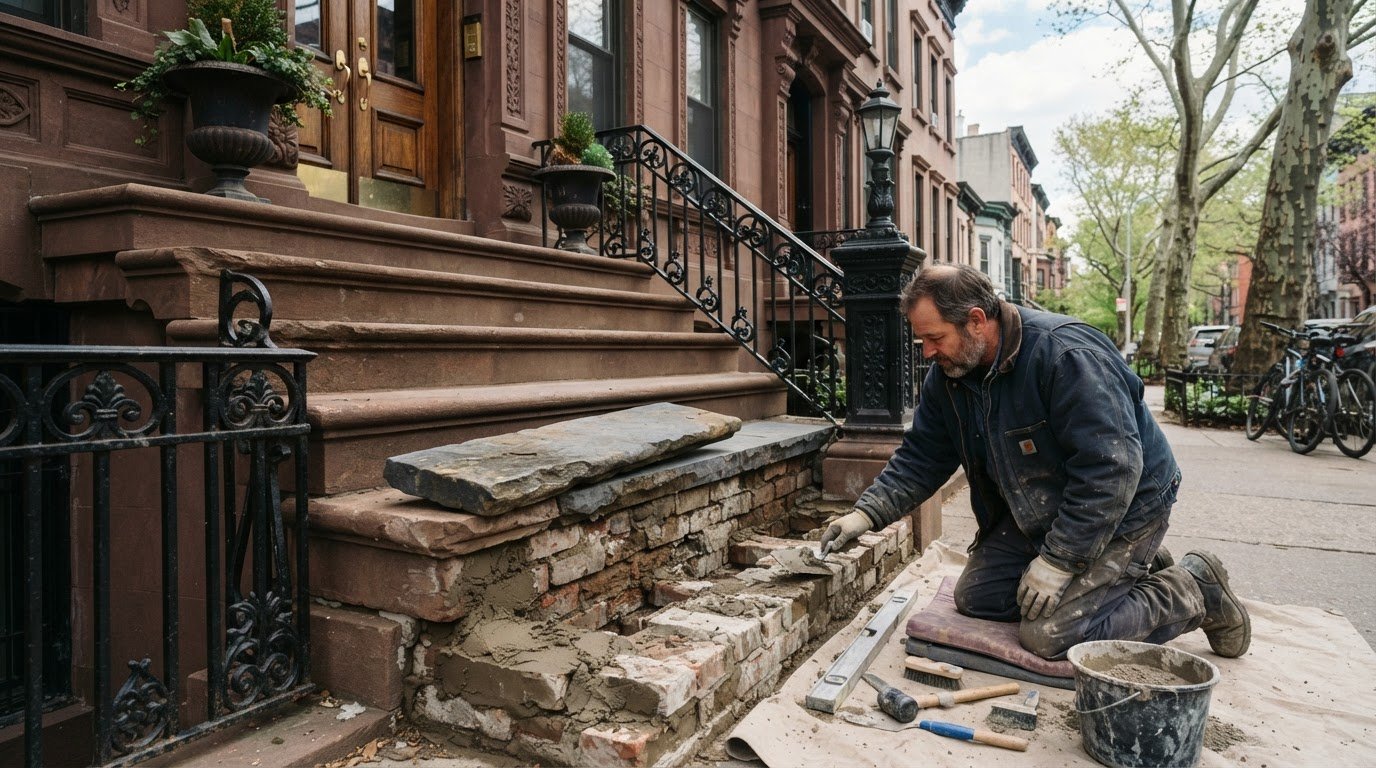
Replacing every tread isn’t always necessary. In Carroll Gardens, stoop repair for bluestone treads can preserve and reset original stones when they’re sound enough to lift and secure again, even if the supporting masonry needs rebuilding.
Keeping original stone can matter, especially when a close match is difficult to find. Salt, trapped water, and freeze-thaw cycles can loosen or damage treads, while poor drainage can worsen the problem. A lasting repair starts by assessing both the stone and its support, then allowing fresh mortar to cure before the steps are used.
Table of Contents
Salt damage and freeze-thaw effects on masonry
Water entering gaps beneath bluestone can weaken the mortar bond. When it freezes, it expands and may lift treads. Freeze-thaw cycles can also flake brick and stone faces. Stoop repair for bluestone treads in Carroll Gardens should begin by identifying whether the damage is in the stone, the joints, or the support beneath them.
Signs of Brick and Stone Damage
Inspect Carroll Gardens stoop steps for treads that rock underfoot, raised edges, open joints, or cracks in the supporting concrete. These signs may point to a weakened bond or movement beneath the stone. White, powdery deposits can indicate moisture moving through masonry. Flaking or small pieces breaking away from brick and bluestone faces, especially after winter, may signal more than surface wear and could affect stability.
Bluestone Tread Maintenance
To maintain bluestone stoop treads in Brooklyn’s weather, check the joints each year, particularly after winter, and clear away leaves, dirt, and debris. This makes gaps easier to spot and helps prevent moisture from sitting on the stone. Repair cracks early because water entering them can weaken the bond and contribute to movement during freeze-thaw cycles.
For ice management, use plain sand or calcium magnesium acetate on masonry steps instead of rock salt. Rock salt and calcium chloride can contribute to freeze-thaw cycling and damage cement paste. Avoid ice-melt products containing ammonium sulfate or ammonium nitrate on concrete. During stoop repair for bluestone treads in Carroll Gardens, loose stones also call for attention to possible causes such as foot traffic, settling soil, or cracked concrete below. Addressing the underlying weakness helps the tread sit securely again.
Water drainage and stoop landing pitch
A lasting bluestone repair depends on directing water away from the stone and the building. For stoop repair for bluestone treads in Carroll Gardens, inspect the landing after rain. Runoff should move away from the house, not pool near the doorway or threshold. Standing water can keep joints and supporting masonry damp, allowing moisture to work beneath the treads.
Small pitch changes can guide runoff away from the steps and entrance. The landing should drain outward, not toward the house. Sealed joints can limit water entry, but they won’t fix a landing that channels water to the doorway. A sound repair plan considers both the joints and the direction water travels across the surface.
A bead test can help assess whether bluestone, brick, or limestone absorbs water. Place water on the surface and observe it: if it absorbs rather than remaining beaded, the stone’s protective barrier may be compromised. This suggests moisture vulnerability, but the landing’s pitch and open joints still need separate assessment.
For example, water may drain from the outer landing edge yet remain beside the threshold. That pattern points to a pitch issue, not just a joint problem. A drainage-focused assessment can help shape stoop repair for bluestone treads in Carroll Gardens, including the masonry work needed to direct water away from the building. Stoop restoration work can address the entry as a connected structure.
Front stoop repair duration
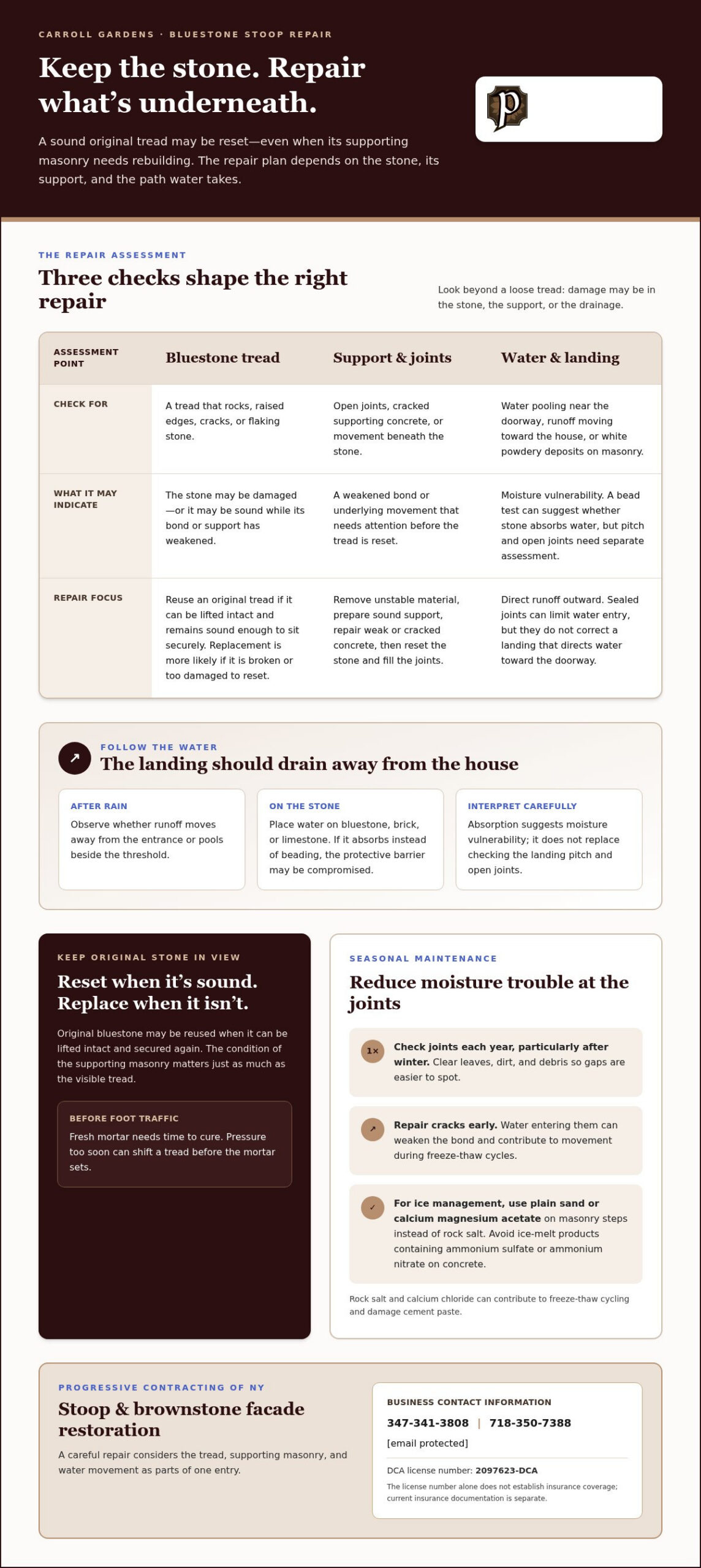
Repair time depends on the damage beneath the bluestone, not just the number of loose treads. Resetting a tread is a smaller job than rebuilding cracked concrete or correcting a failed landing. The work generally involves removing unstable material, preparing sound support, resetting the stone, and filling the joints.
For a Carroll Gardens stoop, the substructure’s condition can affect the work schedule. Cracked or weak concrete beneath a tread needs repair before a fresh bonding layer and stone go back in place. Original treads may be reused if they can be lifted intact and the support rebuilt. Replacement is more likely when a stone is broken or too damaged to reset securely.
Fresh mortar needs time to cure before foot traffic resumes. Pressure too soon can shift a tread before the mortar sets. Plan around curing, not just installation, and keep people off the repaired steps until they’re ready. Weather and the extent of underlying repairs also affect the work.
Whether permits or landmark review apply depends on the scope of work and the property’s designation. Resetting a tread and rebuilding an entire stoop are different projects, so consider approval requirements in relation to the proposed work.
A Carroll Gardens address alone doesn’t establish whether a property is in a historic district. The property’s specific designation and the proposed repair determine what review applies.
For licensed and insured work in Brooklyn, distinguish the license record from proof of insurance. The DCA license number provided for this business is 2097623-DCA; that number alone doesn’t establish insurance coverage. Current insurance documentation is a separate credential to assess.
Progressive Contracting NY Corp: Brownstone facade renovation
Progressive Contracting NY Corp provides brownstone facade renovation and stoop restoration for Brooklyn properties with worn steps or deteriorating masonry. If bluestone treads have shifted, cracked, or lost support, stoop restoration can address the entry as a whole, rather than treating each visible mark in isolation.
The right repair depends on the stone’s condition, the supporting masonry, and how water moves across the stoop. Original treads may be reused if they remain sound, while damaged support or failed joints may also need attention. A careful assessment defines the work before restoration begins.
For stoop and facade work in Carroll Gardens, contact Progressive Contracting NY Corp at 347-341-3808 or 718-350-7388, or email ProgressiveContractingNY@yahoo.com.
Plan the next step for your Carroll Gardens stoop
Before choosing replacement stone, decide whether the work is limited to the treads or requires broader stoop and facade restoration. This distinction helps keep the repair plan focused on the condition of the whole entry. For stoop repair for bluestone treads in Carroll Gardens, Progressive Contracting of NY provides Rammstein stoop restoration, brownstone facade renovation, and brownstone facade restoration.
A clear project discussion connects the visible tread problem with the masonry work needed around it. Note which stones have shifted, where joints have opened, and how water drains around the landing. These details help define a practical approach to restoring the entry.
Understanding the stoop as a complete structure is a sound starting point for restoring the entrance.
Frequently Asked Questions
Can my original bluestone treads be reused?
Yes, original treads can often be reused if they’re intact and can be lifted without breaking. Their edges, surface, and underside need to be sound enough for the stone to sit securely after the support is repaired. Reuse can preserve the stoop’s appearance, especially when weathered stone is difficult to match with new material.
How long does a front stoop take?
There isn’t one schedule for every Carroll Gardens stoop. Resetting a tread involves less work than rebuilding cracked support or addressing movement across the landing. Mortar also needs time to cure before the steps are used. The extent of structural repairs and the required curing time shape the overall timeline.
Why Do My Brick and Stone Steps Need Repair?
Steps need repair when movement, moisture, or material loss affects their stability. A loose tread, for example, can signal a failing bond, while cracked brick or a chipped stone face may show deterioration. Open joints can let water reach the supporting masonry. Addressing the underlying cause matters: filling a surface crack alone won’t stabilize a moving step.
What does bluestone stoop tread repair involve?
Repair starts by lifting the affected tread and removing failed mortar or adhesive from the contact area. Next, inspect the supporting concrete and repair any cracked or weak areas. A fresh bonding layer and evenly spread mortar help the stone sit flat, while fresh mortar fills the surrounding joints. This sequence addresses both the tread and its support.
Can cracked or loose bluestone treads be repaired instead of replaced?
Loose treads can often be reset if the stone remains sound and the supporting concrete can be restored. A cracked tread may also be reusable if the damage doesn’t prevent it from sitting securely. Replace the stone when it’s too broken to reuse safely. The key question is whether the tread can be firmly reset on sound support.