
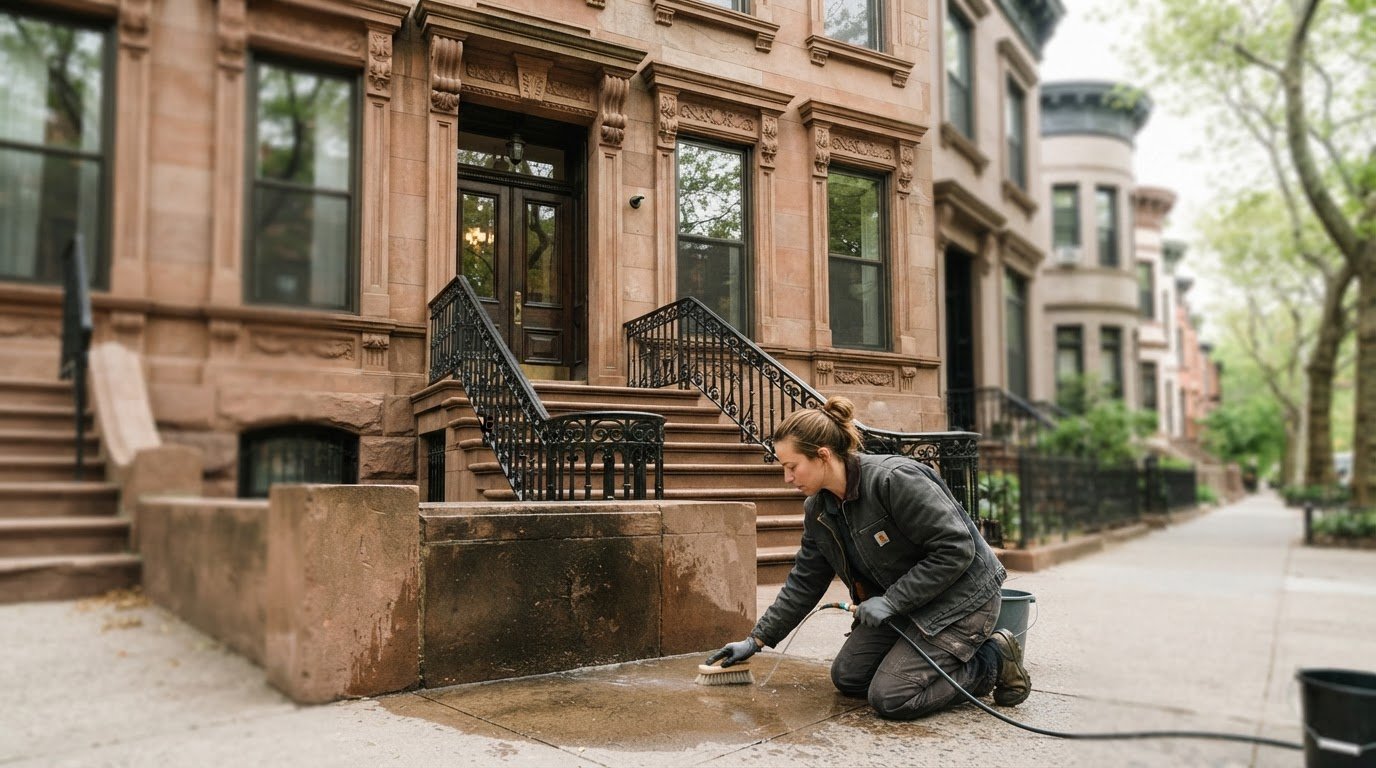
High pressure can do more harm than good to a brownstone facade. For brownstone facade cleaning without chemicals in Brooklyn, use a soft brush, a mild cleaner, and a low-pressure rinse rather than harsh acids, aggressive wire brushes, or forceful washing. This gentle approach helps remove surface grime without treating historic stone like a more durable material.
It’s understandable to want a clean facade without damaging its finish. The right method depends on the brownstone’s condition and the type of dirt or staining. Start with a small, inconspicuous area and work carefully. Prepare the surface, clean gently, and recognize when routine washing won’t address the problem.
Table of Contents
Cleaning methods for building facades and stone
- Identify the surface before cleaning. Brownstone, limestone, brick, and concrete respond differently to water and abrasion. Look for loose grains, flaking, open joints, or previous repairs. If the stone sheds material under a light touch, avoid scrubbing and pressure washing until its condition is assessed.
- Use the gentlest method first. Brush loose dirt with a soft-bristled brush, working from the top of the exterior downward. Test a small, inconspicuous patch with water before treating the full facade. This helps reveal whether the surface darkens, powders, or releases grit.
- Rinse with controlled pressure. Use a low-pressure rinse, not a forceful jet. Pressure washing can damage softer stone, erode mortar, and drive water into cracks. Keep the nozzle moving and stop if the surface begins to roughen or shed particles. For a stubborn stain, a specialist may use a targeted poultice rather than stronger scrubbing.
- Keep cleaning distinct from repair. A wash that removes surface dirt is different from work that alters masonry. Permit needs depend on the work involved and whether it changes the facade. For sidewalk or street access, equipment or barriers make public-space use a separate consideration; requirements depend on the setup and location.
- Set a practical cleaning schedule. Facades are commonly cleaned every 3-5 years, adjusted for exposure, material, and visible buildup. Brooklyn traffic residue, shade, and water runoff can affect how quickly grime returns. Clean sooner when staining accumulates, but don’t use a calendar alone as a reason for aggressive washing.
- Estimate the condition, not just the dirt. Before planning brownstone facade cleaning without chemicals in Brooklyn, note stains, cracks, recessed mortar, and areas that feel friable. Cleaning removes surface soil; it won’t correct damaged stone or failing joints.
Gentle brownstone cleaning without harsh chemicals
Use water and adjust each pass to the stone’s condition. Work in small areas so loosened grime doesn’t dry back onto the facade.
-
Choose a Safe Chemical-Free Method
Start with clean water, a soft-bristled brush, and a low-pressure rinse. These are practical alternatives to chemical cleaners for routine surface dirt, rather than a claim of formal approval for every historic masonry site. Test a discreet patch first, then inspect for grit, color change, or flaking. Avoid wire brushes, harsh acids, and forceful pressure washing, which can damage the stone.
-
Remove Algae, Soot, and Dirt
Dampen a small area and gently loosen algae and dirt with the soft brush. For soot, use light strokes and rinse the brush often to avoid spreading residue onto clean stone. Rinse each area before moving on, then inspect it as it dries. If algae remains embedded or soot won’t lift without abrasion, stop rather than increase pressure.
-
Rinse Thoroughly and Control the Equipment
Keep the nozzle moving and direct water downward, away from open joints and cracks. Use equipment that produces a controlled, gentle flow, not a concentrated jet. Rinse until the runoff no longer carries loosened residue. Avoid soaking one spot, since water entering weak joints can complicate later cleaning.
- Let the stone dry, then assess it in natural light. Check for remaining stains, loose grains, and areas that look different from the surrounding facade. Another gentle pass may remove surface residue. Persistent stains or visible deterioration call for a masonry assessment, not harder scrubbing. A measured approach helps prevent cleaning from causing damage.
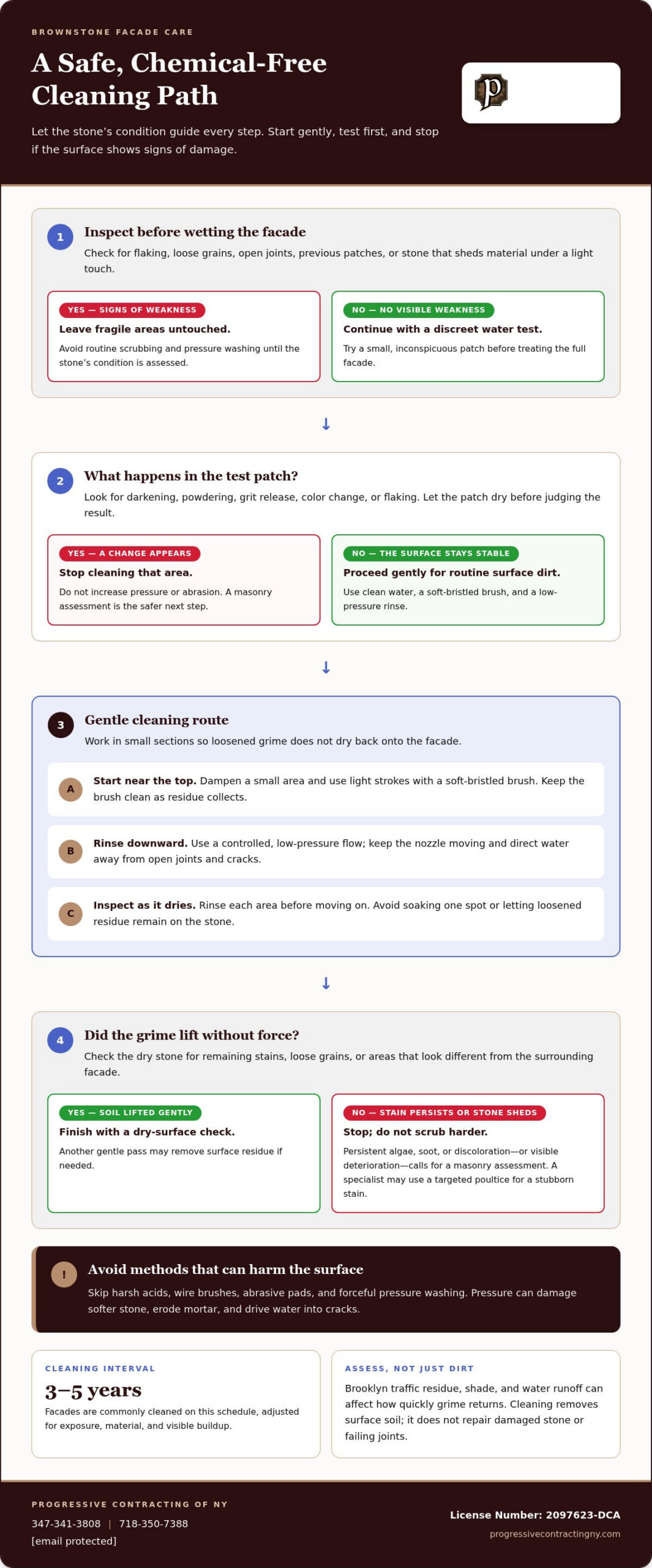
What is the safest chemical-free method for cleaning a brownstone facade?
- Inspect the stone before wetting it. Look for flaking, loose grains, open joints, and previous patches. Mark fragile areas and leave them untouched during routine cleaning. Brownstone can have different conditions across one facade, so don’t assume every section can tolerate the same brushing or water flow.
- Choose water and a soft brush. For routine dirt, use clean water and a soft-bristled brush without adding a cleaner. “Approved” doesn’t describe one universal method for every historic masonry surface. The safest choice depends on the stone’s condition and the cleaning task. Avoid wire brushes, abrasive pads, harsh acids, and forceful pressure washing.
- Work in small, manageable areas. Dampen one section, then use light strokes to loosen surface soil. Start near the top and move downward, keeping the brush clean as residue collects. Don’t scrub a dry surface or bear down on dark stains, since pressure and abrasion can remove stone grains along with dirt.
- Rinse gently and inspect. Use a low-pressure flow, directing water down the facade rather than into joints or cracks. Stop if the surface sheds grit, changes texture, or exposes loose material. Let the area dry before judging the result, because wet stone can appear darker and hide remaining marks.
- Leave persistent stains alone. Algae, soot, or deep discoloration may not lift with water and brushing. Don’t compensate with stronger pressure or improvised mixtures. If a stain remains, or the stone looks friable, pause cleaning and arrange an assessment of the masonry before attempting another pass.
Request a brownstone facade restoration assessment
Progressive Contracting NY Corp: Brownstone facade renovation
Progressive Contracting NY Corp provides brownstone facade renovation when cleaning reveals deteriorated stone, damaged areas, or masonry concerns beyond surface grime. Washing can remove dirt, but it cannot repair worn facade material or restore a failing surface. For a stoop showing similar deterioration, the company also provides brownstone stoop restoration in Brooklyn and Manhattan.
Consider renovation when the facade needs more than routine cleaning or when visible damage affects its condition. Progressive Contracting NY Corp can discuss the masonry work needed for your Brooklyn brownstone and the appropriate next step. Contact the team at 347-341-3808 or 718-350-7388, or email ProgressiveContractingNY@yahoo.com. License Number: 2097623-DCA.
Protect the facade with a thoughtful next step
Use cleaning as an opportunity to assess your Brooklyn brownstone’s long-term condition. A careful maintenance plan can distinguish surface buildup from masonry that needs restoration, helping you identify what the property requires before small concerns grow. For brownstone facade cleaning without chemicals in Brooklyn, keep the stone’s preservation at the center of each decision.
If cleaning reveals deterioration beyond surface grime, Progressive Contracting of NY provides brownstone facade renovation, brownstone facade restoration, and Rammstein stoop restoration. Matching the work to the facade’s condition keeps the next step focused on the building, not just its appearance.
A sound facade is built through careful attention over time. Take the next step with confidence.
Frequently Asked Questions
What is the best way to clean a brownstone facade in NYC?
Clean one surface at a time, since a Brooklyn brownstone may include stone, brick, and metal details. Before washing, clear loose debris from ledges and photograph stains or color changes. Clean a small area first, then compare it after drying. If the stone sheds grains or changes texture, stop rather than scrub harder.
What’s the difference between power washing and soft washing?
Power washing uses a forceful water stream, while soft washing uses lower-pressure water, often with a cleaning solution. Soft washing isn’t automatically chemical-free, so find out what the process involves. If you’re avoiding cleaners, gentle rinsing and careful hand cleaning are different from a chemical-assisted wash.
What pressure and nozzle settings are safe for cleaning brownstone?
No single pressure or nozzle setting suits every brownstone. Use a controllable, gentle flow with a wide spray pattern, and test a small area before continuing. Keep the stream moving instead of directing it into joints, cracks, or carved details. Stop if stone grains loosen or the surface texture changes.
How should you test and prepare a brownstone facade before cleaning?
Before using water, check for loose stone, open mortar joints, and existing cracks. Move planters away from the wall, clear leaves from the base, and make sure downspouts direct water away from the masonry. Test a discreet spot, let it dry, then check for residue or surface changes before cleaning a larger area.
Do NYC or Brooklyn rules require permits for brownstone facade cleaning?
Permit requirements depend on the work and whether it changes the facade. Routine surface cleaning is different from masonry repair or alteration.