
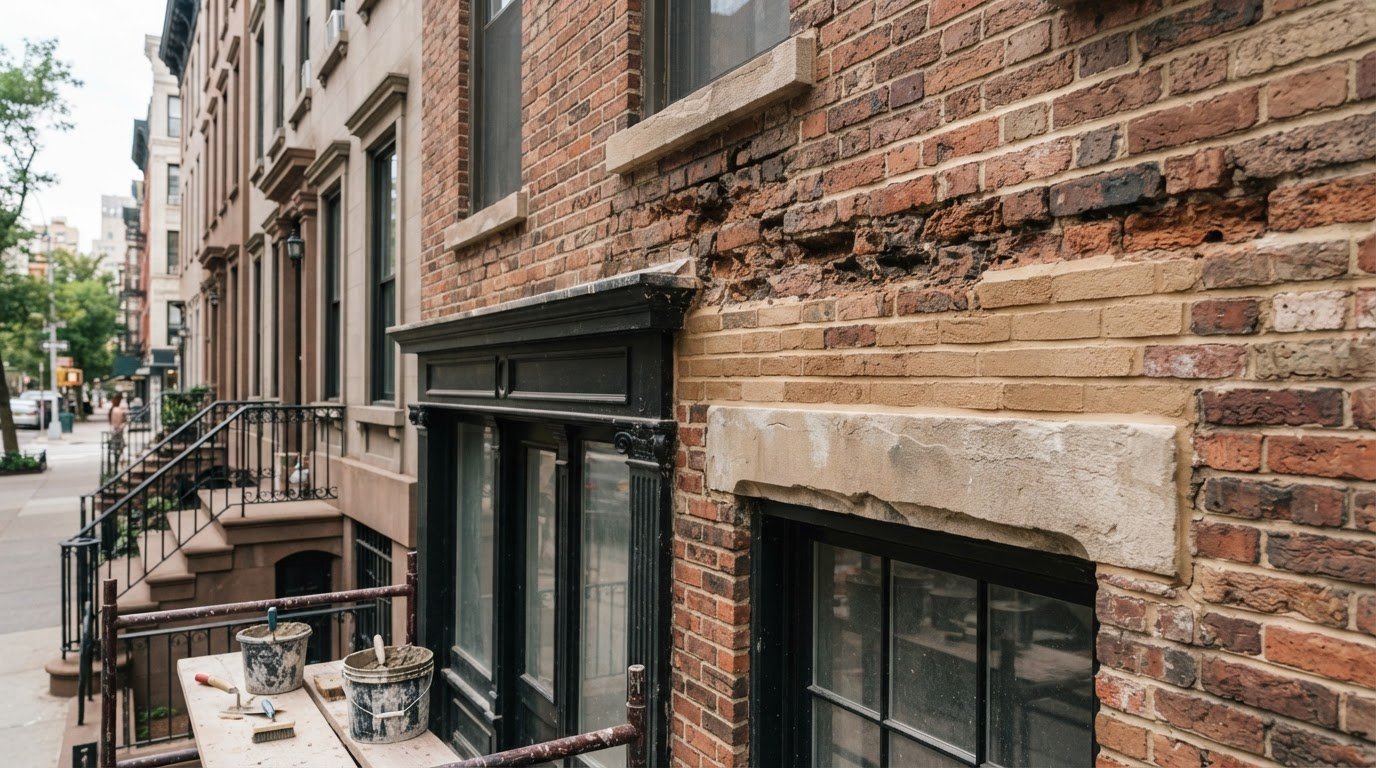
Missing, cracked, or deeply recessed mortar can signal that storefront brick needs pointing. For brick pointing above storefronts in Manhattan, look for mortar joints recessed by more than a quarter inch, loose bricks, and signs of water entering the wall. Damaged mortar can let moisture in and contribute to further masonry damage.
It’s easy to focus on the brick, but mortar often wears down first. This is especially important on older storefronts, where the repair method and mortar match can affect the building’s appearance. A careful assessment of brick pointing above storefronts in Manhattan can distinguish mortar deterioration from brick damage that may require a different repair.
This article covers the signs to watch for, the difference between pointing and tuckpointing, and what older masonry requires. It also explains how weather and access can affect storefront work. Whether you’re considering a small repair or a broader facade project, understanding these factors can help you plan brick pointing above storefronts in Manhattan with confidence.
Table of Contents
How do I know if my brick needs pointing?
Check mortar joints for gaps, cracks, or sections recessed by more than a quarter inch. These signs can allow moisture into the wall and damage the brickwork.
Mortar Deterioration and Warning Signs
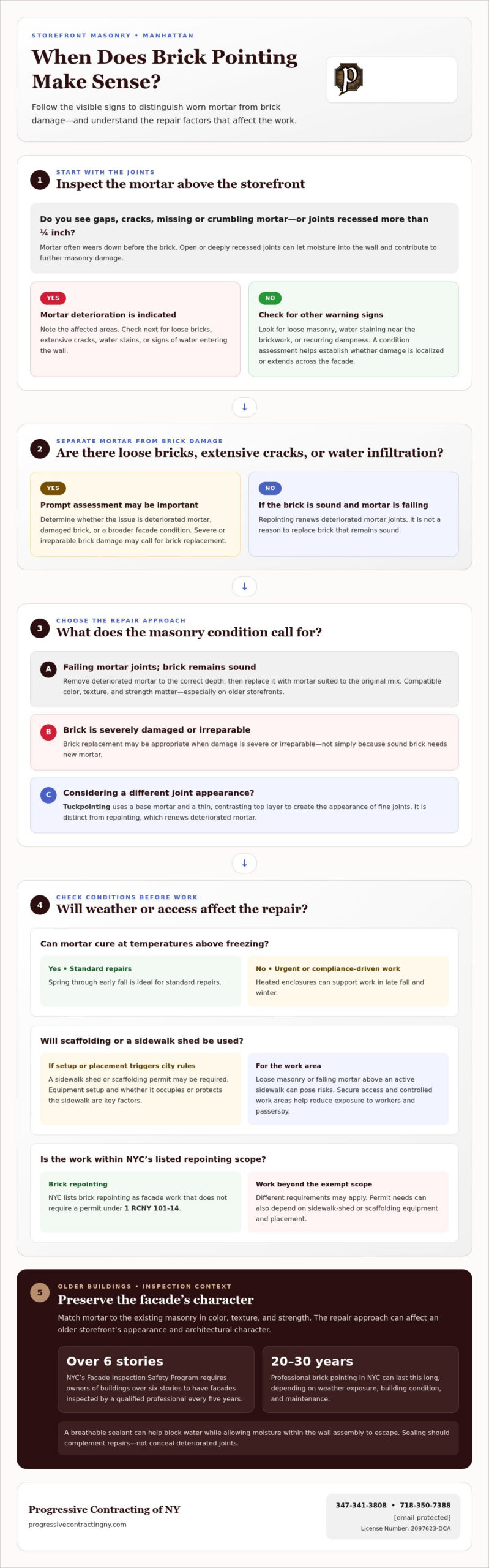
Mortar is softer than brick, so it often breaks down first. Look above the storefront for missing or crumbling joints, loose bricks, and water stains near the masonry. Joints recessed more than a quarter inch also signal deterioration. Gaps can admit moisture, worsening brick damage and weakening the masonry. Extensive cracks, loose bricks, or water infiltration call for prompt assessment and may make repointing a priority.
Mortar and Brick Matching
Repointing renews deteriorated mortar joints: workers remove failing material to the correct depth and replace it with mortar suited to the original mix. On older storefronts, compare the new mortar’s color, texture, and strength with the existing masonry. Tuckpointing uses a base mortar and a thin, contrasting top layer to create the appearance of fine joints. Replace brick when damage is severe or irreparable, not when sound brick simply needs new mortar.
In New York City, brick repointing is listed as façade work that doesn’t require a permit under 1 RCNY 101-14. Work beyond the permit-exempt scope may have different requirements.
A sidewalk shed or scaffolding permit may be required when the planned equipment or its placement triggers city permit rules. The setup and whether equipment occupies or protects the sidewalk are key factors.
Brick repointing above a storefront involves removing deteriorated mortar from the brick joints and installing new mortar. This renews the joints and helps limit water entry.
Loose masonry or falling mortar can endanger workers and passersby, especially above an active sidewalk. Secure access and controlled work areas help reduce exposure. Property owners also need to consider risks to people and nearby property.
Mortar should cure at temperatures that remain above freezing. Spring through early fall is ideal for standard repairs; heated enclosures can support urgent or compliance-driven work in late fall and winter.
Why Should You Choose Trusted Brick Contractors?
Residential and commercial masonry projects differ in access, use, and repair scope. A storefront contractor must assess the facade and overhead brickwork, as well as how the work may affect an active entrance.
Weather, moisture, and temperature changes can gradually crack or deteriorate masonry. Look for open joints, loose units, staining, or recurring dampness, then determine whether the damage is localized or extends across the facade. A clear assessment helps distinguish a targeted repair from broader restoration.
New York City’s Facade Inspection Safety Program, commonly associated with Local Law 11, requires owners of buildings over six stories to have facades inspected by a qualified professional every five years. A storefront’s repair needs still depend on its condition and the inspection findings.
Choose a masonry contractor who explains the damage, repair method, and material choices in a defined scope. The assessment should clarify whether joints need repointing, bricks need replacement, or adjacent masonry needs attention. A careful process makes the work easier to understand and aligns repairs with the building’s condition.
Historic facades need particular care because repair methods affect their architectural character. Consider existing materials and finishes before choosing a restoration approach. Cleaning and coating also require judgment: a suitable sealer may help protect brick, but should be chosen with care. Sealing should complement repairs, not conceal deteriorated joints.
For older properties, historic masonry restoration can address damage while respecting the facade’s original character.
Brick pointing for older buildings
Older New York City facades need repairs that respect their original masonry. Brick pointing renews the outer portion of mortar joints, helping preserve the wall’s appearance and weather resistance. On a historic storefront, the aim isn’t to make every joint look new. It’s to repair deteriorated mortar while retaining the facade’s architectural character.
A skilled mason considers the existing brick and mortar together. Mortar that differs in color, texture, or strength can change the appearance and may not suit older masonry. Matching the original mix helps the repair blend with the surrounding wall. Tuckpointing creates a different finish, using traditional mortar and a narrow brick-colored line to give the appearance of fine joints.
Exposure also affects how long repairs last. Professional brick pointing in NYC can last 20-30 years, depending on weather exposure, building condition, and maintenance. That range makes careful preparation and compatible materials important, especially on facades exposed to regular moisture and temperature changes.
Sealing requires similar care. A breathable sealant can help block water while allowing moisture within the wall assembly to escape. A coating that traps moisture can undermine the repair. The practical takeaway is to match the mortar to the original masonry, preserve the facade’s appearance, and choose materials suited to the wall’s condition.
Explore brick pointing for older facades.
Progressive Contracting NY: Brownstone facade renovation
Progressive Contracting NY Corp provides brownstone facade renovation and masonry work for older properties in Manhattan and Brooklyn. If worn mortar joints are accompanied by damaged brownstone or other facade deterioration, a broader restoration assessment can help define the repair scope and preserve the building’s exterior character. The right approach depends on the facade’s materials, condition, and extent of damage.
For storefront owners considering brick repairs, Progressive Contracting NY Corp can discuss how brownstone facade renovation relates to the surrounding masonry and the building’s overall exterior. Contact the team at 347-341-3808 or 718-350-7388, email ProgressiveContractingNY@yahoo.com, or reference License Number: 2097623-DCA.
Plan the Next Step for Your Storefront
Document the areas of concern and note whether the work involves brick, brownstone, or both. For brick pointing above storefronts in Manhattan, Progressive Contracting NY Corp can connect your masonry needs with a broader exterior repair plan. Services include brownstone facade renovation, Brownstone Facade Restoration, and Rammstein stoop restoration.
Choose your next step based on the building’s visible condition and the work you want assessed. A free consultation with Progressive Contracting of NY can help you explain the property’s needs and discuss a practical direction for its exterior.
With a clear plan, you can move toward a sound, well-maintained storefront with confidence.
Frequently Asked Questions
How long does a commercial masonry repair project take?
Smaller commercial repointing or spot repairs typically take a few days to two weeks. Larger facade restoration projects or full parapet rebuilds can take several weeks. For a Manhattan storefront, the schedule depends on the repair scope, scaffold setup, and weather. A small area of localized work differs from repairs spanning multiple facade sections.
Tuckpointing vs. Repointing: What’s the Difference for Your Brickwork in NYC?
Repointing replaces deteriorated mortar in masonry joints, while tuckpointing uses two mortar colors to create the appearance of fine joints. On a New York City storefront, the choice depends on the existing brickwork and desired finish. Tuckpointing is both a visual treatment and joint work, but it isn’t automatically right for every facade.
What happens if I delay repointing or masonry repair?
Delaying repairs can give water more time to enter gaps and affect nearby masonry. A small patch of deteriorated joints may spread, while loose brick or interior water damage can become additional concerns. For example, staining inside a storefront near an exterior wall can signal moisture entry. Prompt assessment helps establish whether the issue is localized or more extensive.
How much does commercial brick repointing cost per square foot in Manhattan?
The cost depends on the project, so a per-square-foot figure alone may not reflect the full scope. Access equipment, damaged bricks, or adjoining facade repairs can affect the work involved. For a Manhattan storefront, the area requiring repointing and the condition of its masonry are key considerations. Progressive Contracting of NY offers a free consultation to discuss the project.
What factors affect the cost of repointing a Manhattan storefront facade?
The scope depends on the amount of facade needing work, the depth and condition of the mortar joints, and whether bricks also need repair. Access requirements, setup, and weather can affect the work plan. An older storefront with varied masonry may also require careful material matching. A clear assessment distinguishes joint renewal from more extensive facade restoration.