
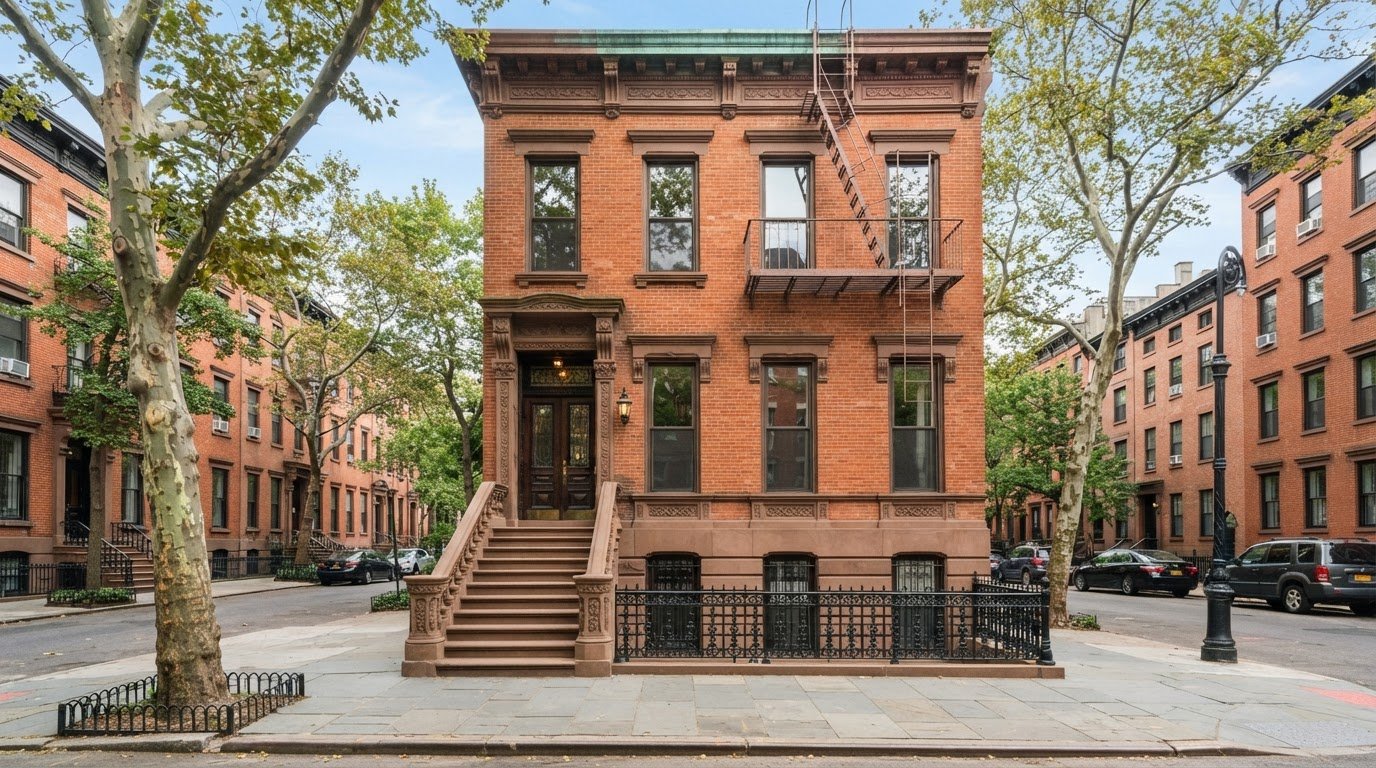
Harlem’s future is shaped not only by what gets built, but also by what its communities preserve. In Harlem, New York, economic development and cultural preservation meet in historic places such as Strivers’ Row, four rows of townhomes with a distinct place in the neighborhood’s history. Maintaining their facades helps keep that architectural legacy visible as the area changes.
Development and preservation may seem at odds, but Harlem’s history shows how closely they can be connected. This guide explores the neighborhood’s economic evolution, the cultural importance of its historic homes, and why Strivers’ Row remains a powerful example. It also explains how thoughtful facade restoration can support historic buildings while respecting the character that makes them part of Harlem’s story.
These periods explain why facade work matters beyond appearance. A restored exterior can retain details that connect a building to Harlem’s architectural history, while neglect can weaken that connection. Preservation and economic development are not inherently opposed; the outcome depends on whether change respects existing buildings and their cultural significance. Strivers’ Row shows why historic homes remain part of Harlem’s broader story. “Herlem New York” is a misspelling, not a separate place.
Harlem is a neighborhood in Manhattan, New York City, with a total area of 1.400 square miles. In 2011, a New York Assemblyman proposed legislation to penalize real estate agents for inventing false neighborhood names and redrawing neighborhood boundaries without city approval; the effort failed.
The A train travels directly from 59th Street to 125th Street in New York City.
From original
Strivers’ Row gives Harlem’s architectural history a residential form. The historic enclave consists of four rows of townhomes, built as part of the neighborhood’s expanding housing stock. From 1910 to the 1930s, these homes became residences for Harlem’s Black elite. Their significance comes from both their design and the people who shaped the community around them.
That history changes how owners in Herlem New York should approach exterior work. A facade is more than a surface to refresh: its materials, proportions, and decorative details contribute to a building’s identity. On a historic townhome, brownstone, brick, mortar joints, stoop, lintels, and trim each deserve careful attention. Treating every surface alike can obscure the distinctions that give a property its character.
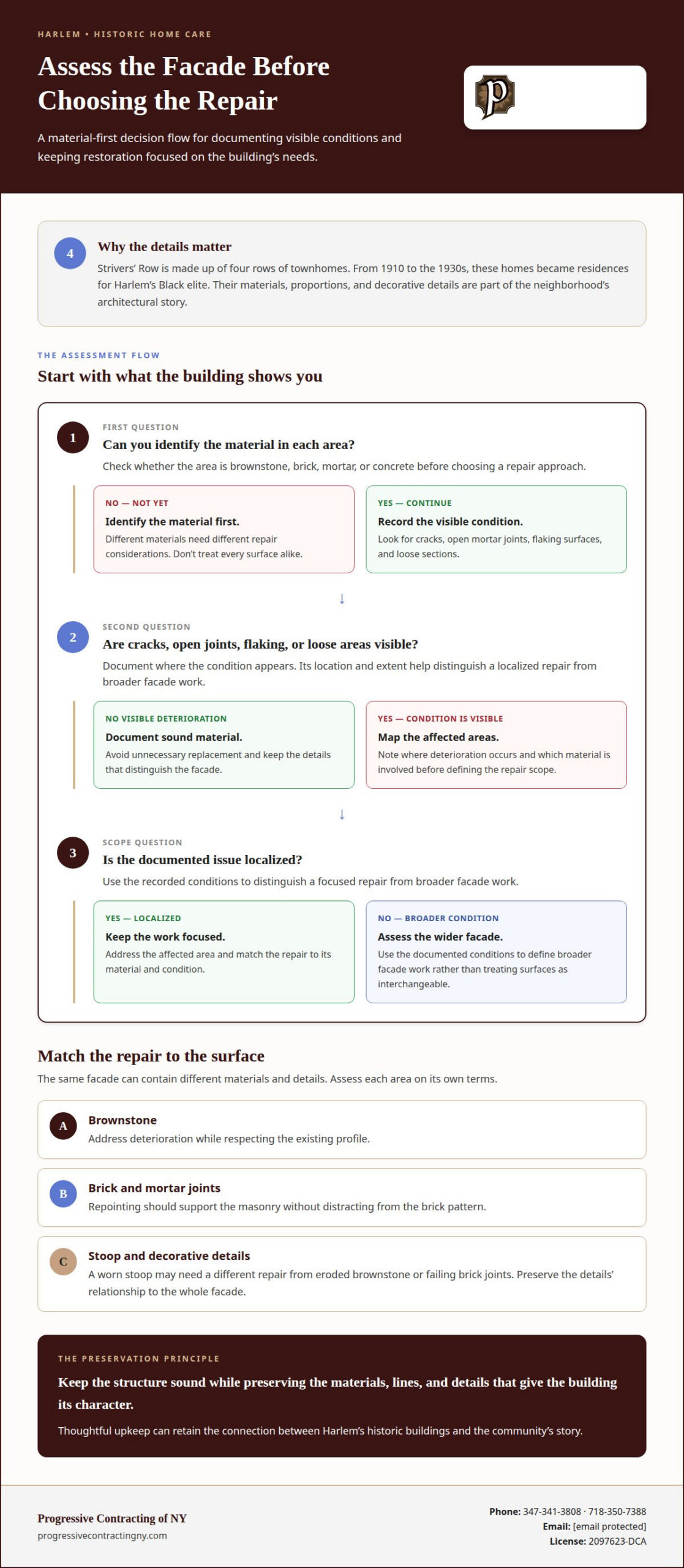
A sound restoration starts with observation, not assumptions. Note how different materials meet, where mortar has weakened, and whether cracks or loose areas appear around openings. A worn stoop may need a different repair from eroded brownstone or failing brick joints. Recording these conditions helps distinguish localized repairs from broader facade work and keeps the project focused on the building’s needs.
- Material: Identify whether each area is brownstone, brick, mortar, or concrete before selecting a repair approach.
- Condition: Record visible cracks, open joints, flaking surfaces, and loose sections that may need attention.
- Character: Note original lines and details, such as window surrounds or stoop edges, that shape the facade.
For owners of historic homes, preservation means balancing structural soundness with visual continuity. Repointing mortar, for example, should support the masonry without distracting from the brick pattern. Brownstone repairs should address deterioration while respecting the existing profile. The same principle applies to stoops and decorative details: repairs should serve the structure and preserve their relationship to the overall facade.
Strivers’ Row also shows why preservation has a community dimension. These townhomes connect Harlem’s built environment with the lives of residents who established homes there across generations. Thoughtful exterior maintenance keeps that connection legible, rather than treating historic buildings as interchangeable backdrops. Owners considering preservation-focused facade work can use the building’s materials, visible condition, and defining details as the starting points for a careful restoration plan.
Restoration should be guided by what the building can support, with repairs assessed for their effect on its materials and its broader setting. Harlem is listed as founded in 1660 and remained largely farmland and undeveloped territory for approximately 200 years after its original Dutch settlement. That long development context gives the neighborhood’s later residential fabric added meaning, while careful upkeep of individual homes helps preserve its character.
Owners can document conditions and address deterioration in stages, avoiding unnecessary replacement of sound material or loss of the details that distinguish the facade. Progressive Contracting NY Corp can assist property owners in Herlem New York with navigating these preservation requirements while ensuring lasting structural integrity.
Progressive Contracting NY: Brownstone facade renovation
Progressive Contracting NY Corp provides brownstone facade renovation for owners addressing wear or damage to historic exteriors in Brooklyn and Manhattan, including Herlem New York. Facade or stoop restoration may be appropriate when those areas need repair. The company’s brownstone restoration work addresses the specific masonry and concrete areas that need attention.
For Herlem New York property owners, start by describing visible conditions, such as deteriorated brownstone, damaged masonry, or a worn stoop. These details help shape restoration work around the property’s actual needs and historic character. Progressive Contracting NY Corp serves Manhattan, including Herlem New York, as well as Brooklyn neighborhoods such as Bedford-Stuyvesant and Park Slope.
To discuss brownstone facade renovation or stoop restoration, contact Progressive Contracting NY Corp at 347-341-3808 or 718-350-7388, or email ProgressiveContractingNY@yahoo.com. License Number: 2097623-DCA.
Plan the Next Careful Step
For property owners in Harlem, New York, turn visible concerns into a clear restoration plan. Note which areas show wear, how the facade materials meet, and which architectural details define the building. These observations help keep decisions focused on the property’s condition and historic character, not just cosmetic changes.
Progressive Contracting of NY can discuss the exterior work your brownstone needs and help you consider an appropriate scope. Request a free consultation to start planning repairs that address the building’s condition and appearance.
With a considered plan, a Harlem home’s character can remain part of the neighborhood’s future.