
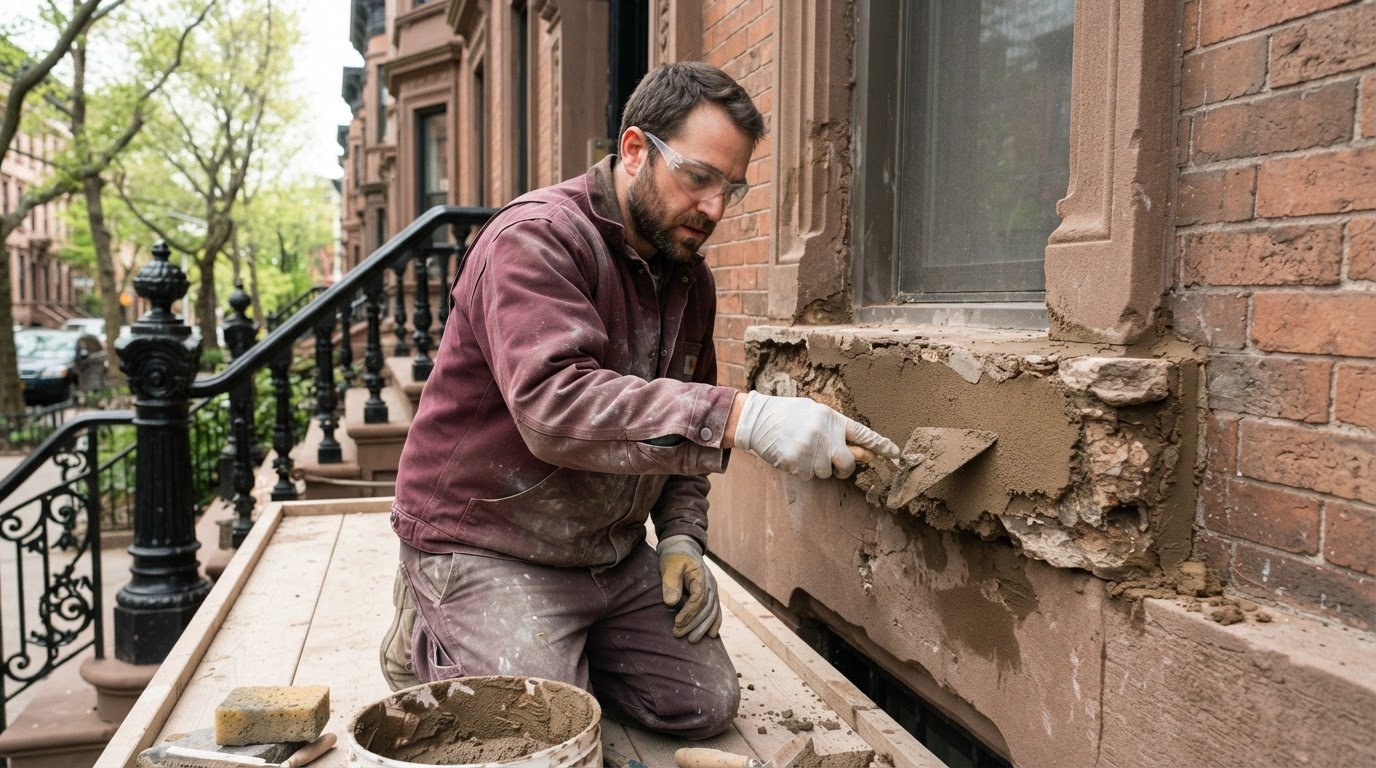
Planning facade restoration for a Brooklyn property starts with understanding the building, not simply sending a crew to the site. Timing depends on the facade’s condition, the work involved, access and staging needs, and whether the property’s historic status affects approvals. A search for facade restoration for a property in Brooklyn should account for these factors from the outset.
It’s reasonable to want a clear sense of when work can begin, especially when damaged masonry or a failing stoop needs attention. Brooklyn brownstones and other older buildings differ in materials, past alterations, and access conditions, so the practical first step is assessing the specific property.
This guide explains how water and freeze-thaw conditions damage brownstone, which features can be restored, and what affects project planning. It also covers how historic-district requirements and the scope of repairs can influence the process.
Table of Contents
Brownstone facade construction and deterioration
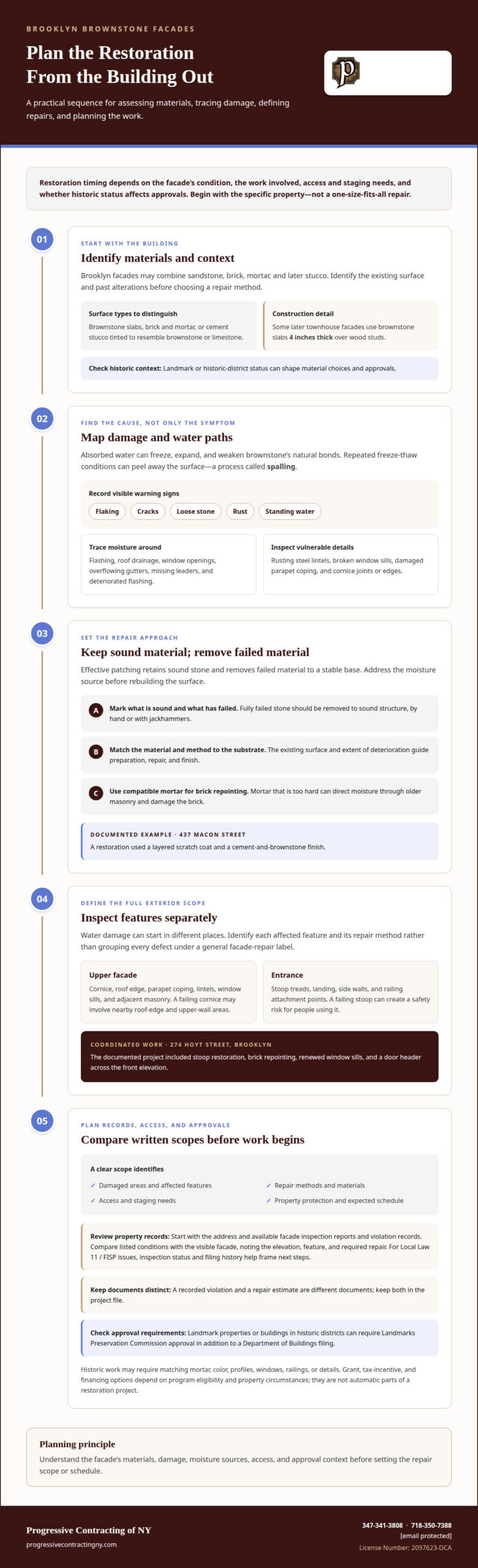
Brooklyn brownstone facades can combine sandstone, brick, mortar, and later stucco surfaces. Restoration starts by identifying failed material, sound areas, and paths for moisture. A search for facade restoration for a property in Brooklyn should begin with the building’s actual materials and visible condition.
Freeze-Thaw Damage
Brownstone is sandstone, and absorbed water can freeze, expand, and weaken its natural bonds. Repeated freeze-thaw conditions can peel away the outer surface, a process called spalling. Look for flaking, cracks, and loose stone, then trace water paths around flashing, roof drainage, and window openings before planning repairs.
Patching and Surface Rebuilding
Effective patching retains sound stone and removes failed material to a stable base. Address the moisture source before rebuilding the surface. At 437 Macon Street, a documented restoration used a layered scratch coat and a cement-and-brownstone finish. The existing substrate and extent of deterioration guide the repair method and finish.
Brownstone and Stucco Surface Restoration
Some later townhouse facades use brownstone slabs 4 inches thick over wood studs; others were covered with cement stucco tinted to resemble brownstone or limestone. Identify the existing surface before patching or coating, since the material affects preparation and repair. Landmark or historic-district status can also shape material choices and approvals.
Mortar and Veneer Repairs
Brick repointing requires mortar compatible with the existing brick. Mortar that is too hard can direct moisture through older masonry and damage the brick. When comparing facade restoration options for a Brooklyn property, review whether each scope identifies the damage, repair methods, materials, access, property protection, and schedule.
Retain sound material and mark failed material for removal. Fully failed stone should be removed to sound structure by hand or with jackhammers. Address water sources such as overflowing gutters, missing leaders, poor roof drainage, and deteriorated flashing before rebuilding.
Cornice, stoop, and railing restoration
Inspect each exterior feature separately because water damage can start in different places. A cornice directs water away from the upper facade, windows, and roof edge. A failing stoop can create a safety risk for people using it. Record visible cracks, loose masonry, rust, and areas where water collects before defining the repair scope.
Window openings need close attention. Rusting steel lintels can expand and crack the brick above a window, while a broken sill can let water enter the wall. Damaged parapet coping also exposes masonry at the roofline, where leaks often begin. A restoration plan should identify these conditions, not just describe visible surface damage.
Cornice repair should address both the damaged material and the path water takes across the facade. Check joints, edges, and nearby masonry for signs of water entry or separation. If the cornice is failing, repairs may need to include adjacent roof-edge and upper-wall areas. This broader inspection helps avoid treating a surface symptom while leaving the moisture source in place.
Stoop and railing work calls for attention to the full entrance assembly. Look at the stone or masonry treads, landing, side walls, and railing attachment points. A documented project at 274 Hoyt Street in Brooklyn included stoop restoration, brick repointing, renewed window sills, and a door header across the front elevation. That example shows how related exterior repairs can be coordinated in one facade scope.
Compare proposed scopes by checking whether they identify each affected feature, its repair method, materials, access needs, and property protection. A clear scope distinguishes cornice, lintel, sill, parapet, stoop, and railing work instead of grouping every defect under a general facade-repair label.
Brooklyn building types and facade restoration
Brooklyn townhouse facades reflect different construction periods, later alterations, and neighborhood histories. Identify the building’s existing materials and any historic-district context before setting the repair scope.
Facade Reports and Violations
Start with the property address and review available facade inspection reports and violation records in the city’s building records. Compare each listed condition with the visible facade, noting the affected elevation, feature, and required repair. For Local Law 11 / FISP issues, the building’s inspection status and filing history help frame the next steps. A recorded violation and a repair estimate are different documents, so keep both in the project file.
Available Restoration Services
Brooklyn facade restoration can include brownstone repair, brick pointing, stoop restoration, and repairs to masonry details. A property with a damaged entrance may need stoop work, while deteriorated mortar joints may call for repointing. Sidewalk repair and sidewalk violation removal address exterior conditions at street level. Match the scope to the affected building elements rather than treating every facade as the same repair.
When comparing contractors, look for a written scope that identifies damaged areas, repair methods, materials, access, property protection, and the expected schedule. For landmarked properties or buildings in historic districts, proposed exterior work can require Landmarks Preservation Commission approval in addition to a Department of Buildings filing. Grant, tax-incentive, and financing options depend on program eligibility and property circumstances; they are not automatic parts of a restoration project.
Explore Brooklyn brownstone facade restoration
Historic work may require matching mortar, color, profiles, windows, railings, or details. In the Greenpoint Historic District, a 1938 tax lot photo plus on-site forensic discoveries helped recreate a Brooklyn townhouse facade. Its replacement clapboards were painted cement siding described as not needing another coat of paint for 20 years.
Originally 3 stories, the Brooklyn Heights townhouse had an attic beneath a pitched roof. In 1881, its facade was extended and the attic became a full fourth floor. Wood shingles were almost never original on pre-1900 houses.
Progressive Contracting NY Corp: Brownstone facade renovation
Progressive Contracting NY Corp provides brownstone facade renovation and Rammstein stoop restoration for Brooklyn properties with deteriorated stone, masonry, or entrance features. Turn to a brownstone contractor when the facade needs repairs planned around its existing materials and visible damage.
Before work begins, identify affected areas, access needs, and any historic-district considerations. A clear project scope connects observed conditions to the restoration required, whether the priority is the facade or stoop. Progressive Contracting NY Corp can discuss your Brooklyn property and the exterior repairs you’re considering.
Contact Progressive Contracting NY Corp at 347-341-3808 or 718-350-7388, or email ProgressiveContractingNY@yahoo.com.
Move from inspection to a clear restoration plan
A search for facade restoration for a property in Brooklyn is more useful when you define the decision in advance: which conditions need attention first, what outcome you want, and what details a contractor needs to assess the work. Note the affected areas and gather any inspection records or photographs you already have. For landmarked or historic-district properties, include that context in the project discussion so restoration planning can account for it.
Progressive Contracting NY Corp offers brownstone facade restoration for property owners planning exterior repairs in Brooklyn and Manhattan. A focused conversation can connect your concerns to a practical scope for the building. Contact Progressive Contracting NY Corp to discuss your property and arrange a free consultation.
A clear starting point makes the restoration process easier to approach.
Frequently Asked Questions
How much does facade restoration cost in Brooklyn per square foot?
There isn’t one per-square-foot price for every Brooklyn facade restoration project. The price depends on the property and is provided after a quote request. Key cost factors include the area and depth of failed masonry, repair materials, access and staging needs, and whether water damage extends beyond the visible surface. A written scope connects the estimate to specific repairs.
How long does facade restoration take, and what affects the schedule?
The schedule depends on the repair scope, building access, material requirements, and any approvals that apply to the property. A small, localized repair requires different preparation from rebuilding several facade areas or coordinating stoop work. Historic-district review can also affect when work proceeds. A useful project schedule identifies work phases, access arrangements, and dependencies.
What risks and warning signs indicate a Brooklyn facade needs urgent repair?
Loose or falling masonry, widening cracks, and a failing stoop warrant prompt attention because they can create hazards near the building. Peeling brownstone, rusting lintels, broken sills, and damaged parapet coping also signal deterioration that may allow water into the wall. Keep people away from visibly loose exterior material and arrange an assessment of the affected area.