
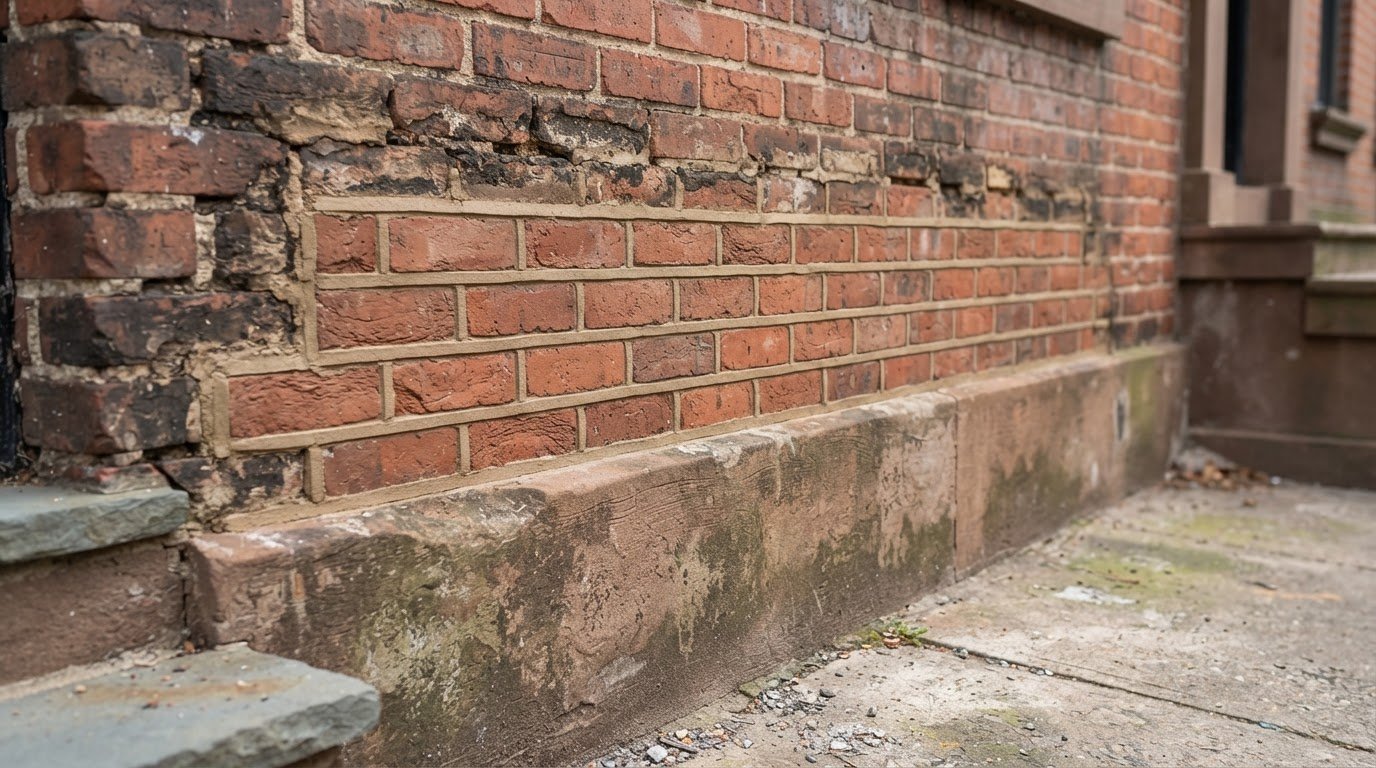
A cracked brick is a warning, not a verdict. It may indicate a localized defect or a wider masonry issue, so a Masonry Contractor assesses the crack pattern, surrounding mortar, and nearby signs of movement or moisture before recommending repairs. One isolated crack and repeated cracking across a wall call for different evaluations.
It’s reasonable to want a clear answer before committing to work. This guide explains the masonry services available in New York City, what a careful assessment and hiring process involves, and which project details affect a brick-repair estimate. You’ll also learn when repointing may address worn mortar and when damaged bricks need a different repair. An assessment begins by locating the damage and considering it in context, including the condition of nearby mortar joints.
Table of Contents
What does Masonry Contractor NY Expertise?
Masonry work in New York City can involve brick, stone, concrete block, facades, and repairs. The material and structure determine the appropriate assembly and repair approach.
Masonry Materials and Stonework
Brick and concrete block form walls, while natural stone can be used for steps, walls, and facade details. Stone veneer creates a surface layer over a supporting structure, unlike solid stone masonry. Identify the material and inspect nearby joints, the foundation, and drainage for related wear. These details help define the repair area and suitable materials.
Masonry and Stone Assembly
Masonry assembly can involve placing and joining masonry units. Facade work may use natural stone, stone veneer, or a custom arrangement suited to the property. An estimate should describe the work area, materials, preparation, drainage details, and adjoining finishes. The contract should record the agreed scope, payment terms, and process for approving changes.
Licenses and Insurance
License requirements depend on the work and jurisdiction, so ask which license applies to the NYC project. Review current liability insurance and workers’ compensation documents that identify the contracting business. These records clarify responsibility for the work and job-site risks. Facade restoration and a small brick-wall repair can involve different scopes, so documentation should reflect the specific project.
Permits and Building Codes
Permit requirements depend on the work scope, property location, and building conditions. Masonry work must follow the codes and approval requirements that apply to the project. Define whether the job affects mortar joints, a wall, a facade, or the foundation. The estimate and contract should state who handles permit-related steps and how the work plan addresses drainage and adjoining surfaces.
Contractor ratings, hires, and service offerings
Ratings can help assess communication and completed work, but they don’t show every detail. Compare feedback about similar projects, such as brick repairs, facade work, or outdoor patios. Look for specific examples of workmanship and clear descriptions of the work performed. A rating alone can’t establish whether a contractor has credentials and insurance suited to a particular NYC project.
Before hiring, clarify who will perform the masonry work, what the written scope includes, and how changes are documented. Discuss how nearby surfaces will be protected and how the site will be cleaned. A useful estimate connects the proposed work to visible conditions, such as deteriorated joints or damaged bricks, rather than relying on a vague description of “repairs.”
Service areas should be clear at the neighborhood level. Brooklyn and Manhattan properties can have different access conditions, building types, and project requirements. The property address helps establish the location and practical details that shape the work plan. Discussing the scope for a specific NYC address keeps the conversation focused on the site and the masonry work it needs.
Residential masonry services may include brick walls, stoops, facades, and patios. Commercial work can involve building exteriors, entryways, and shared outdoor areas. The plan should suit the property’s use and materials. Discuss comparable project experience, planned materials, crew oversight, work sequence, and how agreed changes will be documented. These details help explain the craftsmanship and process before the work begins.
For urgent issues, the contractor states that it offers 24/7 emergency masonry repair service. Ask what conditions qualify as an emergency and what steps are included in the response, so expectations are clear before a problem arises.
Houzz lists 203 stone, pavers, and concrete professionals serving Hackensack, New Jersey. That directory count can provide a starting point for comparing providers, but confirm each professional’s masonry experience, service area, and fit for the specific project.
How much does brick repair cost?
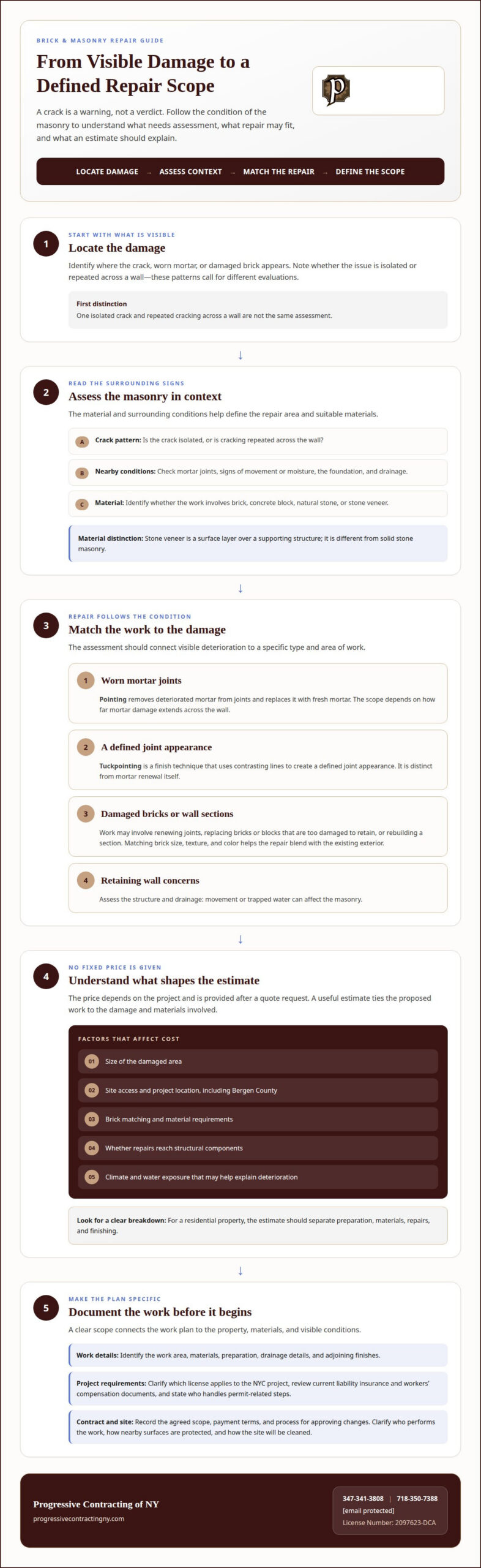
The price depends on the project and is provided after a quote request. The estimate should connect the repair scope to the damage and materials involved.
Brick Repair Cost Factors
Cost depends on the damaged area, access, brick matching, and whether repairs reach structural components. A small exterior patch differs from rebuilding a wall or stabilizing a retaining wall. Climate and water exposure can also help explain deterioration. For a residential property, the estimate should separate preparation, materials, repairs, and finishing. Location, including Bergen County, can also affect project logistics.
Pointing and Tuckpointing
Brick pointing removes deteriorated mortar from joints and replaces it with fresh mortar. Tuckpointing is a finish technique that uses contrasting lines to create a defined joint appearance. The scope depends on how far the mortar damage extends across the wall. An estimate should identify affected sections and say whether the work includes joint preparation, mortar placement, and cleanup. This distinguishes mortar renewal from brick installation or broader brickwork.
Wall Repairs and Brick Replacement
Brick and block wall repairs may involve renewing joints, replacing damaged units, or rebuilding a section. A retaining wall also needs assessment of its structure and drainage, since movement or trapped water can affect the masonry. Replacing individual bricks is appropriate when they are too damaged to retain. Matching their size, texture, and color helps the repair blend with the existing exterior. A clear scope distinguishes replacement from localized repair.
Progressive Contracting NY: Brownstone Contractor
Progressive Contracting NY Corp provides brownstone facade renovation and stone stoop restoration in Brooklyn and Manhattan. Turn to the company when brick deterioration is accompanied by facade damage or a stoop that needs restoration, rather than treating it as an isolated cosmetic concern.
For Brooklyn brownstones, Progressive Contracting NY Corp assesses the exterior and defines the restoration scope. As an experienced masonry contractor, they connect visible masonry damage with surrounding brownstone elements, helping the plan address the property as a whole. A qualified brownstone contractor can also clarify whether the project centers on facade renovation, stoop restoration, or both.
Contact Progressive Contracting NY Corp to discuss your brownstone facade or stoop restoration needs.
Set a Clear Path for Your Restoration
Turn visible damage into a defined restoration scope. A Masonry Contractor can assess how brick repairs connect with adjoining brownstone and facade details, helping focus the next steps on your property.
Progressive Contracting NY Corp handles brownstone facade renovation, Brownstone Facade Restoration, and Rammstein stoop restoration. To discuss your project, call 347-341-3808 or 718-350-7388, or email ProgressiveContractingNY@yahoo.com.
A clear first conversation can make the restoration process easier to plan.
Frequently Asked Questions
Are cracked bricks a problem?
Cracked bricks can signal damage that needs assessment, especially if cracks recur across a wall or appear alongside bulging, loose units, or water entry. A hairline crack in one brick may have a different cause from a spreading stair-step pattern through several joints. Note where cracks begin and end, and whether they change after wet or freezing weather.
How much does masonry work cost per square foot in the United States?
There isn’t one dependable per-square-foot price for masonry work across the United States. A square-foot figure can obscure the differences between repointing a surface, replacing bricks, and rebuilding part of a wall. The price depends on the project and is provided after a quote request. Scope, material matching, access, and the extent of underlying damage shape the estimate.
What factors affect masonry contractor pricing?
Pricing reflects the repair area, material type, access, and work needed beneath the visible surface. For example, replacing a few bricks differs from repairing a wall with movement or moisture damage. A written scope makes these differences easier to understand by identifying preparation, materials, repairs, and finishing. Changes to the agreed scope can also affect the final price.
How do I find and compare reputable masonry contractors near me?
Compare written scopes for the same property and repair goal, not just the totals. Check whether each scope explains materials, damaged areas, preparation, cleanup, and how changes are handled. A Masonry Contractor should explain why the proposed work suits the observed conditions. For a Brooklyn or Manhattan brownstone, relevant facade-restoration work is a useful comparison point.
How can I verify a masonry contractor’s credentials and references?
Verify the contractor’s business identity, applicable credential details, and insurance documents before work begins. Progressive Contracting NY lists license number 2097623-DCA; check the number’s issuing category and current status through the relevant records. For references, focus on projects with comparable brick or brownstone work, and look for clear descriptions of the completed scope rather than general praise alone.