
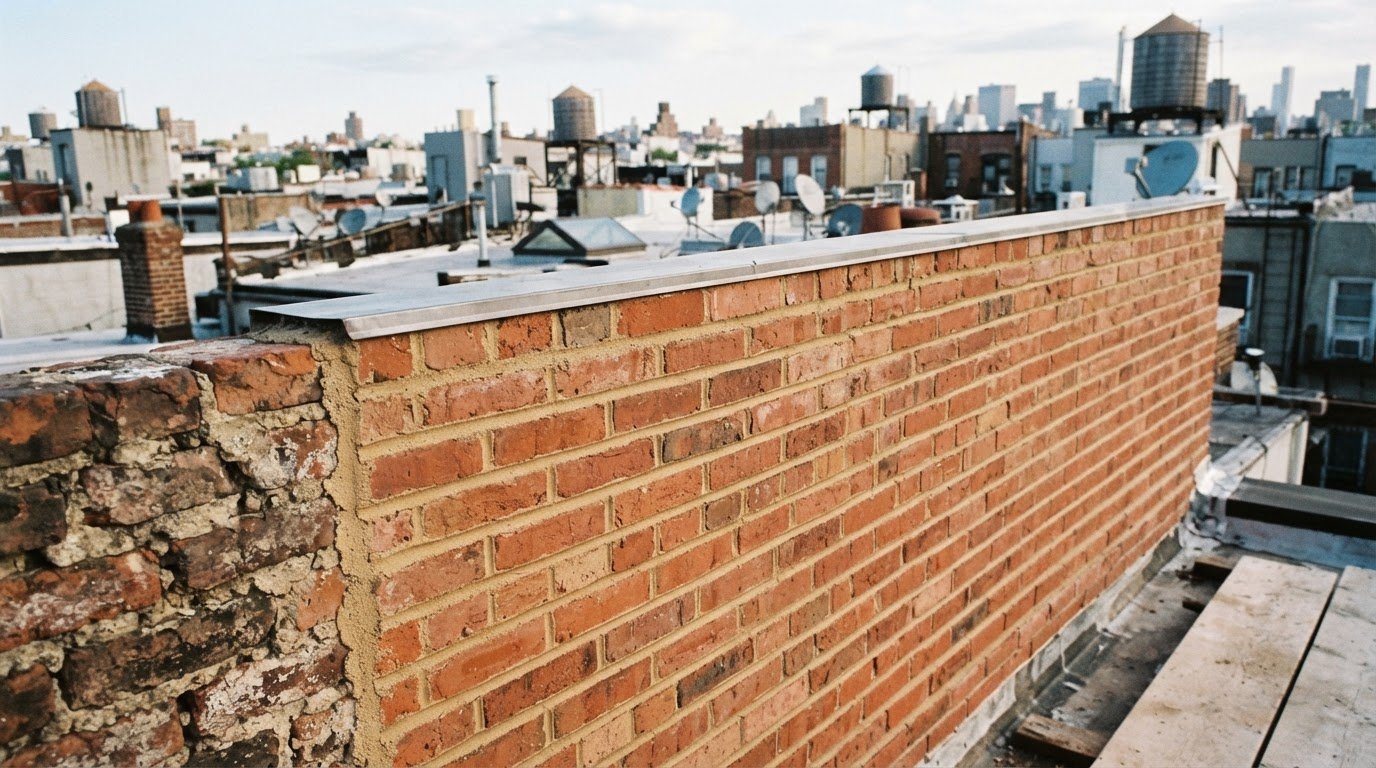
Brick pointing in Brooklyn doesn’t follow a fixed calendar. Properly installed pointing can last 25 to 50 years, but a building over 50 years old that hasn’t been repointed during its current owner’s tenure is due for a professional inspection. A Brooklyn brick pointing contractor can assess the mortar and identify whether the wall needs spot repairs or broader repointing.
Before planning a project, it helps to understand your brickwork’s condition and the likely scope of repairs. This guide explains how often Brooklyn brick may need repointing, what the process involves, and why costs vary by project. Learn which signs to look for, how damaged mortar is replaced, and what details affect a quote.
Table of Contents
How Often Should Brick Be Repointed in Brooklyn?
Properly installed brick pointing can last 25 to 50 years. A Brooklyn building over 50 years old, with no repointing during its current owner’s tenure, is due for professional inspection. Brownstones built in the 1880s-1910s are often ready for their second or third repointing.
Look for mortar that crumbles under light pressure, missing material in the joints, loose bricks, or damp patches after wet weather. Open joints can let water reach the masonry, and repeated moisture may contribute to deterioration. A failed mortar joint signals a need for repair, but does not necessarily mean the whole wall needs rebuilding.
An inspection starts with the façade, mortar joints, and visibly damaged bricks. A brick pointing contractor in Brooklyn assesses whether the work calls for localized repointing, individual brick replacement, or broader restoration. A small affected area may need repairs to specific joints and bricks, while widespread mortar failure requires a wider assessment.
Residential work may involve a brownstone façade or a row-house wall. Commercial buildings also need careful review of mortar condition, brick damage, and water entry. In Brooklyn and Queens, changing weather makes sound joints important for keeping moisture out of masonry. A Brooklyn brick pointing contractor can assess these conditions across residential and commercial properties.
Before work starts, establish the contractor’s applicable license, proof of insurance, and permit needs. The listed license number is 2097623-DCA; permit requirements depend on the job, and some work involving violation removal requires permits.
When choosing a Brooklyn masonry contractor, look for clear communication and examples of completed brick repair work. Experience with similar residential or commercial projects can help you understand how the contractor approaches pointing, brick replacement, and restoration.
A written agreement should describe the work areas, mortar and brick repairs, access arrangements, cleanup, schedule, and payment terms. A clear scope makes it easier to see whether a proposal covers spot repairs or repointing across the full façade.
What Is Brick Pointing, Exactly?
Brick pointing removes deteriorated mortar from masonry joints and replaces it with new mortar. The project scope and cost depend on access, the mortar’s condition, and the area requiring repair.
In New York City, brick-pointing work on buildings six or more stories tall triggers Local Law 11 / FISP requirements. For a landmarked property, the building’s designation is relevant when planning exterior work.
Signs of Mortar Deterioration
Check for joints with missing mortar, visible gaps, cracks, or mortar that has receded behind the brick face. These signs may indicate weathering and create paths for moisture. An assessment can distinguish isolated damage from broader deterioration and clarify whether the work calls for targeted repointing or repairs across a larger area.
Mortar Matching and Consistency
Matching means selecting mortar that suits the existing masonry in color, texture, and consistency. The replacement should fit the joint profile rather than obscure the brick edges. Historic buildings may require lime mortar matching, which adds 20 to 40% to the base brick-pointing price in Brooklyn in 2026. Careful matching helps new joints sit naturally beside older work.
Water Intrusion Through Joints
Open or failing joints can let rainwater pass behind the brick face and into the wall. Repointing addresses the pathway by removing deteriorated mortar and filling the joints with suitable new material. Lightly weathered joints are typically raked out to a depth of 1/2″-3/4″ before repointing. Access, the condition of the mortar, and the area’s square footage shape the work scope. The price depends on the case and is given after a quote request.
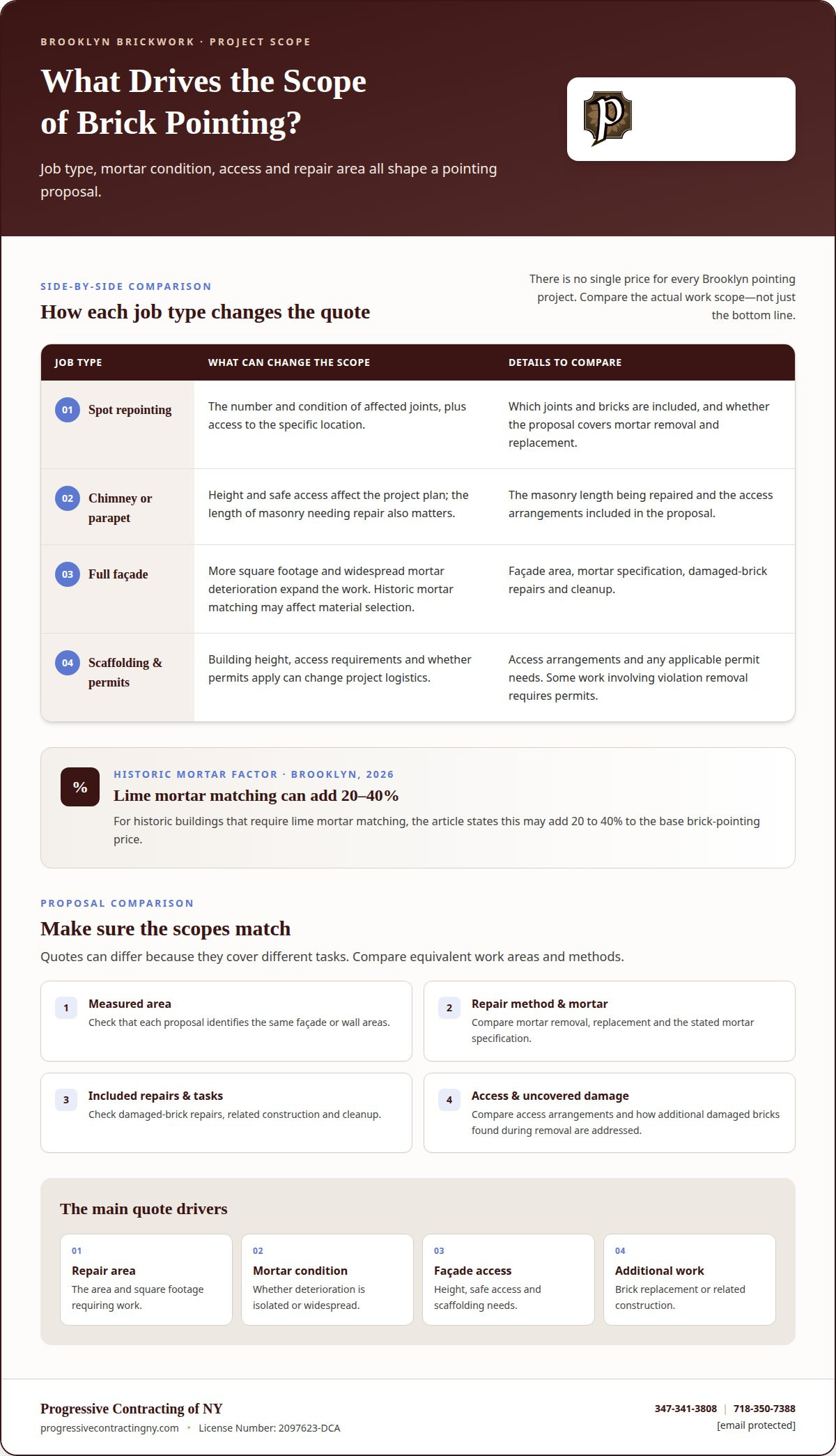
Brooklyn brick pointing cost ranges by job type
There is no single price for every Brooklyn pointing project. Cost depends on the repair area, mortar condition, façade access, and whether the work includes brick replacement or related construction. A useful quote describes the actual scope rather than relying on a broad estimate.
Compare proposals line by line. Check that each identifies the façade or wall areas, mortar removal and replacement, damaged-brick repairs, access arrangements, and cleanup. Quotes can look different because they cover different tasks, so compare the scope as well as the price.
- Spot repointing: A limited repair depends on the number and condition of affected joints and access to that location.
- Chimney or parapet work: Height and safe access influence the project plan, along with the length of masonry needing repair.
- Full façade work: Larger square footage and widespread mortar deterioration expand the scope. Historic mortar matching can also affect material selection.
- Scaffolding and permits: Building height, access requirements, and whether permits apply can change the project’s logistics.
For a fair comparison, look for the same measured area, repair method, mortar specification, and included tasks in each proposal. Ask how the quote addresses additional damaged bricks uncovered during removal. Comparing equivalent scopes makes it easier to assess the proposals beyond the bottom-line price. Cost depends on the property and scope, including access, area, mortar condition, and required repairs.
Explore brick pointing and façade repair
Progressive Contracting NY Corp.: Brownstone Contractor
Progressive Contracting NY Corp. provides brick pointing and brownstone façade restoration in Brooklyn and Manhattan. Its exterior masonry services include stoop restoration and brownstone repair. When worn joints or façade damage need attention, the team can assess the masonry and define a suitable scope of work.
For a brownstone façade project, repairs can be coordinated with broader exterior renovation. Stoop restoration is also available when the stoop needs attention alongside the façade. Share the property’s location and describe the visible issue to start a focused conversation about the work.
Contact Progressive Contracting NY Corp. by calling 347-341-3808 or 718-350-7388, or email ProgressiveContractingNY@yahoo.com to discuss your Brooklyn brownstone project.
Plan the Next Step for Your Brooklyn Brickwork
Use inspection findings to prioritize affected areas and define a clear project scope. A brick pointing contractor in Brooklyn can connect deteriorated joints with an appropriate repair approach and related façade needs.
Progressive Contracting of NY also handles brownstone façade renovation, brownstone façade restoration, and Rammstein stoop restoration. This broader exterior masonry focus is useful when brickwork concerns overlap with brownstone or stoop repairs on the same property. Describe the building and visible issues to begin planning the work.
Take the next step with a clear plan for your property’s exterior.
Frequently Asked Questions
What does brick pointing and repointing cost in Brooklyn?
The cost depends on the job’s scope, access, mortar condition, and any brick replacement or related restoration. A quote request should identify the areas involved and the work required, rather than treating every façade as the same project. For a useful comparison, make sure each proposal describes a similar scope. Project pricing is provided after a quote request.
What factors affect brick pointing costs for Brooklyn homes?
Access and the extent of damaged masonry are key factors. A ground-level repair differs from work on a high façade that requires special access. The estimate may also depend on the area requiring repointing, mortar removal, replacement bricks, and matching historic materials. A clear scope distinguishes joint repairs from additional façade restoration so you know what the estimate covers.
How long does brick repointing take, and what is the process?
Project duration depends on the repair area, access, and the condition of the brickwork. The work generally involves assessing the joints, removing deteriorated mortar, preparing them, and placing new mortar. As one Brooklyn example, the brick-pointing and waterproofing project at 29 Herkimer St took 3 weeks, from December 10 through December 31, 2024. That project schedule isn’t a timeline for every building.
How do I choose the right mortar for repointing historic Brooklyn brick?
Mortar should suit the existing masonry, including its color, texture, and joint finish. For older brickwork, a lime mortar match may be appropriate; selection should account for the existing mortar and the building’s appearance. A close visual match alone is not enough if the new material behaves differently from the original. The project scope should specify the mortar approach before work begins.
What are signs that a Brooklyn brick building needs repointing?
Look for mortar that has visibly receded, gaps along the joints, or powdery material collecting beneath a brick wall. White salt deposits on the surface or recurring interior dampness near an exterior wall may also warrant closer inspection. Note where the signs appear, such as around a window or chimney, to help focus the assessment on the affected masonry.