
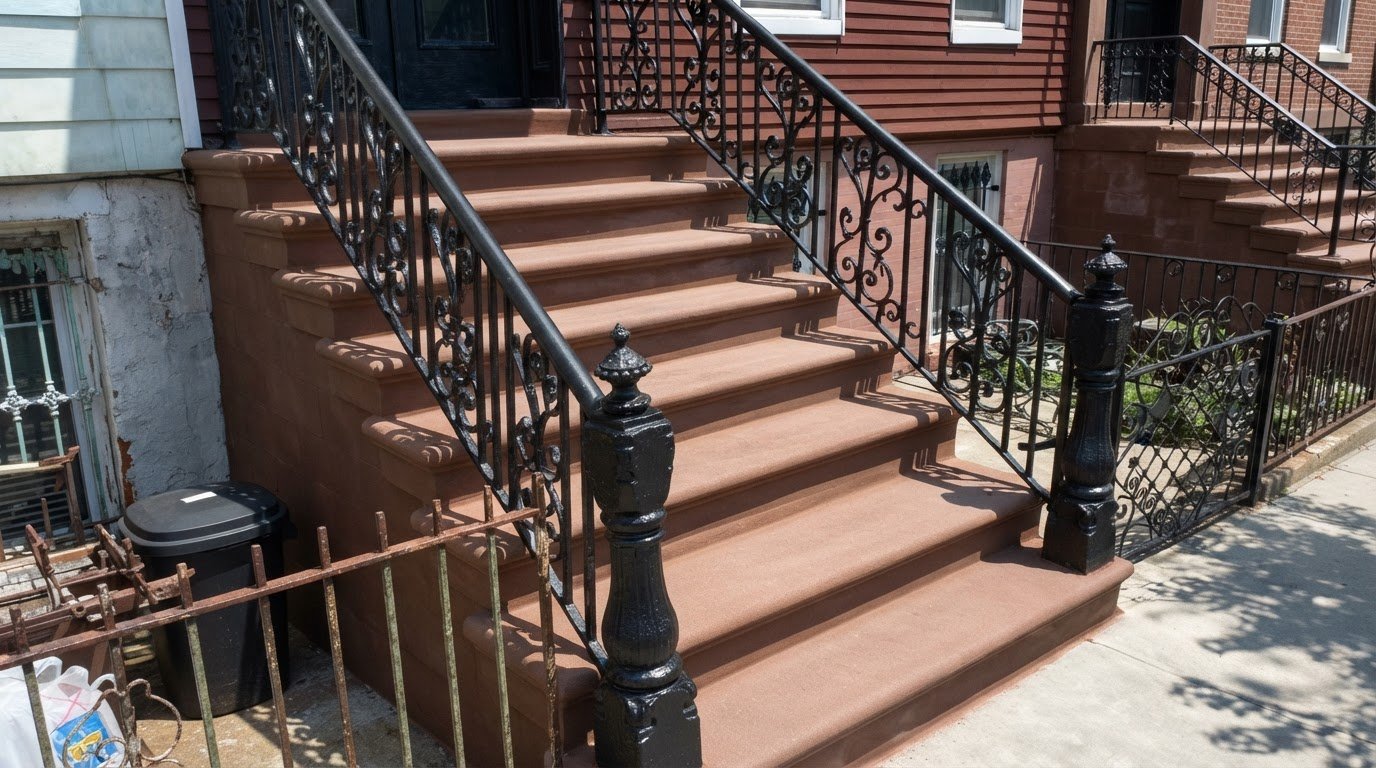
A full New York City brownstone renovation, from design through close-out, often takes 12 to 18 months. For an exterior restoration, start by assessing the facade, stoop, and masonry, then plan repairs around the building’s historic character. A knowledgeable Brownstone contractor can help turn those findings into a clear scope of work.
A brownstone contractor should address deterioration while respecting the building’s original materials and details. This guide explains how to plan a brownstone exterior restoration in New York City, recognize common masonry issues, and understand pointing and preservation. You’ll also learn what to consider when organizing the work and setting a project timeline, so you can make informed decisions before restoration begins.
Table of Contents
Brownstone project experience and references
Review examples of completed brownstone exterior renovation work in Brooklyn or Manhattan. Compare the masonry, stoop details, and finishes with your building’s architectural features. A brownstone contractor experienced in historic properties should explain how the planned work responds to the conditions and preserves the building’s character.
Plan the scope, budget, and schedule together. A realistic New York City start date is 3 to 6 months after signing, while multi-floor construction typically takes 9 to 14 months. A full renovation, from design through close-out, often takes 12 to 18 months. Build those stages into one project schedule, including permits, material selection, site work, and final review.
For licenses and insurance, New York City property owners should confirm that construction professionals hold the required licenses and registrations and maintain current insurance. Ask how the project team will coordinate daily work, communicate progress, and handle changes.
Required permits depend on the work’s scope and the building’s status. Map the proposed work to the necessary filings before construction; landmark review can add 3 to 6 months to design and permitting.
To find a qualified contractor near you, compare references for similar brownstones in your borough. Ask past clients about schedule and changes, and ask suppliers whether they can verify the contractor’s workload and bill-payment history.
The contract should define the work, materials, finish, payment stages, schedule, change process, permit responsibilities, and warranty coverage. Get each item in writing before work begins, so everyone has a clear project plan.
Common mistakes include choosing a generalist without relevant brownstone experience and treating the initial schedule as certain. NYC brownstone renovation timelines with generalist contractors can run 4 to 8 months longer than promised. Set milestones and document changes to help manage delays.
2. Historic masonry repair and preservation
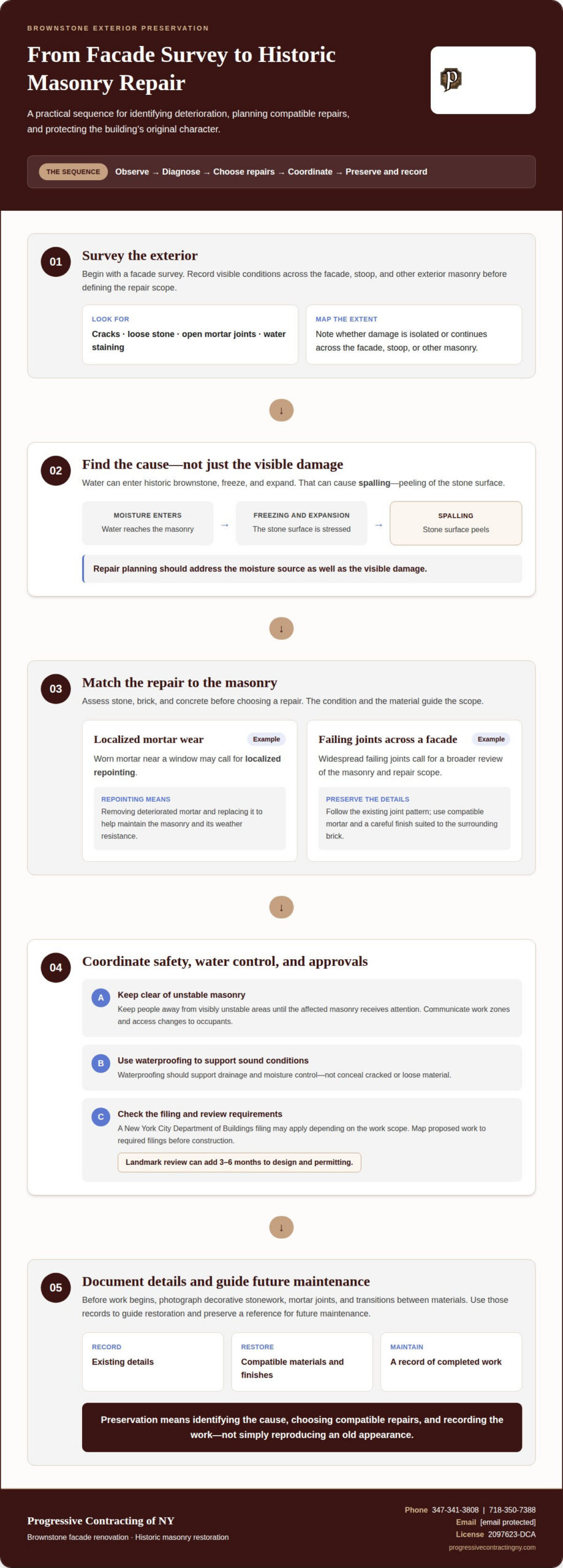
Start with a facade survey that records cracks, loose stone, open mortar joints, and water staining. These signs help distinguish surface wear from areas that need closer assessment. Water can enter historic brownstone, freeze, and expand, causing spalling, or peeling of the stone surface. A repair plan should address the source of moisture as well as the visible damage.
Brick pointing, also called repointing, involves removing deteriorated mortar and replacing it to help maintain the masonry and its weather resistance. The work should follow the existing joint pattern and suit the surrounding brick. For example, a townhouse with worn mortar near a window may need localized repointing, while failing joints across the facade call for a broader review. Compatible mortar and a careful finish help preserve the building’s architectural character.
Stone, brick, and concrete each need assessment before repair. Note whether damage is limited to one area or extends across the facade, stoop, or other exterior masonry. Waterproofing should support sound drainage and moisture control, not conceal cracked or loose material. Keep people clear of visibly unstable masonry until the affected area receives attention. Clear communication also helps occupants understand work zones and access changes.
Preservation also means documenting existing details before work begins. Photograph decorative stonework, joints, and transitions between materials, then use those records to guide restoration. A New York City Department of Buildings filing may apply depending on the scope of work, so coordinate masonry plans with the project’s permit process. For a closer look at brownstone facade restoration, consider how repair methods can protect both the facade and its historic finish.
3. Brownstone and historic-building restoration
Historic restoration starts by separating visible exterior deterioration from concealed structural concerns. A crack near a window, for example, may require investigation before crews repair the surrounding stone. Older brownstones may have concealed framing or structural concerns, so owners should assess the building’s underlying condition when defining preservation work.
Balloon framing was popular in brownstones built in the late 19th and early 20th centuries. That history makes careful assessment important before workers disturb connected materials. A restoration plan should document the facade, stoop, roofline, and drainage paths, then identify which repairs protect historic details without masking damage. Roofing work can affect how water reaches masonry, so coordinate those scopes rather than treating each surface separately.
Landmark status also affects project planning. New York City Landmark Preservation Commission approval can add 3 to 6 months to brownstone renovation design and permitting. Owners should allow that review to inform material choices, drawings, and sequencing. For interiors, keep any separate work coordinated with exterior repairs, especially where moisture or structural conditions connect the spaces.
Preservation is more than reproducing an old appearance. It means identifying the cause of deterioration, choosing compatible repair methods, and recording completed work for future maintenance. Reputation alone cannot show whether a brownstone contractor understands historic construction. Relevant project examples should demonstrate careful transitions between original materials and repaired areas. Assess the whole building before treating a facade symptom as an isolated problem.
Explore historic brownstone restoration
Progressive Contracting NY: Brownstone facade renovation
Progressive Contracting NY Corp handles brownstone facade renovation and Rammstein stoop restoration for owners planning exterior repairs. Turn to the team when worn stone, damaged facade details, or a deteriorating stoop needs restoration suited to a historic property.
For a Brooklyn or Manhattan brownstone, the work can focus on the exterior scope you’ve identified, from facade repairs to stoop restoration. A clear project discussion helps connect visible masonry concerns with the restoration work required.
Contact Progressive Contracting NY Corp at 347-341-3808 or 718-350-7388, or email ProgressiveContractingNY@yahoo.com. License Number: 2097623-DCA.
Set a Clear Path for Your Restoration
Your next step is to turn your observations into a focused exterior project scope. Note the areas that need attention, the historic details you want to retain, and your property’s priorities. This preparation gives the project conversation a practical starting point.
Progressive Contracting NY Corp handles brownstone facade renovation, Brownstone Facade Restoration, and Rammstein stoop restoration. A brownstone contractor can address these exterior needs with restoration work shaped around the building’s visible condition and character. Discuss your priorities with the team to decide where to begin and what to include in the scope.
With a considered plan, you can move toward preserving your brownstone’s character with greater clarity.
Frequently Asked Questions
Planning a Brownstone or Exterior Restoration Project in NYC?
Begin with a written condition record of the building’s exterior. Photograph the facade, stoop, roofline, and areas where water enters, then mark each concern on a simple elevation sketch. For a Brooklyn or Manhattan property, this gives the project team a shared reference and helps distinguish needed repairs from finish and preservation choices.
How much does brownstone renovation or restoration cost per square foot?
There is no single reliable per-square-foot figure for every brownstone restoration. The price depends on the scope, material condition, access, repair methods, and whether the work includes a stoop or other masonry. Progressive Contracting NY Corp offers a free consultation to discuss the repairs and materials involved and prepare a project quote.
What factors affect the cost of repairing or renovating a brownstone?
The main cost drivers are the extent of deteriorated masonry, the areas needing repair, and the materials and finish required. Access and preservation details can also shape the work. For example, replacing a damaged decorative feature may require different preparation and matching than repairing a plain section of brick or stone.
How can I compare brownstone contractor quotes and project timelines?
Compare quotes against the same written scope, including preparation, materials, finish, permit responsibilities, and how changes are handled. Review the schedule by phase and note dependencies such as approvals and material selection. Check that warranty terms match the work covered. Progressive Contracting NY Corp provides a seven-year contract warranty on exterior painting work.
What permits are required for brownstone renovation in New York City?
Required permits depend on the work’s scope and the building’s status. Map the proposed work to the necessary filings before construction; landmark review can add 3 to 6 months to design and permitting.