
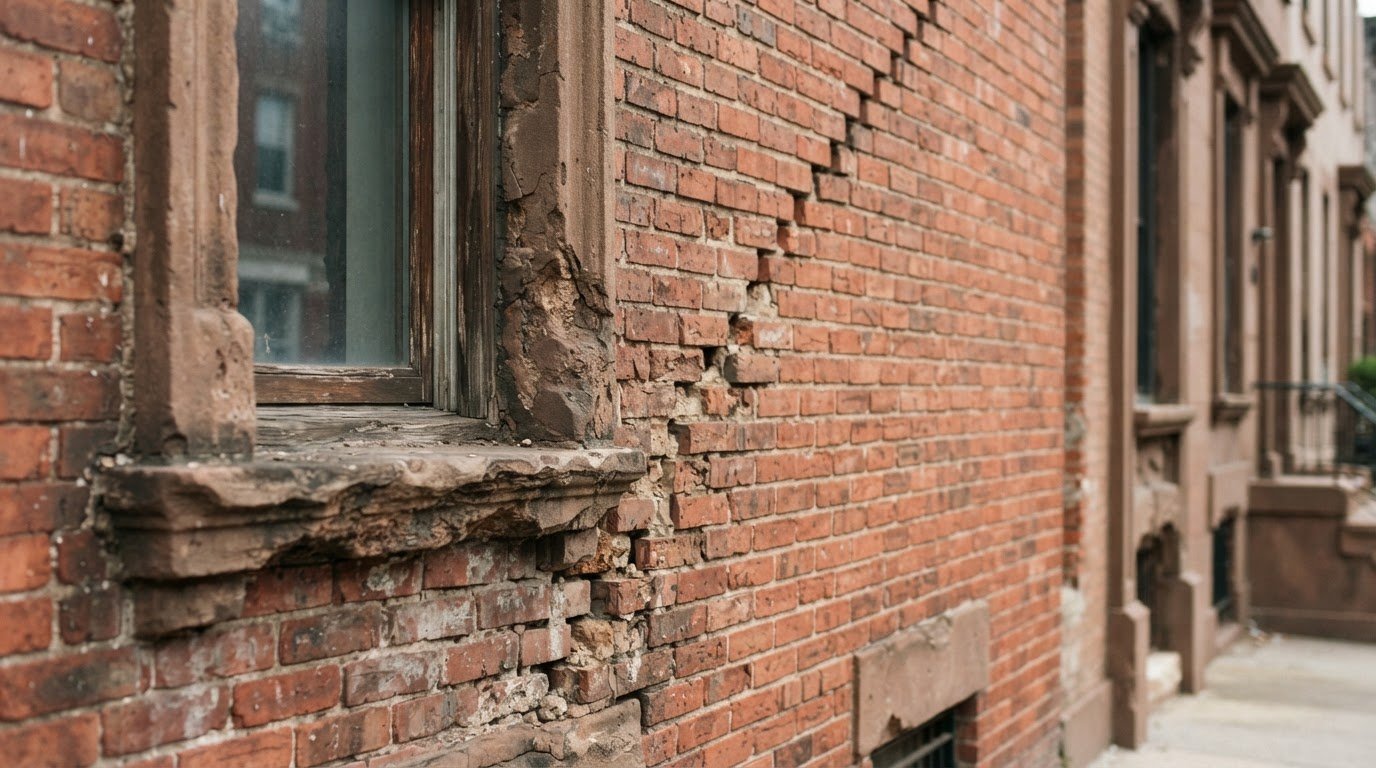
A cracked brick is a warning sign, not a diagnosis. A masonry contractor can assess whether it points to damaged masonry, failing mortar, or movement that needs closer attention. Stair-step or horizontal cracks may indicate a foundation problem, while deteriorating mortar can let water enter the wall and contribute to damage inside the masonry.
It’s reasonable to wonder whether a crack can wait or needs prompt attention, especially in a historic Brooklyn building. This article explains what crack patterns and crumbling mortar can reveal, how facade restoration and historic masonry preservation can protect a building, and what repairs may involve. You’ll also learn how the damage’s condition and extent shape the work, so you can consider the next steps with greater confidence.
Table of Contents
Historic masonry preservation
Historic masonry preservation starts by identifying what has failed and what remains sound. In Brooklyn, repairs should protect structural integrity while respecting the original brick and stone.
Local Permit Requirements
Permit needs depend on the property and the exact work, so no single permit applies to every masonry repair. Surface mortar repairs, structural changes, and sidewalk work can involve different approval requirements. Before work begins, define the scope and identify which approvals apply to the building and location. This helps align the repair plan with local requirements.
Available Masonry Services
Masonry work can include brick pointing, brownstone repair, facade restoration, and sidewalk repair. The U.S. Bureau of Labor Statistics describes masonry workers as building walkways, walls, and other structures with brick, concrete, and natural or manufactured stone. For preservation, the right service depends on the material and damage: failed mortar calls for a different approach than crumbling brownstone details.
Compare quotes from three professionals, as commonly advised, using the same written scope. Check whether each quote addresses materials, damaged areas, preparation, and cleanup, rather than comparing totals alone.
Ask for the license applicable to the work and proof of insurance. Review these alongside the proposed scope, and make sure any relevant certification relates to the material or restoration method.
Before hiring, ask how the contractor will identify the cause of damage, match repair materials, and document the work. For historic masonry, ask how the plan will protect sound brick and stone.
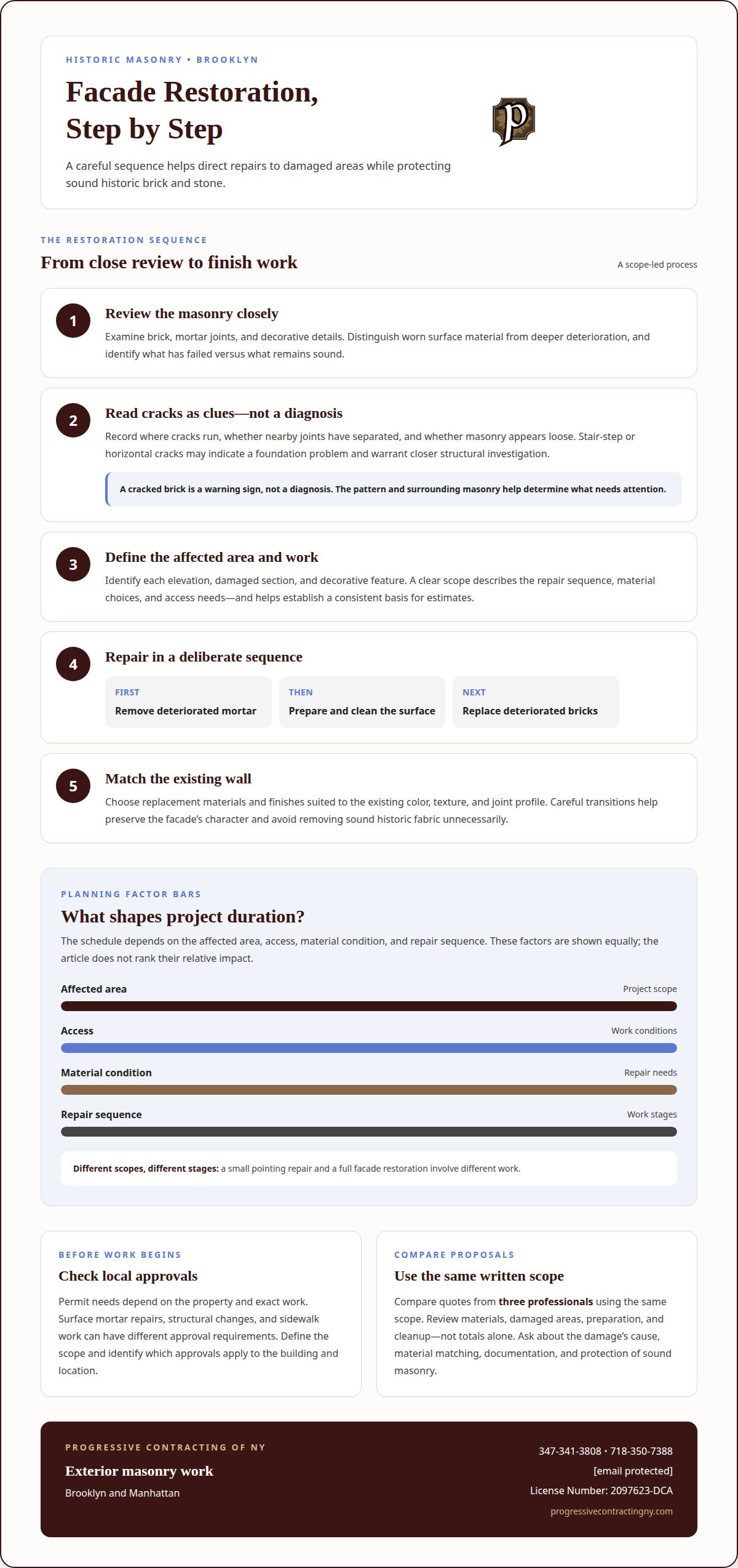
Project duration depends on the affected area, access, material condition, and repair sequence. A small pointing repair and a full facade restoration involve different stages of work.
An inexperienced or improperly licensed contractor may overlook structural movement, use incompatible mortar, or leave water-entry paths unresolved. These mistakes can damage historic details and lead to further repairs.
Building facade restoration
Facade restoration begins with a close review of brick, mortar joints, and decorative details. Failing mortar can let water enter masonry and cause damage from within. A careful assessment distinguishes worn surface material from deeper deterioration, helping direct repairs to affected areas without removing sound historic fabric.
Cracks need to be assessed by their pattern and location. Stair-step or horizontal cracks may indicate a foundation problem, rather than isolated brick damage. A restoration plan should record where cracks run, whether nearby joints have separated, and whether surrounding masonry appears loose. These details help determine whether the repair should focus on the facade or needs structural investigation.
For crumbling brick, the repair sequence matters. Damaged mortar is removed, the surface is cleaned, and deteriorated bricks are taken out before replacement. Replacement materials and finishes should suit the existing wall, including its color, texture, and joint profile. Careful repairs preserve the facade’s character while restoring continuity.
Craftsmanship shows in the transition between repaired and original areas. A clear scope identifies each elevation, damaged section, and decorative feature, giving estimates a consistent basis for comparison. It also helps explain the repair sequence, material choices, and access needs. For Brooklyn brownstones, historic facade restoration brings those details into one coordinated plan, from assessment through finish work.
These figures can help frame a masonry budget, but the wall’s condition and the repair scope matter when comparing proposals. A written estimate should specify which brick repairs are included and how they fit into the broader restoration plan.
What services does a masonry contractor provide?
The U.S. Bureau of Labor Statistics describes masonry workers as builders of walkways, walls, and other structures using brick, concrete, and natural or manufactured stone. In Brooklyn, masonry work can range from repairing a brick wall to restoring a brownstone facade. Each task calls for methods suited to the material and the area being repaired.
Brick pointing renews worn mortar joints between bricks. The work involves removing deteriorated mortar, preparing the joints, and applying replacement mortar. Sound joints help keep water out of the wall. Mortar choice and finish also affect how well the repair fits the existing masonry, especially on older buildings.
Facade work treats the exterior as a connected surface, rather than addressing every damaged spot in isolation. For example, a brownstone facade may need repairs to decorative features as well as surrounding masonry. Stoop restoration focuses on the entry steps and related stonework. The scope depends on which elements are damaged and how they connect to the building.
Concrete work and sidewalk repair address different surfaces than brick pointing. A walkway repair may involve damaged concrete, while a wall repair may require brick or stone. To define the work, first identify the affected structure, material, and visible damage. A clear scope helps match the repair method to the property’s needs.
Discuss your building’s exterior repair needs
Progressive Contracting NY: Masonry contractor
Progressive Contracting NY Corp is a masonry contractor serving building owners in Brooklyn and Manhattan with exterior masonry work. Turn to the company when a brownstone facade needs renovation, its details need careful repair, or a stoop requires restoration. Focused on exterior work, Progressive Contracting NY Corp addresses building features that shape a property’s condition and appearance.
For historic properties, masonry work may include facade or stoop repairs. A masonry contractor can help define the work based on the affected area, whether the concern is a worn facade or deteriorated stoop masonry. Contact Progressive Contracting NY Corp at 347-341-3808 or 718-350-7388, email ProgressiveContractingNY@yahoo.com, or reference license number 2097623-DCA.
Choose a clear next step for your Brooklyn property
A visible masonry concern can be the starting point for a practical plan. Consider what the exterior work should address, which features matter to the building’s character, and how the repaired area should relate to the surrounding facade. A clear goal keeps the conversation focused on the property and its needs.
Progressive Contracting NY Corp offers brownstone facade renovation, Rammstein stoop restoration, and Brownstone Facade Restoration. A masonry contractor can help turn concerns about a historic exterior into a defined restoration scope, with attention to the building’s materials and details. Taking that step gives you a practical basis for deciding how to move forward.
Preserving a Brooklyn building starts with a thoughtful choice. Move forward with a plan that respects its character.
Frequently Asked Questions
Are cracked bricks a problem?
Yes, cracked bricks deserve attention, especially if cracks widen, return, or appear alongside loose masonry. A crack alone doesn’t establish its cause, but changes across a wall can point to an issue beyond one brick. Note its location and any visible changes over time. Arrange an assessment if it grows or nearby masonry becomes unstable.
How much does brick repair cost?
Brick repair costs vary with the damaged area, access, materials, and whether the work involves replacing bricks or repairing joints. A masonry contractor considers those project details when preparing an estimate. The price depends on the case and is provided after a quote request, based on the repair scope and site conditions.
How do I find a reputable masonry contractor near me?
Look for experience with the building type and masonry involved. For a Brooklyn brownstone, review examples of facade or stoop restoration and ask for a clear description of the proposed work. A masonry contractor familiar with historic exteriors can account for the building’s character. Progressive Contracting NY Corp works on brownstone facades and stoops in Brooklyn and Manhattan.
How much do masonry contractors charge per hour or project?
There isn’t one hourly rate for every project; masonry work may be scoped and priced by the project. A masonry contractor bases the estimate on the affected area, materials, access, preparation, and repair method. The price depends on the case and is provided after a quote request. A written scope clarifies which tasks the project price covers.
What factors affect the cost of masonry work?
Cost depends on the amount of work, masonry condition, site access, and repair approach. Replacing several damaged bricks may need different preparation than addressing a small, isolated area. Multiple elevations or detailed architectural features can expand the scope. A masonry contractor’s estimate should identify the specific areas and tasks included in the project.