
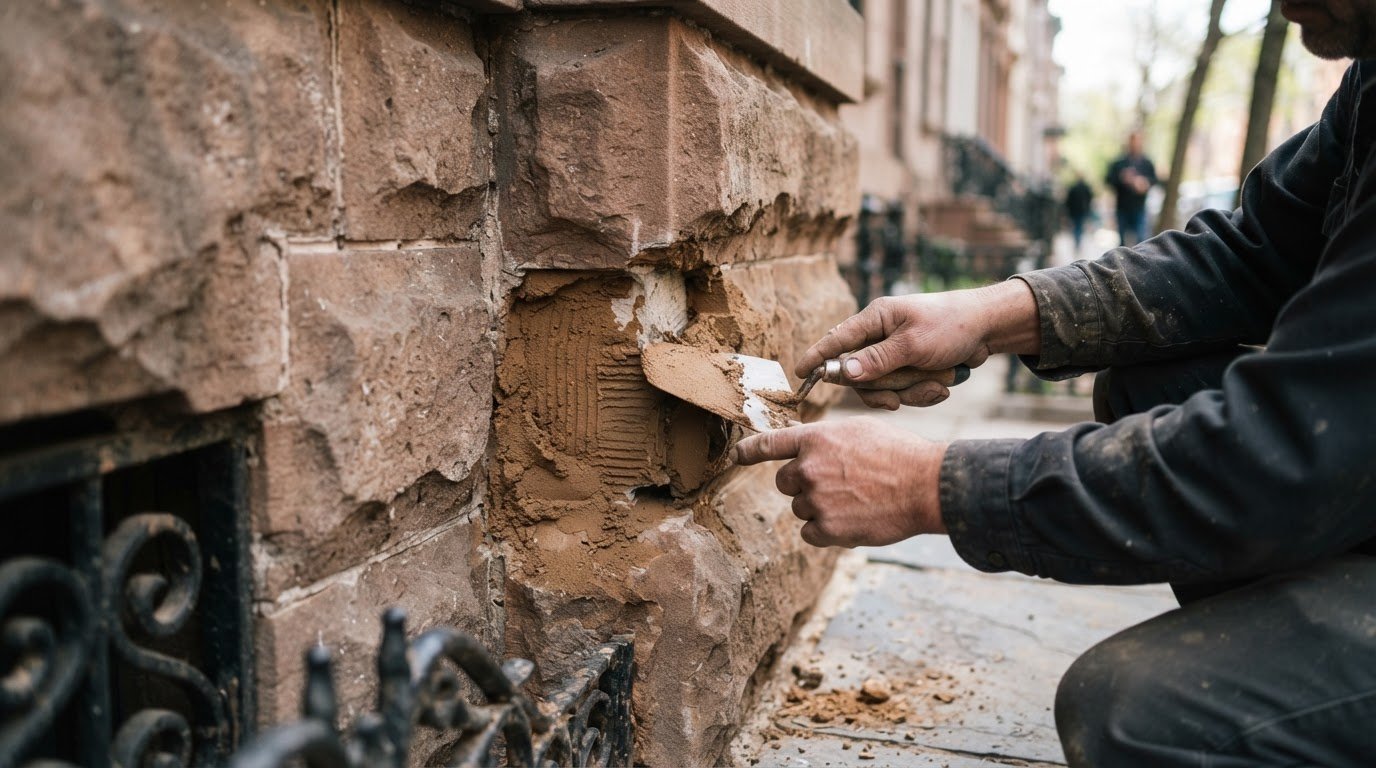
Brownstone does not always need to be replaced. Brownstone repair can preserve damaged areas when the stone beneath is sound enough to support a patch; sections that have deteriorated too far may require a fitted piece of natural stone. The right approach depends on the facade’s condition, not just the visible damage.
Cracks, peeling layers, or crumbling brownstone can raise concerns about more extensive damage. Careful restoration begins by removing deteriorated material and rebuilding the surface in layers. This guide explains how to assess whether brownstone can be patched, why compatible mortar matters, and how scratch and brown coats rebuild the surface. It also outlines what influences the choice between patching and replacing a damaged section, helping Brooklyn property owners understand the work involved in restoring a brownstone facade.
Table of Contents
Can brownstone be repaired, or does it have to be replaced?
Brownstone can often be repaired when cutting back the deteriorated layers reveals sound stone. Replacement is appropriate when the damaged section can no longer support a reliable patch.
Repair and Full Restoration
A localized repair addresses isolated spalling, cracks, or failed areas. Full brownstone restoration covers broader facade deterioration, including stonework, mortar joints, and the overall finish. Brownstone is sandstone, and weather exposure or neglected maintenance can weaken its surface. For historic work, document existing conditions, research the facade’s history, and record proposed procedures, materials, and colors. The National Park Service identifies its Standards for Rehabilitation as guidance for historic properties. Certified historic rehabilitations may qualify for up to 20% in historic tax credits, according to the National Park Service.
Facade Repair and Mortar Repointing
For a patch, cut away loose material until you reach sound stone, then rebuild the surface with compatible repair material. Match the original texture and finish so the repair sits naturally within the facade. Pointing renews deteriorated mortar joints, and the mortar should remain softer than the surrounding masonry. Hard Portland-cement mortar can trap moisture and contribute to further stone loss. The condition of the stone and joints helps define the repair scope.
Cleaning and Consolidating Brownstone
Clean a facade using the lightest suitable method, moving to a stronger method only if deposits remain. Aggressive cleaning can damage historic surfaces, so the method must suit the sandstone and its finish. Consolidation strengthens weakened surface material; patching rebuilds missing areas. These are different treatments. To maintain brownstone, prevent water from entering damaged joints, address deterioration promptly, and avoid coatings that trap moisture. Breathable coatings allow moisture to escape.
Masonry and Facade Safety
Loose masonry and deteriorated load-bearing walls need careful assessment before surface repairs begin. A structural engineer can inspect load-bearing walls and identify structural repair needs. Choose a contractor with demonstrated historic brownstone experience and a clear scope that specifies repair materials and finish. For New York City landmark work, documentation and review are important, and restoration permits should be filed with the Department of Buildings. This helps align the repair method with the building’s condition and historic character.
Brownstone patching and restoration mortar
Effective patching begins by removing deteriorated material until sound stone is exposed. Apply the repair material in layers rather than as one thick fill. Matching the facade’s original texture helps the patch blend with the surrounding sandstone. Mortar and patch compounds must suit the existing masonry and its condition.
Incompatible repair materials can trap moisture or form a surface harder than the surrounding stone. As moisture moves through the facade, these materials can contribute to cracking, separation, and further stone loss. A preservation-minded plan documents existing conditions, identifies the historic finish, and specifies compatible materials before work begins.
Planning should account for nearby features as well as the damaged patch. The condition of historic windows and doors can affect how facade work is sequenced and protected. Roof edges and drainage paths matter too, since water running down masonry can undermine repairs. A coordinated scope keeps these features in view alongside structural concerns.
Landmark work has added review steps. Permits are always required for landmark buildings, and New York City restoration permits should be filed with the Department of Buildings. The Landmarks Preservation Commission specifies recipes for slurry, scratch, and finish coats; it must approve samples and mock-ups. Those approved details guide the skilled application and final appearance.
Clear records connect the mortar choice, coat sequence, and finish to the building’s historic character. A brownstone facade restoration plan can organize those decisions around the facade’s documented condition.
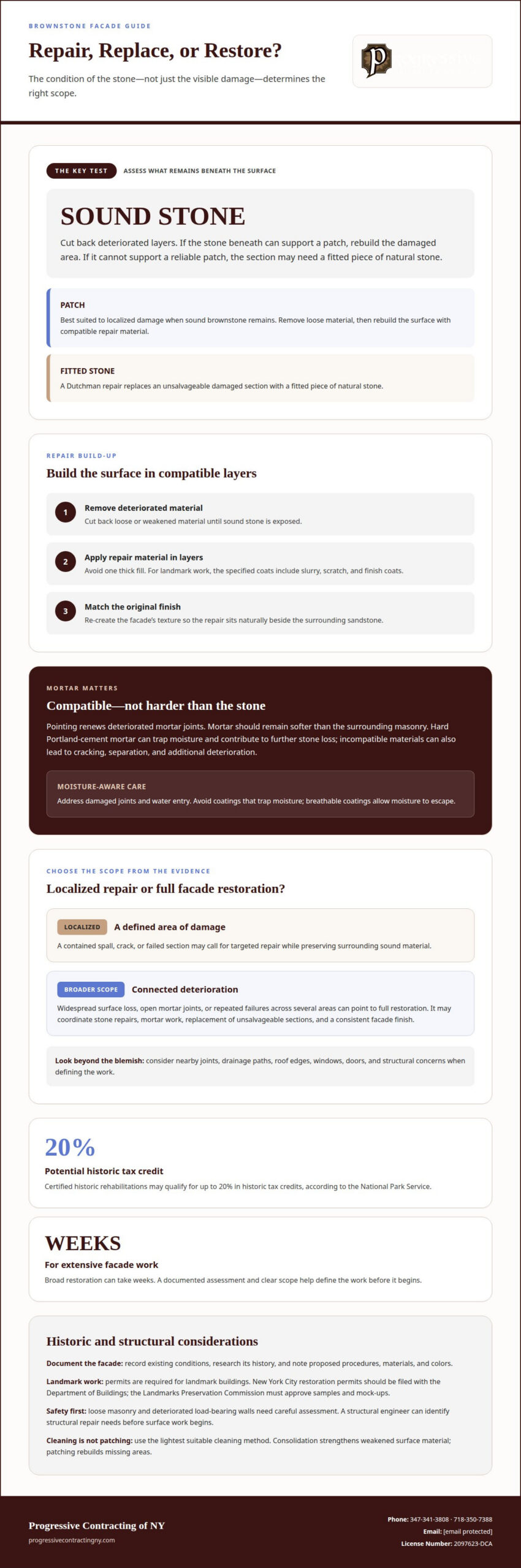
What is the difference between brownstone repair and full brownstone restoration?
A localized repair addresses a defined area, such as a spalled panel or a failed section beside a window. The work removes unsound stone and rebuilds the area while preserving surrounding material. If the damaged section cannot hold a patch, a Dutchman repair replaces it with a fitted piece of natural stone. The decision depends on how much sound brownstone remains.
Look beyond the most visible defect. A small patch may suit isolated damage, but widespread surface loss, open joints, and repeated failures across several areas suggest a broader scope. Water entry can affect connected stone and masonry, so the repair plan should consider nearby joints and drainage paths, not just the first visible blemish.
Full restoration treats multiple parts of the exterior as one coordinated project. It may combine stone repairs, mortar work, replacement of unsalvageable sections, and a consistent facade finish. The goal is to restore the exterior while retaining sound historic material. Extensive facade work can take weeks.
Compare the proposed scope with the observed condition. A clear assessment identifies areas for patching, sections that need replacement, and whether the work extends across the facade. Photographs and a marked-up elevation can make the boundaries easier to understand and help distinguish necessary repairs from cosmetic refinishing.
For a Brooklyn brownstone, the deciding factor is the extent and distribution of deterioration. A contained defect may need targeted work, while connected damage across multiple areas may justify full restoration. A detailed scope clarifies the difference before work begins.
Plan brownstone facade restoration
Progressive Contracting NY Corp
Progressive Contracting NY Corp helps Brooklyn property owners assess brownstone damage and plan appropriate exterior work. As a masonry contractor, the company can address localized repairs or broader facade needs, including brownstone facade renovation and brownstone stoop restoration. The right scope depends on the condition of the stone, mortar joints, and surrounding facade.
Turn to Progressive Contracting NY Corp when deterioration goes beyond a surface blemish, repairs keep failing, or you need to distinguish patching from restoration. The work can be planned around the building’s materials and the extent of damage, preserving sound masonry while addressing failed areas.
Contact Progressive Contracting NY Corp to discuss your brownstone project. Call 347-341-3808 or 718-350-7388, or email ProgressiveContractingNY@yahoo.com.
Choose the next step for your brownstone
A sound decision starts with a clear plan for the building, not just its most visible defect. A Brownstone Repair assessment can help define whether the next step is focused repair or broader restoration, while keeping the property’s historic character in view. Share the areas of concern and any previous repair details to give the project discussion a practical starting point.
Progressive Contracting of NY handles brownstone facade renovation, Brownstone Facade Restoration, and Rammstein stoop restoration in Brooklyn and Manhattan. The team can discuss exterior work suited to your property’s condition and goals. A free consultation is a practical next step toward a defined scope.
Start your brownstone’s next chapter with a careful, informed plan.
Frequently Asked Questions
Do you match the color and texture of the original stone?
Restoration can be finished to coordinate with the existing stone’s color and texture. Brownstone varies across a facade, so the surrounding surface provides the reference for a patch. For example, a repair beside an older window surround should blend with that specific area, not just a general brownstone sample. The finish also affects how closely the repair fits visually.
Should I seal my brownstone?
Use a breathable treatment suited to the stone, not a coating that blocks moisture. Brownstone needs to release moisture, and an impermeable sealer can trap water and contribute to deterioration. Before applying a treatment, consider the facade’s existing finish, exposure to rain, and mortar-joint condition. A coating cannot replace repairing open joints or addressing water entry.
What causes brownstone to spall and crumble?
Water entering porous stone can freeze, expand, and break away the surface. Repeated wetting and drying, weather exposure, and deferred maintenance can compound the damage. For instance, a crack or open joint may let moisture reach a vulnerable layer, where freeze-thaw cycles loosen the outer face. Peeling, flakes, and exposed softer material are signs that the affected area needs assessment.
What is a Dutchman repair?
A Dutchman repair replaces a failed section with a shaped piece of natural stone fitted to the opening. The damaged area is cut out, and the replacement piece is fitted in its place. This method suits a localized section that cannot be reliably patched. Matching the stone’s profile and surface helps the insert align with nearby architectural details.
What is brownstone repair and what work does it include?
Brownstone repair addresses damage to a building’s brownstone facade and related masonry. Work may include removing loose stone, rebuilding a damaged surface, renewing mortar joints, or replacing a failed section. The scope depends on the condition and spread of deterioration. An isolated damaged area may need focused repair, while connected facade problems can call for broader restoration planning.