
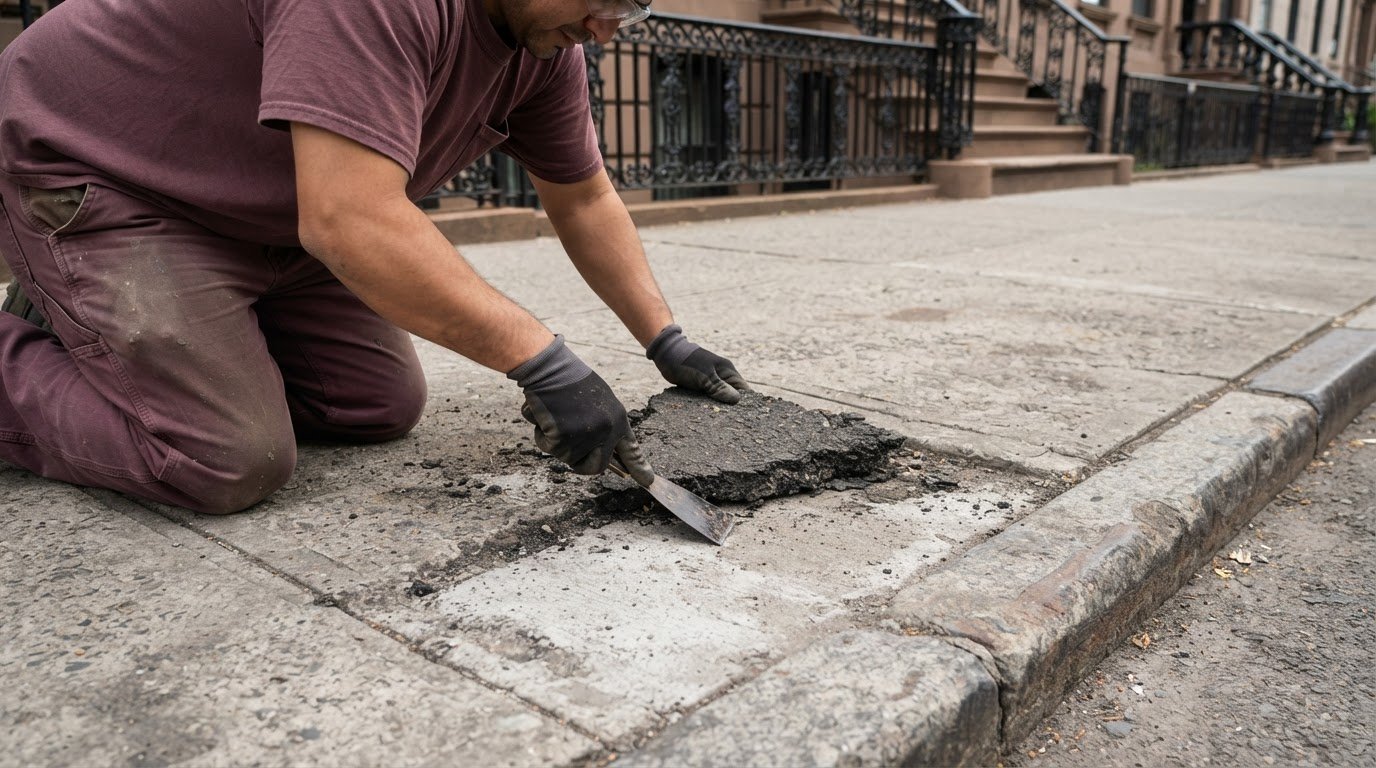
Removing an asphalt patch from a concrete sidewalk in Brooklyn starts with carefully scraping away loose asphalt without gouging the concrete. For surface residue, use a solvent designed for asphalt and tar, then scrub and rinse. If asphalt has penetrated or contaminated the concrete, cutting out the affected section and repairing it may be more suitable. A concentrated pressure-washer spray can damage the surface.
It’s understandable to want the patch gone without creating a bigger sidewalk problem. This guide explains how to assess the asphalt, remove surface residue, and tell when damaged concrete needs repair or replacement. It also covers when professional help makes sense.
Table of Contents
Brooklyn sidewalk repair and replacement
First distinguish removable asphalt residue from concrete that may need cutting or replacement. The right method depends on how deeply the patch has affected the sidewalk.
-
Assess the Concrete
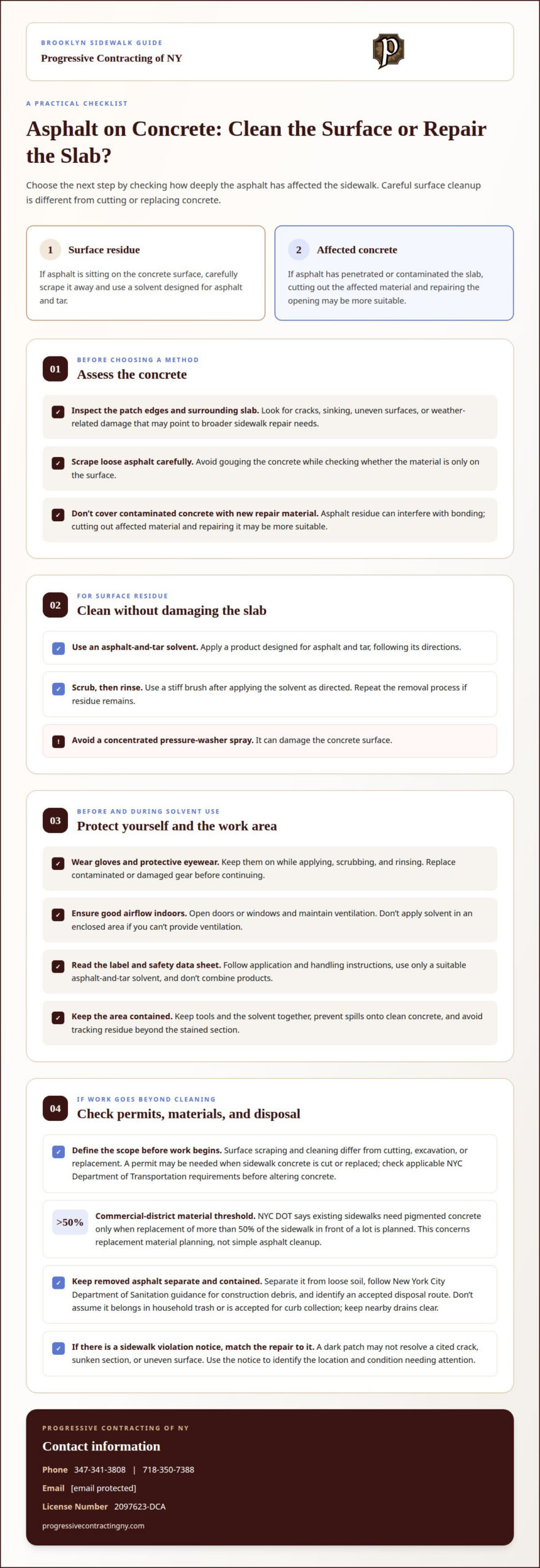
Inspect the patch edges and surrounding slab before choosing a removal method. Scrape surface asphalt carefully to avoid gouging the concrete. If asphalt has penetrated or contaminated the slab, cutting out the affected material and repairing the opening may be more suitable than applying new repair material over residue, which can interfere with bonding. Cracks, sinking, uneven surfaces, and weather-related damage can also signal broader sidewalk repair needs.
-
Check Permit Requirements
Separate surface cleanup from concrete cutting before work begins. A permit may be needed when the job involves cutting or replacing sidewalk concrete, while scraping residue alone is a different scope. Before altering the sidewalk, determine the applicable NYC Department of Transportation permit requirements for the work planned. In commercial districts, NYC DOT says existing sidewalks need pigmented concrete only when replacement of more than 50 percent of the sidewalk in front of a lot is planned.
-
Plan Asphalt Disposal
Collect removed asphalt separately from loose soil and contain the debris during cleanup. Before placing it at the curb, follow New York City Department of Sanitation guidance for construction debris. Don’t assume asphalt belongs in household trash or that curb collection accepts it. Keep the material contained until you’ve identified an accepted disposal route, and leave the sidewalk and nearby drain clear.
Protective gear and ventilation
Before using solvent on an asphalt or tar stain, prepare protective gear and ensure good airflow. Follow the product label and safety data sheet throughout cleanup.
- Put on gloves and protective eyewear. Wear both while handling solvent, as recommended for asphalt and tar removal. Gloves limit direct contact during application and scrubbing; eyewear helps shield your eyes from splashes. Keep them on while the treated area is being scrubbed and rinsed. If either item becomes contaminated or damaged, stop and replace it before continuing.
- Ventilate enclosed work areas. Open doors or windows before applying solvent indoors, and maintain airflow while using it. Solvent fumes can build up in enclosed spaces, so don’t start work in a closed garage or other poorly ventilated area. If you can’t provide ventilation, don’t apply the product there.
- Read the product directions before opening the container. Check the label for application instructions, handling precautions, and any required protective measures. Use only a solvent designed to break down asphalt and tar, and don’t combine products. Keep the container closed when you’re not applying the solvent, and prevent it from spilling onto clean concrete.
- Control the work area during cleanup. Keep tools and the solvent container together, and avoid tracking residue beyond the stained section. Scrub with a stiff brush only after applying the solvent as directed. Rinse the treated concrete after scrubbing, then repeat the removal process if asphalt residue remains. For concrete damaged beyond surface staining, concrete sidewalk repair may be the next step.
Does NYC require a permit to remove or repair a sidewalk asphalt patch
- Define the work before deciding about permits. Removing asphalt residue from the concrete surface differs from cutting out sidewalk concrete. Establish whether the task involves only scraping and cleaning or also saw-cutting, excavation, or replacement. Permit requirements can differ by scope. Before altering concrete, review the applicable NYC Department of Transportation requirements.
- Read any NYC sidewalk violation notice. A city violation notice may require a property owner to repair the sidewalk. Use it to identify the location and condition that need attention. Removing a dark asphalt patch alone may not resolve a cited crack, sunken section, or uneven surface. Match the repair to the specific defect described.
- Check material requirements for the planned replacement area. In commercial districts, NYC DOT says existing sidewalks need pigmented concrete only if replacement of more than 50 percent of the sidewalk in front of a lot is planned. This threshold concerns concrete material planning, not whether asphalt residue can simply be scraped away. Distinguish surface cleanup from the size and extent of any concrete replacement.
- Settle the permit question before cutting or replacing concrete. Describe the work accurately when reviewing NYC DOT requirements: surface cleaning, a localized cut-out, and broader sidewalk replacement are different tasks. Keep the violation notice with a clear description of the affected area. This helps align the permit review, repair scope, and specified concrete material before work begins.
At the garage edge, asphalt repair extended from 1/2 inch to 3 inches into the garage. If solid and clean, scuffing it and applying good primer may allow paint to work adequately.
Progressive Contracting NY Corp: Concrete Contractor
Progressive Contracting NY Corp is a practical next step when removing an asphalt patch exposes damaged concrete that needs repair. The company handles sidewalk and concrete work, as well as brownstone facade renovation and Rammstein stoop restoration for other exterior masonry needs. If scraping leaves a hole, broken edges, or an uneven sidewalk section, a professional assessment can help determine whether repair is needed instead of further surface cleaning.
Share the sidewalk’s condition and the work already attempted when you get in touch. This helps clarify whether the issue is limited to asphalt residue or involves damaged concrete that needs attention. Contact Progressive Contracting NY Corp at 347-341-3808 or 718-350-7388, email ProgressiveContractingNY@yahoo.com, or reference License Number 2097623-DCA.
Choose a Sound Next Step for Your Sidewalk
When removing an asphalt patch from a concrete sidewalk in Brooklyn, determine whether the surface is stained or the slab itself needs attention. Consider the exposed concrete as part of the sidewalk’s overall condition, not merely a spot to disguise. A sound repair plan addresses underlying damage rather than covering it again.
Progressive Contracting NY Corp handles sidewalk and concrete work, alongside brownstone facade renovation and stoop restoration. If the patch has left broken concrete or uneven edges, the company can assess the condition and help clarify the next step.
A clear plan helps you move toward a sidewalk that is orderly, sound, and well maintained.
Frequently Asked Questions
When Should I Call the Pros?
Call a sidewalk professional when asphalt extends into damaged concrete or the slab is cracked, sunken, or uneven. For removing an asphalt patch from a concrete sidewalk in Brooklyn, professional cutting and concrete repair may be appropriate when residue is embedded rather than sitting on the surface. A city violation notice is another reason to assess the cited defect.
How to remove an asphalt patch from a concrete sidewalk safely
First determine whether the patch is loose asphalt or a stain on the concrete. Carefully scrape loose material without gouging the slab. For residue, use a solvent designed for asphalt and tar, scrub with a stiff brush, and rinse. Avoid heating the asphalt: softened material can spread onto nearby concrete and make cleanup harder.
Best tools and methods for removing asphalt from concrete sidewalk
Use a scraper for loose material and an asphalt-and-tar solvent with a stiff brush for surface residue. Rinse after scrubbing, then repeat if residue remains. Asphalt-contaminated concrete that needs removal requires a different approach: cutting out the affected section before repair. Avoid a narrow pressure-washer tip, which can remove concrete along with the stain.
What safety precautions are needed when removing asphalt from a sidewalk?
Wear gloves and protective eyewear when handling solvent, and ventilate enclosed spaces to reduce fume buildup. Keep solvent from splashing onto clean concrete, and follow its handling directions. Don’t use a torch or heat gun to loosen asphalt near the sidewalk: heat can stain surrounding concrete and create more cleanup.
When should a contractor replace the concrete instead of removing the asphalt patch?
Consider concrete replacement when removing an asphalt patch from a concrete sidewalk in Brooklyn reveals asphalt penetration, cracks, sinking, or an uneven surface. Scraping removes material at the surface but won’t correct damage beneath it. Cutting out asphalt-contaminated concrete and repairing the opening may suit a localized defect, while wider deterioration may call for broader repair.