
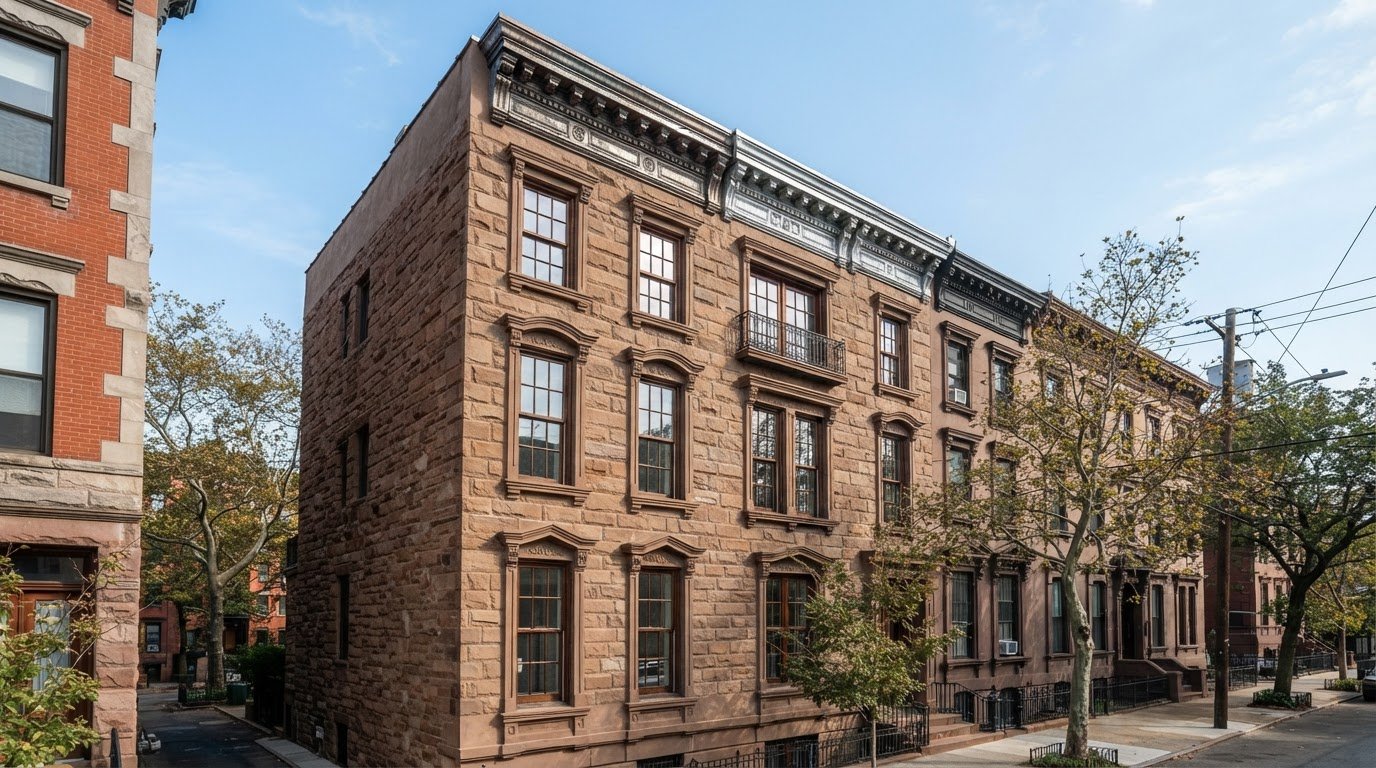
A brownstone facade in Clinton Hill is more than a handsome streetscape; it reflects a neighborhood shaped by generations of change. In Clinton Hill, Brooklyn, notable architecture dates to the 19th century, and its historic homes remain central to the area’s character. The neighborhood’s story is visible in its streets as well as its buildings.
Clinton Hill, Brooklyn, is known for its historic architecture, but understanding the neighborhood means looking beyond its facades. From early houses to later row-house development, each layer contributes to a streetscape that feels rooted rather than uniform. This guide traces the area’s history, explores its brownstone architecture, and highlights the details that make Clinton Hill distinctive. You’ll see how the past continues to shape its character and why careful restoration matters when preserving a historic home.
Table of Contents
1. Historic district and brownstone architecture
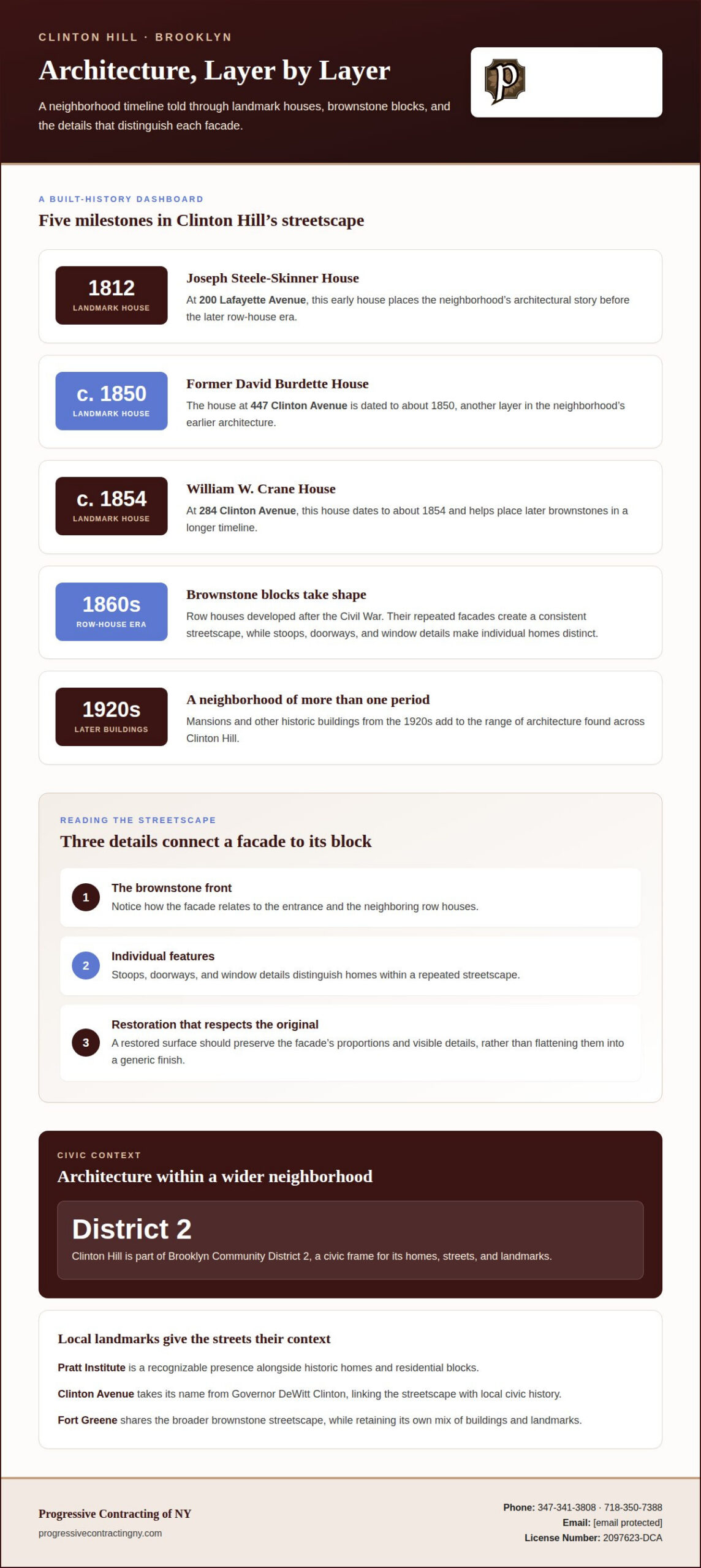
Clinton Hill’s historic character is visible in its 19th-century streets and brownstones. Row houses developed here during the 1860s, after the Civil War. Their repeated facades create a consistent streetscape, while stoops, doorways, and window details distinguish individual homes. This architecture gives residents a direct connection to the neighborhood’s earlier growth.
Older landmarks show that Clinton Hill’s story began before those row houses. The Joseph Steele-Skinner House at 200 Lafayette Avenue dates to 1812. The former David Burdette House at 447 Clinton Avenue dates to about 1850. The William W. Crane House at 284 Clinton Avenue dates to about 1854. These named buildings help place the later brownstones within a longer architectural timeline.
Pratt Institute is another recognizable presence in Clinton Hill, alongside historic homes and residential blocks. Clinton Avenue, named for Governor DeWitt Clinton, links local architecture with the area’s civic history. Nearby Fort Greene shares the broader brownstone streetscape, but each neighborhood has its own mix of buildings and landmarks. An apartment may occupy a historic building, a newer structure, or a converted house.
For residents exploring local real estate, the facade offers useful clues about a property’s character. Look for the relationship between the brownstone front, the entrance, and neighboring row houses. A restored surface should respect those proportions and visible details rather than flattening them into a generic finish. Clinton Hill’s architecture spans multiple periods, including mansions and other historic buildings constructed in the 1920s. That range makes the block, not just one facade, essential to understanding the neighborhood’s built character.
Clinton Hill is part of Brooklyn Community District 2. That designation offers another way to locate the neighborhood alongside its architectural landmarks, putting local homes and streets within a broader civic frame. It complements the block-by-block view without replacing the details that distinguish one building from another.
2. Clinton Hill’s history and neighborhood character
Clinton Hill’s history reflects a neighborhood shaped by development, street names, and community institutions. Clinton Hill’s history reflects different stages of development, alongside that of nearby neighborhoods. Row-house development followed in the 1860s, after the Civil War. These dates describe different stages in the area’s growth, from early settlement to a more defined neighborhood.
How does Clinton Hill compare with Fort Greene and Bed-Stuy? The neighborhoods border one another, so their tree-lined streets and local histories form a connected part of Brooklyn. Each remains distinct, and Clinton Hill has its own landmarks and institutions. Prospect Heights also borders Clinton Hill, while Manhattan lies across the city, not within this local cluster.
Names on the map preserve another layer of history. Clinton Avenue takes its name from New York Governor DeWitt Clinton. A neighborhood library can serve as a lasting community institution. Together, the avenue and library show how civic history remains part of daily life.
To understand Clinton Hill’s character, connect these landmarks with the surrounding streets and buildings. The historic Joseph Steele-Skinner House at 200 Lafayette Avenue dates to 1812, while the William W. Crane House at 284 Clinton Avenue dates to about 1854. These examples place local architecture within the neighborhood’s longer story. Clinton Hill’s identity comes from that continuity, not from a single era or building. Its history is distinct from nearby Fort Greene, Bed-Stuy, and Prospect Heights, even as shared borders connect them.
3. What is Clinton Hill known for?
Clinton Hill, Brooklyn, is known for its brownstone streets, historic buildings, and ties to local culture. Notorious B.I.G. grew up in the neighborhood, adding a notable name to its history. Historic facades line residential blocks, not just isolated landmark sites. That continuity makes the streetscape a defining feature of Clinton Hill.
Pratt Institute gives Clinton Hill, Brooklyn, another recognized institution. Its presence sits within a community that combines residential life, cultural history, and longstanding architecture. The neighborhood is home to a residential community. That figure reflects the community living among historic buildings, rather than reducing the area to a collection of notable facades.
Getting around Clinton Hill, Brooklyn, is part of its practical character, too. The A, C, and G trains serve the neighborhood, connecting local blocks with other parts of Brooklyn and Manhattan. The Brooklyn Navy Yard stop on NYC Ferry opened on May 20, 2019. Together, these transit options link neighborhood routines with destinations beyond residential streets.
To understand Clinton Hill, consider its architecture, local history, and daily movement together. Notice how a brownstone block relates to nearby institutions and transit, rather than viewing each building alone. This context helps explain why preserving a facade matters to the surrounding street’s character as well as to the property itself.
Plan a Clinton Hill brownstone facade restoration
Notorious B.I.G. grew up in Clinton Hill, a connection that gives the neighborhood’s cultural history a personal dimension. It can be considered alongside the area’s brownstone streets and historic buildings, rather than treated as a detail separate from the place. That association offers one way to think about how local identity is shaped by everyday surroundings and remembered cultural ties. His upbringing here is a concise point of connection between Clinton Hill and its cultural story.
Progressive Contracting NY Corp: Brownstone Facade Restoration Clinton Hills Brooklyn
Progressive Contracting NY Corp provides brownstone facade restoration in Clinton Hill for property owners addressing worn, damaged, or deteriorating exterior features. The company also handles brownstone facade renovation and Rammstein stoop restoration for focused exterior work in Brooklyn and Manhattan.
A brownstone contractor can assess the facade and stoop as connected parts of a building’s exterior, then plan restoration around the property’s condition. For a historic brownstone in Clinton Hill, this is a practical next step when exterior wear needs attention.
Contact Progressive Contracting NY Corp to discuss your project. Call 347-341-3808 or 718-350-7388, email ProgressiveContractingNY@yahoo.com, or refer to License Number 2097623-DCA.
Keep Clinton Hill’s character in view as you plan
For a historic property in Clinton Hill, Brooklyn, exterior work is an opportunity to care for the building while respecting its place on the block. Start by noting areas that need attention, such as weathered facade masonry or a worn stoop. A clear picture of the work helps shape a practical restoration plan.
Progressive Contracting NY Corp handles brownstone facade renovation, brownstone facade restoration, and Rammstein stoop restoration in Brooklyn and Manhattan. Whether your project focuses on one exterior feature or several, start with a free consultation to discuss the property and the work you have in mind.
Thoughtful care can help your building remain part of the neighborhood’s story. Take the next step when you’re ready.