
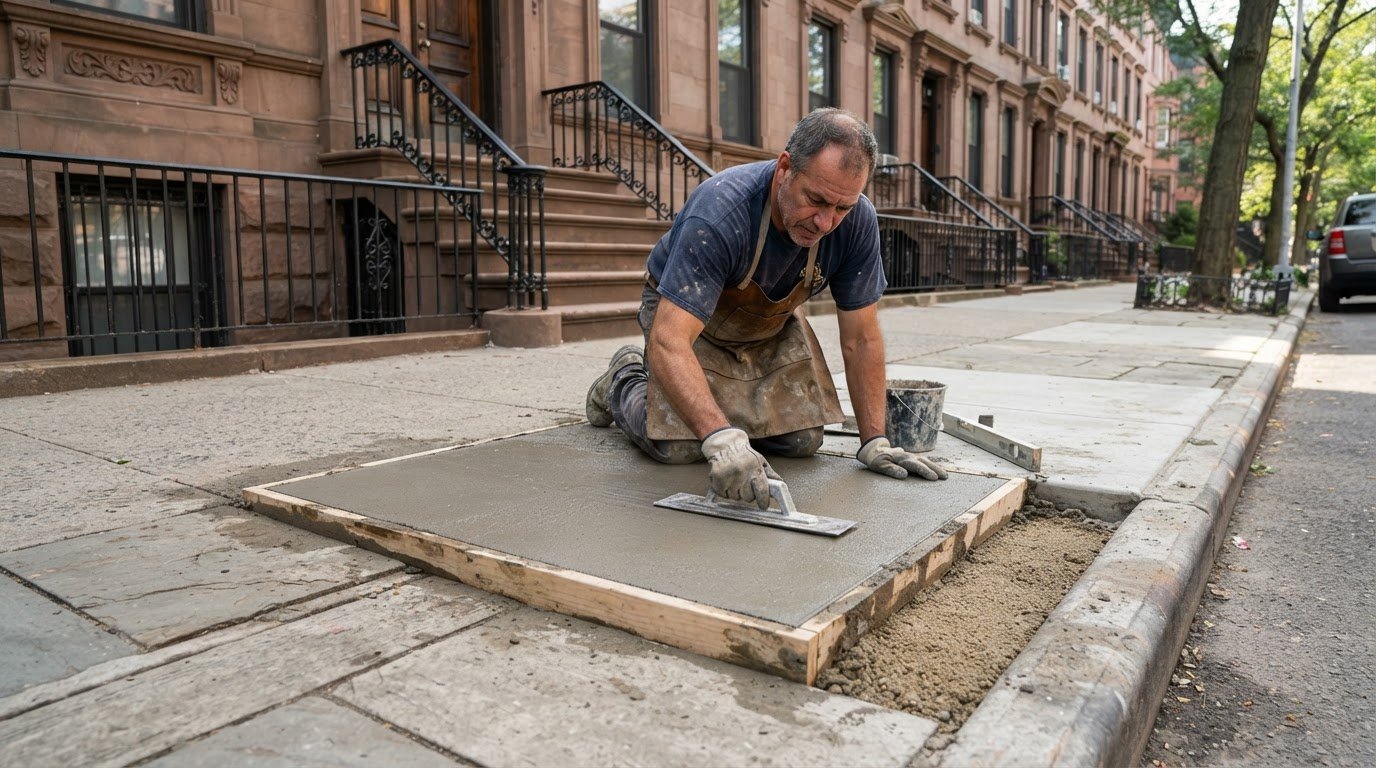
The right repair for an uneven sidewalk flag depends on the damage. Small lifts or settled sections may be corrected by leveling or grinding, while a cracked, raised, or sunken flag may need replacement. To understand how to fix uneven sidewalk flags in Brooklyn, start by identifying the condition affecting the concrete.
It’s reasonable to want a clear picture of the work and its cost before moving ahead. The scope depends on the sidewalk’s condition and the area involved, so no single price applies to every repair.
This article explains who is responsible for sidewalk repairs in New York City, what can happen after a violation notice, and how professionals approach cracked, uneven, or heaved flags. You’ll also learn what can affect a repair’s scope and how to take the next step toward restoring a sound, even sidewalk.
Table of Contents
What is the cost of Brooklyn sidewalk repair?
The cost of replacing sidewalk flags in Brooklyn depends on the repair area, the concrete’s condition, access, and whether the work includes curbs or pedestrian ramps. The price is tailored to the project and provided after a quote request.
A contractor assesses the damage and measures the affected section before defining the replacement scope. For example, a 50-square-foot repair involves less sidewalk than a 100-square-foot replacement, but measurements alone don’t determine the final work. Cracked-through, broken, or crumbling flags generally need removal and replacement. Small surface issues may call for a different repair approach.
For concrete flag replacement, the damaged sections are removed, the area is prepared, and new concrete is installed. The base beneath the sidewalk matters: a weak or uneven sub-base can affect the finished surface. New work should meet adjoining flags cleanly and include suitable expansion joints. Residential and commercial sites can differ in access, pedestrian traffic, and the amount of sidewalk involved.
Sidewalk installation or replacement requires planning as well as concrete work. The New York City Department of Consumer and Worker Protection states that sidewalk work requires a DOT permit. An inspection helps identify the damaged area, the necessary repair, and any related features that need attention. These details shape the project scope and quote.
Some owners may qualify for City help when street-tree roots damage a sidewalk. NYC’s Trees & Sidewalks Program may apply to eligible cases. For 1-, 2-, and 3-family properties, the City will no longer issue violations or impose liens for sidewalk damage caused only by City trees. This is an exemption, not a general repair payment program.
Who is responsible for sidewalk maintenance and repairs
When a property receives a sidewalk violation, the owner must arrange repairs to address the defects listed in the notice. The notice, permit, repair, and dismissal process each need to be handled.
Repair Responsibility and Contractor Hiring
Brooklyn property owners have 75 days from receiving a NYC DOT sidewalk violation to make the repair, according to the New York City Department of Transportation. If defects remain unrepaired within 75 days after a Sidewalk Violation Notice is issued, DOT may perform sidewalk repair work and bill the property owner, according to the New York City Department of Transportation.
For sidewalk repairs costing more than $200, a contractor must have a Home Improvement Contractor License from DCWP to operate legally. Confirm the contractor’s license and ensure the estimate describes the repair scope, permit, and project steps.
Violations and Compliant Repairs
A NYC DOT sidewalk violation is a repair notice, not a fine. It identifies defects that need correction, and the violation remains tied to the property until the repair is complete and DOT dismisses it. Asphalt patches and thin overlays are listed as sidewalk defects, so a temporary-looking surface may not resolve the notice.
After the work, complete the required DOT inspection or dismissal process. Following a reinspection request, DOT schedules a reinspection within 180 days. Keep the notice and repair records together until the violation is dismissed.
Permits, Inspections, and Reporting
Yes. According to the NYC Department of Consumer and Worker Protection, sidewalk work requires a DOT permit. Permit review and inspection scheduling affect the timeline, followed by the repair and any required post-repair inspection.
To report an uneven flag, contact NYC 311 and provide the Brooklyn street location and a clear description of the defect. For help organizing the repair process, review the next steps.
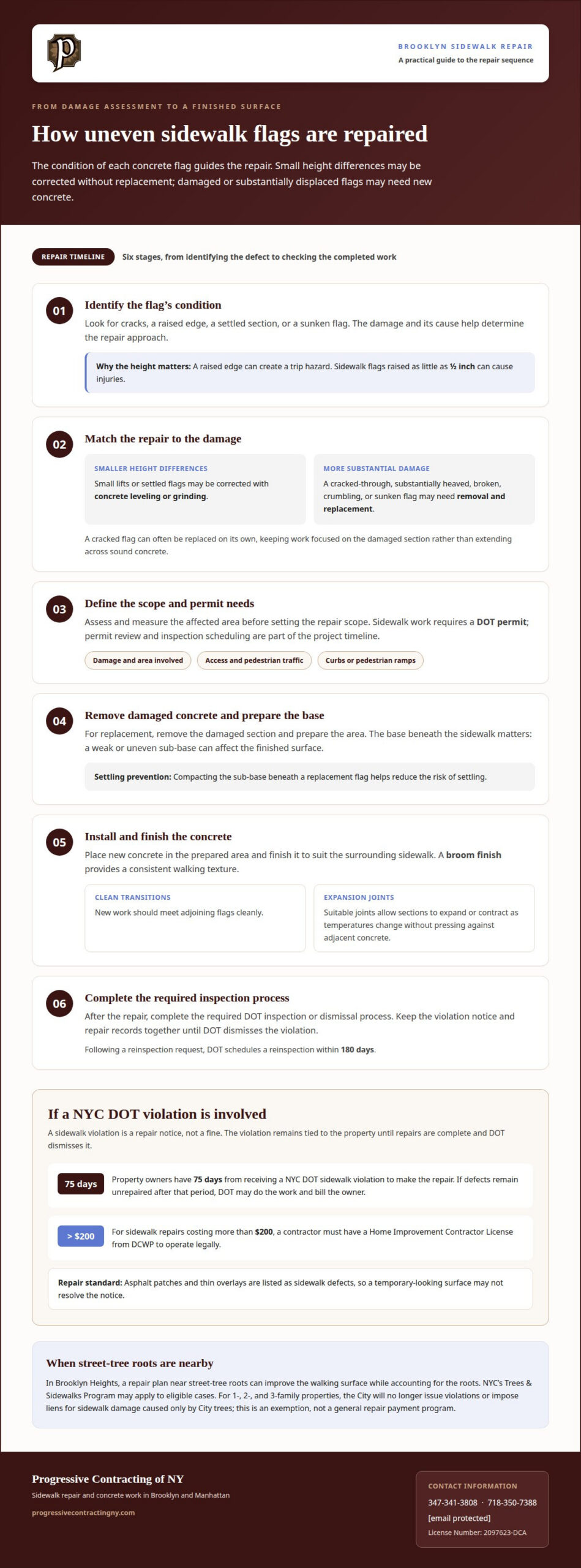
How professionals repair cracked, uneven, and heaved sidewalk flags
To determine how to fix uneven sidewalk flags in Brooklyn, first identify the damage and its cause. The flag’s condition guides the repair, which should correct the surface while limiting disturbance to neighboring sections.
Cracked Flag Repairs
For a cracked flag, the contractor determines whether the concrete needs replacement. A flag cracked through can be removed and replaced without disturbing the entire sidewalk. The work stays focused on the damaged section, rather than extending across sound concrete.
After preparing the area, install replacement concrete and finish its surface to suit the surrounding sidewalk. A broom finish provides a consistent walking texture. Expansion joints between flags allow sections to expand or contract as temperatures change without pressing against adjacent concrete.
Uneven, Heaved, and Settled Flags
A raised edge can create a trip hazard. In New York City, sidewalk flags raised as little as ½ inch can cause injuries. For small lifts or settled flags, concrete leveling or grinding can address the height difference without replacing every slab.
The right way to fix uneven sidewalk flags in Brooklyn depends on each flag’s condition. A cracked, substantially heaved, or sunken section may need replacement. Compacting the sub-base beneath a replacement flag helps reduce the risk of settling. In Brooklyn Heights, a repair plan near street-tree roots can improve the walking surface while accounting for the roots.
Progressive Contracting NY
For broader exterior work at a Brooklyn brownstone, Progressive Contracting NY Corp. can help with the property’s restoration needs. The company provides brownstone facade renovation and stoop restoration, as well as sidewalk repair and concrete work in Brooklyn and Manhattan.
Describe the damaged area, any NYC DOT notice, and whether the flags are cracked, lifted, or sunken. Call 347-341-3808 or 718-350-7388, or email ProgressiveContractingNY@yahoo.com. License Number: 2097623-DCA.
Move Forward With a Clear Repair Plan
Turn what you’ve learned about how to fix uneven sidewalk flags in Brooklyn into a project plan. Gather the property’s street location, the visible damage, and any notice details. Then outline the priority, whether that’s restoring the walking surface, addressing cited work, or coordinating sidewalk repairs with nearby exterior work. This context helps clarify the scope, sequence, and property-specific needs.
A useful conversation should clarify the proposed work and any decisions still to be made. Ask for the scope in plain terms, and keep the next steps organized with the property’s records. A defined plan can also help coordinate sidewalk work with other exterior priorities. Start with a focused discussion to understand the work and plan what comes next.
Frequently Asked Questions
Can a cracked sidewalk be patched instead of replaced?
A flag cracked through generally needs replacement; a surface patch may not address the underlying damage. In New York City, asphalt patches and thin overlays are listed as sidewalk defects, so they may not resolve a sidewalk violation. The repair depends on whether the concrete has surface damage or is cracked through.
Can you repair the sidewalk without harming the street tree?
Sidewalk repairs near street trees can be planned to protect roots while restoring a safe walking surface. In Brooklyn Heights, the plan can account for tree roots and the surrounding flags. If the damage involves a City tree, the property may also qualify for the Trees & Sidewalks Program, depending on the circumstances.
Does the work come with a warranty?
Progressive Contracting of NY provides a seven-year contract warranty on exterior painting work. This coverage applies to exterior painting, not sidewalk repairs. For sidewalk work, review the written project terms to understand the coverage for the specific repair. Clarifying this distinction helps set expectations before work begins.
How long before I can walk on the new sidewalk?
New sidewalk concrete in Brooklyn can usually take foot traffic within a day or two. Keep the work area taped off while the concrete cures so pedestrians don’t step onto the fresh surface too early. Concrete continues gaining strength for several weeks after pouring, even once it can support ordinary foot traffic.
What are Sidewalk Flags and Why are they Important?
Sidewalk flags are the individual concrete sections that form a paved sidewalk. In New York City, they usually measure 5 by 5 feet and are at least 4 inches thick. Their joints separate sections and allow for expansion or contraction as temperatures change. Keeping each flag sound and level helps maintain a continuous walking surface.