
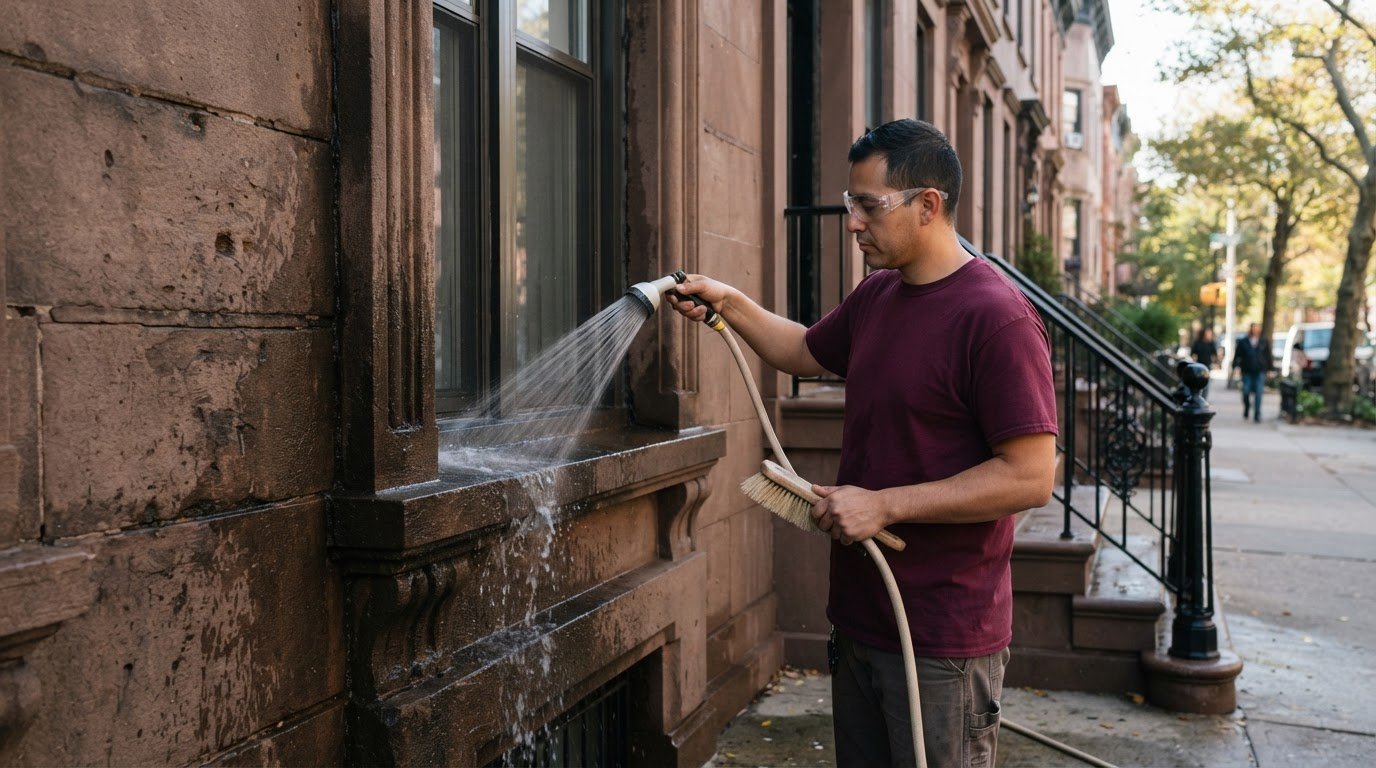
A darker brownstone facade doesn’t automatically need more water pressure. How often to clean depends on how quickly pollution and dirt build up, the masonry material, and the facade’s condition. For brownstone facade cleaning to remove pollution stains in NYC, the sound first step is to assess the surface and the stains before choosing a method.
It makes sense to want a clean exterior without harming historic masonry or mortar. This guide explains how to judge when cleaning is due, how professionals approach soot and grime, and why water pressure must suit the surface rather than follow a one-size-fits-all setting. You’ll also learn what to expect from a careful cleaning process and when facade restoration may be the more appropriate next step.
Table of Contents
Cleaning historic brownstone, limestone, brick, stone, and masonry
NYC brownstones often feature historic sandstone facades, while limestone, brick, and other masonry require their own cleaning approach. Pollution, soot, grime, biological growth, paint, and weathering can all leave marks. Before cleaning, assess the masonry, mortar condition, and material to be removed, then test the method on a small area.
Low-pressure washing can lift dirt and surface grime while helping protect mortar joints and finishes. Historic cleaning should start with the lightest suitable method, increasing intensity only if needed. Laser cleaning uses no abrasive media and can be adjusted for compatible surfaces and coatings. It can remove contaminants while helping preserve carved or ornamental details. Sandblasting isn’t allowed on landmark facades in New York City.
Paint removal calls for the same surface-first approach. The right method depends on the coating and underlying material; unsuitable abrasion can alter historic details. If cleaning reveals deteriorated joints, lime-based mortar repointing may be needed to restore them without damaging surrounding brick or stone.
When choosing a brownstone restoration contractor, look for a process that evaluates the masonry and mortar, tests a small area, and explains the proposed method. These steps help distinguish careful historic work from a one-method approach.
Professional cleaning costs depend on the facade, staining, and method; the price is given after a quote request. DIY cleaning may appear less costly, but excessive pressure or abrasive methods can damage masonry and mortar.
The New York City Landmarks Preservation Commission requires property owners to obtain a permit for work on a landmark property. Restoration work subject to its rules needs approval before repairs proceed, and the Commission requires approval of samples and mock-ups for brownstone patching materials.
Before work begins, protect windows and nearby landscaping from water and cleaning residue, and keep pedestrians clear of the work area. Match the pressure and cleaning method to the facade to reduce the risk of runoff or surface damage.
How professionals adjust water pressure for different brownstone surfaces and stains
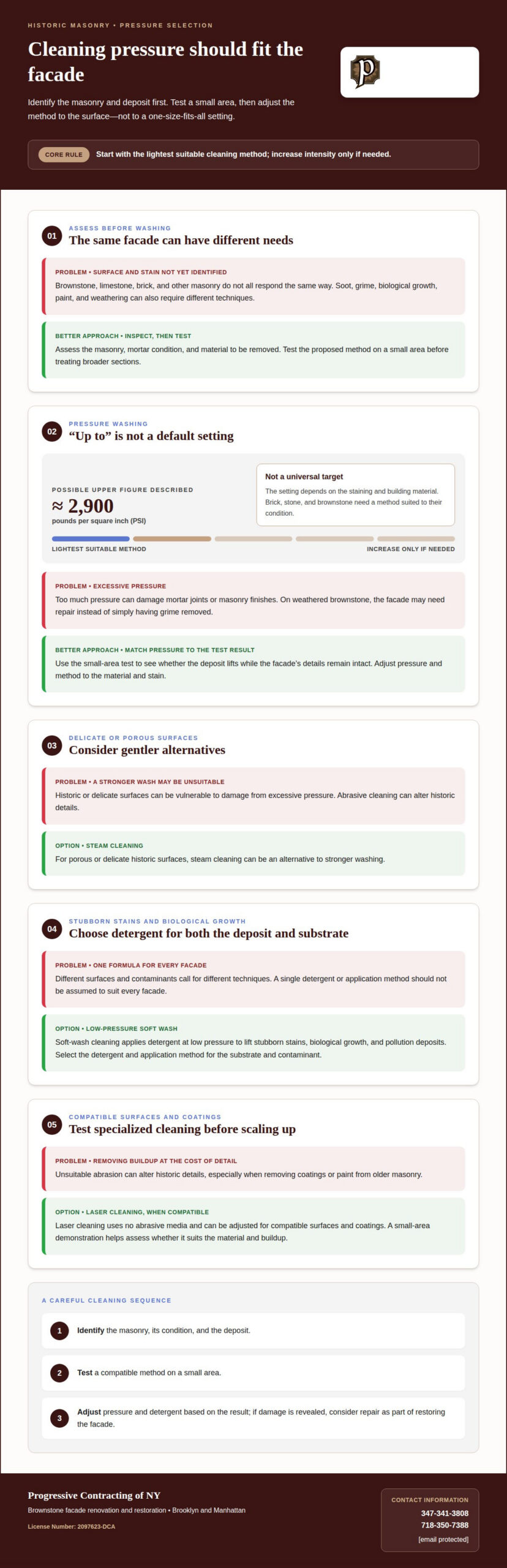
Pressure depends on the masonry and the deposit being removed. Professionals assess the facade first, then test a small area before treating broader sections. Pressure washing may use settings up to approximately 2,900 pounds per square inch, depending on staining and building material. That upper figure isn’t a default: brick, stone, and brownstone surfaces require a method suited to their condition.
For porous or delicate historic surfaces, steam cleaning can be an alternative to stronger washing. Soft-wash cleaning applies detergent at low pressure to lift stubborn stains, biological growth, and pollution deposits. Choose the detergent and application method for both the substrate and the contaminant, rather than using the same formula on every Brooklyn facade.
Laser cleaning is another option for compatible surfaces and coatings. A demonstration on a small area can show the result and help determine an approach before larger-scale work begins. This evaluation helps establish whether laser cleaning suits the material and buildup.
Excessive pressure can damage mortar joints or masonry finishes, while abrasive cleaning can alter historic details. On weathered brownstone, that damage may leave the facade needing repair instead of simply removing grime. Testing first and choosing a method gradually helps limit these risks.
For brownstone pollution stains, the process is to identify the surface and deposit, test a compatible method, then adjust pressure and detergent based on the result. If cleaning reveals damaged masonry, brownstone repair can address the underlying deterioration as part of restoring the facade.
Pollution and dirt removal from brownstone facades
Urban emissions are a primary source of facade grime, and limestone is especially vulnerable to emissions-based deposits. Identifying both the stain and the surface helps guide cleaning without treating every facade alike.
Causes of NYC Pollution Stains
In NYC, airborne emissions settle on brownstone, limestone, brick, and other masonry. Moisture and weather exposure can leave grime on a facade, while biological growth, coatings, and paint create different kinds of buildup. Uneven darkening or deposits beneath ledges can indicate where grime collects and where the surface needs closer inspection.
Emissions-based grime can be especially difficult to remove from limestone. For brownstone facade cleaning to remove pollution stains in NYC, consider both the original surface and the material causing the mark. Soot, biological growth, and paint call for different techniques; treating them identically can affect the underlying finish.
Professional Pollution Stain Cleaning
Assess the facade material, its condition, and the substance to be removed. Test a small area, then select a suitable method, starting with the lightest effective approach. For example, low-pressure washing can lift surface dirt and soot from masonry while helping protect mortar joints and finishes.
A test can show whether the chosen method lifts the deposit while preserving the facade’s detail. If the result is inadequate, adjust the approach to suit the material and stain. This measured process is central to brownstone facade cleaning to remove pollution stains in NYC, especially where grime sits alongside biological growth or older coatings. Removing contaminants and biological growth can help prevent premature facade deterioration and reduce long-term maintenance costs.
For historic materials, start with the lightest cleaning method and increase intensity only as needed. Laser cleaning can remove unwanted coatings and contaminants from many historic materials while helping preserve intricate details.
Progressive Contracting NY Corp
Progressive Contracting NY Corp provides brownstone facade renovation and restoration services for property owners in Brooklyn and Manhattan. If pollution stains remain after cleaning or the masonry shows deterioration, a professional assessment can clarify whether brownstone facade renovation or repair is the appropriate next step. Consider the surface, existing damage, and work needed to preserve the facade.
For questions about a brownstone in Brooklyn or Manhattan, call 347-341-3808 or 718-350-7388, email ProgressiveContractingNY@yahoo.com, or reference License Number 2097623-DCA.
Plan the next step for your brownstone facade
Brownstone facade cleaning to remove pollution stains in NYC should suit the building’s condition, not just the appearance of its exterior. If staining accompanies worn or deteriorated masonry, consider whether restoration is needed before choosing a cleaning plan. A suitable scope addresses the facade as a whole and helps preserve its architectural character.
Progressive Contracting of NY provides brownstone facade renovation and restoration, as well as Rammstein stoop restoration. These services are relevant when the concern extends beyond surface grime to the facade or stoop itself. Describe the building’s condition to start a conversation about the next step.
A considered plan helps you move forward with a clearer understanding of your property’s exterior.
Frequently Asked Questions
How Often to Clean?
There’s no single cleaning interval that suits every NYC brownstone. Timing depends on traffic emissions, facade material, and how quickly visible deposits return. For a Brooklyn home near a busy street, watch for new dark buildup and arrange an assessment when it becomes noticeable rather than relying on a fixed schedule.
What cleaning methods do professionals use to clean brownstone safely, including low-pressure washing and chemical cleaning?
Cleaning methods may include low-pressure washing or soft-wash cleaning, which applies detergent at low pressure to loosen pollution deposits and biological growth. Choose detergent to suit the masonry and stain. A dark deposit on a Manhattan brownstone, for example, may need different treatment from paint or biological growth, so select the method for the specific surface.
How often should a NYC brownstone facade be cleaned?
Clean when buildup is visible or biological growth is developing, rather than following an assumed annual schedule. A relatively clean facade needs a different maintenance plan from one exposed to persistent emissions or weathering. If staining remains after surface cleaning or the masonry looks worn, consider whether it needs a restoration assessment instead of repeated washing.
How do professional facade cleaning costs and results compare with DIY cleaning?
Professional cleaning costs depend on the facade, staining, and method, with a price provided after a quote request. DIY may appear less costly, but excessive pressure or abrasive methods can damage masonry and mortar.