
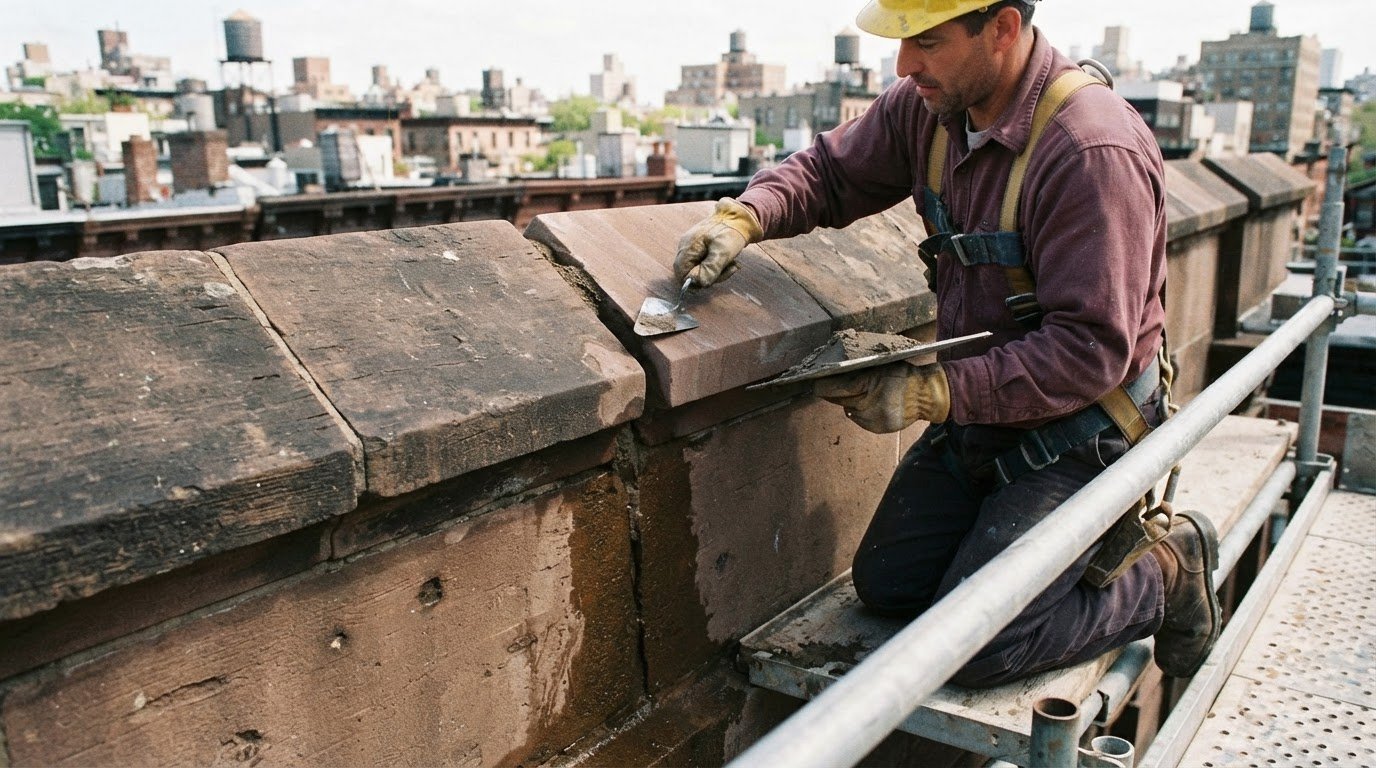
A brownstone leak is rarely fixed by covering the visible damage alone. Brownstone facade water penetration repair in Manhattan should address where moisture enters before damaged stone is rebuilt. Whether the work requires Landmarks Preservation Commission approval depends on the building’s designation and the proposed exterior work. Individually landmarked buildings and buildings in historic districts require a permit before exterior work begins.
It’s understandable to want a clear answer before work starts, especially when water is affecting the facade and interior. This article explains common moisture entry points, how a restoration plan addresses them, and what shapes the right repair approach for a Manhattan brownstone.
You’ll also learn how landmark status can affect the project and when professional facade restoration is a practical next step.
Table of Contents
What does brownstone facade restoration include?
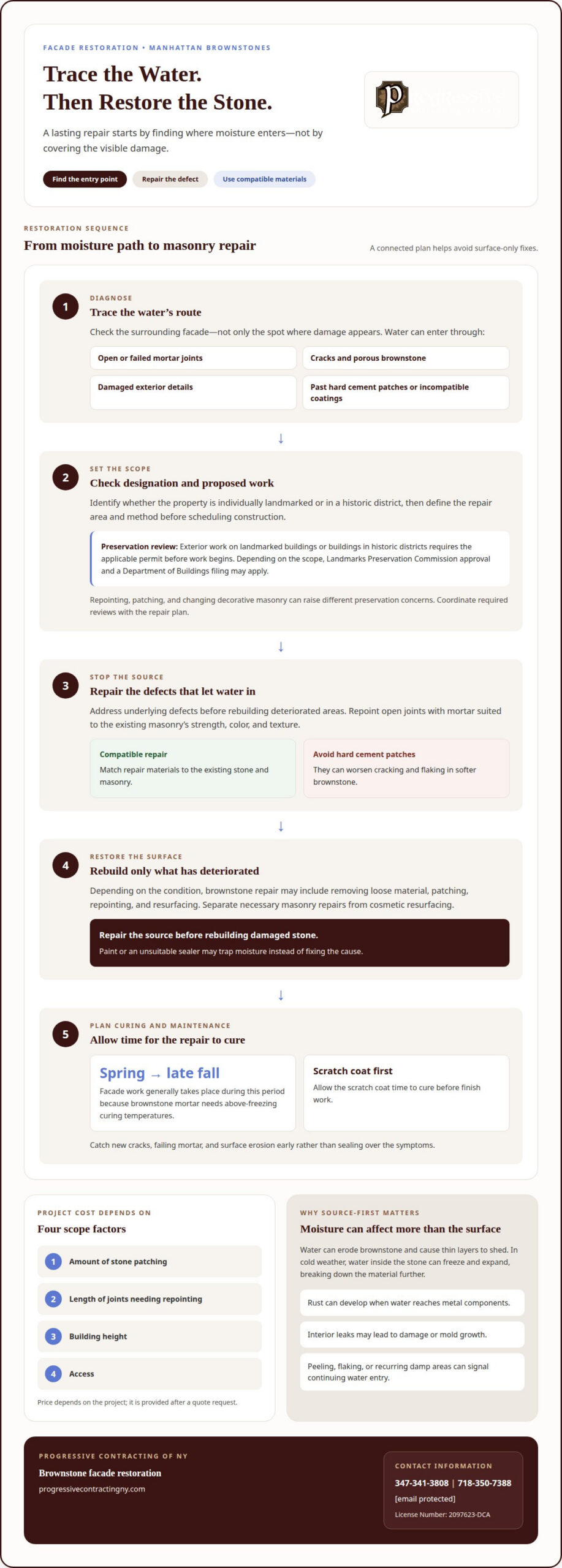
Brownstone facade restoration starts by locating water entry, not covering visible cracks. Water may pass through failed mortar joints, porous stone, or damaged exterior details. A sound restoration plan addresses those sources before rebuilding deteriorated areas. Brownstone repair may involve removing loose material, patching, repointing, and resurfacing. Open joints need mortar suited to the existing masonry’s strength, color, and texture. Hard cement patches can worsen cracking and flaking in softer brownstone.
To help prevent future water intrusion, a professional assesses the facade, identifies vulnerable joints and details, and repairs underlying defects before applying compatible materials. Maintenance means catching new cracks, failing mortar, and surface erosion early, rather than sealing over the symptoms.
Residential and commercial buildings both need repairs suited to their masonry and exposure. A brownstone residence with failing joints, for example, may need repointing, while a larger commercial facade may also need attention to masonry movement and access. The building’s materials and surroundings guide the restoration method.
When choosing a Manhattan restoration contractor, look for a clear process: assess the facade, trace moisture paths, specify repairs, and explain material choices. On landmarked properties, material selection should also respect the building’s historic appearance. The project plan should distinguish necessary masonry repairs from cosmetic resurfacing.
Restoration costs depend on the amount of stone patching, the length of joints needing repointing, building height, and access. The price depends on the project and is provided after a quote request. Timing also varies with scope and curing needs: brownstone mortar requires above-freezing curing temperatures, so facade work generally takes place from spring through late fall. A scratch coat needs time to cure before finish work. A Manhattan plan for brownstone facade water penetration repair should account for both the moisture source and the restoration sequence.
Does a Manhattan brownstone require Landmark Preservation Commission approval?
It depends on the building’s designation and the proposed exterior work. For landmarked properties and buildings in historic districts, preservation review can shape the repair method.
Landmarks Preservation Commission Approval
Exterior work on landmarked buildings or buildings in historic districts may require approval before work begins. The proposed scope matters: repairing masonry joints can affect the facade differently from replacing or reshaping historic details. Identify the property’s designation and define the repair area before scheduling work. This helps establish whether the planned method needs preservation approval.
DOB Permits and Historic Preservation Requirements
Landmarks approval and a Department of Buildings filing are separate considerations. Exterior work on a landmarked property or within a historic district can require Landmarks Preservation Commission approval as well as a DOB filing. The project scope determines which reviews apply, so describe the proposed facade work clearly. Repointing, patching, and changing decorative masonry can each raise different preservation concerns.
For a Manhattan brownstone, establish landmark status, define the exterior repairs, and identify required approvals before construction begins. A historic facade may need a repair method that preserves its original appearance while addressing deterioration. This can affect mortar selection, replacement details, and the order of work. Include these requirements in the project plan so preservation review and masonry restoration are coordinated.
Brownstone facade water penetration and moisture damage
Water enters through cracks, porous stone, failed mortar, and defective exterior details. Finding the entry point matters because surface repairs alone can leave moisture moving through the masonry.
Causes of Facade Water Penetration
Brownstone is porous sandstone, so water can penetrate its surface rather than drain away. Open mortar joints and cracks create direct paths, while damaged exterior details can let water reach concealed areas. Earlier repairs may contribute too: hard cement patches and incompatible coatings can interfere with the stone’s ability to dry. A professional assessment traces likely water paths and checks the surrounding masonry, not just the visible spot.
Moisture Damage in Brownstone Facades
Moisture can erode brownstone and make its surface shed in thin layers. In cold weather, water inside the stone can freeze and expand, breaking down the material further. Water reaching metal components can contribute to rust, while leaks inside the building may lead to interior damage or mold growth. Peeling, flaking, and recurring damp areas can signal that water is still getting in.
The repair should address the source before rebuilding damaged stone. Repointing can close deteriorated joints, while compatible patching can restore areas where the surface has failed. Paint or an unsuitable sealer may trap moisture instead of fixing the cause. On a landmarked facade, preservation requirements and approval can also shape the work. The essential steps are to trace the water path, repair the defect, and restore the affected masonry with compatible materials.
Progressive Contracting NY Corp
Progressive Contracting NY Corp helps Manhattan property owners address facade water intrusion through brownstone facade renovation and restoration. When cracks, deteriorated masonry, or recurring moisture point to a facade problem, a professional assessment can identify affected areas and guide the repair plan. The work addresses the exterior condition and needed restoration, rather than simply covering visible damage. For brownstones with related stoop deterioration, Rammstein stoop restoration is also available.
Contact Progressive Contracting NY Corp to discuss your brownstone facade concerns. Call 347-341-3808 or 718-350-7388, or email ProgressiveContractingNY@yahoo.com.
Plan the Next Step for Your Brownstone
Prepare the details that will shape the project scope: where water appears, whether it returns after rain, and which facade areas show visible changes. Note previous exterior repairs and whether the building is landmarked or in a historic district. These details help focus the discussion on the building’s condition and needed work. For brownstone facade water penetration repair in Manhattan, Progressive Contracting NY Corp provides brownstone facade renovation and Brownstone Facade Restoration, as well as Rammstein stoop restoration for related stoop work.
Address the concern before surface damage spreads, with a clear understanding of the building’s needs.
A careful next step gives the restoration a sound footing.
Frequently Asked Questions
Why is waterproofing important for brownstone facades?
Managing water entry helps protect porous brownstone from continued erosion and damage. Moisture inside the stone can freeze and expand in cold weather, causing the surface to break down. Water passing through the facade can also affect interior spaces. The goal is to correct entry points and use compatible restoration materials, not trap moisture beneath an unsuitable coating.
How can a contractor identify water intrusion in a brownstone facade?
A contractor examines the exterior for cracks, open mortar joints, flaking stone, and damaged facade details, then considers where water appears indoors. Dampness near a window, for example, may direct the assessment toward nearby masonry and exterior joints. Reviewing earlier patches or coatings can reveal conditions that interfere with drying. The assessment should connect visible symptoms to likely water entry paths.
How do contractors repair cracks and spalling in Manhattan brownstone?
First address the condition allowing water to enter, then repair the affected masonry. For spalling, remove loose or damaged stone back to sound material while limiting removal to what is necessary. Rebuild the surface with compatible brownstone repair materials and repair failed joints separately. The surrounding facade’s condition helps determine the appropriate repair extent and finish.
What materials are appropriate for brownstone facade restoration and waterproofing?
Suitable materials work with the existing brownstone instead of imposing a harder or less breathable surface. Repointing mortar should match the masonry in strength, color, and texture. For a patched area, a compatible brownstone stucco mix can help maintain the facade’s appearance. Hard cement and modern coatings can contribute to damage or trap moisture, so material choice matters.
How much does brownstone facade water penetration repair cost in Manhattan?
The price depends on the condition and scope of the project and is provided after a quote request. Key factors include the amount of stone patching, the length of joints to repoint, building height, and access to the work area. A detailed scope connects the estimate to the actual facade conditions instead of treating every leak as the same repair.