
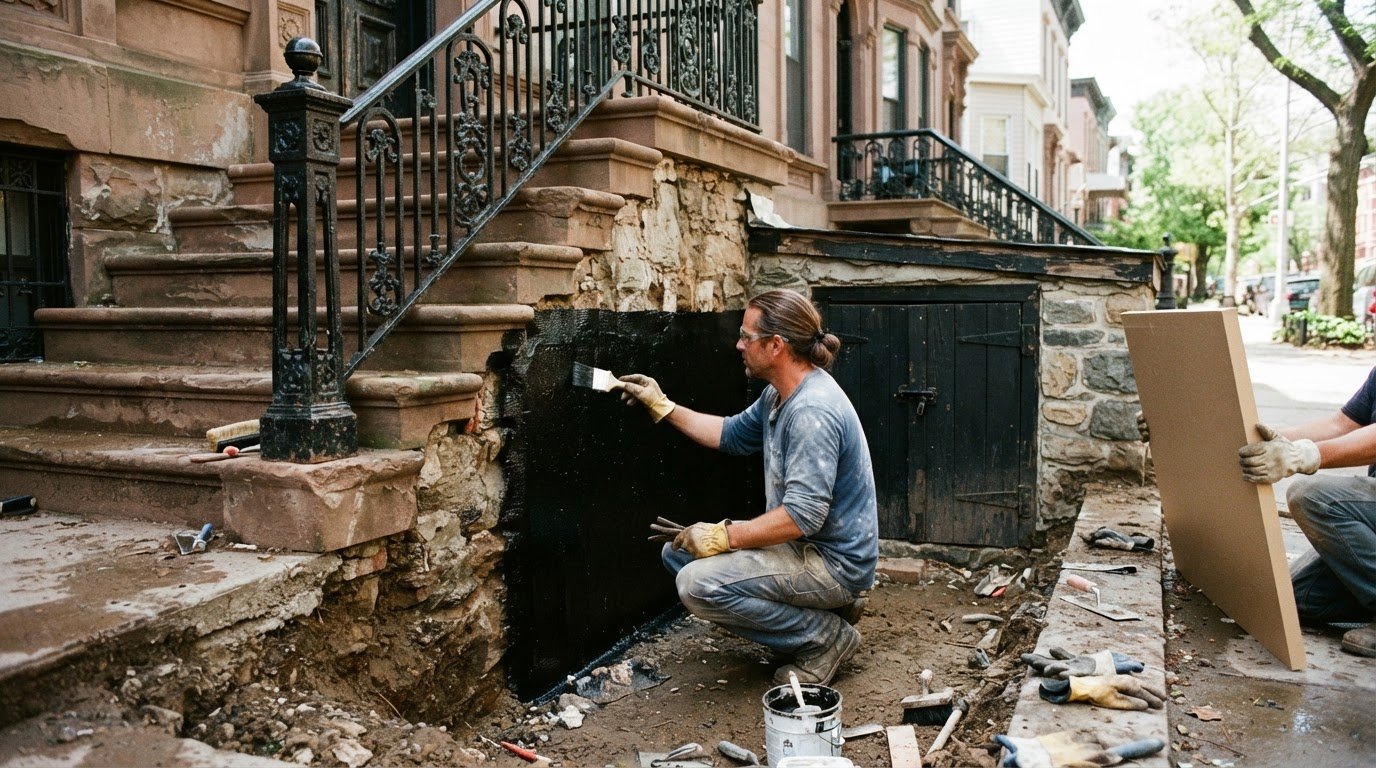
The stoop and the storage room may need different waterproofing solutions. For waterproofing a brownstone stoop storage room in Park Slope, first identify whether water is entering through cracks or joints in the stoop, coming through the foundation, or collecting because drainage is inadequate. The source determines which repair is appropriate.
It’s easy to treat the stoop and the damp space beneath it as one problem, but exterior masonry repairs and room drainage do different jobs. This guide explains how to distinguish water intrusion from a drainage issue and how exterior barriers compare with French drains, dry wells, and sump pumps. That gives you a clearer starting point for planning repairs to a historic brownstone in Park Slope or elsewhere in Brooklyn or Manhattan.
Table of Contents
1. French drains, dry wells, and sump pumps
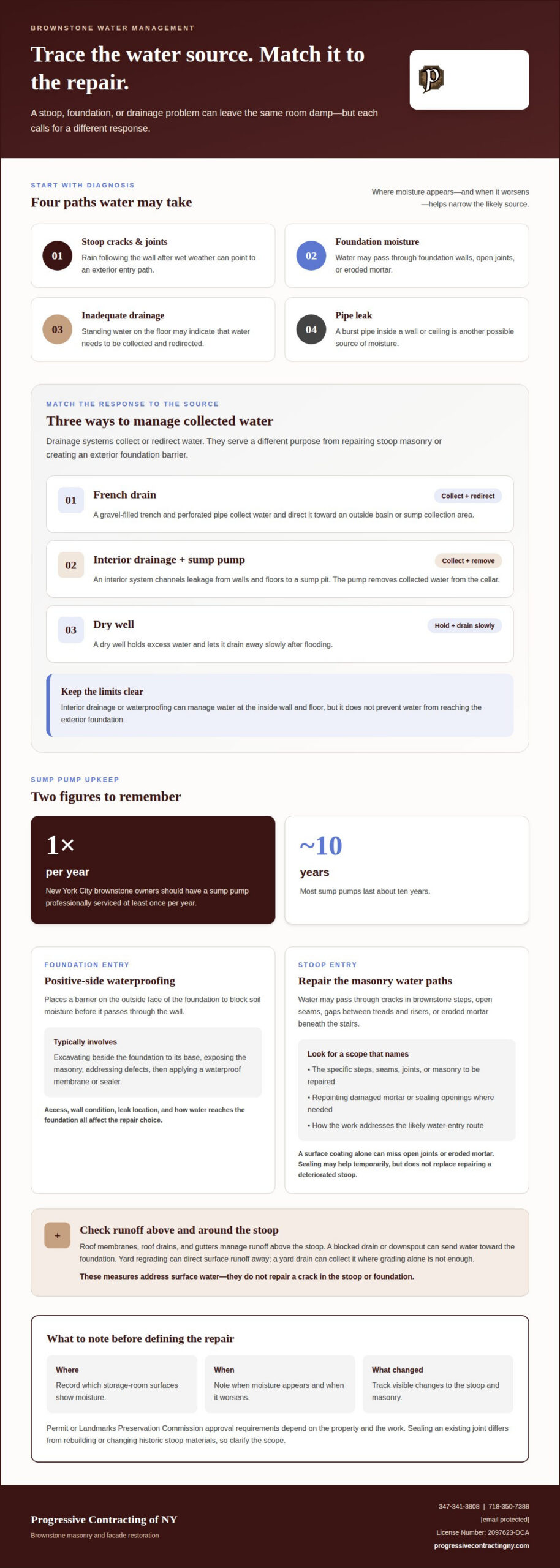
Start by tracing where water appears in the under-stoop room. Rain that follows the wall after wet weather points to an exterior entry path, while standing water on the floor may call for drainage. A burst pipe inside a wall or ceiling is another possible source. In a historic brownstone, identifying the source helps distinguish stoop repairs from cellar water management.
A French drain uses a gravel-filled trench and perforated pipe to collect and redirect water toward an outside basin or sump collection area. An interior drainage system can collect leakage from walls and floors, then channel it to a sump pit. A sump pump removes collected water from a cellar, whose floor is usually below the sewer line. New York City brownstone owners should have a professional service a sump pump at least once per year; most pumps last about ten years. A dry well is another option: it holds excess water and lets it drain away slowly after flooding.
Can a Park Slope stoop storage room be waterproofed from inside without excavation? Interior drainage or waterproofing can manage water at the inside wall and floor. These systems collect or seal incoming water, but they don’t prevent water from reaching the exterior foundation.
Roof membranes, roof drains, and gutters manage runoff above the stoop. A blocked drain or downspout can send water toward the foundation, while yard regrading can direct surface runoff away from the building. A yard drain can collect water where grading alone isn’t enough. These measures address surface water, but they don’t repair a crack in the stoop or foundation.
2. Positive-side exterior waterproofing
Positive-side waterproofing places a barrier on the outside face of the foundation. For a below-grade storage room, it helps block soil moisture before it passes through the wall. The work typically requires excavation beside the foundation, down to its base. Crews expose the masonry, address defects, then apply a waterproof membrane or sealer. The leak location and wall condition help determine the repair.
Cracks, open joints, and eroded mortar need attention before applying a barrier. Repointing damaged foundation mortar or sealing openings with hydraulic cement can help reduce water entry. A membrane then covers the exterior surface to create a continuous protective layer. At a stoop, the repair must account for how the steps, foundation, and adjoining paving meet. Water can still enter through an unsealed hatch or joint, even when the larger wall is protected.
Can improper waterproofing trap moisture and damage masonry? Yes. A poorly placed or incompatible coating can limit drying, while movement and wet-dry cycles can stress the repair. Persistent moisture may worsen masonry deterioration, including crumbling mortar or damaged stone. The method should address the actual entry point without covering unresolved defects.
Exterior excavation may be impractical beside a tightly built stoop or where access is restricted. Interior treatments can manage leakage from the room side, but they don’t create an exterior barrier. The choice depends on access, wall condition, leak location, and how water reaches the foundation. For related brownstone restoration work, the repair should account for both the masonry and its water-entry paths.
3. Brownstone stoop waterproofing
Water can pass through cracks in brownstone steps, open seams, and gaps between treads and risers. Sealing these points may help temporarily, but it doesn’t replace repairing a deteriorated stoop. For waterproofing a brownstone stoop storage room in Park Slope, first distinguish water entering through the stoop from moisture passing through the foundation. The underside of an old stoop is not a reliable waterproofing surface; attention usually belongs on exposed steps, joints, and the masonry beneath them.
The bricks beneath the stairs need attention too. Eroded mortar or crumbling joints can create paths for water, so repointing may be part of the repair. A contractor should connect visible damage with the damp area inside, then identify the likely entry route. When comparing written scopes, look for the specific repair locations and how the proposed work addresses the masonry and water paths. This helps you assess waterproofing a brownstone stoop storage room in Park Slope without assuming every damp space needs the same treatment.
NYC permit or Landmarks Preservation Commission approval requirements depend on the property and the work. Sealing an existing joint differs from rebuilding or changing historic stoop materials, so clarify the scope before work begins.
For excavation, the plan needs to account for the foundation, sidewalk, and building entrance. The access route and work area affect how nearby surfaces are protected and entry is maintained. If excavation exposes damaged masonry, that surface may need repair before waterproofing proceeds.
A surface coating alone can miss open joints or eroded mortar. A properly scoped brownstone stoop repair considers the steps, seams, and masonry beneath them together.
Progressive Contracting NY Corp: Brownstone Contractor Park Slope Brooklyn
Progressive Contracting NY Corp is a practical next step when water damage points to cracked stoop masonry, deteriorated joints, or a stoop that needs restoration. Its brownstone contracting and facade renovation work addresses exterior masonry. The right repair depends on where water enters and what the stoop needs.
If water comes from a pipe or collects because of interior drainage conditions, stoop restoration alone may not address the source. Note where moisture appears and when it worsens to help define the project.
For a Park Slope brownstone stoop or facade concern, contact Progressive Contracting NY Corp at 347-341-3808 or 718-350-7388, or email ProgressiveContractingNY@yahoo.com. License Number: 2097623-DCA.
Set a clear scope for the next step
Before planning work, record which storage-room surfaces show moisture, when it appears, and any visible changes to the stoop. These details help focus the scope on the affected masonry and needed repairs instead of treating every damp space the same way. For waterproofing a brownstone stoop storage room in Park Slope, a focused scope can clarify whether the work concerns the entry stoop, the facade, or both.
Progressive Contracting NY Corp provides brownstone facade renovation, Brownstone Facade Restoration, and Rammstein stoop restoration. These services address exterior masonry and stoop conditions that may be part of the project. Discuss the property and the work you’re considering in a free consultation.
Frequently Asked Questions
Does the brownstone stoop need to be waterproofed separately?
The stoop and the storage-room foundation can have different water-entry points. For example, water showing beneath a stair joint may call for stoop repair, while dampness across a foundation wall may need separate wall treatment. A shared structure doesn’t mean one coating will solve both problems. The right scope follows the location and route of the water.
How do professionals waterproof a brownstone stoop storage room from the exterior?
The exposed foundation and the transitions between the stoop and wall are connected but distinct details. Work may include preparing masonry, repairing open joints, and applying an exterior membrane where the foundation is accessible. Around a storage-room entry, the crew also considers hatch edges and adjoining walls, since water can enter through those transitions even when the main foundation surface is covered.
What materials are suitable for waterproofing historic brownstone stoops?
Material choice depends on the brownstone’s condition and the surface being treated. Repointing can repair deteriorated mortar joints, while a penetrating silane-siloxane sealer is used on brownstone facades. Foundation membranes serve a different purpose on exterior below-grade walls. These materials aren’t interchangeable: the repair should suit the surface and location, rather than cover historic stone with an unsuitable coating.
What drainage and grading changes help keep water out of a stoop storage room?
Direct roof runoff and surface water away from the stoop and foundation. Clear gutters and roof drains, adjust yard grading so runoff doesn’t collect beside the building, and use a yard drain where water otherwise pools. A dry well can hold excess runoff for gradual drainage, while a sump pump handles water collected indoors. The right combination depends on where water gathers.
How do you find and compare reputable brownstone waterproofing contractors in Park Slope?
Record where and when moisture appears, and note any visible stoop damage. Compare written scopes for the specific repair locations and how each plan addresses the masonry and likely water-entry paths.