
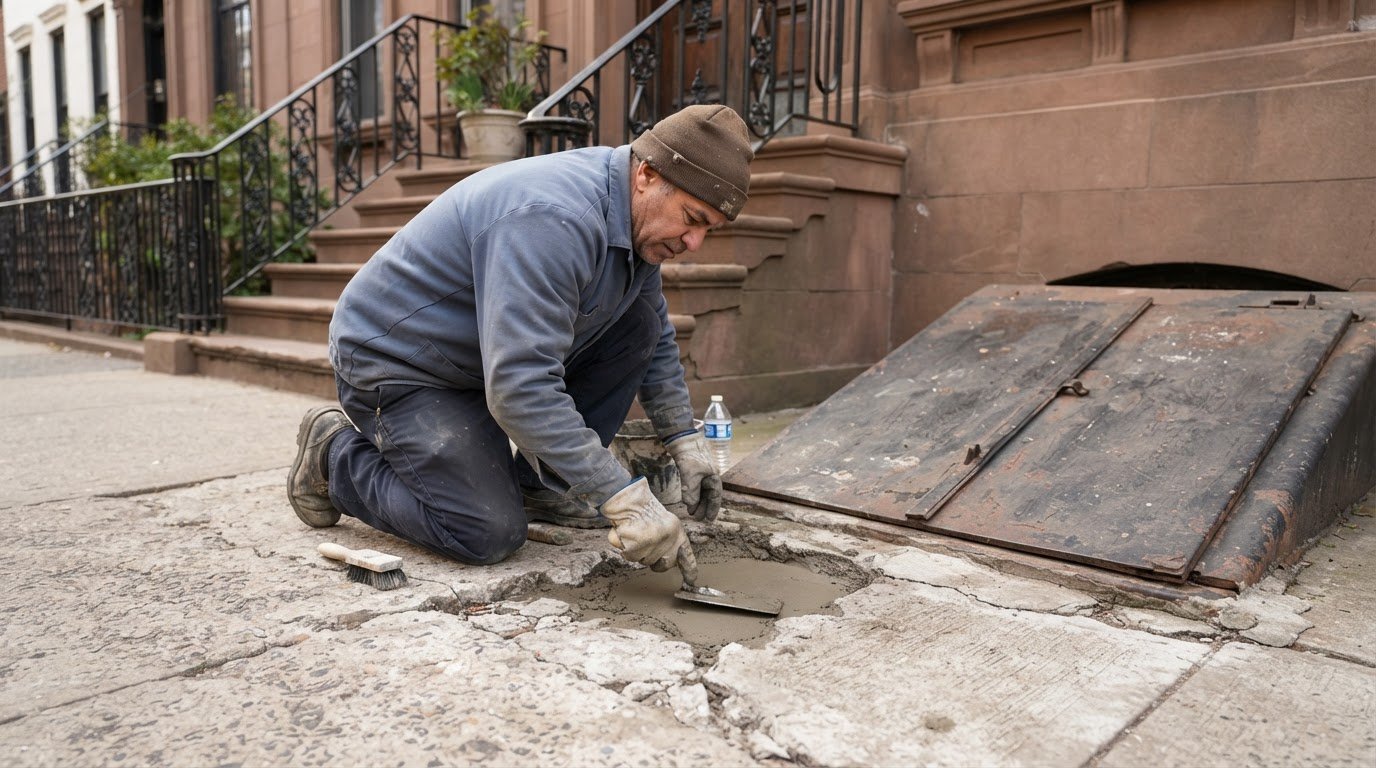
How serious is a crack beside a sidewalk cellar door? Repairing cracked concrete around a sidewalk cellar door in NYC starts with assessing its width, whether the concrete has shifted, and how moisture may be entering. A surface crack may need a different repair from concrete that is sinking or breaking apart.
It’s reasonable to be concerned: water entering concrete can contribute to further damage through repeated freezing and thawing. This article explains how a professional assesses the damage, addresses moisture concerns, and chooses suitable materials and repair methods. You’ll also learn what affects the choice between a localized repair and replacing a larger section, and how work proceeds around the cellar door.
Table of Contents
Professional tools and materials for concrete crack repair
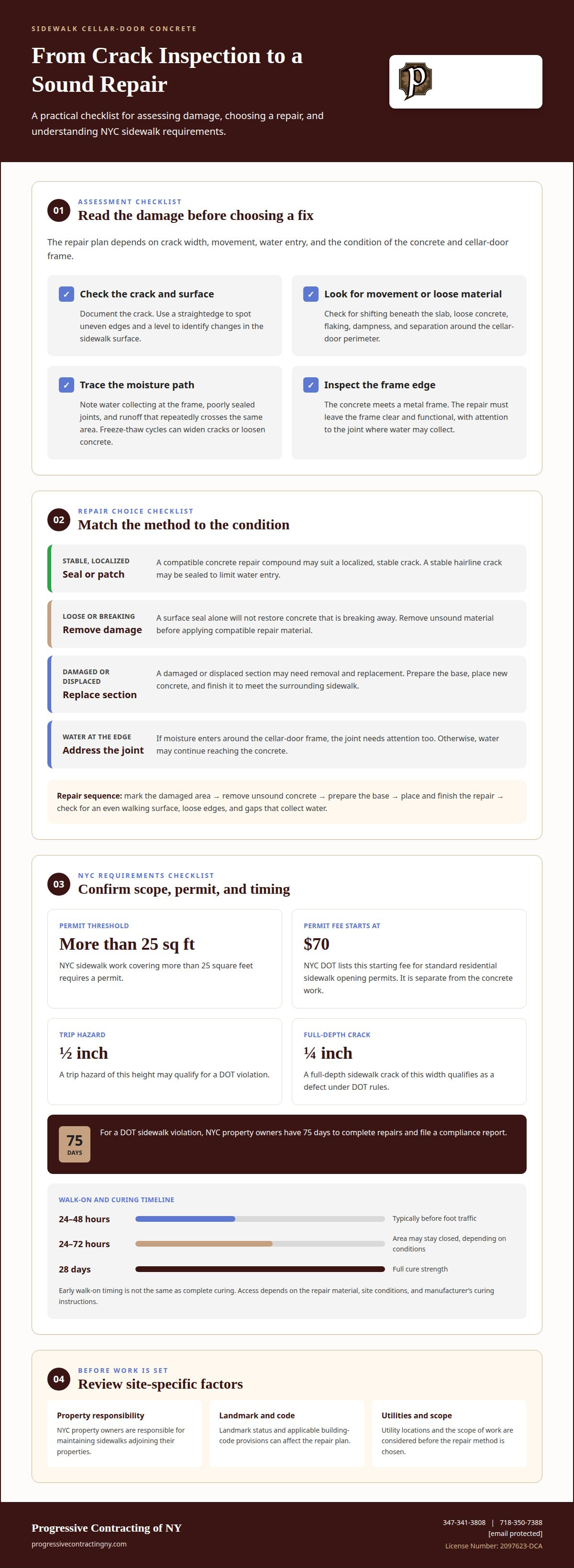
Professional repair begins by documenting the crack and inspecting the cellar-door frame. A straightedge can reveal uneven edges, while a level helps identify changes in the sidewalk surface. The inspection also checks for loose concrete, water entry, and signs of movement beneath the slab.
To prepare the area, crews may use a concrete saw to define the repair area and a chipping hammer to remove unsound material. A shop vacuum clears dust from the opening before repair material is applied. Around a cellar door, careful cutting matters because the concrete meets a metal frame that must remain clear and functional.
Material selection depends on the damage. A compatible concrete repair compound may suit a localized, stable crack, while a damaged or displaced section may need removal and replacement. For a wider repair, new concrete must be placed on a prepared base and finished to meet the surrounding sidewalk. The joint between the concrete and cellar-door frame also needs attention to help prevent water from collecting at the edge.
Landmark status, applicable building-code provisions, and utility locations can affect the repair plan, depending on the property and scope of work. These considerations are assessed before the repair method is chosen.
For a DOT sidewalk violation, New York City Department of Transportation gives NYC property owners 75 days to complete repairs and file a compliance report. The New York City Department of Transportation lists NYC sidewalk opening permit fees starting at $70 for standard residential repairs. The fee is a permit cost, separate from the concrete work.
When a permit applies, its requirements shape the work sequence. Tools and materials should suit the crack, surrounding slab, and cellar-door edge, rather than merely covering the visible surface.
Freeze-thaw damage and moisture infiltration
Water entering a concrete crack can freeze, expand, and put pressure on the surrounding material. As temperatures change, repeated freezing and thawing can widen existing cracks or loosen concrete beside a cellar-door frame. A small surface opening may point to a deeper moisture path, especially where water collects along the frame or joints.
During an assessment, the concrete professional traces the crack and looks for dampness, flaking, loose edges, and separation around the cellar-door perimeter. Drainage patterns matter too. Runoff that repeatedly crosses the same area can carry water into a crack, while a poorly sealed joint can let moisture reach the concrete beneath the surface.
The repair should address the source of the damage. A stable hairline crack may be sealed to limit water entry. If concrete is already breaking away, a surface seal alone won’t restore the damaged section: loose material must be removed before compatible repair material is applied. If moisture enters around the door frame, the joint needs attention too, or water may continue reaching the concrete.
For example, a crack that reopens after patching may signal continued water entry or movement, rather than a failed surface finish alone. A professional concrete assessment connects these signs to the repair method instead of simply covering the visible line. This is especially useful when winter weather has visibly damaged the concrete beside the cellar door.
For professional concrete repair assessment, the inspection can identify moisture paths and distinguish surface cracking from deterioration beneath the slab.
Professional repair of cracked sidewalk concrete
A sound repair addresses the cause of the crack, the sidewalk hazard, and the cellar-door edge.
How professionals repair cracked sidewalk concrete around a cellar door
The crew marks the damaged area, removes unsound concrete, and prepares the base. It then places and finishes replacement concrete to meet the surrounding sidewalk. At the cellar door, the repair must meet the frame cleanly without obstructing its movement. A useful quality check is an even walking surface with no loose edges or gaps that collect water.
Repair Responsibility
In New York City, property owners are responsible for maintaining sidewalks adjoining their properties. That responsibility can include cracked concrete around a cellar door, particularly when the defect creates an uneven walking surface. The repair assessment determines whether the damage is limited to the sidewalk slab or also involves the door frame. The distinction matters: the work must address the damaged area and leave the pedestrian path serviceable.
Permits and DOT Rules
NYC sidewalk work covering more than 25 square feet requires a permit. A ½-inch trip hazard may qualify for a DOT violation, and a ¼-inch full-depth sidewalk crack qualifies as a defect under DOT rules. The repair scope and any issued violation shape the required work and follow-up. These regulations make accurate assessment important: a cosmetic patch may not resolve a defect that needs a larger concrete repair.
Curing and Walk-On Timing
For NYC sidewalk repairs, concrete typically needs 24-48 hours before foot traffic. Crews may keep the repair area closed for 24-72 hours, depending on conditions. Full cure strength takes 28 days, so early walk-on timing is not the same as complete curing. The contractor sets access based on the repair material, site conditions, and manufacturer’s curing instructions, keeping pedestrians off until the surface is ready.
Progressive Contracting NY Corp: Concrete Contractor
Progressive Contracting NY Corp handles sidewalk concrete repairs around cellar doors as part of its concrete contracting work. Turn to the team when cracks, loose concrete, or an uneven edge need professional assessment and repair. The work focuses on the concrete and its connection to the cellar-door frame.
For buildings where sidewalk damage is accompanied by broader exterior deterioration, Progressive Contracting NY Corp also provides brownstone facade renovation and Rammstein stoop restoration.
To discuss a sidewalk repair, call 347-341-3808 or 718-350-7388, or email ProgressiveContractingNY@yahoo.com. License Number: 2097623-DCA.
Plan the Next Step for Your Sidewalk
Repairing cracked concrete around a sidewalk cellar door in NYC is an opportunity to address the walking surface and assess the surrounding exterior. If the cellar-door area is beside deteriorating masonry, considering the related work can help you plan a coherent repair scope.
Progressive Contracting NY Corp also offers brownstone facade renovation and stoop restoration services. These services may be relevant when sidewalk concerns accompany broader brownstone or stoop deterioration. Describe the visible issue and affected area so the repair plan can focus on the property’s needs.
A clear plan starts with the condition at your entrance and works toward a sound, well-maintained property.
Frequently Asked Questions
How Serious Is a Concrete Crack?
A crack needs prompt attention if it is widening, has loose edges, or is beside a raised or sunken section. A full-depth crack wider than ¼ inch qualifies as a defect under NYC DOT rules, and a crack wider than ¼ inch may need replacement. At a cellar door, note whether the frame binds or water collects along the edge; these signs may point to damage beyond the visible crack.
What causes concrete to crack around sidewalk cellar doors?
Moisture, freeze-thaw cycles, and movement beneath the slab can all contribute to cracking. Runoff can erode soil and leave voids under concrete; rotted tree roots or poorly compacted fill can also create unsupported areas. Around cellar doors, the frame and adjoining joints are additional places where water may enter. A professional considers these conditions together to identify why the crack formed.
How do professionals repair cracked concrete around a sidewalk cellar door?
Repairing cracked concrete around a sidewalk cellar door in NYC begins with assessing the crack, surrounding slab, and door frame. Professionals remove concrete that cannot support a sound repair, prepare the area, and apply suitable repair material or replacement concrete. The finished work should meet the adjacent sidewalk without obstructing the door. A crack with movement beneath it needs more than a surface covering.
When should cracked concrete around a cellar door be patched versus replaced?
The right approach to repairing cracked concrete around a sidewalk cellar door in NYC depends on the concrete’s stability and the extent of the damage. A stable, localized crack may be suitable for patching if the surrounding concrete remains firm and level. Replacement is more likely when concrete is displaced or breaking apart. A crack wider than ¼ inch may need replacement, while extensive sidewalk damage can call for a larger repair.
What concrete mix and materials do professionals use for sidewalk cellar door surrounds?
Professionals choose repair compound or replacement concrete to suit the scale of the repair and condition of the existing slab. They also account for the edge beside the cellar-door frame, where the material must create a clean transition without interfering with the door. The right choice depends on the prepared area and surrounding concrete, so a product intended only to cover a surface crack may not suit deeper damage.