
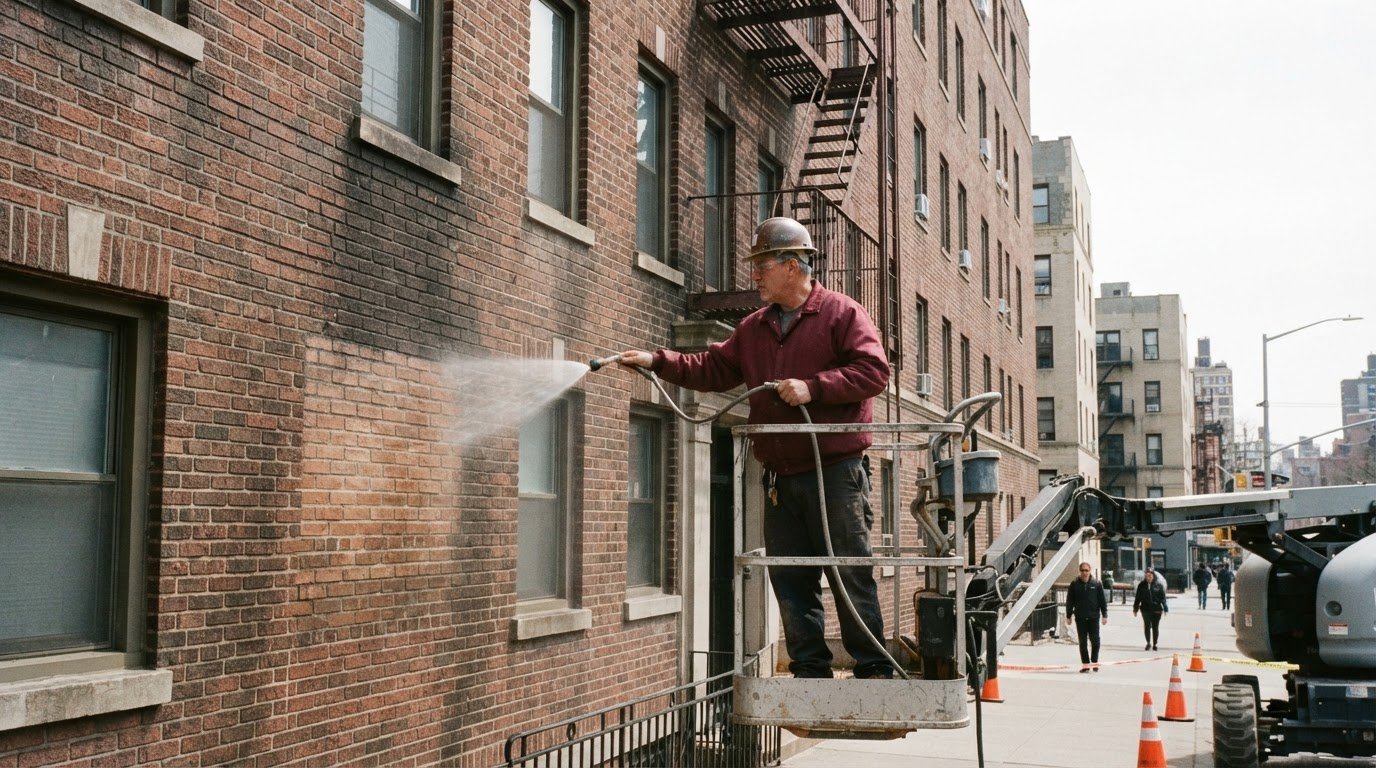
Muriatic acid is not a safe default for cleaning a brick co-op facade. The Brick Industry Association advises against using unbuffered muriatic acid on brick, because an unsuitable cleaning method can damage the masonry rather than restore its appearance. For boards considering brick cleaning and sealing services for co-ops in the Bronx, the right plan starts with the brick’s condition, existing moisture, and open mortar joints, not a chemical chosen in advance.
It’s understandable to want a deep clean that lifts grime without compromising the building envelope. This guide explains what professional deep cleaning involves, why test patches and careful rinsing matter, and when sealing may or may not suit masonry. You’ll also learn how to plan cleaning and recoating schedules for brick, stone, glass, and metal based on the materials on your building’s facade.
Table of Contents
Cleaning and recoating schedules for building materials
Set the schedule by material, condition, and repair needs rather than applying one cycle to every facade. Stone cleaning is generally scheduled every 15 years, while glass cleaning is scheduled every 10 years. Protective coatings on unfinished and non-painted metals can be applied every six to 10 years; metallic coatings on painted surfaces should be resprayed every 15 to 20 years.
Scheduling Around Building Operations
For a co-op, coordinate access, resident notices, and work areas with building operations before setting dates. Cleaning a regular eight-floor stone building may take about four weeks, so include staging, resident access, and weather-sensitive work in the schedule. Record notice periods, cancellation fees, and any after-hours arrangements in the written work plan; don’t assume flexible hours or waived fees. Include insurance documents and insured access requirements in the board’s planning.
For masonry work in New York City, permit and approval requirements depend on the project scope. Review the proposed work, co-op approvals, and access requirements before scheduling mobilization. Cleaning and masonry repairs may involve different considerations.
Sealer Selection and Exterior Brick
There is no single “best” breathable water-repellent sealer for every brick building. According to the National Park Service’s Preservation Brief 1, water-repellent coatings on historic masonry are usually unnecessary, are not permanent, and should not be applied to a damp wall. Consider brick condition, moisture sources, and whether renovation or repair should come before coating. A careful test helps assess how the original surfaces respond.
Cleaning and sealing estimates depend on facade area, access, soil and stain severity, mortar condition, repairs, and any proposed coating. An amazing-looking finish still depends on sound masonry and appropriate preparation; extremely soiled or damaged areas can require more work. A regular eight-floor stone building may take about four weeks to clean. Brick work duration depends on access, cleaning scope, drying conditions, and repairs before recoating.
What a professional brick deep-cleaning service includes
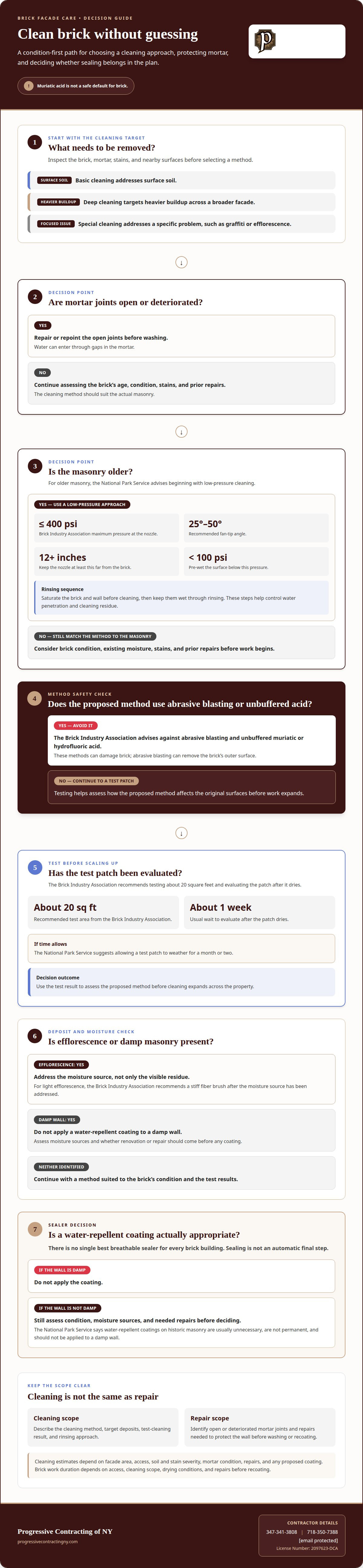
A professional deep clean begins with inspecting brick, mortar, stains, and nearby surfaces. Basic cleaning addresses surface soil; deep cleaning targets heavier buildup across a broader facade. “Special” cleaning describes a focused problem, such as graffiti or efflorescence, rather than a standard level of service. The Brick Industry Association recommends testing about 20 square feet, then evaluating the patch after it dries, usually about a week. The National Park Service suggests allowing a test patch to weather for a month or two when time allows. For boards comparing brick cleaning and sealing services for co-ops in the Bronx, this test helps assess the proposed method before work expands.
For older masonry, the National Park Service advises beginning with low-pressure cleaning. The Brick Industry Association sets a maximum of 400 psi at the nozzle, recommends a 25-to-50-degree fan tip, and advises holding it at least 12 inches from brick. Before cleaning, the crew pre-wets the surface below 100 psi, saturates the brick and wall, and keeps them wet through rinsing. These steps help control water penetration and cleaning residue.
Product choice matters. The Brick Industry Association advises against abrasive blasting and unbuffered muriatic or hydrofluoric acid, which can damage brick. Open joints need repointing before washing because water can enter through gaps. For light efflorescence, the association recommends using a stiff fiber brush after addressing the moisture source. Facade work differs from interior deep cleaning: its scope addresses exterior masonry, mortar, and deposits. A scope for brick cleaning and sealing services for co-ops in the Bronx should distinguish surface cleaning from repairs needed to protect the wall.
Brick cleaning services in the Bronx
Bronx co-op facade cleaning starts with reviewing the brick, mortar, stains, and signs of water entry. The aim is to remove deposits without stripping the masonry or concealing damage. Cleaning methods should suit the brick’s age, condition, and prior repairs. A test area lets the board assess the result before work proceeds across the property.
For older masonry, the National Park Service recommends starting with low-pressure cleaning. The Brick Industry Association advises against abrasive blasting, which can remove brick’s outer surface. Repair open mortar joints before washing, since water can pass through the gaps. Efflorescence also requires addressing its moisture source, not just removing visible residue. These steps help protect the wall while improving its appearance.
Bronx co-op boards can consider masonry contractors with experience in multifamily and historic facades. Compare written scopes, insurance documentation, references for similar buildings, and warranty terms, including coverage and exclusions. A proposal for brick cleaning and sealing should explain the cleaning method, repairs, drying, and whether a sealer is recommended. Sealing is not an automatic final step.
Board review can start with the proposed scope, test-cleaning results, access needs, and work schedule. These details help directors assess resident impacts and determine whether the project fits the building’s maintenance plan. Approve a method suited to the actual masonry, not a one-size-fits-all treatment.
Progressive Contracting NY: Brick Pointing
Progressive Contracting NY Corp. provides brick pointing for co-op facades with mortar joints that need repair. If cleaning reveals open or deteriorated joints, repointing can address those defects before water enters through gaps. The sequence matters: assess the joints, complete necessary repairs, then plan further facade work around the building’s condition.
For boards managing broader exterior needs, Progressive Contracting NY Corp. also handles brownstone facade renovation, stoop restoration, and general masonry services. These offerings are relevant when a building requires repairs beyond surface cleaning, such as addressing damaged mortar or brownstone facade deterioration. A clear project scope helps the board distinguish cleaning from restoration work.
To discuss masonry work for your building, contact Progressive Contracting NY Corp.
Plan the Next Step for Your Co-op Facade
Use the next board planning cycle to turn facade concerns into a written scope. Identify affected elevations, separate cleaning from repairs, and set a decision point for any proposed recoating. This gives directors a basis for budgeting and resident communication before authorizing work. For brick cleaning and sealing services for co-ops in the Bronx, keep the masonry’s condition central to planning rather than treating a coating as an automatic finish.
A board can bring the written scope, photographs, and known repair concerns into a project discussion, then decide which exterior work belongs together. Progressive Contracting NY Corp. offers brownstone facade renovation, Rammstein stoop restoration, and Brownstone Facade Restoration for properties with broader facade or stoop needs. These services can be relevant when a building’s work extends beyond cleaning and into restoration.
Contact Progressive Contracting NY Corp. today at 347-341-3808 or 718-350-7388, or email ProgressiveContractingNY@yahoo.com. License Number: 2097623-DCA.
Frequently Asked Questions
Should a masonry contractor use muriatic acid to clean brick?
Not with unbuffered cleaner. The Brick Industry Association advises against unbuffered muriatic acid on brick because an unsuitable chemical treatment can damage masonry or cause discoloration. Identify the deposit first, then select a method suited to the brick and mortar. For example, efflorescence calls for addressing the moisture source, not simply applying a stronger acid.
Can a contractor pressure wash brick without damaging it?
Yes, if the contractor controls pressure, nozzle distance, and water application for the specific wall. The Brick Industry Association sets a 400 psi maximum at the nozzle; for older buildings, the National Park Service advises beginning at 100 psi or below. Brick condition and mortar joints matter too. A sound plan avoids directing concentrated force into vulnerable areas.
How long should a contractor wait before judging a brick cleaning test?
Allow about a week for a test patch to dry before judging its appearance, according to the Brick Industry Association. The National Park Service suggests letting the patch weather for a month or two when the project schedule allows. Drying can reveal changes that wet brick hides, while weathering shows how the cleaned area looks over time.
Is blast cleaning safe for brick when performed by a contractor?
Abrasive blast cleaning is not recommended for brick, even when performed by a contractor. The Brick Industry Association advises against abrasive blasting because it removes the brick’s outer surface. This can alter the face and expose less durable material. For a co-op facade, choose a cleaning plan that preserves the masonry rather than relying on abrasion to remove stubborn deposits.
Is soft washing better than pressure washing for professional brick cleaning?
Not in every situation. “Soft washing” describes a lower-pressure approach, but the result still depends on the cleaning solution, brick type, mortar condition, and stain. Carefully controlled pressure washing may also be appropriate. Assess the wall and test a small area before choosing a method; its name alone does not show that it is safer or more effective.