
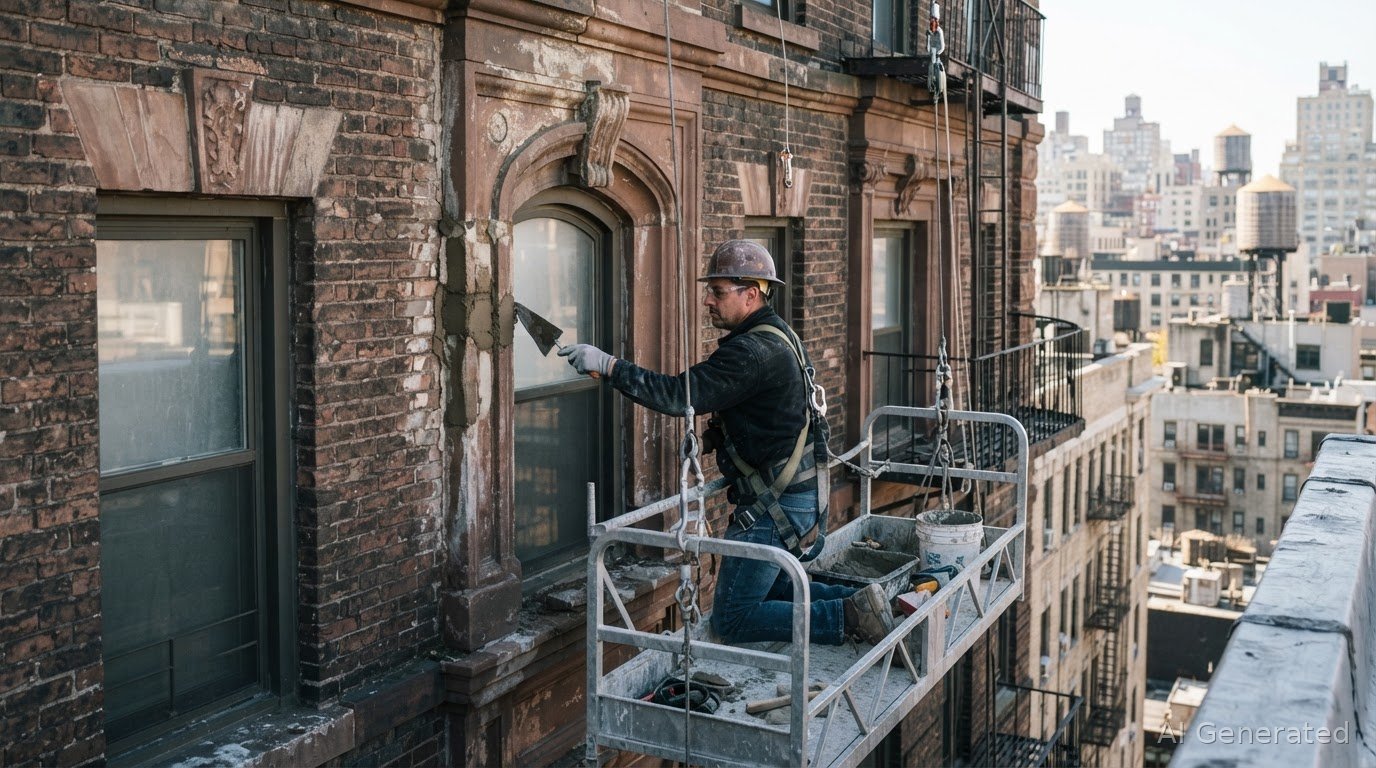
A facade deadline is driven by the inspection finding, not just what can be seen from the sidewalk. In New York City, buildings taller than six stories must have exterior walls inspected by a Qualified Exterior Wall Inspector every five years under FISP, commonly known as Local Law 11. If repairs are required, their urgency depends on the condition classification, so Manhattan owners need a clear path from report to restoration. A Local Law 11 facade repair contractor in Manhattan can carry out the masonry and exterior work identified by the report.
It’s understandable to want a straightforward answer: does the rule apply, and how quickly must work begin? This guide explains the building threshold, inspection categories and repair timelines, then outlines what facade restoration can involve, from masonry repairs and pointing to broader exterior work.
Table of Contents
How urgent are Local Law 11 repairs?
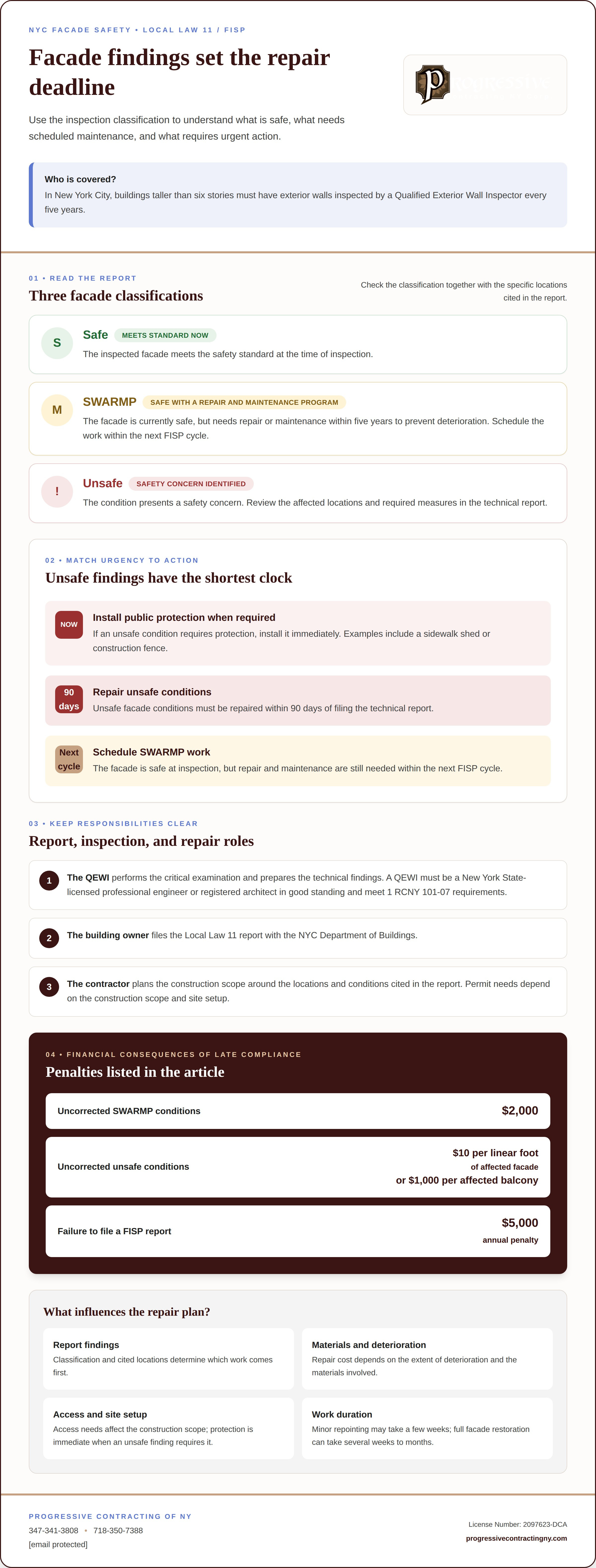
The inspection report classifies facade conditions and identifies the next steps. For Manhattan owners, the distinction between Safe, SWARMP, and Unsafe affects repair timing and measures needed to protect public safety.
Facade Safety Classifications
A Safe classification means the inspected facade meets the safety standard at the time of inspection. SWARMP means “Safe With a Repair and Maintenance Program”: the facade is currently safe but needs repair or maintenance within five years to prevent deterioration. Unsafe identifies a condition that presents a safety concern. Read the classification together with the locations cited in the report. A parapet or exterior wall finding may require a different scope from localized masonry deterioration.
Urgency of Unsafe and SWARMP Repairs
Unsafe facade conditions must be repaired within 90 days of filing the technical report. If the Qualified Exterior Wall Inspector reports an unsafe condition requiring protection, install public protection immediately, such as a sidewalk shed or construction fence. SWARMP work is scheduled within the next FISP cycle; the condition is safe at inspection, but repair and maintenance still matter. The report’s findings and deadlines determine which work must come first.
When evaluating a Local Law 11 facade repair contractor in Manhattan, review comparable project references, proof of insurance, and applicable licenses. A QEWI must be a New York State-licensed professional engineer or registered architect in good standing and meet 1 RCNY 101-07 requirements. The building owner files the Local Law 11 report with the NYC Department of Buildings; the QEWI performs the critical examination and prepares the technical findings.
Late repair can bring penalties: NYC charges a $2,000 penalty for uncorrected SWARMP conditions, while uncorrected unsafe conditions can incur $10 per linear foot of affected facade or $1,000 per affected balcony. According to the New York City Department of Buildings, failure to file a FISP report carries a $5,000 annual penalty.
A Local Law 11 facade repair contractor in Manhattan can plan the construction scope around the report’s cited conditions. Permit needs depend on construction scope and site setup; an unsafe finding requiring protection calls for immediate sidewalk protection. Repair cost depends on the extent of deterioration, materials, and access. Minor repointing may take a few weeks, while full facade restoration can take several weeks to months.
Need Help With NYC Local Law 11 Compliance?
After an inspection, owners need to turn the report’s findings into a practical repair scope. The restoration plan should account for exterior wall materials, access, weather, and ongoing maintenance needs.
Choose a Manhattan facade contractor by reviewing comparable masonry projects, references, insurance documentation, and applicable licenses. A clear proposal should connect each repair to the inspection findings and identify materials, work sequence, and site access.
After the inspection, the hiring process can follow three steps:
- Share the report and identify each location classified for repair or maintenance.
- Have the contractor assess the cited brick, stone, concrete, or metal elements and define the repair scope.
- Review the proposed methods, access needs, and schedule, then coordinate the work with the building’s qualified professionals.
Restoration methods depend on the material and observed damage. Brick or stone may need localized replacement or repointing; deteriorated concrete may need patching or rebuilding. Metal elements also need attention when corrosion or failing connections are present. At joints and other water-entry points, the repair plan should address the moisture source, not just the visible damage. An architect’s details can help align masonry repairs with the building’s existing character.
Cold-weather planning matters. Masonry repair work typically slows or stops below about 40°F unless the work area is heated and enclosed. This affects when crews can place mortar or complete exposed restoration, so the schedule should account for temperature and site conditions.
For a masonry scope that includes a brownstone exterior, plan the facade repair work around the report’s findings and the building’s materials.
Facade repair and exterior restoration
New York City facade restoration starts with the inspection findings and turns each cited location into a defined masonry scope. The exterior review covers walls and appurtenances, including balconies, fire escapes, and parapets. When materials vary across the building, examining all four sides can show how brick, stone, or concrete conditions differ.
A hands-on critical examination assesses a representative sample of the facade. The report identifies conditions and locations that need attention, helping owners distinguish localized work from broader restoration. A parapet repair, for example, may require a different approach from deteriorated mortar joints or a damaged balcony element.
Filing follows the building’s assigned FISP cycle and sub-cycle window, based on its block number. Cycle 10 runs from February 21, 2025 through February 20, 2030. The current sub-cycle dates are:
- 10A: February 21, 2025 through February 21, 2027, for blocks ending in 4, 5, 6, or 9.
- 10B: February 21, 2026 through February 21, 2028, for blocks ending in 0, 7, or 8.
- 10C: February 21, 2027 through February 21, 2029, for blocks ending in 1, 2, or 3.
Once the scope is clear, repairs can be prioritized and completed in phases based on severity and the nature of each issue. After required work is complete, building owners file an amended report with the Department of Buildings. Coordinating the construction sequence with the locations in the report helps align completed exterior work with the findings and filing record.
Progressive Contracting NY Corp
Progressive Contracting NY Corp provides exterior masonry and brownstone restoration for Manhattan property owners addressing facade review findings. When a report calls for repairs to brownstone, brickwork, or related exterior features, the company can carry out work that fits the building’s repair scope. Services include brownstone facade renovation and Rammstein stoop restoration.
Share the relevant inspection findings and affected areas to discuss the restoration work. Contact Progressive Contracting NY Corp by calling 347-341-3808 or 718-350-7388, or emailing ProgressiveContractingNY@yahoo.com. License Number: 2097623-DCA.
Move From Inspection Findings to a Clear Next Step
The next step is to turn the inspection findings into a defined exterior repair scope. A Local Law 11 facade repair contractor in Manhattan can help connect the identified masonry work with the building’s restoration needs. Progressive Contracting NY Corp offers brownstone facade renovation, Rammstein stoop restoration, and Brownstone Facade Restoration for buildings with brownstone features needing repair or restoration.
Keep the inspection findings and affected locations together so project discussions stay focused on the actual scope. This gives owners a clear starting point for planning the building’s repairs.
Frequently Asked Questions
What is Local Law 11 and does it apply to my building?
Local Law 11, commonly known as FISP, covers qualifying buildings across New York City, including Manhattan and Brooklyn. The key threshold is whether the building is more than six stories; its age or historic appearance alone doesn’t determine coverage. For example, a shorter historic brownstone isn’t covered solely because it has a traditional facade. Owners can use the building’s story count to assess whether the program applies.
What is Local Law 11 (FISP)?
FISP is New York City’s facade inspection and safety program, commonly called Local Law 11. It requires qualified exterior wall inspections and condition reporting for covered buildings. The program focuses on exterior walls and attached features, rather than interior renovation. For a Manhattan property, the inspection report gives owners a formal record of observed facade conditions and the work those findings may require.
Do you work on historic buildings?
Yes. Progressive Contracting of NY provides historic brownstone facade restoration and repair in Brooklyn and Manhattan. Work on a historic brownstone can address deteriorated facade masonry while respecting the building’s existing character. The company also offers Rammstein stoop restoration. Share the affected exterior areas and project details to focus the restoration discussion on your building’s needs.
FISP Compliance: What Your Building Needs to Do?
Building owners need to coordinate the required inspection, report filing, and repairs identified in the findings. A qualified exterior wall inspector conducts the examination and prepares the report; the owner is responsible for filing it with the Department of Buildings. If the report calls for repairs, organize the scope around the cited facade locations so the work and follow-up documentation stay aligned.
How Does the NYC Local Law 11 Inspection Cycle Work?
New York City organizes FISP filing into five-year cycles, with each covered building assigned a sub-cycle based on its block number. That assignment determines the filing window, so buildings on nearby streets may have different deadlines. Use your building’s block number to identify its assigned window, then plan the inspection and report preparation around that schedule.