
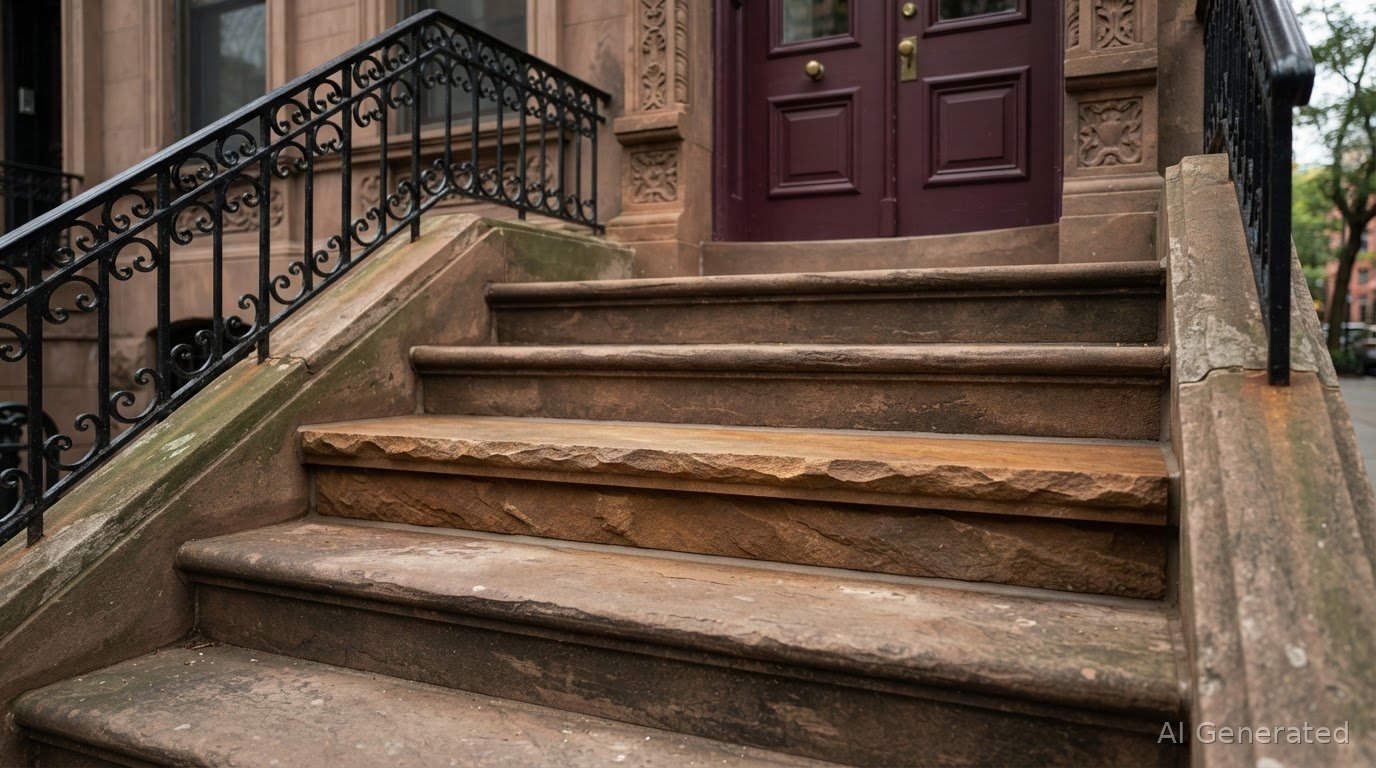
A damaged tread doesn’t automatically mean a stoop needs partial reconstruction. The brownstone stoop tread replacement cost in Manhattan depends chiefly on whether the damage is limited to a tread or extends into adjacent stone and the stair structure. That scope, rather than a separate Manhattan-versus-NYC price label, is the useful starting point.
It’s reasonable to want a clear idea of the brownstone stoop tread replacement cost in Manhattan before deciding how to proceed. The project’s scope, stone condition, and site access all affect the work and its cost.
This article explains how localized tread repairs differ from partial reconstruction and what can shift the work from one scope to another. Project pricing depends on the property’s condition, repair scope, and access, and is provided after a quote request.
Table of Contents
Localized stoop repairs versus partial reconstruction
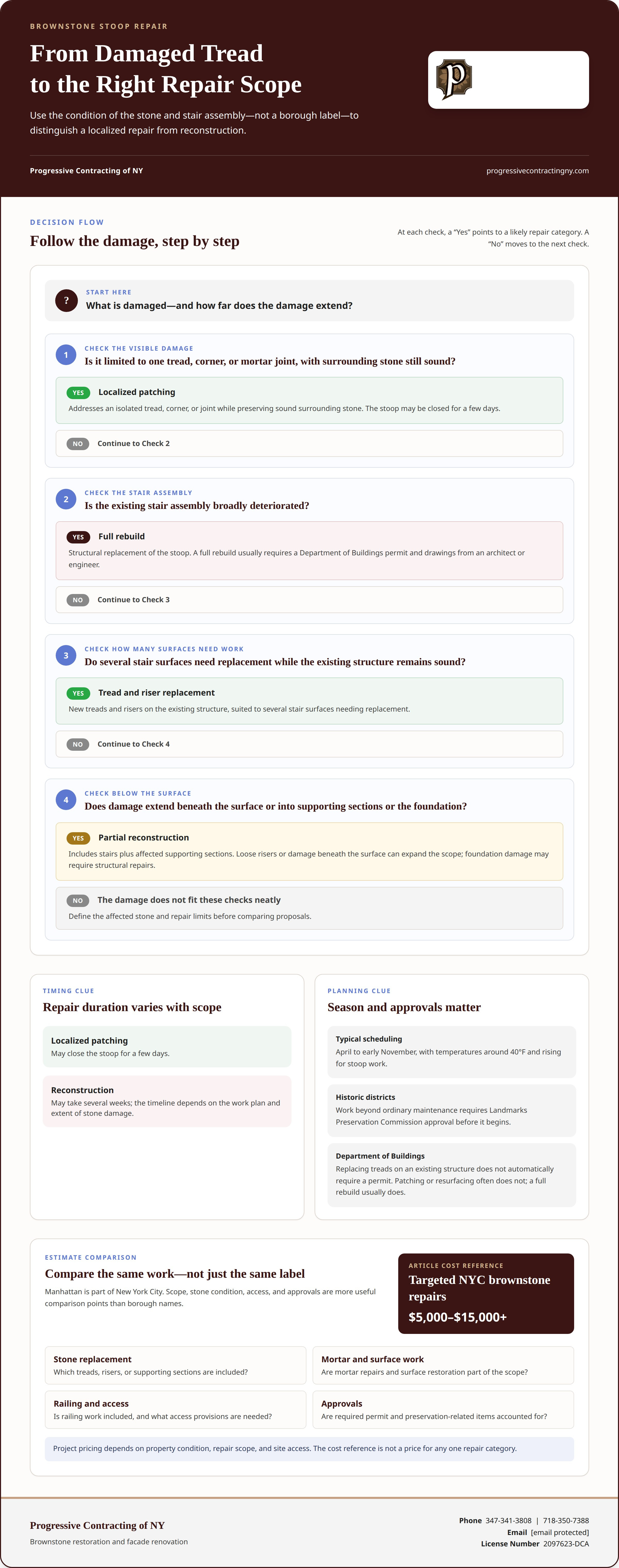
A localized repair addresses a damaged tread, corner, or mortar joint while preserving sound surrounding stone. Partial reconstruction is more likely when failing stone, loose risers, or damage beneath the surface affects the stair assembly.
In NYC historic districts, stoop work beyond ordinary maintenance requires a Landmarks Preservation Commission permit before work begins. A full stoop rebuild is structural work and usually requires a Department of Buildings permit with drawings from an architect or engineer. Repairs to risers, railings, or the stoop foundation add to the scope. Foundation damage may require structural repairs, while railing restoration and waterproofing involve separate work.
For quote comparisons, line up the same scope: stone replacement, mortar repairs, surface restoration, railing work, access, and required approvals. A quote that excludes damaged risers or foundation work may not be comparable to one covering those repairs. Typical scheduling favors April to early November, with temperatures around 40°F and rising for stoop work.
Localized patching may close the stoop for a few days, while reconstruction may take several weeks. The timeline depends on the work plan and extent of stone damage.
| Repair option | Typical scope | Best fit |
|---|---|---|
| Localized patching | One tread, corner, or mortar joint | Damage is isolated and surrounding stone remains sound |
| Tread and riser replacement | New treads and risers on the existing structure | Several stair surfaces need replacement |
| Partial reconstruction | Stairs plus affected supporting sections | Damage extends beneath the surface or into the foundation |
| Full rebuild | Structural replacement of the stoop | The existing stair assembly is broadly deteriorated |
Choose a repair that addresses the full area of damage, not just its visible surface.
NYC stoop and brick-step repair costs
Brick-step repairs vary according to how much brick, mortar, and tread needs rebuilding. A few loose bricks call for localized work, while widespread deterioration can extend the scope to the stoop or adjoining facade. Bluestone tread installation also depends on tread dimensions, removal requirements, and the condition of the supporting masonry. A project quote reflects these site conditions and the work required.
Repointing is another distinct task. Proper repointing removes deteriorated mortar to a depth of two to two-and-a-half times the joint width, with a minimum depth of about 3/4 inch. That preparation helps the new mortar bond within the joint rather than simply cover its surface.
Access needs can add work beyond the stoop itself. Larger facade restoration projects may require scaffolding, and a sidewalk shed may be needed when crews require protected street or sidewalk access. A Department of Transportation permit is required for a dumpster, material storage, barriers, or a sidewalk bridge on the sidewalk or street. Account for access needs when comparing proposals for work in a dense Manhattan neighborhood.
Replacing treads on an existing structure does not automatically require a Department of Buildings permit. Patching or resurfacing often does not require one, while a full stoop rebuild is structural work and usually requires a permit and design drawings. Work in a historic district beyond ordinary maintenance also requires Landmarks Preservation Commission approval before it begins.
For a quote tailored to the tread, mortar, facade access, and sidewalk conditions, request a project-specific assessment.
Manhattan and New York City cost ranges
Manhattan is part of New York City, so compare the repair scope rather than borough labels. A tread-only repair and a full stoop rebuild are different projects, even at similar addresses. Brownstone stoop repair cost depends more on stone condition, affected stair sections, access, and required approvals than on a Manhattan-versus-NYC price distinction.
Use these scope categories to compare estimates consistently. A proposal should identify the parts of the stoop it covers instead of grouping every job under “restoration.”
| Work category | Scope | Cost drivers | Comparison point |
|---|---|---|---|
| Localized tread repair | One damaged tread or corner | Stone damage and matching finish | Confirm adjacent stone remains outside the scope |
| Multiple tread replacement | Several stair surfaces | Removal, replacement stone, and access | Compare the number and extent of treads included |
| Partial reconstruction | Treads plus affected supporting sections | Risers, substrate, and structural condition | Check whether the proposal addresses underlying damage |
| Full stoop reconstruction | Replacement of the stair assembly | Structural work, drawings, and permits | Compare the complete rebuild scope |
A landmark district can add preservation review when work exceeds ordinary maintenance. This affects project planning and scope, not just the visible stone repair. For a fair comparison, align estimates around the same materials, demolition, repair limits, access provisions, and permit-related work. If one proposal includes risers or supporting masonry while another covers treads alone, they describe different projects.
Share the stoop’s condition and requested scope to discuss a project-specific estimate: request a brownstone stoop assessment.
Targeted NYC brownstone repairs: 5,000-15,000+.
Progressive Contracting NY Corp
Progressive Contracting NY Corp provides brownstone restoration and facade renovation for historic properties in Manhattan and Brooklyn. If cracked treads occur alongside loose risers or damaged stone, the work may call for more than a localized patch. The appropriate repair scope depends on the stoop’s condition and surrounding masonry.
Its expert stoop restoration and brownstone contractor services address stoop and exterior masonry needs. For project inquiries, call 718-350-7388 or 347-341-3808, or email ProgressiveContractingNY@yahoo.com. License Number: 2097623-DCA.
Contact Progressive Contracting NY Corp to discuss your brownstone stoop project.
Plan the next step with confidence
Before authorizing repairs, define the result you need: a sound tread, a consistent finish, or broader restoration of the stoop and facade. The brownstone stoop tread replacement cost in Manhattan is easier to assess when the scope reflects the stone’s condition and the outcome you want, not just a visible crack. A clear scope keeps planning grounded in the actual repair.
Progressive Contracting of NY provides Rammstein stoop restoration, brownstone facade renovation, and brownstone facade restoration. These services address stoop and exterior masonry needs when the work extends beyond one tread or involves the surrounding facade. Share the property’s condition and the repairs you’re considering to start a focused conversation about your project.
A well-defined scope is a practical first step toward restoring your brownstone with care.
Frequently Asked Questions
What is the average cost to replace brownstone stoop treads in Manhattan?
There is no average cost that applies to every Manhattan stoop. Brownstone stoop tread replacement cost in Manhattan depends on whether the work replaces isolated treads or also includes risers, supporting masonry, and related repairs. A useful estimate describes the specific work and materials required for the property. Treat figures for broader stoop restoration as separate from a tread-only scope.
What factors affect brownstone stoop tread replacement cost, such as tread size and access?
Tread dimensions affect the amount of stone and fitting work, while access shapes how crews can remove and install each piece. The existing stoop’s condition matters too: a tread set over sound masonry requires a different scope from one with failing risers or support beneath it. Historic details and the need to match adjacent stone can also affect material selection and preparation.
How does replacing brownstone treads compare in cost with bluestone, granite, or concrete?
Material comparisons depend on the specified stone, tread dimensions, finish, and installation scope, so the material name alone does not establish which option costs less. Brownstone may suit a historic facade, while bluestone, granite, or concrete can create a different appearance and require different installation work. Compare proposals that specify the material, finish, removal work, and supporting repairs rather than relying on material labels alone.
How can homeowners find qualified brownstone stoop contractors in Manhattan and compare estimates?
Compare estimates by what each includes: tread removal, replacement material, riser repairs, support conditions, access, and relevant approval work. Ask for the proposed scope in writing so exclusions are clear. For a Manhattan brownstone, experience with historic masonry and stoop restoration matters when preserving the existing architectural character. Progressive Contracting of NY provides brownstone restoration services in Manhattan.