
A leak inside a Brooklyn brownstone doesn’t always start where the water appears. Knowing how to find the source of a brownstone water leak in Brooklyn means tracing the path back to its likely entry point, whether that’s an internal pipe or an opening in the roof, windows, masonry, or drainage system.
It’s natural to want a clear answer about who should handle the repair. A licensed plumber typically repairs internal plumbing leaks; water entering through the exterior may require a masonry contractor or another building-envelope specialist, depending on the source. This guide covers common leak points in brownstones and row houses, what professionals look for when tracing water, and which repairs address each problem. The goal is to help you choose the right next step without confusing visible damage with its source.
Table of Contents
Who fixes a leak in a Brooklyn brownstone?
The right repair professional depends on where water enters: an internal pipe, the roof, the façade, or a street-side main. Owners or landlords are responsible for arranging the appropriate repair.
Identifying Internal and Outside Water Sources
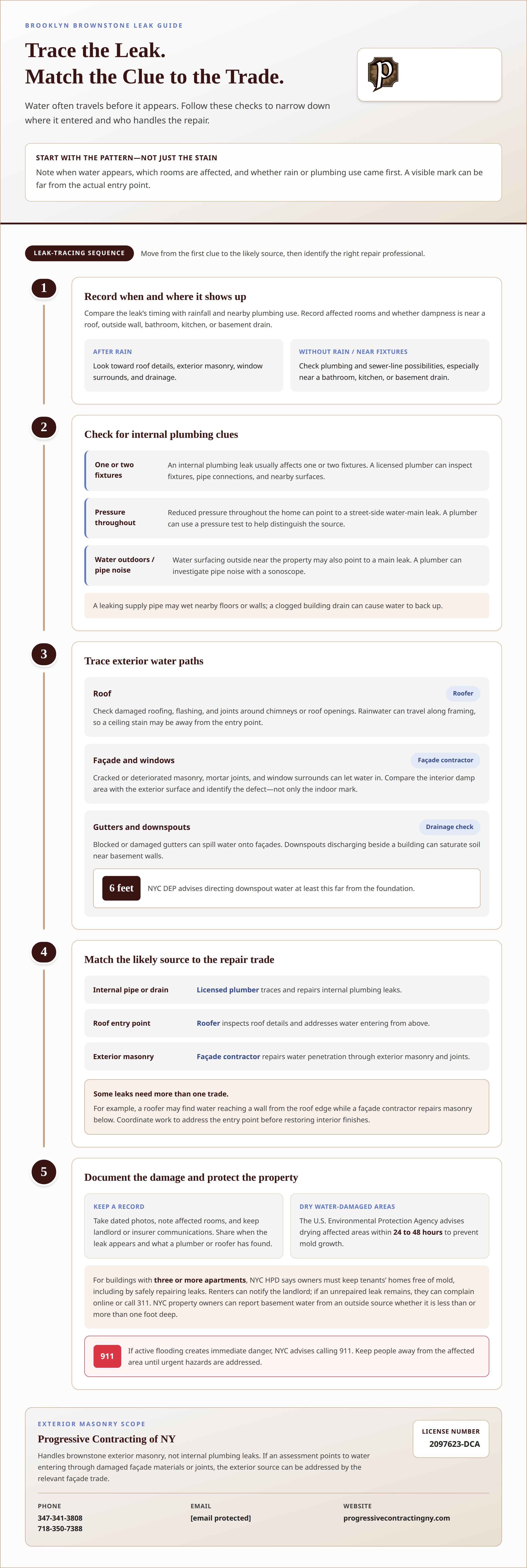
An internal plumbing leak usually affects one or two fixtures, while a street-side water-main leak can reduce pressure throughout the home. A licensed plumber can use a pressure test to help distinguish between them. Water surfacing outside near the property may also point to a main leak; a plumber can investigate pipe noise with a sonoscope.
Stains or dampness near a roof or exterior wall can indicate an outside source rather than a plumbing fixture. A professional traces the damp area and inspects likely entry points. NYC property owners can report basement water from an outside source, whether it is less than or more than one foot deep.
Contractors and Rules for Leak Repairs
A licensed plumber handles internal pipe leaks, a roofer addresses roof entry points, and a façade contractor repairs water penetration through exterior masonry. NYC advises customers who discover a water leak to contact a licensed plumber for repairs. For buildings with three or more apartments, the New York City Department of Housing Preservation and Development says owners must keep tenants’ homes free of mold, including by safely repairing leaks.
In a rental apartment, notify the landlord about an unrepaired leak; renters can complain online or call 311 if it remains unfixed. Homeowners should document the damage with dated photos, note affected rooms, and keep landlord or insurer communications. Delays can allow damage and mold to spread: the U.S. Environmental Protection Agency advises drying water-damaged areas within 24 to 48 hours to prevent mold growth.
Common water leak sources in brownstones and row houses
A brownstone leak may come from plumbing, the roof, exterior masonry, or drainage. The location of a stain offers clues, but the building’s construction and the water’s path help reveal the source.
Roof leaks often begin at damaged roofing, flashing, or joints around chimneys and roof openings. Rain can travel along framing before appearing on a ceiling, so the stain may be far from the entry point. To find the source of a brownstone water leak in Brooklyn, professionals compare interior moisture with vulnerable roof and wall details.
Drainage problems send water toward the foundation instead of away from it. Downspouts that discharge beside a building can saturate soil near basement walls; NYC DEP advises directing downspout water at least 6 feet from the foundation. Blocked or damaged gutters can also spill water onto façades during coming rain, increasing exposure around vulnerable joints.
Plumbing and sewer lines are another possibility, especially when dampness appears without rain or near a bathroom, kitchen, or basement drain. A leaking supply pipe may wet nearby floors or walls, while a clogged building drain can cause water to back up. When tracing a brownstone water leak in Brooklyn, professionals use its timing and location, along with nearby fixtures, to narrow the investigation before repairs begin.
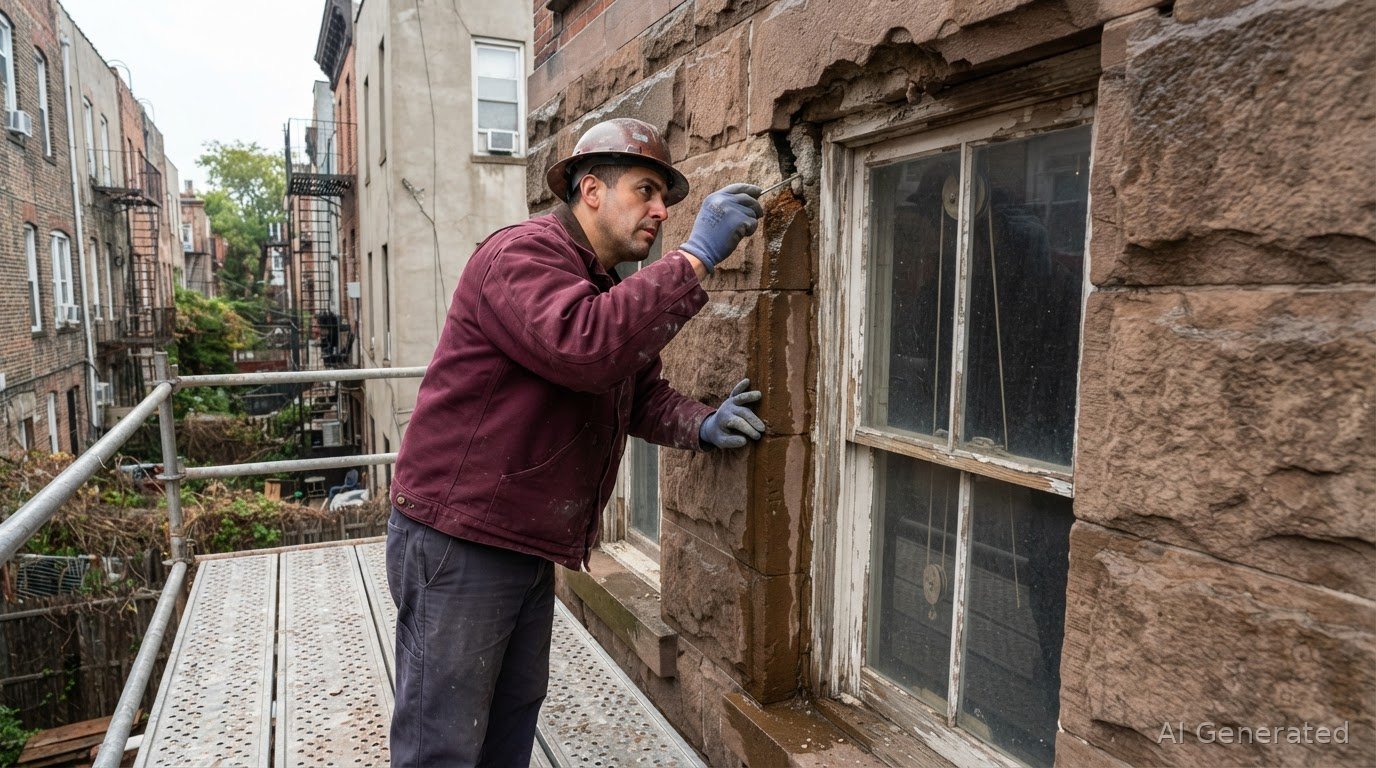
When water enters through cracked or deteriorated exterior masonry, brownstone façade restoration can address the damaged surface and its joints.
When should you call a licensed plumber, roofer, or façade contractor for a brownstone leak?
An internal-pipe leak is a plumbing problem for a licensed plumber to trace and repair. NYC advises customers who discover a water leak to contact a licensed plumber for repairs. The plumber checks fixtures, pipe connections, and nearby surfaces, then determines whether the source is a supply line or drain.
A roofer is the right trade when a leak follows rainfall and appears near roof details. Water below a chimney or roof opening calls for inspection of flashing, seams, and adjoining materials. The roofer compares the leak’s timing with rainfall and traces dampness upward, since water can travel before reaching a ceiling.
A façade contractor addresses water entering through exterior masonry, mortar joints, or window surrounds. If dampness appears along an outside wall after rain, a professional examines the façade and interior stain together. The assessment should identify the exterior defect and define the repair area, rather than treating only the visible indoor mark.
Some brownstone leaks involve more than one trade. A roofer may find that water is reaching a wall from the roof edge, while a façade contractor repairs damaged masonry below. Professionals coordinate the repair sequence to address the entry point before restoring interior finishes. Share when the leak appears, which rooms are affected, and whether rain or plumbing use precedes it.
If active flooding creates immediate danger, NYC advises calling 911. Keep people away from the affected area until urgent hazards have been addressed.
Progressive Contracting NY
Progressive Contracting NY Corp. handles brownstone exterior masonry, not internal plumbing leaks. If a plumber’s assessment points to water entering through damaged façade materials or joints, brownstone façade renovation or restoration can address the exterior source rather than just the indoor stain.
Share where water appears, whether it follows rainfall, and what a plumber or roofer has identified. These details help clarify whether the concern involves the brownstone exterior or another system requiring a different trade. For exterior leak concerns, contact Progressive Contracting NY Corp. at 347-341-3808 or 718-350-7388, email ProgressiveContractingNY@yahoo.com, or reference License Number 2097623-DCA.
Turn the Leak Assessment Into a Clear Repair Plan
Next, match the identified source with the repair that addresses it. Knowing how to find the source of a brownstone water leak in Brooklyn helps you explain the problem clearly and direct work to the affected part of the building. Keep the plumber’s or roofer’s findings with your property records, especially if exterior repairs may follow.
When an assessment points to water entering through the brownstone exterior, Progressive Contracting NY Corp. provides brownstone façade renovation and Brownstone Facade Restoration. The company also offers Rammstein stoop restoration. These services address exterior masonry and stoop work; plumbing and roofing concerns require the relevant trade.
When you reach out, share the assessment and describe where the water appears. A clear starting point helps focus the conversation on your building’s needs.
Once you’ve identified the source, you can move toward a repair plan suited to the property.
Frequently Asked Questions
What are the most common sources of water leaks in Brooklyn brownstones?
Common sources include plumbing lines, roof details, exterior masonry, and drainage around the foundation. A basement puddle near a floor drain may suggest a backup, while dampness beneath a window can point to water entering around its frame. Note whether the problem appears after rain, plumbing use, or both. That timing gives a professional useful clues before repairs begin.
How can a professional trace a brownstone leak to its source without opening walls?
A professional can compare the leak’s location and timing with visible moisture, nearby plumbing, and exterior exposure. Specialty listening devices can help detect underground water movement, while a water meter’s moving leak indicator may point to ongoing water use when fixtures are idle. These observations help narrow the investigation. Opening a wall may still be necessary if the source remains concealed.
How do roof, parapet, chimney, and façade leaks appear in Brooklyn brownstones?
Roof or parapet leaks often appear as ceiling or upper-wall stains after rain, though water can travel before showing indoors. A chimney leak may leave dampness near the chimney breast or ceiling junction. Façade leaks can cause localized interior dampness beside an exterior wall or window. These patterns guide an inspection, but the stain alone doesn’t establish the entry point.
How can a professional tell whether a leak comes from plumbing, a neighboring unit, or rainwater?
A professional compares when the leak appears with rainfall, plumbing use, and activity in adjoining apartments. For example, dampness that returns after an upstairs fixture runs suggests a different route from a stain that appears only after heavy rain. In a shared building, access to a neighboring unit can help trace the water’s path. The damage’s location alone may not show which apartment is responsible.
What tools do leak-detection plumbers use, and how much does inspection cost in Brooklyn?
Plumbers may use specialty listening devices to detect water movement and a sonoscope to listen for pipe noise. Inspection cost depends on the scope of the investigation, the suspected source, access to pipes, and whether specialized testing is needed. No single figure applies to every brownstone. A plumbing assessment and an exterior review involve different work, so clarify the expected scope before repairs proceed.