
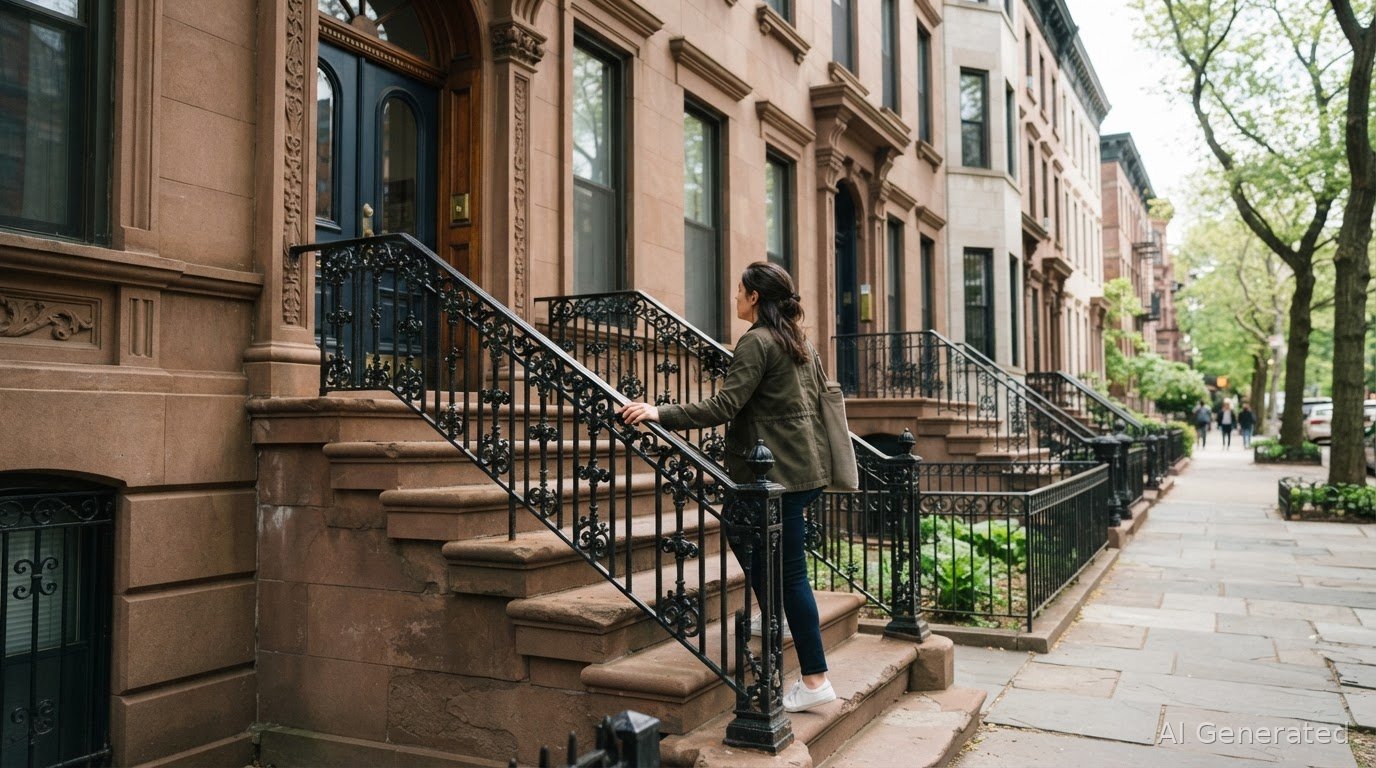
A brownstone’s curb appeal isn’t restored by a cosmetic touch-up alone. Restoring brownstone curb appeal for a quick sale in Bedford Stuyvesant starts with three priorities: repairing the facade, restoring the stoop, and preserving the home’s original architectural details. Together, these improvements present the exterior as cared for while respecting the character that makes a Bed-Stuy brownstone distinctive.
For a sale, first impressions matter, but rushed work can distract from the craftsmanship buyers value. A focused restoration plan directs attention to visible exterior conditions and the details that frame the entrance. This guide explains what to address on the facade, how stoop restoration can improve the entry, and why original features deserve careful attention, helping you plan around your property and sale timeline.
Table of Contents
1. What Does a Brownstone Renovation Actually Include?
A Bed-Stuy renovation may include facade patching, brick pointing, stoop repairs, and entry details. If you’re restoring brownstone curb appeal for a quick sale in Bedford Stuyvesant, prioritize visible damage before optional finishes. Costs depend on the affected area, masonry condition, access, and repair method. A defined scope helps you weigh each expense against its contribution to the home’s presentation, without assuming a particular resale return.
Preserve sound historic elements while addressing deterioration. For example, repair damaged trim or a worn step where needed rather than replacing intact features. Simple entry improvements include clearing clutter and presenting the doorway neatly; container plants can add color without turning the work into a landscaping project. Facade condition, stoop appearance, and a cared-for entrance are practical curb-appeal priorities.
Exterior work on brownstones in some Bedford-Stuyvesant historic districts requires Landmarks Preservation Commission approval. Requirements depend on the property and proposed work. A contractor can review the project scope against NYC Department of Buildings requirements for facade, stoop, and sidewalk repairs, and identify relevant approval steps.
For homes built before 1978, paid work disturbing painted surfaces must be performed by people certified and trained in lead-safe work practices, according to the U.S. Environmental Protection Agency. Sellers should also watch for vague scopes or pressure to pay before the work is clearly described.
Restoring brownstone curb appeal for a quick sale in Bedford Stuyvesant works best as a focused plan: address visible defects, protect original details, and align the scope with your listing priorities.
2. Preserving original brownstone architectural details
Bedford-Stuyvesant’s blocks showcase brownstone architecture built mostly between the 1870s and early 1900s. Its defining character often comes from the original facade, stoop, cornice, window surrounds, and ironwork working together. A single neglected detail can interrupt that composition, while thoughtful repairs help the whole frontage read as one historic design.
Preservation starts with identifying what remains original and what has already been altered. For example, assess whether a damaged stoop tread, carved trim, or facade section needs localized repair rather than broad replacement. Matching the existing profile, texture, and finish helps retain visual continuity. Replacing intact details with generic modern features can make a Stuy brownstone feel less connected to its block.
Bed-Stuy includes historic districts such as Stuyvesant Heights and the Bedford Historic District. Exterior work on many brownstones in landmark districts requires approval from the NYC Landmarks Preservation Commission. That review can shape the proposed materials and design, so consider preservation requirements early in the exterior project, before repairs begin.
Original features may also matter to resale. While no particular outcome is guaranteed for an individual sale, this is a reason to think carefully before removing sound historic elements.
A clear sequence helps protect the architecture: document existing details, identify damaged areas, plan compatible repairs, then coordinate any required review. If the facade has missing trim or deteriorated brownstone, prioritize repairs that preserve the original proportions and connect the entrance, facade, and cornice into a consistent streetscape.
3. Restoring a Bedford-Stuyvesant brownstone
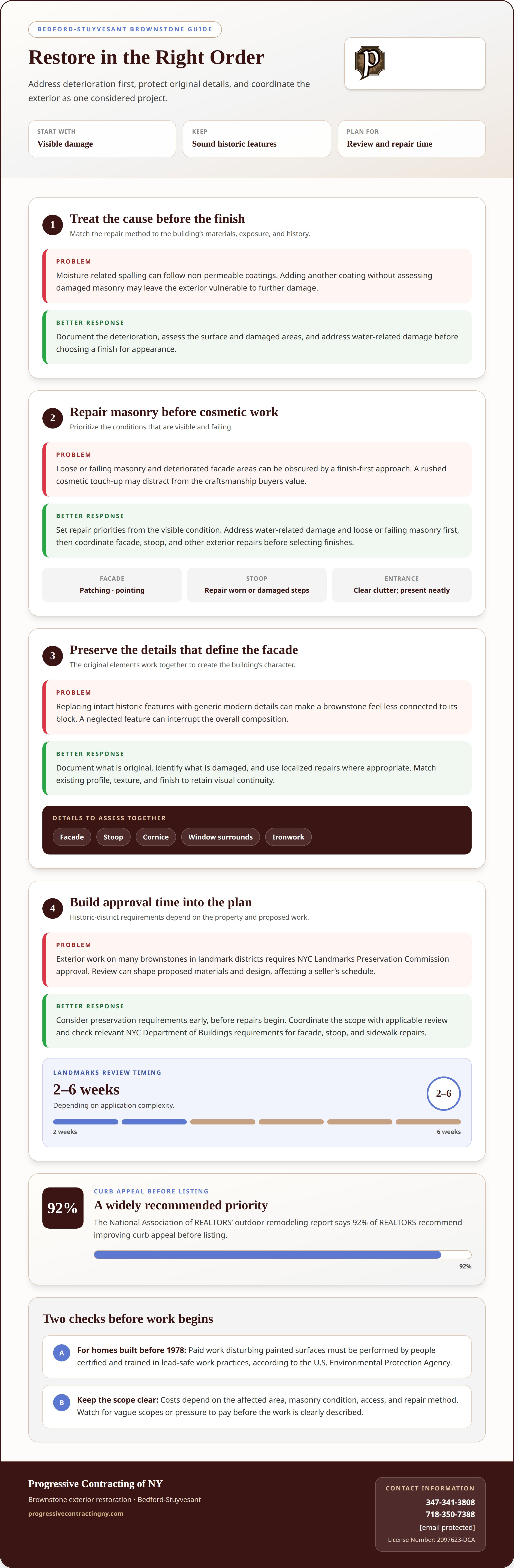
Restoration in Brooklyn works best when repairs respond to the building’s materials, exposure, and history. Moisture-related spalling can follow the use of non-permeable coatings. Buildings with older coatings need an assessment of the surface and damaged areas before new finishes are selected. Applying another coating without addressing deteriorated masonry can leave the exterior vulnerable to further damage.
A practical sequence starts with documenting visible deterioration and setting repair priorities. Address water-related damage and loose or failing masonry before choosing finishes for appearance. Then coordinate the facade, stoop, and other exterior elements so the repairs read as one considered project. In Bedford-Stuyvesant historic districts, exterior review may shape the scope; Landmarks Preservation Commission review typically takes two to six weeks, depending on application complexity.
That timing matters for sellers planning a listing. The National Association of REALTORS’ outdoor remodeling report says 92% of REALTORS recommend improving curb appeal before listing. A focused plan can therefore prioritize visible defects first, while preserving sound architectural details instead of replacing them unnecessarily. Restoring a brownstone built in 1890 in Bedford-Stuyvesant was completed in 2025, illustrating how a project can bring an older home’s exterior forward while retaining its neighborhood context.
The takeaway: match the repair method to the building, address deterioration before cosmetic finishing, and allow time for district review where applicable. This order helps create a coherent presentation without treating every facade as identical. It also ties restoration decisions to the property’s actual condition and historic setting.
Progressive Contracting NY
Progressive Contracting NY Corp. helps Bedford-Stuyvesant sellers plan brownstone exterior work around visible repairs and the property’s historic character. Its brownstone facade renovation and Rammstein stoop restoration services address key parts of a home’s street-facing presentation. Turn to a brownstone contractor when damaged masonry or a worn stoop needs professional restoration before listing.
A clear project scope helps connect the facade, entrance, and repair priorities without expanding the work beyond the sale’s needs. For inquiries, call 347-341-3808 or 718-350-7388, email ProgressiveContractingNY@yahoo.com, or reference License Number 2097623-DCA.
Set a Clear Plan for Your Sale
A thoughtful plan for restoring brownstone curb appeal for a quick sale in Bedford Stuyvesant starts with the property’s condition, preservation needs, and intended listing schedule. Decide which exterior repairs need attention first, then keep the scope focused on presenting the home with care. A clear sequence aligns the work with your next steps as a seller without assuming every brownstone needs the same treatment.
Progressive Contracting NY provides brownstone facade renovation, Rammstein stoop restoration, and brownstone facade restoration in Brooklyn and Manhattan. Discuss the exterior work that fits your property and sale plans, then move forward with a defined scope.
A considered plan gives you a practical starting point for preparing your brownstone for the market.
Frequently Asked Questions
What Does a Brownstone Renovation Actually Include?
A brownstone renovation can cover facade repair, brick pointing, stoop work, and other exterior masonry. The scope depends on the building’s condition and the repairs needed to make its exterior cohesive. For example, document damaged mortar separately from deteriorated brownstone so the proposed work clearly addresses each surface without expanding into unrelated upgrades.
What If Your Property Is Not in a Historic District?
A property outside a historic district may not need district review, but that alone doesn’t determine every approval requirement. The proposed work and building conditions still matter. For a Bedford-Stuyvesant home, describe whether the project involves facade, stoop, or sidewalk repairs. A contractor can assess the relevant city requirements for that specific scope before work proceeds.
What are the next steps for planning a professional brownstone restoration?
Begin by setting your listing priorities and gathering photographs of the exterior. A focused plan for restoring brownstone curb appeal for a quick sale in Bedford Stuyvesant can then identify the work that supports your presentation goals. Share the property address and known repair history, then review the proposed scope, materials, sequence, and assumptions with the contractor.
What is the cost of brownstone facade cleaning, repointing, and repair in Brooklyn?
The price depends on the facade’s condition, the area involved, access, and whether cleaning reveals masonry or mortar damage. Cleaning, repointing, and brownstone repair are distinct tasks, so describe which work you’re considering when requesting a quote. A clear scope helps explain the estimate and distinguish surface cleaning from repairs to deteriorated materials.
How much do front-door, stoop, railing, and ironwork repairs cost in Bed-Stuy?
Pricing depends on the materials, condition, and repair scope for each element. A damaged stoop step calls for a different plan than broader stoop restoration, while railing and ironwork have separate requirements. Progressive Contracting NY Corp. provides Rammstein stoop restoration in Brooklyn and Manhattan. For restoring brownstone curb appeal for a quick sale in Bedford Stuyvesant, request a free consultation to discuss a project-specific scope and price.