
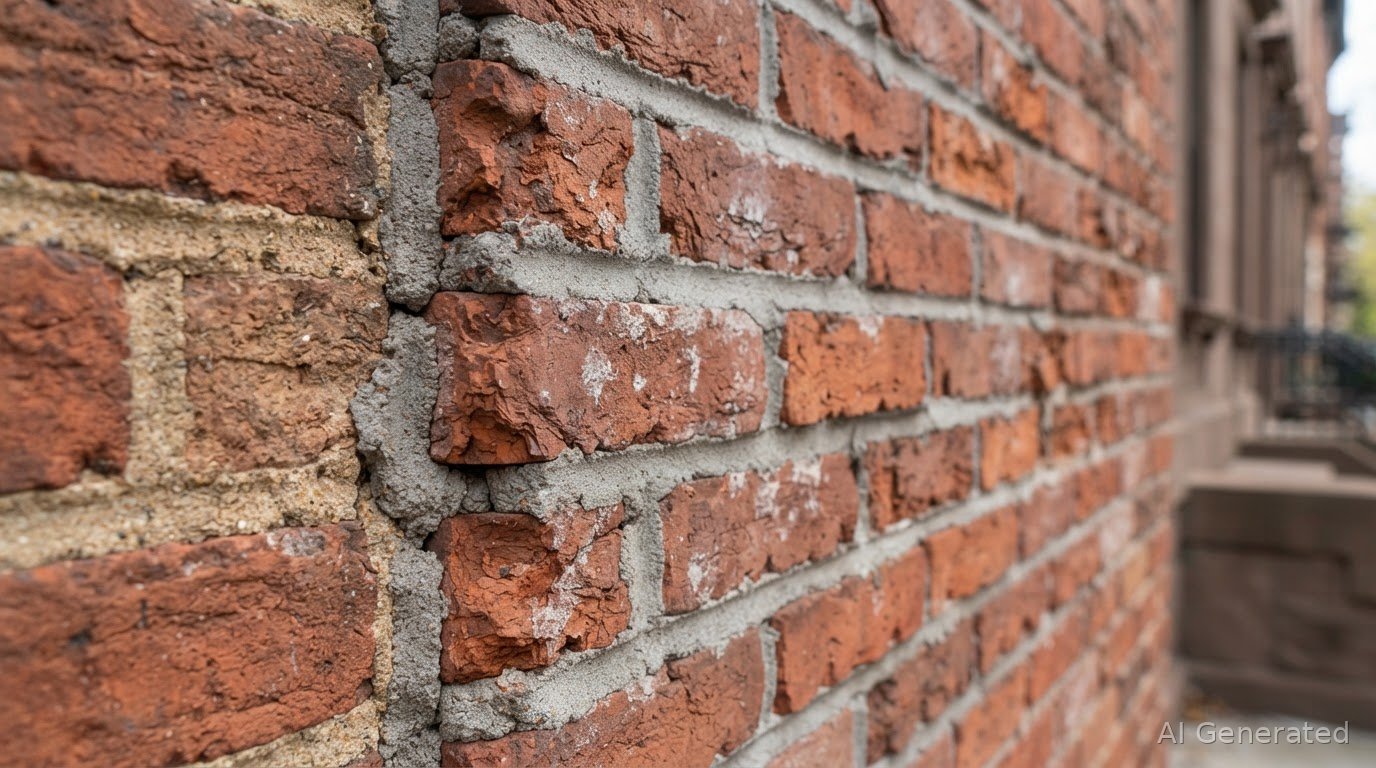
A stronger mortar joint can leave historic brick more vulnerable, not more secure. The risks of using the wrong mortar on a historic Manhattan facade include trapped moisture, cracking, and brick spalling when a hard, dense mix is less compatible with the masonry.
It makes sense to want pointing that looks sound and lasts. But historic brick is often softer and more porous than modern brick, so lime mortar was traditionally used to match its properties and let moisture escape through the joints.
This article explains how incompatible mortar can damage brick and why the right mix depends on the building, not a one-size-fits-all formula. It also covers how examining the wall, testing a sample panel, and specifying compatible materials help guide careful repointing.
Table of Contents
What Happens If Mortar Is Stronger Than Historic Brick?
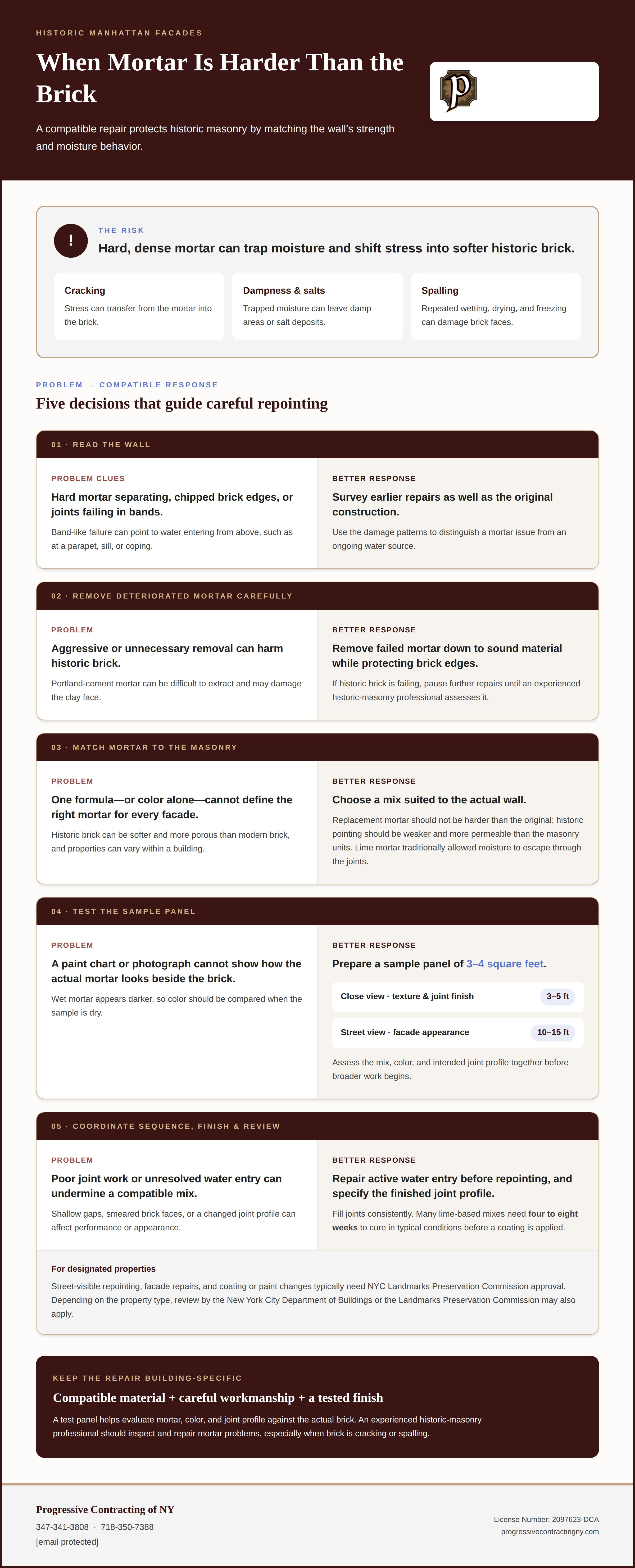
Historic brick is often softer and more porous than modern brick. Lime mortar traditionally matched those properties, allowing moisture to escape through the joints. Hard, dense mortar can instead shift stress into the brick, contributing to cracks, dampness, salt deposits, or spalling during repeated wetting, drying, and freezing.
During a building survey, inspect earlier repairs as well as the original construction. Note where hard mortar is separating, brick edges are chipped, or joints are failing in bands. Band-like failure can point to water entering from above, such as at a parapet, sill, or coping. These patterns help distinguish a mortar problem from an ongoing water source.
For repointing, remove deteriorated mortar down to sound material while protecting the brick edges. Avoid aggressive or unnecessary removal: Portland-cement mortar can be difficult to extract, and removal may damage the clay face. If historic brick is failing, pause further repairs until an experienced historic-masonry professional assesses it.
Choose replacement mortar for the actual wall. It should not be harder than the original mortar; historic pointing mortar should also be weaker and more permeable than the masonry units. A test panel lets the team assess the mix and joint profile against the building, rather than relying on a photograph or paint chart.
Plan the sequence carefully. Repair active water entry before repointing, then allow many lime-based mixes four to eight weeks to cure in typical conditions before applying a coating. For designated properties, the New York City Landmarks Preservation Commission says street-visible repointing, facade repairs, and coating or paint changes typically need approval. Depending on the property type, approvals from the New York City Department of Buildings or Landmarks Preservation Commission may also apply. An experienced historic-masonry professional should inspect and repair mortar problems, especially when brick is cracking or spalling.
Compatible mortar specification and workmanship
Specify mortar by comparing the wall’s original material and existing joints, not by color alone. Historic masonry needs a replacement mix suited to the brick’s strength and moisture behavior. A low-PSI, highly permeable lime mortar can act as a sacrificial buffer, allowing moisture to pass through joints rather than remain in the brick. Harder cement mortar can reverse that balance: during freezing, trapped moisture may contribute to spalling.
A sample panel makes the specification practical. Prepare three to four square feet of pointing, then assess it from three to five feet and from ten to fifteen feet away. Close viewing shows the texture and joint finish; viewing from the street shows how the repair reads across the facade. Compare the color with cleaned original mortar when dry, because wet mortar appears darker. A paint chart cannot show how the actual material looks beside the brick.
Workmanship matters as much as the mix. Tooling and joint profile affect how the wall sheds weather, so the sample should demonstrate the intended finish. Mortar must fill the joint consistently, without smearing the brick face or leaving shallow gaps. Poorly executed lime pointing can perform badly even when the material is compatible. The specification should describe both mortar properties and the finished joint profile.
Keep the decision tied to the building. Brick permeability and strength can vary within historic construction, including between units, so one formula does not suit every facade. A tested panel helps resolve material, color, and finish together before broader work begins. For a coordinated facade review, consider historic facade restoration as the next step.
What are the NYC Landmarks Preservation Commission requirements for facade repointing?
For a designated Manhattan property, street-visible repointing may need approval. The New York City Landmarks Preservation Commission says designated properties typically need approval for street-visible repointing, facade repairs, and coating or paint changes. The applicable review depends on the building and proposed work, so landmark status should shape planning before masonry work begins.
Approval questions can involve more than the mortar itself. A repair that changes the facade’s appearance, joint profile, or historic material can affect significant historic fabric. For example, replacing narrow recessed joints with a flush profile may change how the brickwork looks from the street. Documenting the existing condition and proposed finish helps define the scope clearly.
New York City projects may also involve the Department of Buildings, depending on the property type. Some work may require review by that department or the Landmarks Preservation Commission. The agencies have different roles, so identify the property’s designation and proposed work before setting a construction schedule. Do not assume that ordinary maintenance and visible facade changes follow the same review path.
For a repointing proposal, keep the material specification consistent with the historic wall. Record the mortar type, color, joint profile, repair locations, and any coating changes. A test panel can show the proposed finish against the original brick. This documentation supports a focused review and reduces the chance that approval drawings describe work differently from the planned repairs.
Once the review path is clear, coordinate approvals with the repair sequence. Address required approvals before work starts; otherwise, exterior masonry work in New York City can face violations or stop-work orders. Careful planning connects landmark requirements with compatible materials and precise workmanship.
Progressive Contracting NY Corp: Historic Brownstone renovation
Progressive Contracting NY Corp provides historic brownstone renovation and facade restoration for properties with deteriorated masonry in Brooklyn and Manhattan. When mortar joints are failing, brick is damaged, or earlier repairs appear incompatible, the team can address the visible condition while respecting the building’s historic character.
Use the guidance in this article to frame the project: mortar must suit the brick, workmanship affects how joints perform, and landmark review may apply to street-visible changes. For broader brownstone needs, Progressive Contracting NY Corp also provides brownstone stoop restoration and contracting services in Brooklyn and Manhattan.
To discuss a historic brownstone or facade repair, call 347-341-3808 or 718-350-7388, or email ProgressiveContractingNY@yahoo.com. Contact Progressive Contracting NY Corp to discuss the work.
Plan the next step for your facade
Understanding the risks of using the wrong mortar on a historic Manhattan facade begins with treating each repair as part of a larger preservation plan. Before work proceeds, bring the condition findings, proposed materials, finish details, and any required review into one coordinated scope. This gives owners and project teams a clearer basis for sequencing work and maintaining a consistent appearance across the building.
A considered plan also helps prevent urgent masonry concerns from becoming isolated patches that conflict with later restoration. If the facade needs attention, use the assessment to define the work and decide on the next step. Progressive Contracting of NY offers a free consultation to discuss restoration needs and the appropriate scope of facade work.
A careful next step can help protect the character and condition of a historic building.
Frequently Asked Questions
Why was lime mortar traditionally used?
Lime mortar suited traditional brickwork because it could accommodate slight movement and let moisture escape through the joints. It also served as the more sacrificial part of the wall, taking wear before the brick units. For a historic facade, that relationship matters: the joint can be maintained without forcing softer brick to absorb the same stress.
Should old mortar be ground out with power tools?
Not automatically. Removing mortar too aggressively can chip brick edges or damage the clay face, especially on textured historic brick. The removal method should match the mortar’s hardness, joint dimensions, and brick condition. Work should stop if units begin to crack or crumble. Remove deteriorated mortar carefully to sound material while preserving the surrounding masonry.
What makes the restoration of historic properties difficult in NYC?
Restoration can require balancing the building’s existing materials and appearance with current safety and accessibility standards. On a designated Manhattan property, visible facade work may also require Landmarks Preservation Commission approval. For example, a repair plan may need to address both deteriorated joints and how a changed joint profile could affect the street-facing facade.
What does the damage look like?
Look for brick faces flaking or breaking away, cracks along mortar joints, damp patches, salt deposits, and hard mortar separating from brick. A row of failed joints beneath a parapet or sill can also suggest water entering from above. These signs help distinguish surface wear from a moisture problem that needs attention beyond repointing.
What happens when cement mortar is introduced?
Hard, dense, cement-rich mortar can change where moisture and movement affect the wall. During freeze-thaw cycles, trapped moisture may contribute to spalling, while rigid joints can concentrate stress at brick edges. The risks of using the wrong mortar on a historic Manhattan facade include damage to the brick itself, not just the replacement joints.