
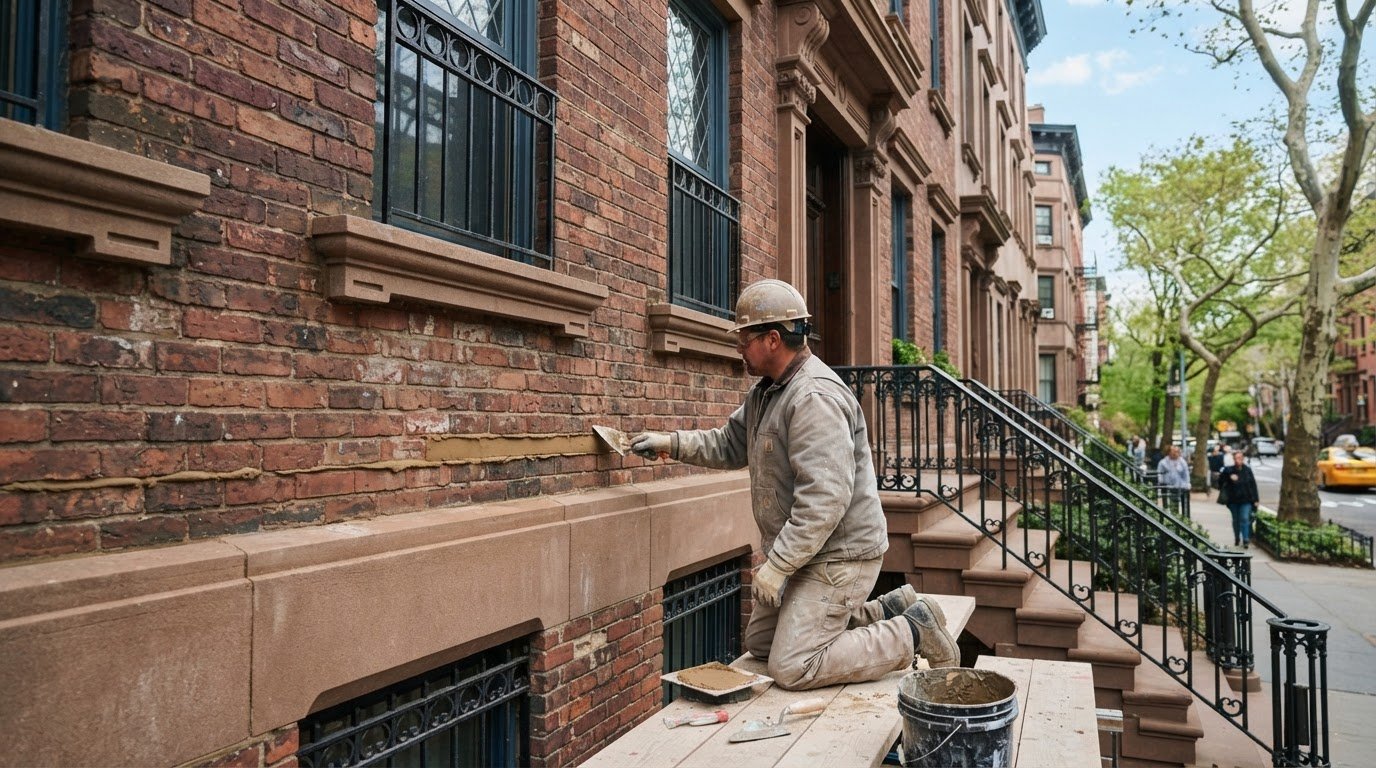
Stronger mortar isn’t always safer for a historic facade. In Greenwich Village, hard, incompatible mortar can put soft brick at risk, so brick pointing for soft historic brick in Greenwich Village should start with the brick and existing joints, not simply filling visible gaps.
This guide explains why mortar compatibility matters, how to distinguish worn joints from other possible water-entry problems, and what a careful repointing plan should address. Progressive Contracting NY Corp provides brick pointing and historic facade restoration for properties in Manhattan and Brooklyn, including Park Slope and Bedford-Stuyvesant, as well as exterior masonry work in the Bronx and Queens. For project inquiries, call 347-341-3808 or 718-350-7388, email ProgressiveContractingNY@yahoo.com, or reference license number 2097623-DCA.
Why soft historic brick in Greenwich Village needs compatible brick pointing
Brick pointing renews deteriorated mortar joints; it does not coat the facade or replace sound brick. Repointing is the process of renewing the external part of mortar joints in masonry construction. In an older wall, brick and mortar work together and respond differently to moisture and weather. Mortar joints also help protect the surrounding masonry.
That is why brick pointing for soft historic brick in Greenwich Village should begin with examining the wall, not choosing a mix based on age or appearance alone. The existing mortar, condition of the brick, exposure to weather, and evidence of previous repairs all help guide a compatible choice. For historic masonry, compatibility matters more than maximum hardness: the joint should work with the brick, not place it under avoidable stress.
How mortar mismatch can put fragile brick at risk
An overly hard or otherwise unsuitable joint can change how moisture moves through a wall. If water cannot escape readily through the mortar, moisture may contribute to dampness or damage at the brick face as the masonry weathers. Flaking, surface loss, or crumbling can result, but these symptoms alone do not prove that a mortar mismatch is the cause.
Recessed or powdery joints, loose mortar, staining, and damaged brick faces are clues to document, not a diagnosis. Water entry may also relate to other parts of the facade. The location and pattern of deterioration matter: note whether damage follows the joints, appears around transitions, or is concentrated in particular areas.
Greenwich Village has many older buildings with distinctive masonry, but construction history and landmark status vary from property to property. A site-specific review helps determine whether joints need repointing, whether brick needs separate attention, and how repairs can respect the facade’s character.
How to assess brick pointing options for a Greenwich Village facade
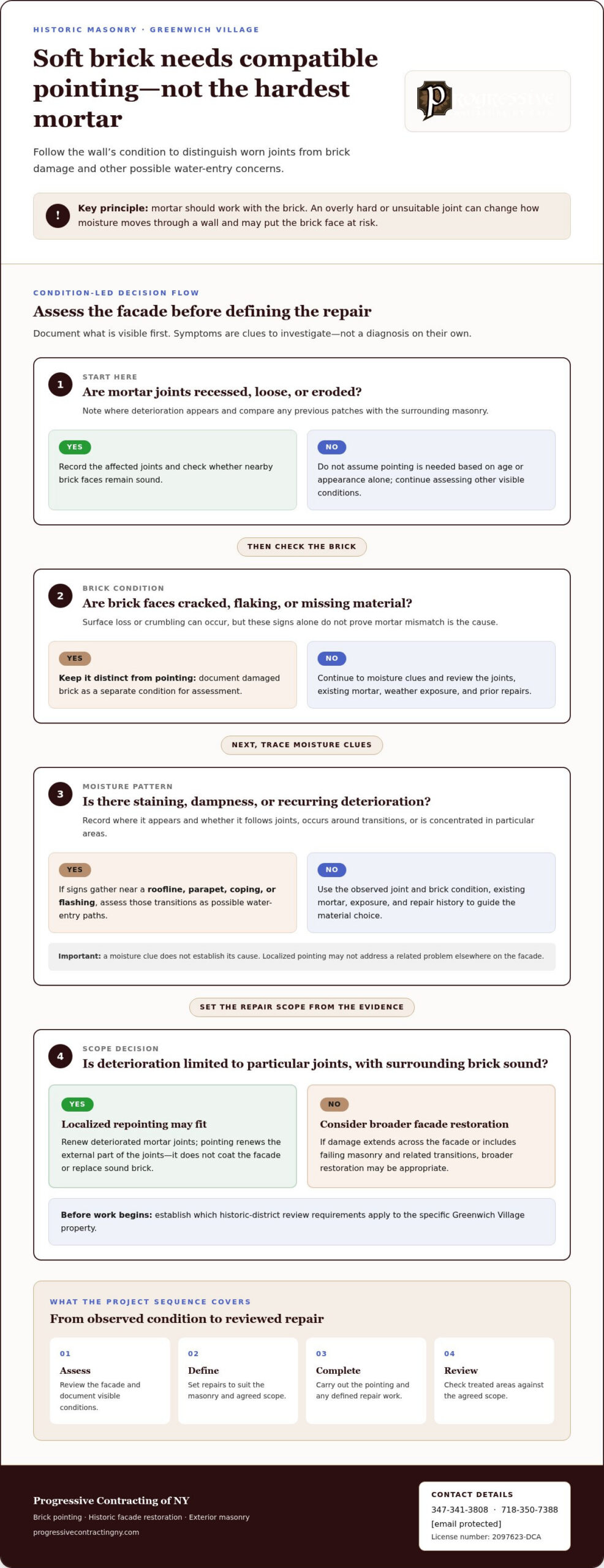
A sound repair plan follows the evidence on the wall. For brick pointing for soft historic brick in Greenwich Village, assess the joints and brick first, look for moisture clues, and then define the work. This helps distinguish worn joints that need renewal from broader facade conditions that may call for additional repair.
What a careful assessment should establish before work begins
Document where mortar has recessed, loosened, or eroded, and note any cracked, flaking, or missing areas of brick face. Compare the condition of previous patches with the surrounding masonry. Record staining, damp areas, or recurring deterioration, including where they appear in relation to joints and transitions. The National Park Service’s guidance on repointing historic masonry explains why repair materials and methods should suit the historic masonry.
Then consider whether the signs point beyond the mortar joints. If staining or deterioration gathers near a roofline, parapet, coping, or flashing, those transitions may need assessment as possible water-entry paths. Their presence does not establish the cause, but a localized pointing repair may not address a related problem elsewhere on the facade.
Define the scope only after reviewing the visible conditions. If deterioration is limited to particular joints and the surrounding brick remains sound, localized repointing may fit. If damage extends across the facade or includes failing masonry and related transitions, broader facade restoration may be appropriate. The repair should follow documented conditions, not assumptions based on age or appearance. Before work begins, establish which historic-district review requirements apply to the specific Greenwich Village property.
Progressive Contracting of NY provides brick pointing services as part of its exterior masonry work, with the scope shaped around the facade’s condition.
What to expect from historic brick pointing in Greenwich Village
A considered project follows a clear sequence: assess the facade, define repairs suited to the masonry, complete the pointing, and review the treated areas against the agreed scope. For brick pointing for soft historic brick in Greenwich Village, this keeps decisions tied to the building’s observed condition and architectural character rather than a one-size-fits-all repair.
Choosing a repair scope that respects the building’s historic character
The scope should distinguish deteriorated mortar joints from other facade conditions. If the assessment identifies damaged brick or a possible water-entry issue near a roofline or transition, record it as a separate repair need rather than treating it as pointing work alone. This clarifies what the repointing addresses and whether broader facade restoration is also warranted.
Progressive Contracting of NY provides brick pointing and historic brownstone facade restoration for exterior masonry in Manhattan and Brooklyn. The work can move from an assessment to a defined repair scope, careful execution, and a review of the treated areas. Materials and the extent of work should reflect the brick and mortar observed at the property.
To discuss your building, call Progressive Contracting of NY at 347-341-3808 or 718-350-7388, or email ProgressiveContractingNY@yahoo.com. License number: 2097623-DCA.
Discuss your historic brick pointing project with Progressive Contracting of NY.
Take the next step with care
A historic facade deserves a repair plan based on its actual condition. If you are considering brick pointing for soft historic brick in Greenwich Village, begin by noting where joints are recessed or crumbling, whether brick faces are flaking, and where staining or dampness appears. These details can help focus the initial discussion on the facade’s needs.
Progressive Contracting of NY provides brick pointing and historic facade restoration across Brooklyn and Manhattan, including work in Park Slope and Bedford-Stuyvesant, as well as exterior masonry services in the Bronx and Queens. For project inquiries, call 347-341-3808 or 718-350-7388, email ProgressiveContractingNY@yahoo.com, or reference license number 2097623-DCA.
A thoughtful starting point can help you move forward with greater clarity and respect for your building’s character.
Frequently Asked Questions
What mortar is best for soft historic brick?
There is no single mortar mix that suits every historic wall. For brick pointing for soft historic brick in Greenwich Village, the choice depends on the brick, existing mortar, exposure, and assessment findings. For example, joints on a sheltered wall may show different wear from those exposed to wind-driven rain. Reviewing the actual masonry helps guide a compatible selection without relying on a formula based only on building age.
Can hard mortar damage soft historic brick?
Yes, incompatible hard mortar may contribute to damage, but that does not automatically mean it is harming a particular facade. The result depends on the brick, joint materials, moisture conditions, and other factors. If brick faces are flaking near repaired joints, that pattern deserves assessment; it does not by itself establish that mortar hardness caused the damage.
How can I tell if historic brick needs repointing?
Missing, crumbling, or visibly deteriorated mortar joints are reasons to arrange an assessment. Look for areas where joints appear noticeably recessed or mortar breaks away, rather than judging from one isolated spot. Cracks, staining, or damp patches can have other causes, too. Note where symptoms occur and whether they change after rain; that context can help guide an evaluation.
Does a Greenwich Village brick-pointing project need historic-district approval?
It depends on the specific building’s designation and the proposed exterior work, so do not assume every Greenwich Village property follows the same review process. Before planning a repair, establish whether the property is within a designated historic district and identify the requirements that apply to the building and scope. This helps clarify the project path before work is scheduled.