
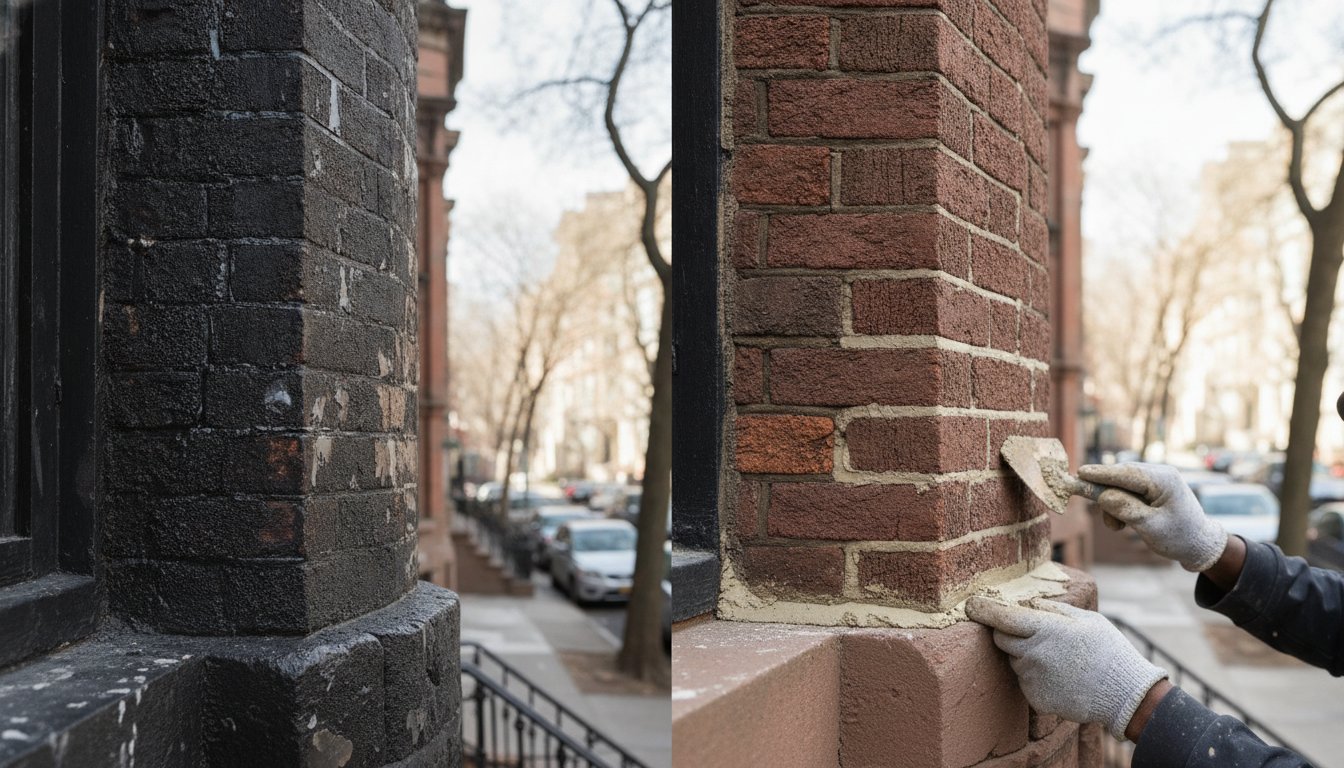
A fresh coat of paint on a Manhattan facade often hides a dangerous secret: crumbling mortar joints and trapped moisture that can lead to expensive spalling. If you hire a brick painting contractor who ignores these structural issues, your cosmetic upgrade could become a major liability. It’s a common concern for NYC property owners who want to update dated 1960s brick colors but worry about the long-term health of their masonry.
You shouldn’t have to choose between a beautiful exterior and a durable building. This guide explains how to identify experts who prioritize structural integrity and understand NYC’s unique masonry requirements. We’ll cover the essential preparation steps, like professional brick pointing, and the specific breathable materials needed to protect your property from water infiltration while maintaining its historic character.
Why You Need a Specialized Brick Painting Contractor vs. a General Painter
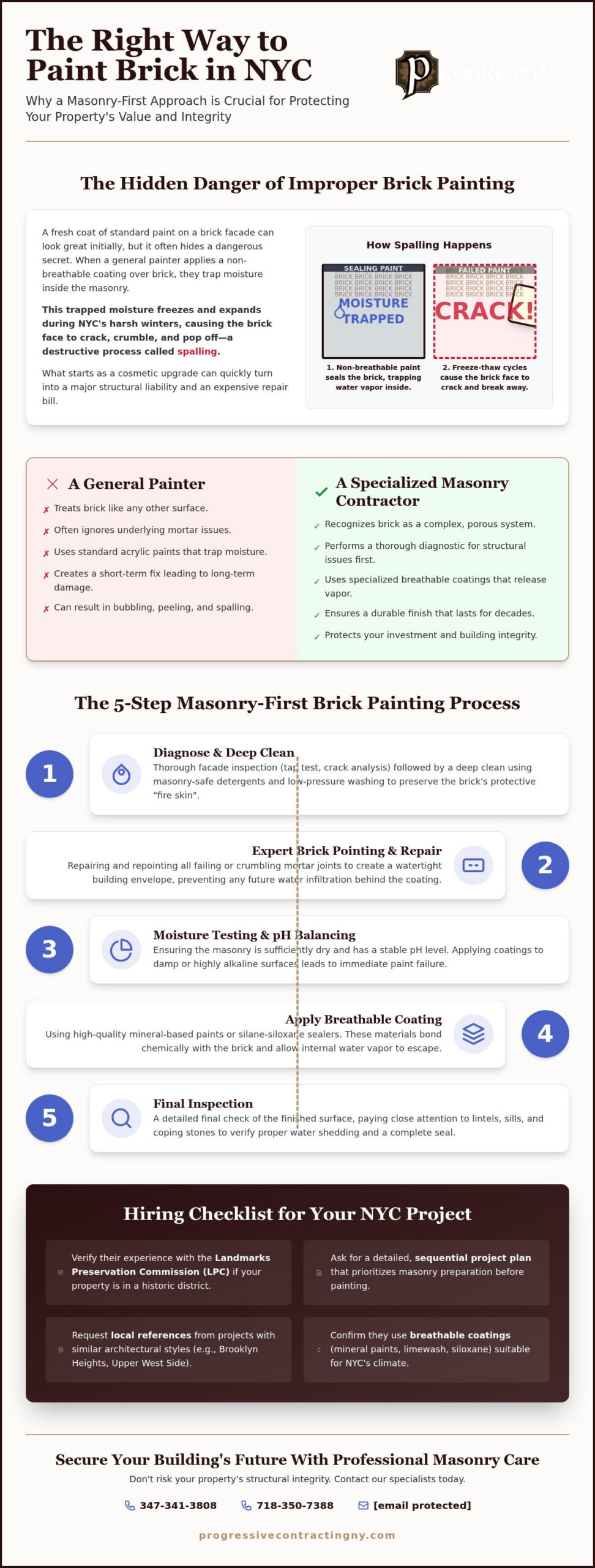
A general painter often treats brick like any other siding, but a specialized brick painting contractor recognizes it as a complex, porous structural system. If you ignore the health of the mortar, you’re essentially sealing in a future repair bill. Paint applied over failing joints or efflorescence, those white and powdery salt deposits, will bubble and peel within a few seasons. This occurs because moisture becomes trapped behind the coating, causing the brick face to expand and eventually pop off in a destructive process called spalling.
At Progressive Contracting NY Corp, we prioritize structural stability over quick aesthetics. Mastering professional Brickwork techniques allows our team to identify exactly where your facade requires repointing before any finish is applied. This masonry-first strategy ensures your new look lasts for decades rather than months, protecting your investment from the harsh NYC climate and preventing the facade from crumbling under trapped moisture.
Identifying Masonry Issues Before the First Coat
Before the first drop of paint touches the wall, a thorough diagnostic is mandatory. Look for deep voids, sandy grit in the mortar, or stair-step cracks that indicate shifting. We also use a “tap test” to listen for hollow sounds across the facade. These echoes signal that the brick face is separating from its core; this requires immediate attention to prevent the exterior from failing after the project is complete.
For historic Manhattan properties with intricate carvings, we avoid high-pressure washing. Instead, we use specialized low-pressure cleaning to preserve the delicate masonry surface. This careful preparation removes contaminants without damaging the “fire skin” of the brick, ensuring the best possible bond for your breathable finish while maintaining the building’s historic integrity.
The 5-Step Masonry-First Brick Painting Process
A successful facade renovation requires more than just a ladder and a roller. As a dedicated brick painting contractor, we follow a rigorous five-step sequence designed for durability. First, we perform a deep clean using masonry-safe detergents to remove biological growth and pollutants. Following NPS guidelines on treating historic masonry is vital here to avoid damaging the brick’s protective outer layer. Second, we execute expert brick pointing to seal the building’s envelope, ensuring no water can penetrate the substrate.
The third step involves moisture testing and pH balancing. Applying coatings to damp or highly alkaline surfaces leads to immediate failure. Once the surface is stable, we apply breathable mineral-based paints or silane-siloxane sealers. These allow internal vapors to escape while blocking external rain. Finally, we conduct a detailed inspection of lintels and sills to verify proper water shedding. You can consult with a specialist to determine if your sills need repair before the coating process begins.
Choosing Breathable Coatings for NYC Climates
Breathability is non-negotiable for Manhattan’s historic facades. Standard acrylic paints create a plastic-like film that traps moisture, leading to rot and spalling during NYC’s intense freeze-thaw cycles. Mineral paints and limewashing offer superior alternatives. These traditional coatings bond chemically with the masonry, allowing the building to “breathe” naturally. This technical approach preserves the brick’s integrity while providing a modern, uniform finish. If you’re planning a project, a qualified brick painting contractor can help you select the right breathable system for your specific neighborhood.
Hiring the Right NYC Contractor for Your Brick Project
A brick painting contractor in Manhattan must navigate more than just the weather. You need to ask about their specific experience with the Landmarks Preservation Commission (LPC). If your property sits in a historic district like Park Slope or Bedstuy, the LPC has strict rules regarding color palettes and material types. A partner who understands these local regulations prevents costly work-stop orders and ensures your project stays compliant with neighborhood standards.
Demand transparency regarding the project timeline and financial stages. A reliable expert provides a sequential plan that includes the masonry preparation discussed earlier. Ask for local references from similar architectural styles. Seeing a finished project in Brooklyn Heights or the Upper West Side proves they respect the historic character of the community while delivering a modern finish. This local expertise is the difference between a temporary fix and a lasting restoration.
Ensuring Long-Term Durability and Maintenance
Maintenance is the key to longevity once the scaffolding comes down. After the project concludes, don’t use harsh chemicals or high-pressure washers on your facade. These aggressive methods can strip the breathable seal and expose the brick to moisture. Instead, use a soft-bristle brush and mild detergent for gentle annual cleaning to keep the exterior looking fresh.
Most urban exterior coatings carry manufacturer warranties, but these are only valid if the underlying masonry is sound. This is why we emphasize the structural preparation phase. To ensure your building’s envelope remains watertight for years to come, you can Learn more about our brick pointing services before finalizing your painting plans. This dual approach guarantees that your new aesthetic doesn’t compromise the structural safety of your NYC property.
Secure Your Building’s Future with Professional Masonry Care
Selecting a specialized brick painting contractor ensures that your building’s structural health isn’t sacrificed for a new aesthetic. By prioritizing expert brick pointing and selecting breathable mineral coatings, you prevent the moisture traps that lead to crumbling masonry. This methodical approach protects your investment against the city’s harsh freeze-thaw cycles while maintaining compliance with local neighborhood standards.
Our team brings decades of experience to historic Brooklyn and Manhattan facades, offering direct access to seasoned masonry masters. We’re here to provide the stability and precision your property deserves. Reach out at 347-341-3808 or 718-350-7388, or email us at ProgressiveContractingNY@yahoo.com to begin your restoration. We look forward to helping you achieve a durable, beautiful finish that stands the test of time.
Frequently Asked Questions
Is it a bad idea to paint brick on a historic NYC home?
It isn’t a bad idea if you use breathable materials and strictly follow LPC guidelines for your district. Traditional latex paints trap moisture inside the masonry, which leads to destructive spalling. However, mineral paints or limewash allow the brick to breathe naturally, preserving the structural integrity of Manhattan brownstones while providing a modern update.
What is the best type of paint for a brick painting contractor to use?
A professional brick painting contractor should use mineral-based paints or silane-siloxane coatings rather than standard acrylics. Mineral paints bond chemically to the masonry and provide high vapor permeability. This prevents the “plastic wrap” effect that leads to bubbling and peeling in New York’s humid and variable climate.
How long does professional brick painting last in New York?
A high-quality application typically lasts 15 to 20 years when the masonry is properly prepared and cleaned. Longevity depends on the initial condition of the brick and the building’s exposure to freeze-thaw cycles. Regular inspections of sills and lintels help maintain the protective seal and extend the overall lifespan of the finish.
Do I need to repoint my brick before painting it?
Yes, you must repoint any crumbling or sandy mortar joints to ensure a watertight building envelope before applying any coating. Painting over failing joints is a temporary fix that leads to moisture entrapment and structural decay. A qualified brick painting contractor will always include a masonry assessment and necessary pointing as part of the essential preparation process.