
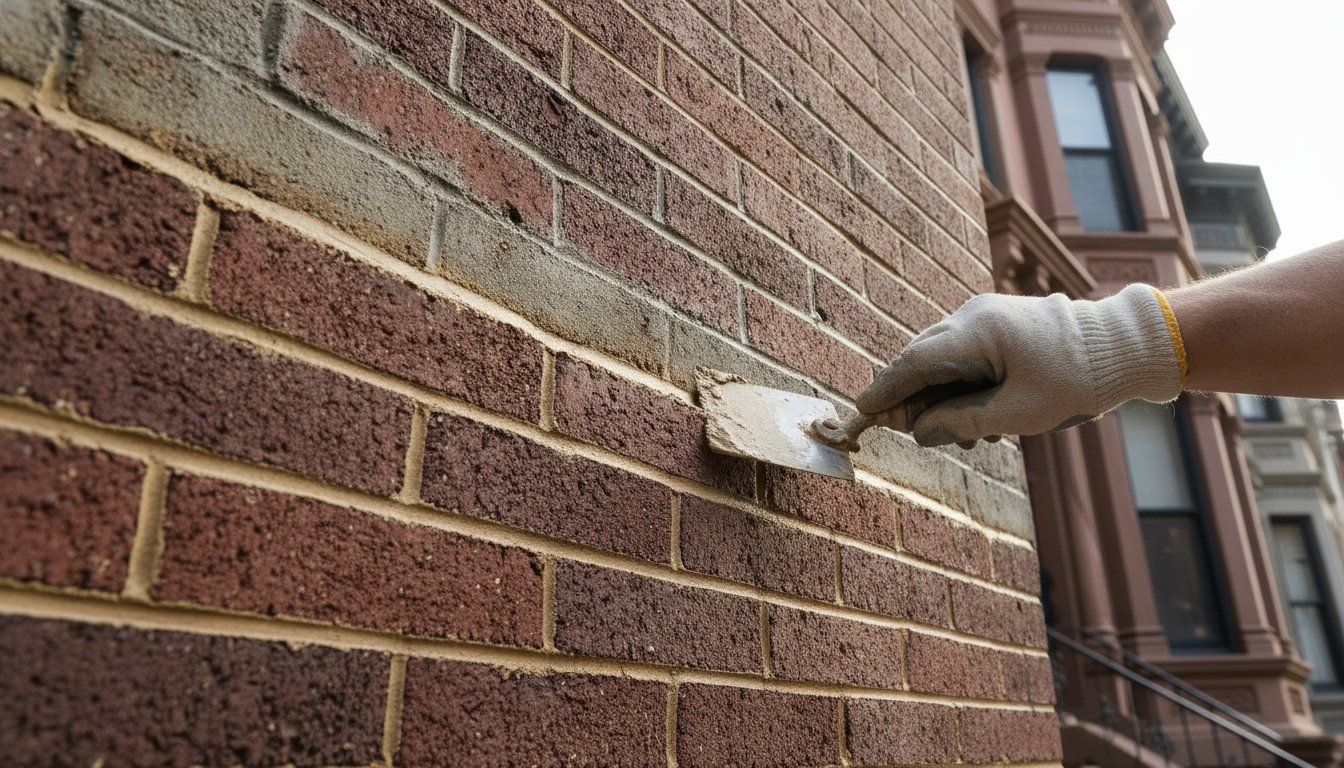
Using modern Portland cement on a 19th-century facade isn’t just a mistake; it’s a slow-motion demolition of your property’s structural integrity. Most homeowners in the neighborhood understand that maintaining a historic rowhouse is a significant responsibility. You want to stop leaks and keep your exterior looking sharp, but the fear of violating Landmark Preservation Commission (LPC) rules or using materials that trap moisture is a valid concern. Finding a specialist for brick pointing park slope who understands these nuances is the difference between a lasting restoration and a costly mistake.
Progressive Contracting NY Corp provides the essential standards for historic masonry, from selecting breathable lime-based mortars to navigating the latest NYC requirements. This guide explains how to protect your property value and ensure your home remains waterproof without the risk of fines or delays. For direct assistance with your project, you can reach our team at 347-341-3808 or 718-350-7388, or email us at ProgressiveContractingNY@yahoo.com. We provide the steady hand and local expertise needed to preserve Brooklyn’s architectural heritage through disciplined craftsmanship.
Understanding Brick Pointing in Park Slope’s Historic Districts
Understanding Brick Pointing is the first step toward maintaining a healthy historic facade. This process involves carefully removing the outer layer of weathered or decayed mortar from the joints between bricks and replacing it with fresh, compatible material. In Park Slope, this work is particularly specialized. Because much of the neighborhood is a designated Landmark District, the new mortar must match the original in color, texture, and joint profile to preserve the building’s historic character.
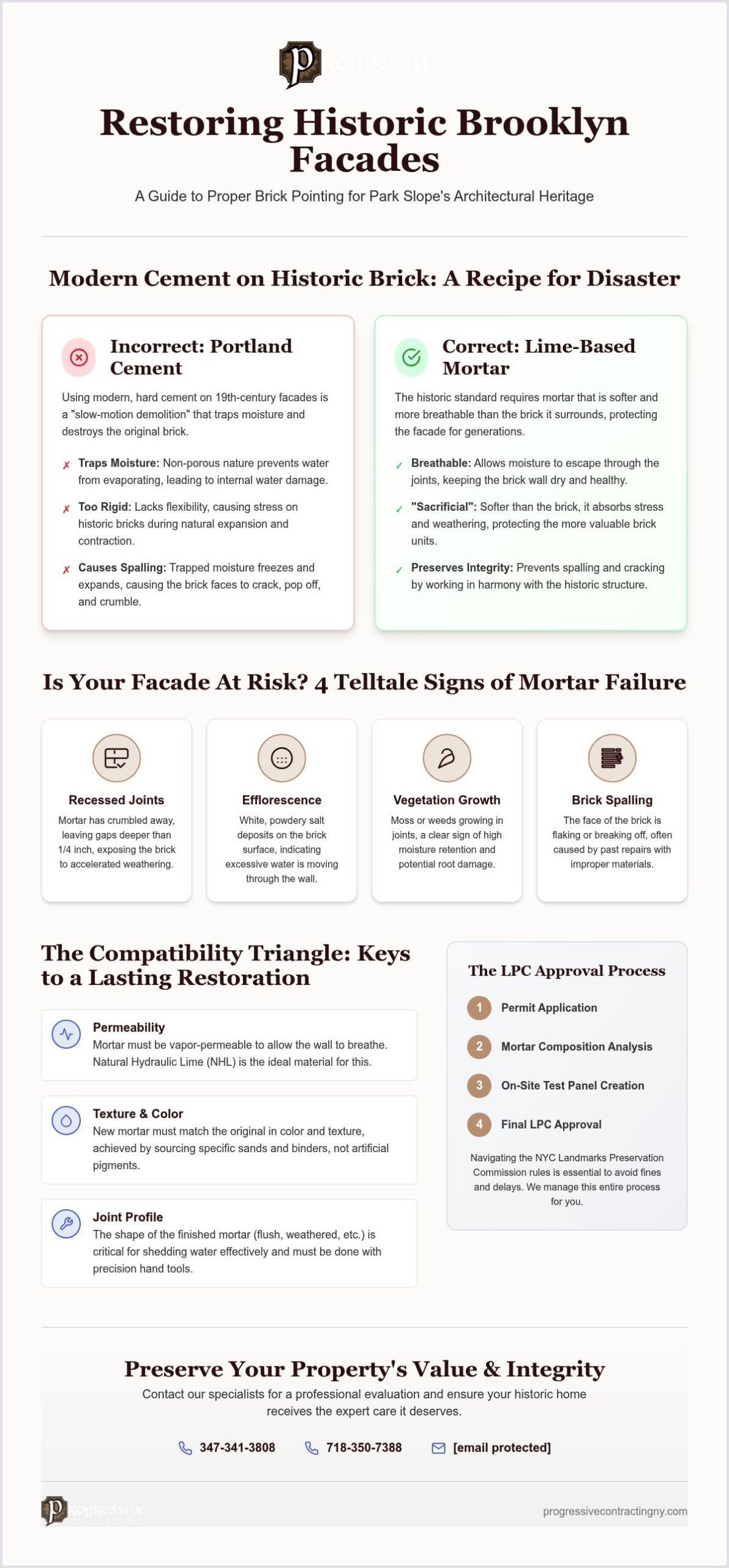
The technical success of brick pointing park slope depends on the “sacrificial” rule of masonry. In historic homes, the mortar must be softer and more permeable than the surrounding brick. This allows the mortar joints to act as a drainage system; moisture evaporates through the joints rather than being trapped inside the brick. When contractors use modern, hard Portland cement on old Brooklyn facades, they often cause the brick faces to crack and pop off during freeze-thaw cycles. Progressive Contracting NY Corp prioritizes lime-based mortars that respect these traditional building methods.
Signs Your Park Slope Facade Needs Repointing
Identifying mortar failure early can prevent expensive structural repairs. Homeowners should regularly inspect their masonry for these specific indicators:
- Recessed Joints: Mortar that has eroded or crumbled away, leaving gaps deeper than 1/4 inch.
- Efflorescence: White, powdery salt deposits on the brick surface that suggest significant water movement through the wall.
- Vegetation Growth: Moss, weeds, or small plants rooted in the joints indicate high moisture retention and root damage.
- Brick Spalling: Visible damage where the face of the brick has detached, often caused by previous repairs using incompatible, non-breathable materials.
The Role of the Landmark Preservation Commission (LPC)
The NYC Landmarks Preservation Commission requires permits for almost all exterior masonry work in Park Slope’s historic zones. This ensures that the restoration maintains the neighborhood’s aesthetic standards. We handle the complexities of the brick pointing park slope permit process, including mortar composition analysis and the creation of required test panels for LPC approval. If you notice crumbling mortar or water intrusion, contact us at 347-341-3808 or 718-350-7388. You can also email ProgressiveContractingNY@yahoo.com to discuss your project’s specific Landmark requirements.
The Technical Standard for Repointing Historic Brooklyn Masonry
High-quality brick pointing park slope depends on the Compatibility Triangle: balancing permeability, texture, and joint profile. Most 19th-century Brooklyn homes were built using soft, lime-based mortars that allow for natural movement and moisture evaporation. Modern Portland cement is the primary enemy of these historic structures. Because it is too rigid and non-porous, it traps water inside the brick. This leads to internal pressure that eventually causes the brick face to shatter. To prevent this, we utilize Natural Hydraulic Lime (NHL), which offers the flexibility and vapor permeability required for aging masonry.
Authentic restoration also requires natural color matching. We avoid artificial pigments that tend to fade or clash with the original neighborhood aesthetic over time. Instead, we source specific sands and binders that replicate the historic appearance of the block. You can review the Technical Standard for Repointing to understand why these material choices are vital for preservation. If you’re concerned about the condition of your facade, reach out to our experts at 347-341-3808 or 718-350-7388 for a professional evaluation.
The Importance of Test Panels
We never commit to a full facade without first creating a test panel. We mock up two to three square feet of repointing to evaluate the mortar under various light and weather conditions. A test panel is a non-negotiable step in historic restoration to prevent color-matching errors. This process ensures the texture and hue are seamless before the project moves forward. It provides homeowners with peace of mind, knowing the final result will respect the building’s history.
Joint Profiles and Craftsmanship
The joint profile, or the shape of the finished mortar, is critical for water shedding. Whether your home requires flush, weathered, or concave joints, the application must be precise. Our masons use specialized hand tools to remove old mortar without widening the joints or scarring the historic brick edges. Proper craftsmanship during this phase is the best way to avoid brownstone spalling repair in the future. For a detailed consultation on your project, email us at ProgressiveContractingNY@yahoo.com.
Hiring a Park Slope Brick Pointing Specialist
Finding the right partner for brick pointing park slope requires more than a quick search. You need a contractor who respects the historical context of your home. Start by verifying their specific experience with Park Slope Landmark properties. A contractor unfamiliar with the Landmarks Preservation Commission (LPC) will likely cause project delays or lead to expensive fines. We recommend asking for references from similar rowhouse projects in the immediate neighborhood to confirm their local track record.
Ask directly about their mortar composition. If a contractor suggests using “standard cement” or an off-the-shelf mix, they aren’t a restoration specialist. According to the National Park Service Preservation Brief, using incompatible materials is the fastest way to ruin historic masonry. Always confirm they hold the specialized masonry licenses and high-limit insurance required for NYC facade work. Finally, ensure your proposal includes a clear plan for joint preparation and cleanup. A disciplined expert will always outline how they intend to protect your property during the process.
Why Local Expertise Matters in Brooklyn
Brooklyn presents unique environmental stressors that demand a localized approach. Constant vibrations from the transit system and salt air from the coast can accelerate mortar decay in ways that suburban homes don’t experience. Progressive Contracting NY Corp understands these factors and integrates them into every project, whether it’s a targeted repair or a full brownstone facade renovation. For a broader look at the process across the five boroughs, see our comprehensive guide to brick pointing NYC.
Get a Professional Assessment Today
Don’t wait for interior water damage to signal a major problem. Progressive Contracting NY Corp provides straightforward, expert evaluations to help you understand the current state of your masonry. We focus on transparency and craftsmanship to ensure your home remains a stable asset for decades to come. Call us today at 347-341-3808 or 718-350-7388 to schedule a site visit. You can also send project details and photos to ProgressiveContractingNY@yahoo.com for a direct response from our senior team.
Protecting Your Historic Investment in Park Slope
Maintaining a historic facade requires a balance of technical knowledge and respect for traditional materials. You now understand that successful brick pointing park slope depends on using vapor-permeable lime mortars and following strict LPC guidelines to prevent structural damage. Choosing a partner who prioritizes test panels and proper joint profiles ensures your home remains waterproof. It’s a disciplined approach that protects both the structural integrity and the market value of your property.
Progressive Contracting NY Corp brings over a decade of experience to every project. We specialize in Park Slope and Bed-Stuy historic restoration, focusing on high-level craftsmanship and precise LPC-compliant lime mortar applications. Our team provides the steady guidance and transparency your project needs. Reach us directly at 347-341-3808 or 718-350-7388. You can also email us at ProgressiveContractingNY@yahoo.com to discuss your property’s specific requirements.
Request a Historic Masonry Assessment from Progressive Contracting
Your Brooklyn home is a significant piece of history. We look forward to helping you preserve it with the care and expertise it deserves.
Frequently Asked Questions
How much does brick pointing cost per square foot in Park Slope?
Industry averages for residential brick pointing in Brooklyn generally range from $15 to $35 per square foot. The final cost depends on factors such as the condition of the existing mortar, the height of the building, and whether scaffolding is required. For a typical two-story rowhouse facade, homeowners often see project totals between $5,000 and $12,000. For a detailed project quote, you can reach us at 347-341-3808.
How long does a typical brick pointing project take for a Brooklyn brownstone?
Most facade restoration projects are completed within one to three weeks. This schedule accounts for the time needed to carefully rake out old joints, clean the masonry surface, and apply the new mortar in layers. We monitor weather conditions closely during this period to ensure the material cures correctly. Our team maintains a disciplined workspace to minimize disruption to your daily routine and the surrounding neighborhood.
Do I need an LPC permit for brick pointing if my house is in a historic district?
Yes, you must obtain a permit from the Landmarks Preservation Commission (LPC) for any exterior work in a designated historic district. This includes repointing that is visible from a public way. When the new mortar matches the original in color, texture, and profile, the approval process is often handled at the staff level for faster turnaround. We manage these filings and documentation to ensure your project remains compliant with all local regulations.
Can I use standard mortar from a hardware store for my historic brick home?
You shouldn’t use standard Portland cement mixes found at local hardware stores for historic 19th-century masonry. These modern mixes are too rigid and trap moisture, which eventually causes the historic bricks to crack or shatter. Professional brick pointing park slope requires specialized lime-based mortars that are softer and more breathable than the brick itself. To discuss the specific material needs of your home, email us at ProgressiveContractingNY@yahoo.com.
What is the best time of year to perform masonry repointing in NYC?
The best window for masonry restoration in New York City is from April through November. Mortar requires temperatures to stay above 40 degrees Fahrenheit to cure properly and reach its intended durability. Working in extreme cold can lead to frozen mortar that loses its structural integrity and fails within a few seasons. We recommend scheduling your facade assessment in early spring to secure a spot during the optimal working months.
How often should a brick facade in Park Slope be repointed?
Mortar joints in Brooklyn typically last between 20 and 30 years before they require significant repair. However, environmental factors like heavy rain or vibrations from nearby transit lines can accelerate this timeline. You should inspect your facade every five years for signs of erosion or gaps. Catching these issues early prevents water from reaching the building’s interior and causing costly structural damage. For a professional evaluation of your masonry, call 718-350-7388.