
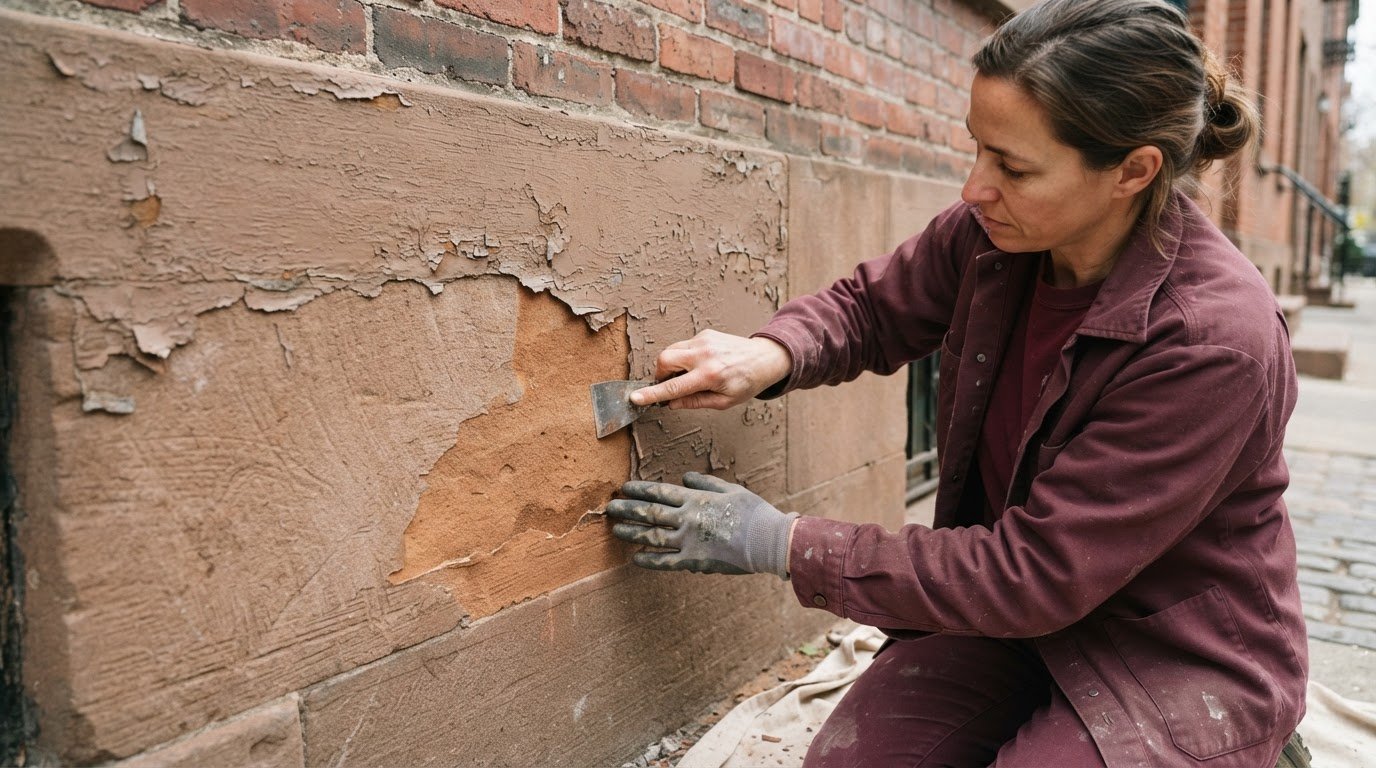
A brownstone restoration is a planning project as much as a masonry project. A brownstone contractor in Brooklyn can help organize the work, but the schedule depends on the scope and any required approvals; landmark approval can add 3 to 6 months to design and permitting, and the full design-through-close-out process often takes 12 to 18 months. New York City also has rules governing sidewalk repairs, according to the New York City Department of Transportation.
Before work begins, it’s reasonable to want a clear understanding of costs, timing, and repair options. This guide explains how to plan a restoration, what brick pointing and brownstone repairs involve, and which project factors shape the budget and schedule. You’ll also learn how to prepare for next steps, from defining the work to deciding when a masonry specialist can help.
Table of Contents
Planning a Brownstone or Exterior Restoration Project in NYC?
A brownstone contractor in Brooklyn can handle facade and stoop restoration, masonry repairs, and brick pointing. Start by documenting visible damage and identifying the exterior surfaces and architectural details that need attention.
Facade and Stoop Restoration
Restoration can address worn brownstone, cracked masonry, and deteriorating stoop surfaces. Inspect the steps, facade details, and joints where water may enter. A defined scope helps distinguish localized repairs from broader facade work, prioritize areas, and preserve the building’s historic character.
Historic Masonry and Brick Repairs
Historic facade restoration repairs masonry while preserving a building’s architectural character. Brooklyn brownstone facade repair may involve replacing damaged brownstone sections, stabilizing loose material, or repairing adjacent brick. Note cracks, flaking, open joints, and mismatched patches to define the repair area and sequence.
Facade Repointing and Paint Removal
Brick repointing removes deteriorated mortar and replaces it to help maintain the condition and weather resistance of brick masonry. It addresses failing joints rather than coating the entire facade. On painted brick, assess the coating and brick surface before removing paint to avoid damaging the masonry while restoring the facade’s appearance.
Permits and Landmark Rules
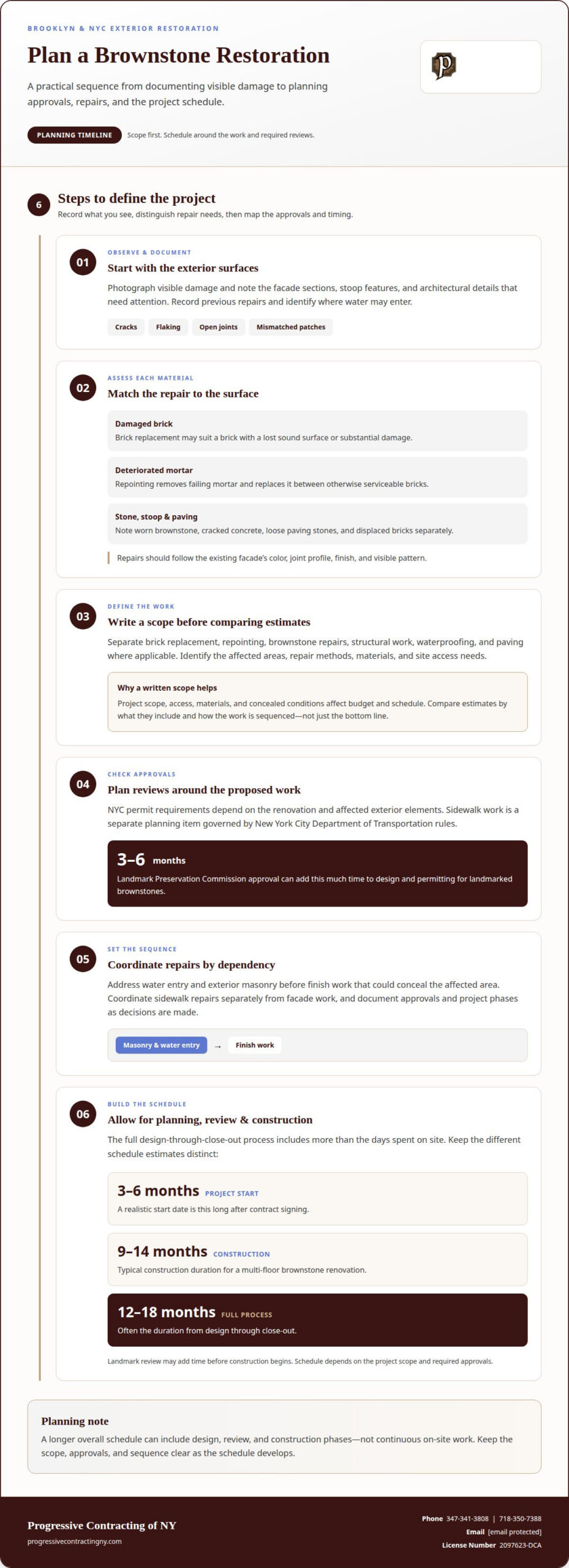
NYC permit requirements depend on the proposed renovation and affected exterior elements, so the work scope shapes which approvals apply. New York City Department of Transportation governs sidewalk repair rules, making sidewalk work a separate planning item. For landmarked brownstones, Landmark Preservation Commission approval can add 3 to 6 months to design and permitting. Account for that review when planning the project schedule.
Brickwork, masonry repair, and pointing
Townhouses in Brooklyn and Manhattan often combine brick walls, brownstone details, and paved entry areas. Assess each material separately: a cracked brick, an open mortar joint, and a worn stone step each need a different repair. Record the affected surfaces to define the masonry work before restoration begins.
Brick replacement is appropriate when a brick has lost its sound surface or sustained substantial damage. Repointing addresses deteriorated mortar between otherwise serviceable bricks. Repairs should match the existing facade’s color, joint profile, and finish. On a historic townhouse, mismatched patches can disrupt the architectural character, so identify the original materials and visible pattern before work begins.
Brick pointing and repointing require attention to the surrounding masonry, too. Mortar joints can vary in depth and appearance across a facade, so repairs should follow the existing pattern rather than create an unrelated finish. Note open joints, loose brick, and earlier patching to help distinguish isolated repairs from work affecting a larger area.
Concrete, stone, and brick paving each need a separate surface assessment. Note cracked concrete, loose paving stones, or displaced bricks around a stoop. Record where the damage occurs and whether it meets the facade, steps, or sidewalk. This helps separate paving repairs from facade restoration and clarify the work sequence.
For a brownstone repair project, a written scope can identify brick replacement, repointing, and paving as separate tasks. Explore masonry repair and brick pointing to see how these exterior repair needs connect.
Brownstone renovation costs and timelines
In New York City, the project scope, site access, materials, and concealed conditions affect the budget and schedule. A comprehensive exterior project may combine facade restoration, waterproofing, pointing, structural repairs, and sidewalk work. Since each task has different preparation and sequencing needs, define the work before comparing estimates.
Price depends on the project and is provided after a quote request; the affected surfaces, repair methods, access, and materials shape the estimate. A written scope should distinguish visible masonry repairs from potential structural work. This makes it easier to understand what each estimate covers and how added work could affect construction.
Scheduling also involves more than the days workers spend on site. A realistic project start date is 3 to 6 months after contract signing. Construction for a multi-floor brownstone renovation typically runs 9 to 14 months, while design through close-out often takes 12 to 18 months. Landmark review can add time before construction begins.
Plan the work around its dependencies. For example, address water entry and exterior masonry before finish work that could conceal the affected area. Sidewalk repairs may need to be coordinated separately from facade work. Clear records of the scope, approvals, and project phases help owners track decisions and understand schedule changes.
The key takeaway: compare estimates by scope and sequence, not just the bottom line. A longer schedule may include design, review, and construction phases rather than continuous on-site work.
Discuss brownstone restoration planning
Progressive Contracting NY: Brownstone facade renovation
Progressive Contracting NY Corp handles brownstone facade renovation and stoop restoration for Brooklyn property owners planning exterior repairs. Turn to the team when worn brownstone, damaged facade details, or deteriorating stoop surfaces need a defined restoration scope. Matching the repair approach to the building’s materials helps preserve its architectural character and clarify which areas require work.
For a brownstone project, start by identifying the affected facade sections and stoop features. Progressive Contracting NY Corp can handle exterior restoration as a focused project, with repairs suited to the specific issues rather than treating every visible problem the same way. Share the property’s location and the exterior areas that need attention to begin discussing the work as your trusted brownstone contractor Brooklyn.
Contact Progressive Contracting NY Corp at 347-341-3808 or 718-350-7388, or email ProgressiveContractingNY@yahoo.com.
Move Your Restoration Plan Forward
Turn your observations into a defined scope of work. Gather photographs of the areas you want addressed, note previous repairs, and identify the exterior features that matter most to your property. This gives a brownstone contractor in Brooklyn a useful starting point for discussing the project.
Progressive Contracting of NY handles brownstone facade renovation, Brownstone Facade Restoration, and Rammstein stoop restoration. These services support owners planning focused exterior work, from facade repairs to stoop restoration. A clear conversation about the property and your priorities can help define the next steps.
Setting priorities now can make the first project discussion more productive. When you’re ready, contact Progressive Contracting of NY for a free consultation about your restoration plans.
A well-planned exterior project starts with a clear first step.
Frequently Asked Questions
How do I find a reputable brownstone contractor in Brooklyn?
Look for a contractor whose written scope names the specific facade, stoop, or masonry work involved. For example, a proposal should distinguish brick replacement from mortar repointing rather than group both under general repairs. A brownstone contractor in Brooklyn should also explain the work sequence and how repairs relate to the building’s existing exterior materials.
What does brownstone renovation cost in Brooklyn per square foot?
There’s no single per-square-foot figure that fits every Brooklyn brownstone renovation, especially when the work covers only the exterior. The price depends on the case and is given after a quote request; the affected area, repair method, materials, and access shape the estimate. Compare proposals by included tasks and exclusions, not by a unit figure alone.
How much does brownstone stoop and facade restoration cost in Brooklyn?
The scope shapes the cost: a stoop-only repair differs from work that also addresses facade sections, masonry joints, or adjoining surfaces. Note which steps and facade areas need attention, and list them separately in the project description. This helps clarify what the estimate covers and provides a basis for pricing the specific restoration work.
What should I check in a brownstone contractor’s license, insurance, and references?
Check that the contractor’s identity and license details match the project paperwork. Progressive Contracting NY Corp’s license number is 2097623-DCA. Review insurance documents and references for relevant exterior masonry work, such as a brownstone facade or stoop project. Compare the documented scope with the work being proposed, so the paperwork describes the same project.
What questions should I ask before hiring a brownstone contractor?
Ask which surfaces the proposal covers, how it distinguishes repair from replacement, and what conditions could change the scope. For a stoop and facade project, ask how the phases relate and which materials and finishes the proposal specifies. Clarify what documentation you’ll receive as the project progresses from planning through completion.