
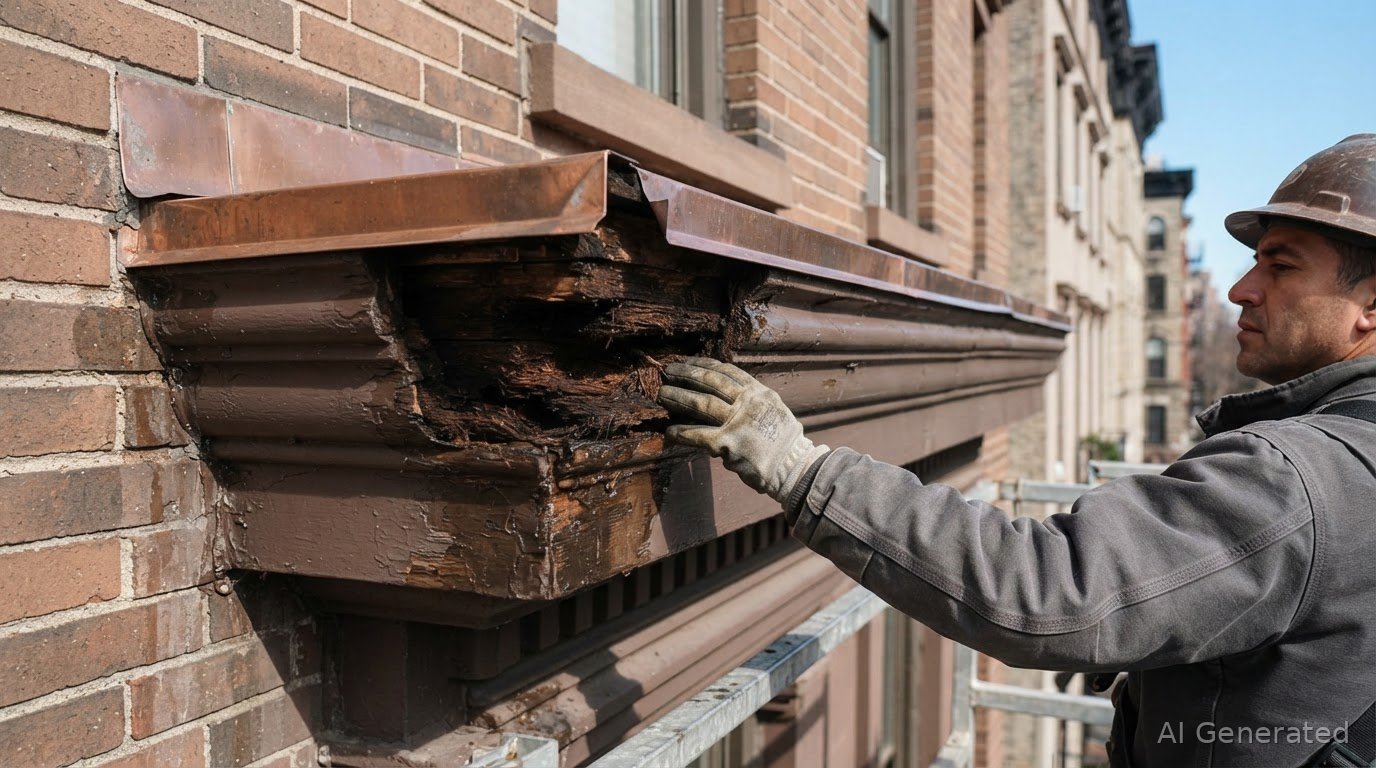
Paint can cover a cornice problem, but it can’t repair the damage or stop water from getting in. In Manhattan, distinguishing brownstone cornice dry rot from masonry collapse starts with identifying whether the failing material is wood or masonry and assessing how much of the assembly has deteriorated. Peeling paint alone doesn’t tell the whole story.
It’s understandable to consider repainting when a cornice looks worn. But if rot, corrosion, loose masonry, or failed flashing is letting water in, paint alone won’t fix the cause. This article explains how to distinguish cornice decay from masonry failure, when repainting is insufficient, and how suitable materials and flashing help manage water. A professional assessment can clarify the right repair before work begins.
Table of Contents
Brownstone cornice functions and water management
A cornice crowns the façade and helps direct rain away from the wall below. Failed joints, cladding, or drainage details can let water reach the wood and masonry, so the cornice’s condition matters.
Cornice Roles in Water Management
A cornice is the projecting roofline assembly that directs water outward from a building’s upper wall. Its overhang and flashing help limit water entry where the roof meets the façade. New York City cornices commonly use galvanized sheet metal, wood with sheet-metal cladding, cast stone, or terra cotta. Each material needs secure connections and effective water-shedding details to help protect the masonry below.
For example, a gap where flashing meets the wall can send rain behind the cornice instead of away from it. Water can damage wood, corrode metal, or enter masonry joints. A functioning cornice protects more than its visible trim: it also helps manage water at the vulnerable roof-to-façade transition.
Deterioration Causes in New York City
Cornice deterioration develops when water repeatedly reaches materials or becomes trapped in joints and concealed spaces. Failed paint can expose wood or metal, while poor drainage and open seams allow more water in. Brownstone also weathers over time; the Wikimedia Foundation notes that its ease of quarrying and carving makes it susceptible to damage.
Many Brooklyn brownstones have galvanized sheet-metal cornices dating from 1880-1920. Untreated New York City cornices typically need significant intervention every 25 to 40 years. These periods are not a diagnosis: visible peeling, rust, soft wood, or displaced masonry can indicate different failures requiring different repairs.
NYC Building Code requirements apply to building work, including cornice repairs, with the relevant provisions depending on the material and scope. Local Law 11 is the city’s façade inspection program, but it does not apply to every brownstone solely because of its architectural style.
Local Law 11 applies when a building meets the city’s covered-building criteria. Whether a specific brownstone falls within those criteria depends on the building, not simply its cornice material or age.
Cornice reconstruction materials and flashing
A deteriorated cornice may be repairable when damage is localized and its supporting assembly remains sound. Rebuilding may be needed when decay, corrosion, or loose sections compromise stability or the ability to shed water. The decision depends on the condition of the structure beneath the visible finish.
New York City cornices commonly use galvanized sheet metal, wood with sheet-metal cladding, cast stone, or terra cotta, and each material calls for compatible repairs. Limited deterioration in a wood section may allow targeted replacement, while a failed connection or broadly weakened assembly may need reconstruction. Matching the existing profile also helps preserve the façade’s character.
Flashing is critical because it directs water away from roof edges and vulnerable joints, rather than letting moisture get behind the cornice. A poorly fitted transition where the cornice meets the wall, for example, can channel rain into concealed wood or masonry. Reconstruction should correct the water path, not just cover the visible damage.
After repairs, a suitable finish helps protect exposed material. The described cornice repair process uses two coats of exterior masonry or metal paint, selected for the material. Paint can support protection, but it cannot compensate for failed flashing, open seams, or deteriorated sections. Repair those underlying conditions first.
For a brownstone, a professional assessment weighs material condition, attachment, and water entry before choosing repair or rebuilding. A brownstone repair assessment can identify the appropriate scope and how flashing fits into the restoration.
Signs of cornice rot, decay, and structural damage
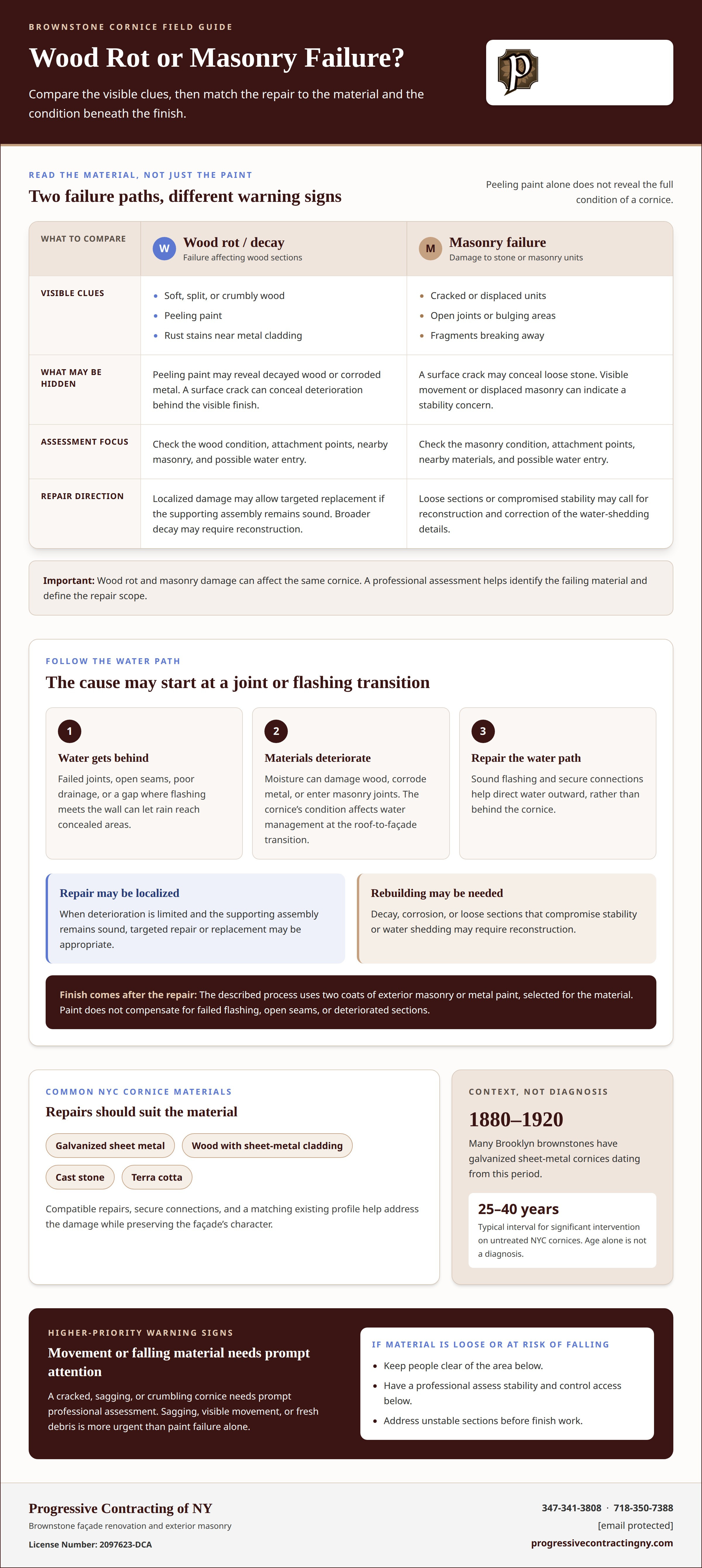
Wood rot and masonry failure have different warning signs, though both can affect the same cornice. Rot may appear as soft, split, or crumbly wood, peeling paint, or rust stains near metal cladding. Masonry damage may show as cracked or displaced units, open joints, bulging, or fragments breaking away. In Manhattan, distinguishing brownstone cornice dry rot from masonry collapse starts with identifying which material is failing.
A cracked, sagging, or crumbling Manhattan cornice needs prompt professional assessment because loose material can fall. Sagging, visible movement, or fresh debris is more urgent than paint failure alone. Keep people clear of the area below while arranging an assessment; paint is not a structural repair.
A professional examines the materials, attachment points, and nearby masonry, then looks for possible water entry. A surface crack, for example, may conceal loose stone, while peeling paint may reveal corroded metal or decayed wood. This assessment helps clarify whether the issue is brownstone cornice dry rot or masonry collapse in Manhattan and define the repair scope.
If material is loose or at risk of falling, a professional should control access below, assess stability, and address unstable sections before finish work. The repair plan can then distinguish localized replacement from broader reconstruction and account for the cornice’s connections.
The Wikimedia Foundation notes that brownstone’s ease of quarrying and carving also makes it susceptible to weathering and damage over time, making it important to watch for changes.
Progressive Contracting NY: Masonry contractor
Progressive Contracting NY Corp provides masonry contracting and brownstone façade renovation for property owners dealing with cornice decay or damaged masonry. When an assessment identifies loose material, failing joints, or water-related deterioration, the company’s exterior masonry services can address affected façade areas. The work focuses on the building’s exterior condition, not paint alone.
For questions about your façade or brownstone repair in Manhattan, contact Progressive Contracting NY Corp at 347-341-3808 or 718-350-7388, or email ProgressiveContractingNY@yahoo.com. License Number: 2097623-DCA.
Choose a Clear Path for Your Brownstone
Have the cornice and adjoining façade assessed as one exterior assembly. Distinguishing brownstone cornice dry rot from masonry collapse in Manhattan helps shape a repair plan around the damaged material, its attachment, and the source of moisture. The assessment can clarify whether targeted repairs or broader façade restoration suit the condition.
Progressive Contracting of NY provides brownstone façade renovation and restoration, as well as Rammstein stoop restoration for related exterior work. The right scope depends on the building’s actual condition, so let clear findings guide decisions rather than relying on a fresh coat of paint alone.
A well-planned repair gives you a practical next step toward protecting your building’s exterior.
Frequently Asked Questions
Can I just have it painted instead of properly repaired?
No, paint alone won’t correct decay, failed connections, or water entry. Paint-only cornice repairs may look fine for 18 months before rust and rot return through the coating. Repainting over corroded metal, for example, leaves the underlying damage in place. Repair the affected material and address the water path before applying a suitable finish.
How does a professional tell if your cornice needs work?
A professional examines the cornice’s material, joints, attachment points, and nearby façade, then looks for signs of water entry. Staining below a roofline seam, for example, may point to a leak path, while a loose decorative section raises a stability concern. In Manhattan, assessing brownstone cornice dry rot versus masonry collapse helps distinguish surface deterioration from damage affecting the assembly.
How long does cornice repair take?
A standalone cornice repair on a typical four-story Brooklyn brownstone takes 3-10 days on site, with setup and teardown taking 1-3 days. Larger or landmark cornice repair scopes can take 2-4 weeks. The scope, access, material condition, and need for reconstruction all affect the work period.
What are the signs of dry rot in a brownstone cornice?
Dry rot affects wood. Warning signs include soft or crumbly areas, splits, peeling paint, and sections that have lost their shape. A wood cornice board may look intact from the street yet be deteriorating around a joint or behind cladding. A professional assessment can determine whether the wood itself has weakened or only its coating has failed.
What are the signs of masonry failure or collapse in a brownstone cornice?
Masonry failure can appear as widening cracks, bulging, displaced stone or terra cotta, crumbling joints, or falling pieces. A loose unit or visible movement needs prompt attention, especially above an entrance or sidewalk. The distinction between brownstone cornice dry rot and masonry collapse in Manhattan matters: displaced masonry signals a different failure from decayed wood and calls for assessment of the affected masonry.