
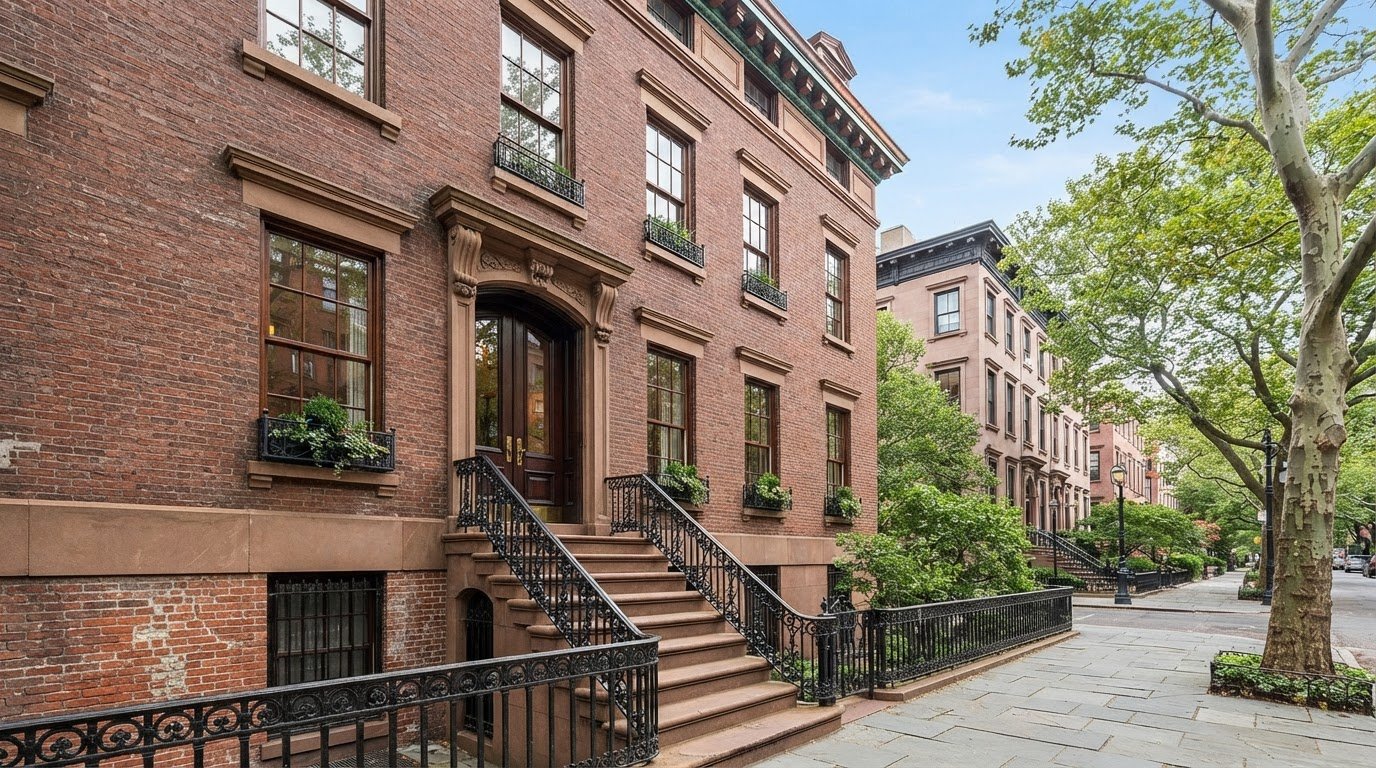
What if the most important masonry decision is what not to replace? On a landmarked Manhattan building, an aggressive repair can erase original detail, while a poorly matched patch may remain visible for years. Choosing a historic masonry specialist for landmarked buildings in Manhattan means finding a preservation-minded approach that protects sound material and responds to the facade’s actual condition.
Progressive Contracting NY Corp brings over a decade of brownstone and masonry experience in Brooklyn and Manhattan. The team uses traditional tuck-pointing methods and historic-appropriate materials. This guide explains how to assess a restoration approach, what to discuss during a walkthrough, and how landmark review can shape project planning. Manhattan’s landmarked facades and Brooklyn’s historic blocks, including Park Slope and Bedford-Stuyvesant, are part of a wider NYC masonry landscape that also includes buildings in the Bronx and Queens. For a free consultation, call 347-341-3808 or 718-350-7388, or email ProgressiveContractingNY@yahoo.com. License number: 2097623-DCA.
What landmark status means for Manhattan historic masonry work
A landmarked property is a building or site formally recognized for its architectural, historical, or cultural importance. It may be designated individually or included in a historic district, where buildings share a recognized historic character. The New York City Landmarks Preservation Commission oversees these designations and reviews changes to protected properties. Check current LPC records for the specific address, since district boundaries and designation details matter.
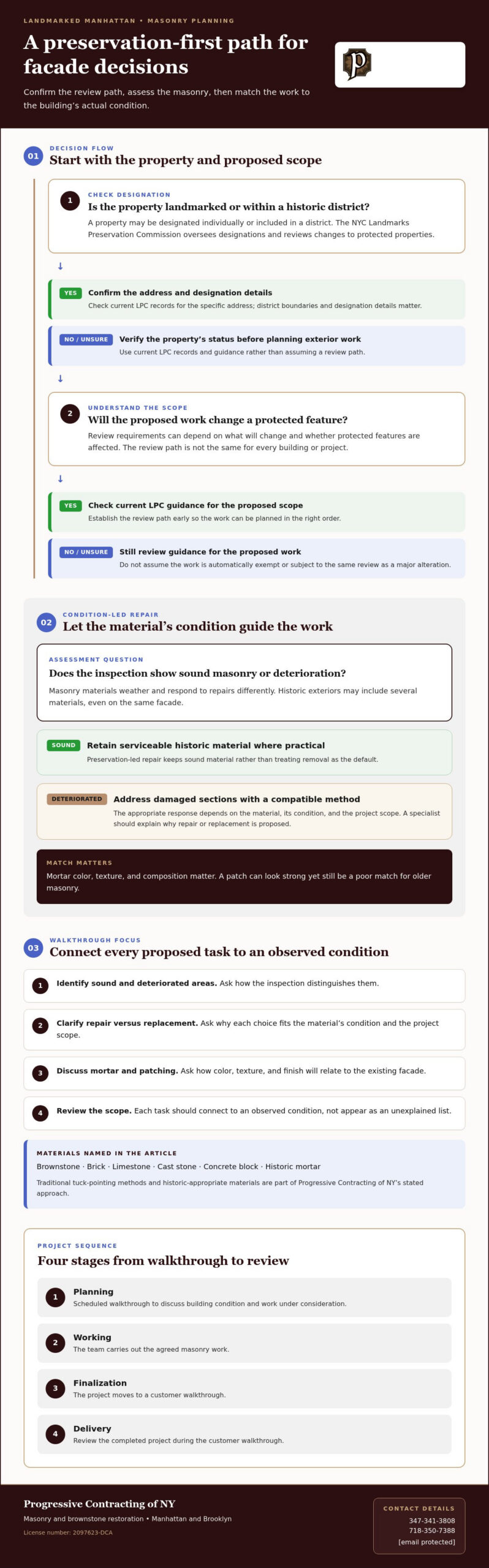
Landmark status does not mean every building follows the same review path. Before planning exterior masonry work, confirm the property’s status and review current LPC guidance for the proposed scope. Requirements can depend on what will change and whether protected features are affected. Establishing the review path early helps owners plan the work in the right order and avoid assuming that a repair is either automatically exempt or subject to the same review as a major alteration.
How preservation priorities shape facade repair
Preservation starts with understanding the existing materials and their condition. Brick, limestone, cast stone, concrete block, and historic mortar can weather and respond to repairs differently. A careful assessment identifies which areas remain sound and which show deterioration, so the work can retain serviceable material and address damaged sections with a compatible method. Mortar color, texture, and composition matter: a patch that looks strong may still be a poor match for older masonry.
Preservation-led repair retains and repairs historic material where practical; routine facade replacement treats removal as the default. The right response depends on the material, its condition, and the project scope. A historic masonry specialist for landmarked buildings in Manhattan should explain why a repair or replacement is appropriate rather than assume the whole facade needs to be renewed. This helps protect architectural detail while addressing the building’s actual needs.
How to evaluate a historic masonry specialist in Manhattan
Historic exteriors may combine brownstone, brick, limestone, cast stone, and concrete block, sometimes on the same facade. Experience with these materials matters because their repair needs differ. A specialist should explain what the inspection reveals and how the proposed work fits the material’s condition, rather than treating every crack or worn joint as a reason for broad replacement.
Look for a clear explanation of the repair plan. Progressive Contracting of NY uses traditional tuck-pointing methods with historic-appropriate materials and provides brownstone facade restoration, stoop repair, and masonry work. During a scheduled walkthrough, the team can discuss the facade’s condition, the scope of work, and practical repair choices. Its project sequence, Planning, Working, Finalization, and Delivery, gives owners a clear framework for understanding how work progresses.
Historic restoration planning may involve documenting visible conditions and selecting repairs that respect the existing structure. Elwyn and Palmer’s overview of historic masonry restoration engineering offers additional context on assessment and repair planning. For an owner, the important point is a clear connection between observed conditions and the work being proposed.
Questions that reveal a preservation-minded approach
During the walkthrough, discuss how the team distinguishes sound masonry from deteriorated areas and decides between repair and replacement. Ask how mortar and patching will relate to the facade’s existing color, texture, and finish. Request an explanation of which areas need attention and why. A useful scope connects each task to an observed condition instead of presenting a list of repairs without context.
Progressive Contracting of NY’s brownstone facade restoration work connects material-specific repairs with the character of the existing exterior. A walkthrough is a practical first step toward defining the scope for your building.
Start your Manhattan masonry restoration with a clear project process
A defined process helps turn facade concerns into practical next steps. Progressive Contracting of NY organizes masonry projects into four stages: Planning, Working, Finalization, and Delivery. Planning begins with a scheduled walkthrough to discuss the building’s condition and the work under consideration. During Working, the team carries out the agreed masonry work. Finalization and Delivery include a customer walkthrough, so you can review the completed project.
For owners seeking a historic masonry specialist for landmarked buildings in Manhattan, begin with a clear scope and an open discussion of the building’s condition. The work is planned around the property and project needs, rather than a one-size-fits-all duration.
What to prepare for a free restoration consultation
A little preparation can make the first conversation more focused. Gather photos of the full facade, visible damage, and distinctive details such as carved stone, decorative bands, or unusual brickwork. If you know when earlier repairs took place or what materials were used, share that history. Relevant building or project documents can add useful context.
Progressive Contracting of NY provides a free consultation for Manhattan masonry and brownstone restoration. Its brownstone facade repair information can help you identify exterior concerns to discuss. To plan a consultation, call 718-350-7388 or 347-341-3808, or email ProgressiveContractingNY@yahoo.com. License number 2097623-DCA.
Take the next step toward a considered facade plan
A landmark facade deserves a plan shaped by its actual condition, not assumptions. Start by identifying what prompted you to act and which architectural features you want the work to respect. Those priorities can guide a discussion about what needs attention, what requires closer assessment, and how repair choices can fit the building’s character. For owners considering a historic masonry specialist for landmarked buildings in Manhattan, a clear starting point makes the next decision easier.
Bring your questions and concerns to the project conversation, even if you are still defining the scope. Progressive Contracting of NY offers a free consultation to discuss masonry and brownstone restoration in Manhattan and Brooklyn.
A thoughtful plan can help you move forward with care for the details that make your building distinctive.
Frequently Asked Questions
How can I check whether a Manhattan building is landmarked?
Consult current New York City Landmarks Preservation Commission designation information and records for the property or its district. Check the exact address and designation context, since a building’s relationship to a historic district may affect restoration planning. Verify the property’s current status through official LPC information rather than relying only on an old listing or its appearance.
Does landmark status mean every original facade element must remain untouched?
No. Preservation does not automatically rule out intervention. Sound material may be retained, while deteriorated masonry may call for repair or replacement. The appropriate approach depends on the building’s condition and the proposed work. A historic masonry specialist for landmarked buildings in Manhattan can help frame repair choices, while current official LPC guidance can clarify project-specific review or approval requirements.
What should I document before planning historic masonry restoration?
Take clear photographs of the full facade and close-ups of damaged areas, then note visible changes such as cracking, missing mortar, or earlier patches. Record where each image was taken and its approximate date, so observations are easier to compare. Gather relevant building or project records if available. These materials can focus a consultation, but they do not replace an on-site assessment.