
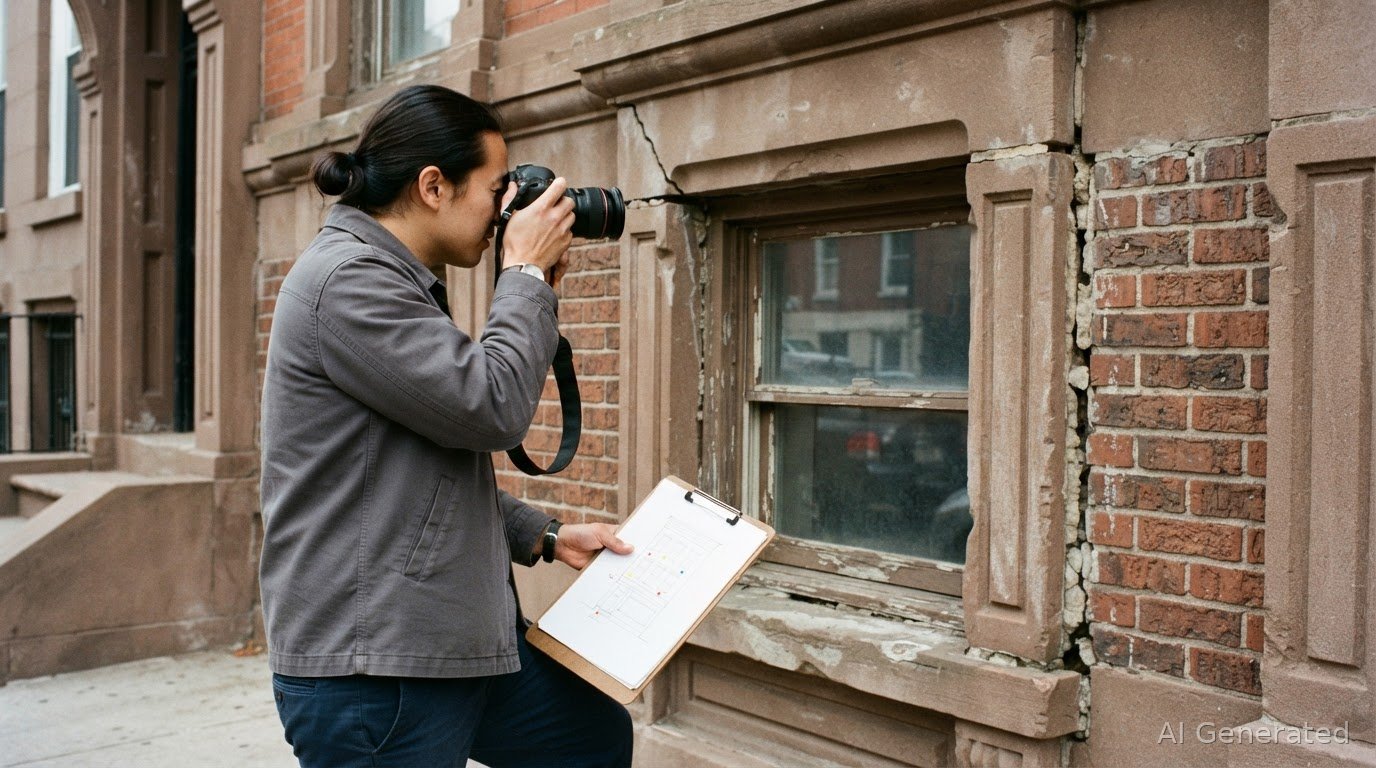
A photo can show a crack, but not the full story behind it. To document facade condition for an insurance claim in Brooklyn, take clear color photographs, map each visible condition to its location, and make a written record of the deterioration and its apparent causes before repairs begin. This gives an insurance reviewer an organized view of what is damaged and where it appears.
A stain, loose pointing, or broken masonry may be an isolated defect or part of a larger pattern, especially when photographs lack location details. This guide shows how to pair photos with a simple facade map, describe visible damage without guessing at its cause, and organize supporting records such as inspection notes and repair documents. You’ll learn what to record and how the pieces support an insurance claim.
Table of Contents
Color photographs and condition mapping
To document facade condition for an insurance claim in Brooklyn, pair clear color photographs with a map that identifies the location of each observed condition.
Color Photo Records
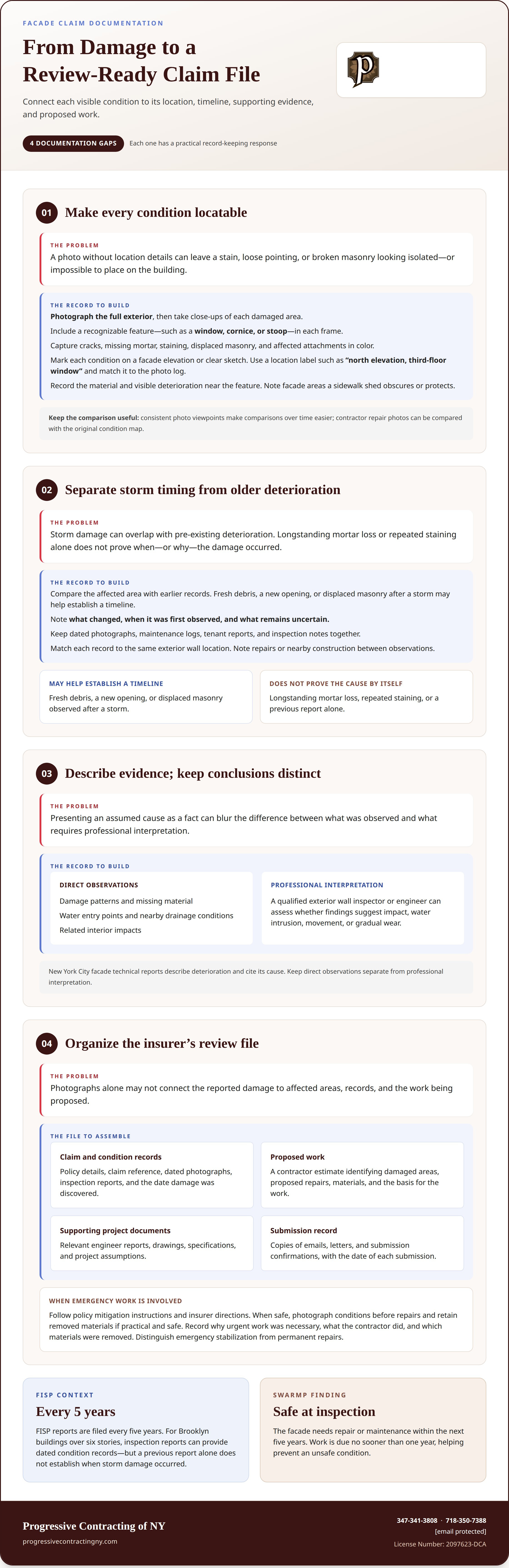
Photograph the full exterior, then take close-ups of each damaged area. Include a recognizable feature, such as a window, cornice, or stoop, in each frame. Capture cracks, missing mortar, staining, displaced masonry, and affected attachments in color. For how to document facade condition for an insurance claim in Brooklyn, use consistent viewpoints to make comparisons over time easier. If a sidewalk shed is present, note which facade areas it obscures or protects.
Condition Mapping
Mark each observed condition on a facade elevation or clear building sketch. Use a specific label, such as “north elevation, third-floor window,” and match it to the photo log. Record the material and visible deterioration near that feature. Contractor repair photos can then be compared with the original map. NYC facade compliance reports also use color photographs and maps to locate observed conditions.
For a claim-only record, an inspection can help assess the damage and its cause. For FISP, a DOB-approved Qualified Exterior Wall Inspector must be a New York State registered architect or professional engineer with at least seven years of relevant facade experience.
Inspection and condition-report costs depend on the building, access, damage scope, and documentation required. Pricing is provided after a quote request.
FISP reports must be filed every five years, according to the New York City Department of Buildings. Local Law 11 is associated with the facade safety program covering the exterior and appurtenances.
Documentation of deterioration and its causes
Record visible damage separately from conclusions about its cause. Link each defect to its location, condition, and supporting evidence.
Storm Damage Versus Existing Deterioration
Storm damage can overlap with older deterioration, so compare the affected area with earlier records. Fresh debris, a new opening, or displaced masonry after a storm may help establish a timeline. Longstanding mortar loss or repeated staining may indicate earlier deterioration, but these signs alone do not prove the cause. Note what changed, when it was first observed, and what remains uncertain.
Damage Timing Evidence
To document when damage appeared, keep dated photographs, maintenance logs, tenant reports, and inspection notes together. Match each record to the same exterior wall location, and note any repairs or nearby construction between observations. For Brooklyn buildings over six stories, FISP inspections and reports to the Department of Buildings can provide dated condition records. A previous report alone, however, does not establish when storm damage occurred.
Damage Cause Records
Describe the evidence without presenting an assumption as fact. Record damage patterns, missing material, water entry points, nearby drainage conditions, and related interior impacts. New York City facade technical reports describe deterioration and cite its cause. A qualified exterior wall inspector or engineer can assess whether findings suggest impact, water intrusion, movement, or gradual wear. Keep direct observations separate from professional interpretation.
A SWARMP finding means the facade is safe at inspection but needs repair or maintenance within the next five years. The work is due no sooner than one year, helping prevent an unsafe condition.
In Brooklyn, facade repairs may become a priority after a FISP inspection, an engineer’s report, DOB requirements, leaks, masonry deterioration, sidewalk shed issues, or other safety concerns. A damage assessment can include a site inspection, photographs, written documentation of existing damage, and an evaluation of how the damage affects compliance with current building code. A property damage assessment can also document structural elements, finishes, mechanical and electrical systems, and code issues affected or exposed by the damage.
Documents to provide for an insurance review
Submit an organized claim file, not just photographs. Include policy details, the claim reference, dated records, inspection reports, and repair estimates. A well-organized file connects the reported damage to the affected areas and proposed work.
If you’re documenting facade condition for an insurance claim in Brooklyn, start by following the notice terms in your policy. Send the initial report promptly, then keep copies of emails, letters, and submission confirmations. Record when you discovered the damage and identify any immediate safety concerns.
For emergency work, follow the policy’s mitigation instructions and the insurer’s directions. When safe, photograph conditions before repairs and retain removed materials if practical and safe. Record why urgent work was necessary, what the contractor did, and which materials were removed. Protect the public if a condition creates a hazard.
NYC’s Facade Inspection Safety Program reports document exterior conditions for the Department of Buildings. Include relevant reports in the claim file, but keep regulatory findings distinct from the insurer’s coverage decision. If a report identifies an unsafe condition, public protection, such as a sidewalk shed, may be required immediately.
A contractor’s estimate should identify damaged areas, proposed repairs, materials, and the basis for the work. Engineer reports, drawings, specifications, and project assumptions can help explain the proposed scope. If the estimate covers both, distinguish emergency stabilization from permanent repairs.
If a claim is denied or underpaid, request the insurer’s written explanation and compare it with the policy, reports, and estimate. If you’re documenting facade condition for an insurance claim in Brooklyn, submit relevant additional evidence through the insurer’s stated review process and keep a dated record of each submission.
Progressive Contracting NY Corp
Progressive Contracting NY Corp is a practical next step when documented facade damage needs repair or renovation. As a brownstone contractor serving Brooklyn, the company handles brownstone facade renovation and related restoration work. Photographs, condition maps, inspection findings, and the insurer’s scope can help identify the areas that need attention.
Turn to Progressive Contracting NY Corp when a review identifies masonry deterioration or facade damage that needs a repair plan. Clear records help connect observed conditions to proposed work, while keeping the insurance review separate from the construction scope.
Contact Progressive Contracting NY Corp at 347-341-3808 or 718-350-7388, or email ProgressiveContractingNY@yahoo.com to discuss facade repair needs.
Move from documentation to a repair plan
Once the insurance review is underway, the next decision is how to address the facade work. Knowing how to document a facade’s condition for an insurance claim in Brooklyn helps keep the damage record separate from the repair scope. Progressive Contracting of NY handles brownstone facade renovation, brownstone facade restoration, and Rammstein stoop restoration. These services are suited to documented damage involving brownstone masonry or a stoop that needs restoration.
Keep the repair discussion focused on the observed conditions and the work required. A clear next step can help you move from claim records toward a considered plan for the property.
With a well-organized record and a defined repair need, you can approach the next stage with greater clarity.
Frequently Asked Questions
What photos and videos should I take to document facade damage for an insurance claim?
Take still photos from several angles and record short video clips showing how damaged sections relate to nearby building features. A steady pan can capture a continuous crack, displaced masonry, or the boundary between damaged and intact areas. Keep the original files, including their date metadata, and don’t climb or enter restricted areas to get a closer view.
What information should a facade condition report include for an insurance claim?
A useful report identifies the property address, inspection date, person preparing it, and areas examined. It separates direct observations from professional opinions, explains any limits on access, and links each finding to supporting records. For example, if the rear elevation wasn’t accessible, the report should say so rather than suggest every facade area received the same level of inspection.
How soon must I notify my insurer of facade damage in New York?
Follow the notice terms in your policy and send the initial report promptly. Keep dated records of what you submit.